Weymouth Harbour: Historic Maritime Gateway of Dorset
Historic Heritage of Weymouth Harbour
Weymouth is one of those English coastal towns where history literally shows through the facades of Georgian mansions and the cobblestones of the waterfront. This port on Dorset's southern coast has served as a maritime gateway for more than seven centuries. There is evidence that Roman galleys once sailed up the River Wey to Radipole, where they moored and unloaded goods for transport to the Roman town of Durnovaria — modern-day Dorchester. The present town emerged from two small settlements on either side of the River Wey, which over time developed into two separate medieval seaports: Weymouth and Melcombe Regis.
Weymouth Harbour boasts over 700 years of history and was formerly a major trading port. The harbour waterfront, also known as the Old Harbour, was built around the 17th century, while its origins as a working port date back to 1347. It was here, in 1348, that the Black Death arrived in England — one of the darkest chapters in European history. Ships arriving from Bordeaux brought the plague, which soon spread throughout the entire country.
From Roman Galleys to Modern Yachts
Today, Weymouth Harbour is a vibrant mix of a working port and a yachting paradise. The fishing fleet is still based here, with their daily catches landing on the shelves of local fish shops. In 2004, the Weymouth fishing fleet caught significant volumes of seafood, confirming the town's status as an active fishing port. Alongside the fishing boats, pleasure cruisers and private yachts bob gently, having arrived here from all corners of England's southern coast.
Between 1848 and 1967, the Cosens company used its paddle steamers to transport passengers along the coasts of Dorset, Devon, and Hampshire, and sometimes as far as Cherbourg and the Channel Islands. These steamships were true symbols of the Victorian era of leisure, and their schedules were printed in local newspapers alongside news from London. The vessels also transported convicts from Southampton to Portland for work on the construction of Portland Harbour in the mid-19th century — a grim but important chapter in the region's history.
Olympic Legacy of 2012
In 2012, Weymouth and Portland became a global hub for sailing — hosting competitions as part of the London Olympic Games. The sailing programme consisted of ten events across eight classes. Eleven races on the water were scheduled for each event in Weymouth Bay. Great Britain excelled in the sailing competitions, winning gold medals and strengthening its reputation as a maritime nation.
Later, a sculpture was created based on Ben Ainslie's yacht "Rita" to mark ten years since the sailing competitions held in Weymouth for the 2012 Olympic and Paralympic Games. This sculpture became a new landmark on the waterfront, reminding visitors and locals of that magnificent sporting event that instantly transformed the international standing of the local yacht club.
The Drawbridge — An Engineering Landmark
The Weymouth Town Bridge, opened in 1930, is the sixth bridge built across the harbour since 1597. The first bridge was a wooden structure with a central drawpiece made of "two beams." The opening of the current bridge took place on 4 July 1930 at 12:30, and the ceremony was attended by the Duke of York, who later became King George VI. The bridge was built for £90,000 and features twin steel leaves that rise to provide access to the inner harbour.
The bridge was listed as Grade II in 1997, underscoring its architectural and historic significance. The previous bridge only allowed small vessels to pass, which seriously limited the potential of the inner harbour. With the new drawbridge in place, vessels with taller masts gained access to the upper docks, giving a boost to the yachting business in the town.
Pirates and Smugglers of Weymouth
In the 1500s, Hugh Randal was simultaneously a mayor and a pirate, running the town and smuggling contraband through it. Weymouth and Melcombe Regis were notorious for their piratical activities, and local residents often viewed smuggling not as a crime but as a means of survival in the face of high taxes. Throughout the 18th and 19th centuries, high taxes led to an increase in illegal imports into Britain, and Weymouth found itself right at the centre of this shadowy trade.
In June 1770, a large consignment of smuggled goods was expected off the coast near Weymouth, and the controller set out by boat to intercept the smugglers. The Battle off Portland resulted in the capture of the Spanish ship "San Salvador," which was brought into the harbour as a trophy. Today, Weymouth celebrates its pirate history — information boards have been installed along the waterfront, and local restaurants offer "pirate" themed menus.
What You Can See on the Cam
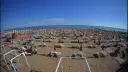
The online webcam is positioned to capture the panorama of Weymouth Harbour — from the historic waterfront to the water surface where yachts and fishing boats bob. In real time, you can watch the Weymouth Town Bridge at work, still raising its steel leaves to let vessels pass through. The camera conveys the atmosphere of a working port: fishermen are unloading their catch, yachtsmen are preparing their sails, and tourists are strolling leisurely along the waterfront.
The harbour is renowned for its scenic sunsets, and the live webcam lets you watch as the setting sun paints the waters of the bay in golden and crimson hues. The Weymouth online webcam is an opportunity to experience the atmosphere of one of the most picturesque ports on England's southern coast without leaving home.
Similar cameras
Find similar






Author's other cameras
All camerasComing soon