

🏙️ Webcams Almaty Online — Watch in Real Time
3 cameras
The City Born from an Apple Tree
Almaty is a place where the name tells the entire story. The word "alma" means "apple" in Kazakh, and the suffix -ty indicates abundance — together they form "a place surrounded by apple trees." It was here, in the foothills of the Trans-Ili Alatau, that wild apple trees grew, becoming the ancestors of the famous Aport variety, which settler Yegor Redko developed in 1874 by crossing seedlings from central Russia with the local wild apple tree.
Ancient chronicles from the 17th century record the toponym "Gurban-Almatay" — a tract where three apple trees grow. Archaeologists have discovered settlements from the 10th–9th centuries BCE on the territory of the modern city, and in 1969 near Almaty they excavated the Issyk kurgan with the legendary "golden man" wearing clothing made of gold plates.
Until 1921, the city bore the Russian name Verny. On February 5, 1921, it was renamed Alma-Ata — an artificial compound that made no sense in Kazakh (literally "Apple-Grandfather"). Only in 1993, after gaining independence, was the historical name Almaty returned to the city — grammatically correct and emphasizing the connection to apple orchards.
Medeu: The Ice Rink Above the Clouds
At an altitude of 1691 meters above sea level lies Medeu — the highest mountain ice rink in the world. This is not just a sports facility, but a true symbol of the city, set into the landscape of the Trans-Ili Alatau foothills. Water for the rink comes from the Malaya Almatinka mountain river, and the unique microclimate at altitude allows the ice to remain perfect for a long time.
Medeu accommodates up to 8,100 spectators simultaneously and has repeatedly hosted speed skating championships. Walking routes are laid out around the rink, and views of mountain peaks make this place a magnet for tourists and locals. Watching an Almaty webcam in the Medeu area means seeing the city from a height where clouds float below eye level.
Green Bazaar: 120 Years of Trade and Traditions
Green Bazaar (Kök bazar) is not just a market, but a living organism pulsing for over 120 years. Trading rows appeared on this site back in 1868, and in 1875, at the request of merchant Sadyk Rafikov, architect Jan Kozell-Poklevsky built the "Gostiny Dvor" — two pavilions where caravans from all over Central Asia, China, and even Japan stopped.
In 1975, the wooden stalls were demolished and a new building in the Soviet Constructivist style was erected. Architect Mark Pavlov designed it with seismic activity in mind: a main pavilion for 800 vendors, a summer market for 200, and parking for 400 cars. At the time of construction, it was one of the most technologically advanced bazaars in the region.
Today, at the intersection of Zhibek Zholy and Zenkov streets, you can buy everything: from fresh fruits and spices to textiles and furniture. The atmosphere of an Eastern bazaar has been preserved here — sellers communicate with buyers like old friends, and tea houses and cafes offer to sample local cuisine right among the trading rows.
Ascension Cathedral: A Wooden Wonder Without Nails
In the center of Almaty stands a unique structure — the Ascension Cathedral, built in 1906. Its main feature is that not a single nail was used in its construction. The wooden joints were made using ancient technologies, making the building not only an architectural monument but also an engineering marvel.
The cathedral survived several strong earthquakes, including the devastating Vernensk earthquake of 1911, when many stone buildings in the city were damaged. The wooden walls proved more flexible and resistant to underground tremors. Today the cathedral is active and open to visitors, and its white-and-blue walls and green roof have become one of the symbols of Almaty.
Kazakhstan Hotel: A Skyscraper That Survived Earthquakes
Standing over 100 meters tall, the Kazakhstan Hotel remained the tallest building in the city until 2008. This earthquake-resistant skyscraper is designed to withstand an earthquake of magnitude 8 — a critical indicator for a seismically active region.
An architectural monument of the Soviet era, it stands out against the mountain backdrop with its distinctive "crown" — a rooftop platform offering panoramic views of all Almaty. The building has become one of the city's symbols and a recognizable landmark for tourists.
Almaty Metro: Underground Art Galleries
The Almaty Metro is not just a transport system, but a true underground museum. The stations are famous for their unique stained glass windows and mosaics, turning each stop into an art gallery. The station decor reflects Kazakh culture, history, and the nature of the region.
The first metro line opened in 2011, and since then the system has continued to develop. For passengers, it is not only a way to quickly reach the desired point in the city, but also an opportunity to experience art right underground.
Surroundings: Lakes, Canyons, and Ancient Petroglyphs
The surroundings of Almaty are home to natural wonders that attract tourists from all over the world. Kolsai and Kaindy Lakes amaze with water that changes color from dark blue to emerald depending on the time of day and weather. At Kaindy, you can see spruce trunks sticking out of the water — a relic forest flooded during the lake's formation.
The Black Canyon offers fantastic rock formations carved by water and wind over millennia. And the ancient rock complex of Kok-Tash preserves Bronze Age rock paintings — petroglyphs telling the story of people who inhabited these lands long before our era.
Apple Museum and Horticultural Heritage
In the Almaty Hotel building operates a unique Apple Museum (Alma Museum) — small and free, dedicated to the thousand-year history of local horticulture. Here you can learn how the wild apple trees of the Trans-Ili Alatau foothills became the ancestors of varieties known worldwide.
The exhibition tells about the breeders who developed new varieties and how apple orchards shaped the city's appearance over the centuries. For Almaty, the apple is not just a fruit, but part of its identity, reflected in its name, coat of arms, and cultural code.
Almaty as the Former Capital
Until 1997, Almaty was the capital of Kazakhstan. It was here that key decisions were made, state policy was formed, and the culture of the independent country developed. The transfer of the capital to Akmola (now Astana) did not diminish the importance of Almaty — the city remained the cultural, financial, and educational center of the republic.
The architectural heritage of the capital period — administrative buildings, theaters, universities — shapes the appearance of modern Almaty. The city continues to grow and develop, maintaining its connection with the past and looking to the future.
What the Cameras Show
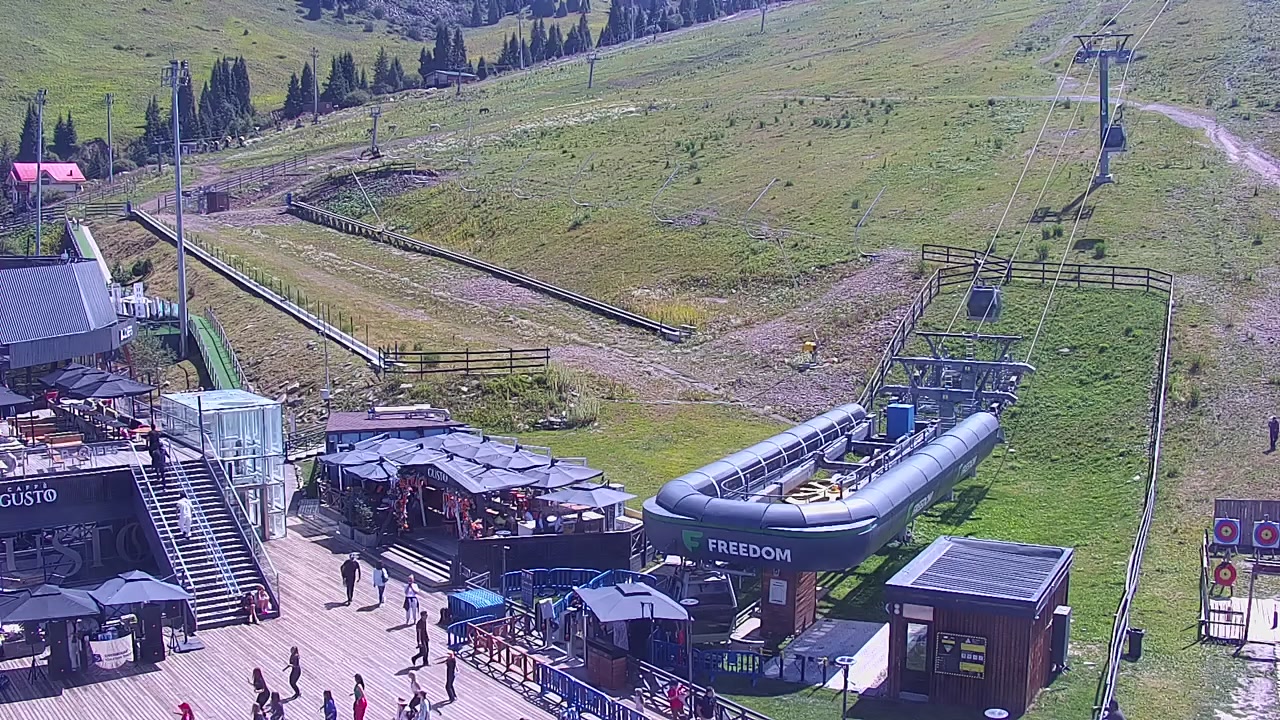
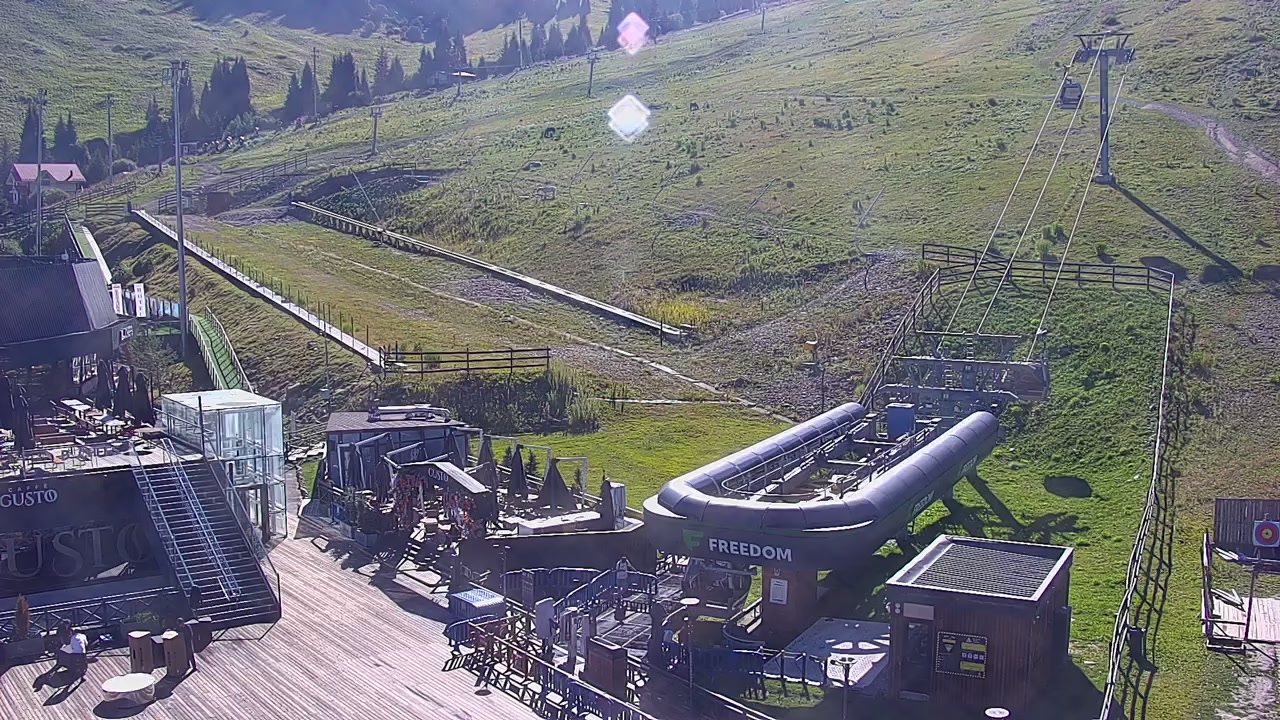
Almaty webcams online allow you to see the city in real time: from the bustling streets of the center to the peaceful foothills. Broadcasts from key points of the city — Republic Square, the Park of 28 Panfilov Guardsmen, the Medeu district — provide an opportunity to appreciate the scale and atmosphere of the southern capital of Kazakhstan.
Watching an Almaty webcam is a way to experience the rhythm of the city without leaving home. Morning fog in the foothills, midday bustle of the Green Bazaar, evening lights of Dostyk Avenue — each broadcast reveals its own perspective on the city of apples and mountains.