

🏙️ Webcams Konakovo online — watch in real time
4 cameras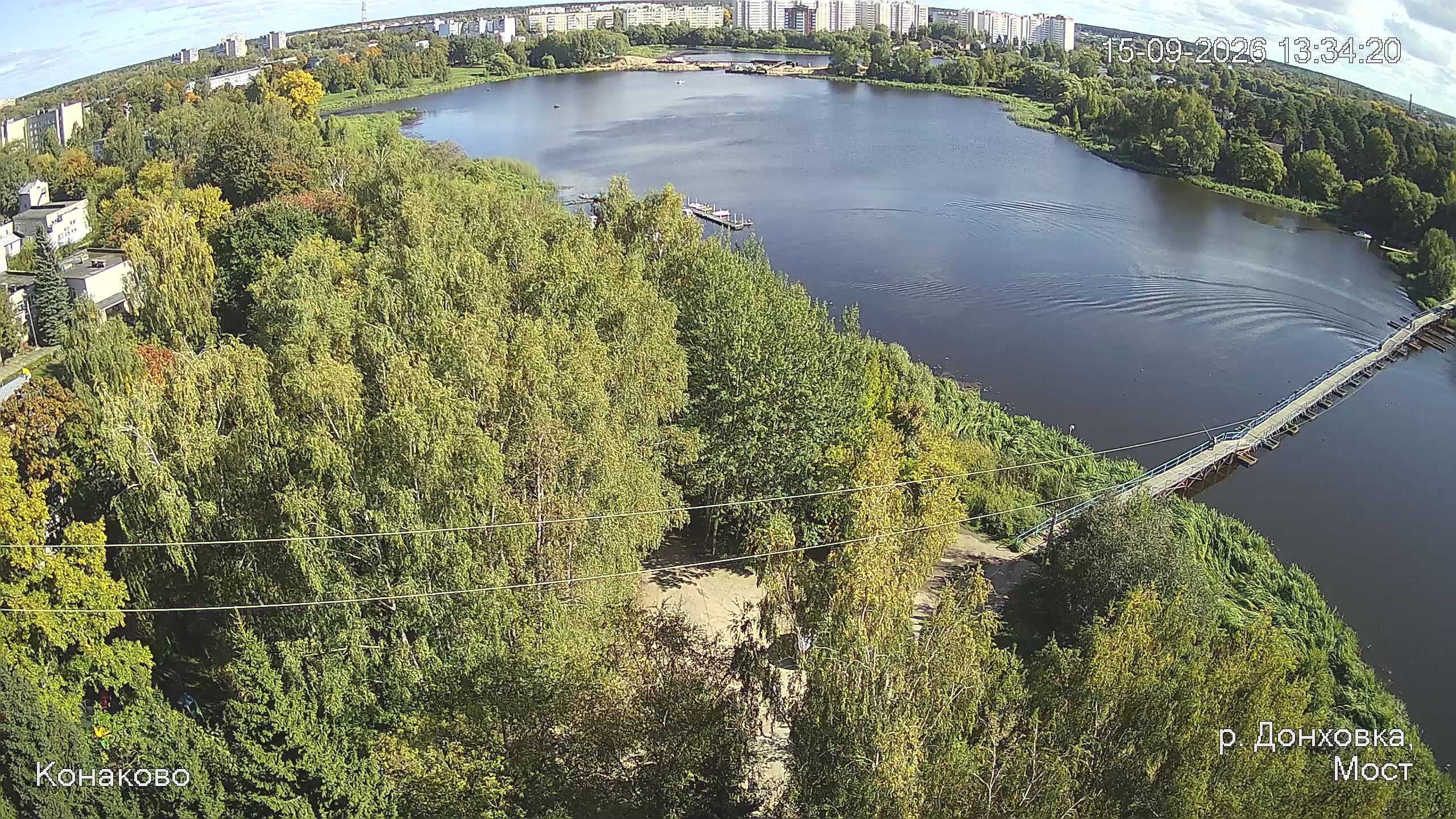
Konakovo on the map of Tver Oblast: location and how to get there
Konakovo is located in the northwestern part of Tver Oblast on the high right bank of the Volga River. The city lies 119 kilometers from Moscow along the federal highway M10 "Russia" and 90 km from Tver. The Donhovka River flows through the city, forming a picturesque rapid at its confluence with the Volga.
The regional climate is temperate continental with mild winters and warm summers. Average January temperatures are around -11°C, while July averages +18°C. Precipitation is evenly distributed throughout the year.
In summer and during thaws, vacationers from all over the country come to Konakovo for trips on the reservoir. Tourism infrastructure is well developed along the Volga embankment, featuring sanatoriums, holiday resorts, and numerous tourist routes.
City history: from village to energy capital
The history of Konakovo began in 1806, when the village of Kuznetsovo appeared on the lands of peasant Ivan Kuznetsov. In its first decades of development, a porcelain factory and several residential houses already existed here. Legends say that the village started with a single street along the river, and houses were built following the pattern of other Volga towns of that era.
In 1809, pharmacist Friedrich-Christian Brenner founded a porcelain factory in the village of Domkino; production was moved to Kuznetsovo the following year. From that moment, Konakovo became the center of the region's ceramic craft. Early products featured antique-style designs and unique glazes, giving them a distinctive character.
By the 1930s, Kuznetsovo had developed into an industrial and administrative center. In 1932, construction began on the Moscow-Volga Canal with a hydroelectric station in Ivankovo, which led to the creation of the Ivankovo Reservoir. The status of district center was transferred from the village of Korcheva (flooded in 1937) to Kuznetsovo, which was renamed Konakovo in 1929 in honor of revolutionary Porfiry Konakov.
In 1937, the settlement was granted city status. That same year, construction of the canal and Ivankovo HPP began, leading to the flooding of part of the historic city of Korcheva. Official records excluded Korcheva's city registers, and water covered the former main street, embankment, cemetery, and many wooden and stone buildings. Korcheva's fate became one of the most vivid legends of the Volga region.
Konakovo GRES: regional power generation
Observing Konakovo's development today is impossible without mentioning the Konakovo GRES — the largest power plant in the Northwestern Federal District. Construction began in 1962 and proceeded in two phases of 1,200 MW each. The first power unit was commissioned on January 10, 1965, a date considered the station's founding day.
In 1966, the fourth unit was launched, completing the first phase of construction. By 1969, all 8 power units were operational, and the station reached its design capacity of 2,400 MW. 1972 marked the achievement of full design capacity, after which Konakovo GRES began stable operations. For outstanding achievements, the station was awarded the Order of Lenin.
The station has an electric generating capacity of 2,520 MW and a thermal capacity of 120 Gcal/h. Natural gas is used as the primary fuel, with fuel oil as backup. Today, GRES is part of PJSC Enel Russia and supplies electricity not only to Konakovo and Tver Oblast but also to neighboring regions.
A special place in the company's enterprise history belongs to the sturgeon hatchery at the GRES. The largest in the Moscow region, it was founded in 1973 and breeds rare fish species — beluga, kaluga, Russian and Lena sturgeon. In 1981, offspring of Lena sturgeon were obtained for the first time in world practice, a significant achievement in aquaculture. Today, the plant is open to visitors, allowing guests to see predatory freshwater fish in captivity.
Unique attractions
Traveling around Konakovo, it's worth paying attention to several unusual places. The production and tourism complex "Konakovsky Fayans" in the factory building offers production tours, ceramics workshops, an exhibition hall, and a shop. A collection of over 500 exhibits is displayed here, ranging from early 1810s samples to contemporary art pieces.
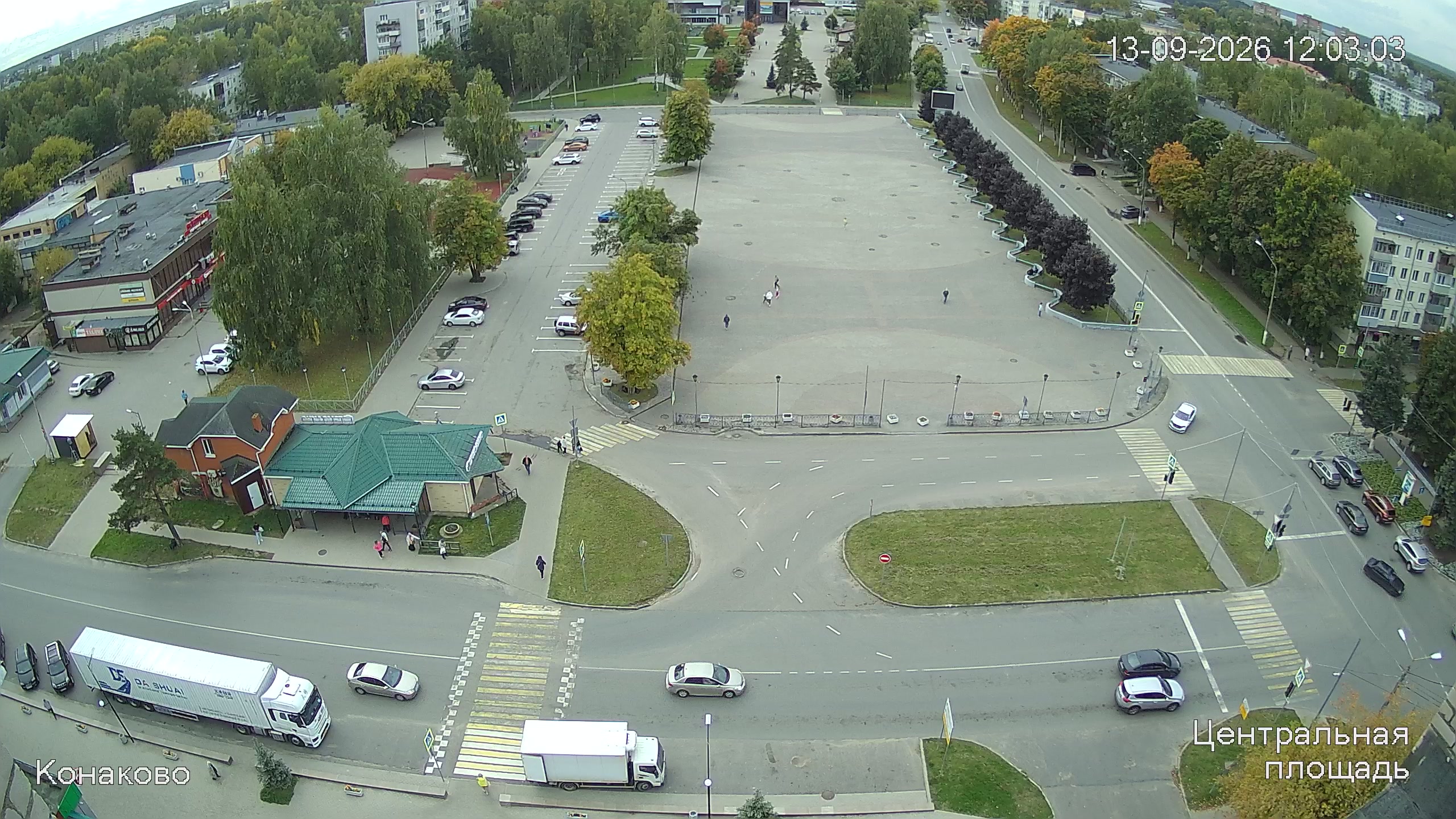
In Komsomolsky Square, at the end of December 2020, a sculptural composition was unveiled in memory of the flooded city of Korcheva. The monument preserves the history of one of the most enigmatic legends of the Volga region and has become an important symbol of the city.
In the village of Selihovo, the Church of Elijah the Prophet has been preserved — a stone temple in the Classical style, built approximately in 1833. This is a rare case where the church was not closed during the Soviet era and continues to operate. Unlike other villages in the district, ancient church furnishings and traditions have been preserved here.
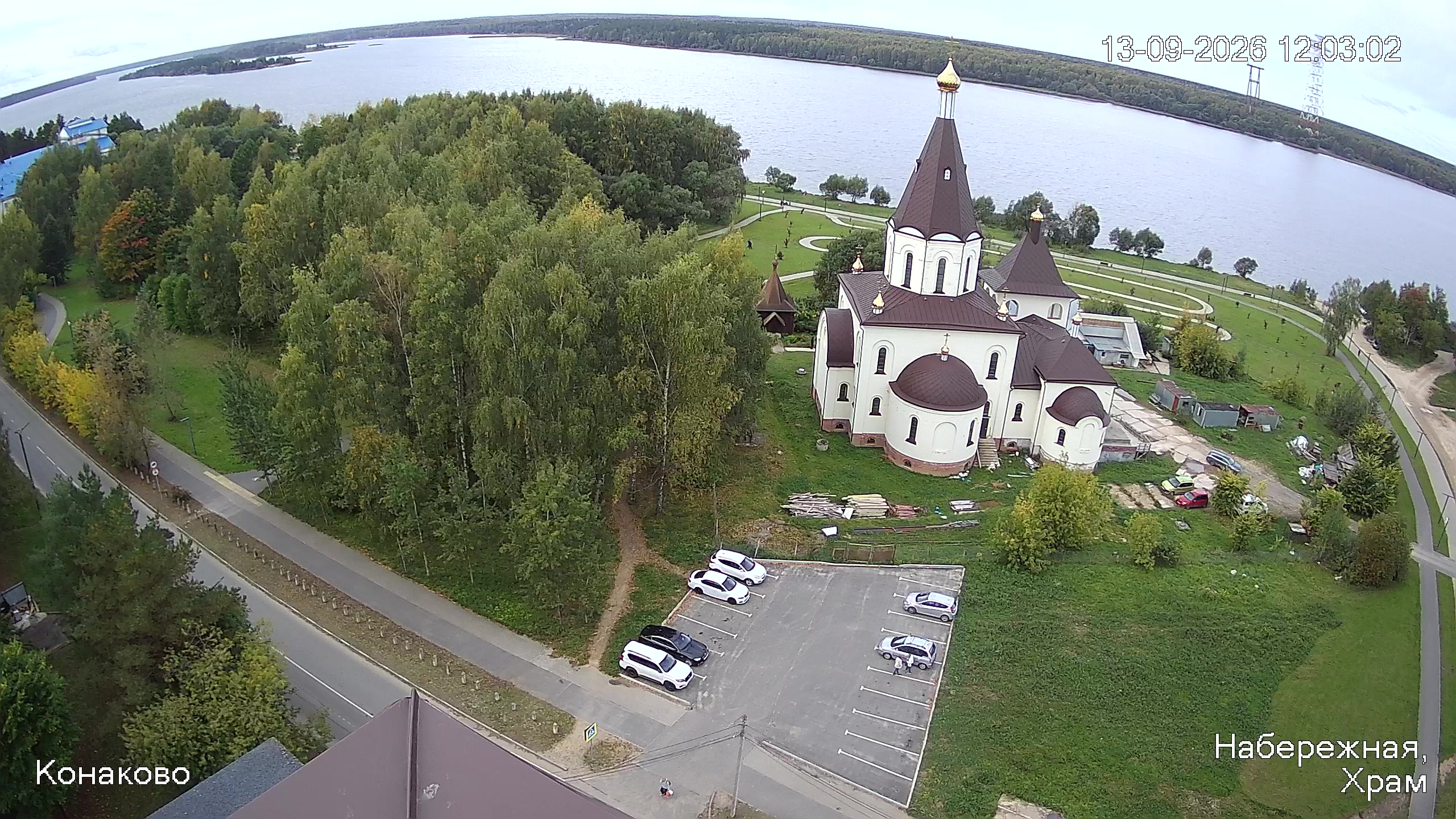
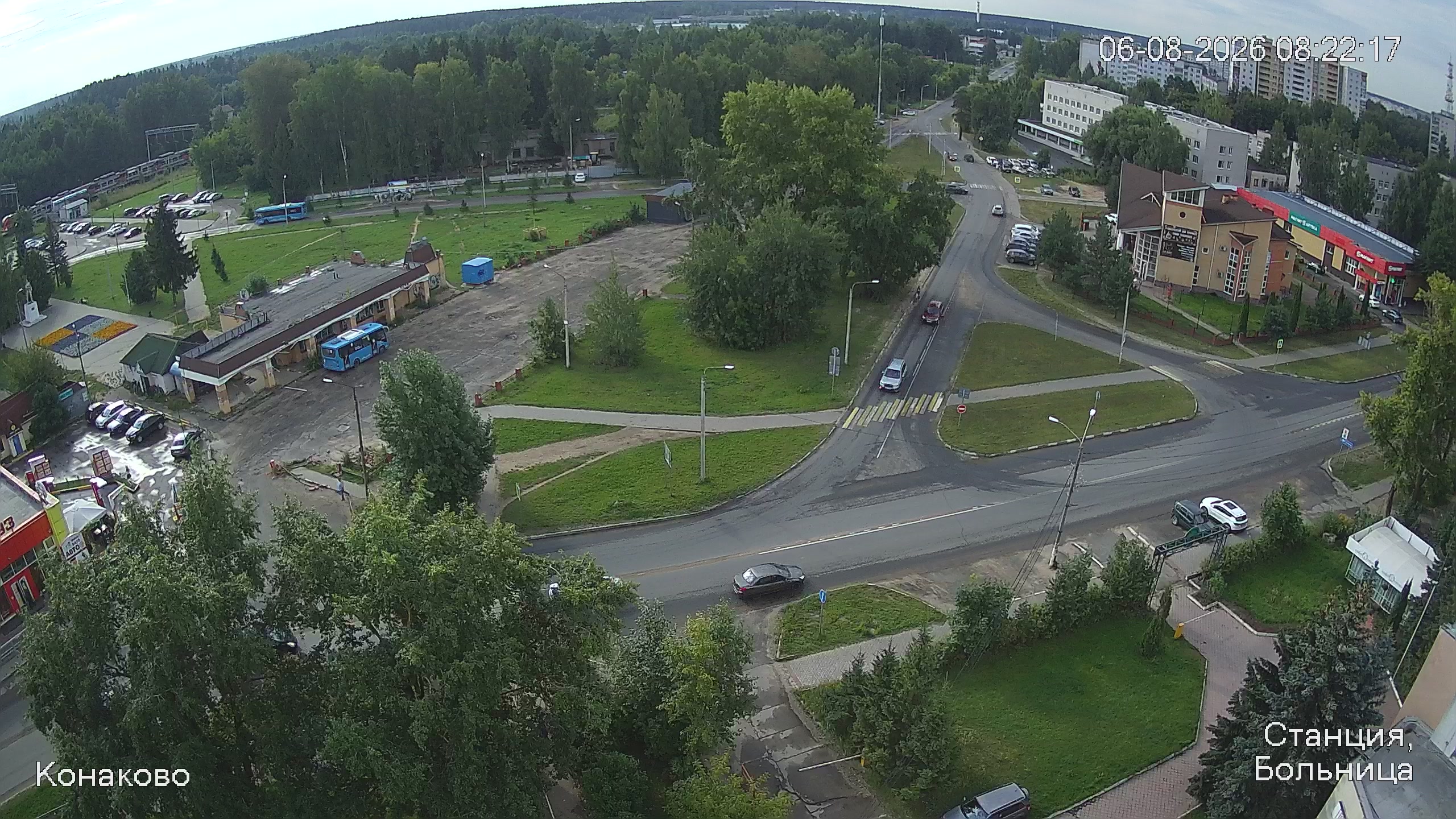
Another modern landmark is the Monument to Porfiry Konakov, unveiled in 1982 at the Station Square. The monument commemorates the first mayor of the city. On the Volga bank, there is also the Church of the Forty Martyrs of Sebastia — a single-domed tented-roof temple, construction of which began in 2004.
Next to the old city, a wooden pontoon bridge crosses the Donhovka River, connecting the Old and New Towns. On the reservoir shore stands the former estate of Prince Gagarin — the "Karacharovo" sanatorium, from which boat trips on the Moscow Sea depart.
On the Volga, there is also an unusual microdistrict — "a city on water" — shed-houses on stilts with boardwalks instead of streets. There's a wooden monument to destroyed telephones nailed to a tree with large nails. In the city center are the Konakovo Stables with a horse museum, where show jumping, dressage, and eventing competitions are held.
Traditions and culture
Konakovo has always developed as an industrial and cultural center of the region. Ceramics here have long served not only as a craft but also as an attraction. The faience factory has been a center of folk art since 1910, and its products are known not only in Russia but also abroad. Legend has it that Queen Elizabeth II keeps a Konakovo piece on her table.
In modern city life, ceramic craft traditions are preserved. The faience museum at the central library presents a rich collection, and the production complex hosts schools for young ceramists and master classes. Tourists can not only observe production but also try making a ceramic figurine with their own hands.
Nature and recreation on the Volga
The uniqueness of Konakovo lies in its geographical location. The city stands on a high hill where the Donhovka River flows into the Volga, forming a picturesque rocky rapid. Kopytina Mountain is nearby — a place offering the best views of the reservoir's vast expanse.
The Ivankovo Reservoir, also called the "Moscow Sea," is the largest reservoir in Eastern Europe. Its area is 327 square kilometers, length — 121 km, and width — 20 km. The reservoir was formed in 1937 after the construction of the Ivankovo HPP on the Volga. The shores are partly forested, and the coastal zone features beaches, campgrounds, piers, and recreation bases.
In summer, numerous events take place on the reservoir — from sailboat races to gastronomic festivals. In March and April, the active fishing season begins for pike-perch, pike, and catfish. In autumn, many vacationers come here to observe migratory birds and dark water landscapes.
City life today
Today, Konakovo's population is about 31 thousand people. The city is divided into several districts — the historic center, industrial zones, the embankment, and new residential microdistricts. The city center preserves historic pre-revolutionary buildings, while the periphery develops as a bedroom community.
Urban infrastructure includes educational institutions, cultural centers, shops, cafes, and medical facilities. In recent years, historic buildings have been restored, and new embankments and park zones have been created. City development combines the preservation of historical memory and natural landscapes.