

🏙️ Kiel Germany Webcams Online — Watch Live in Real Time
2 cameras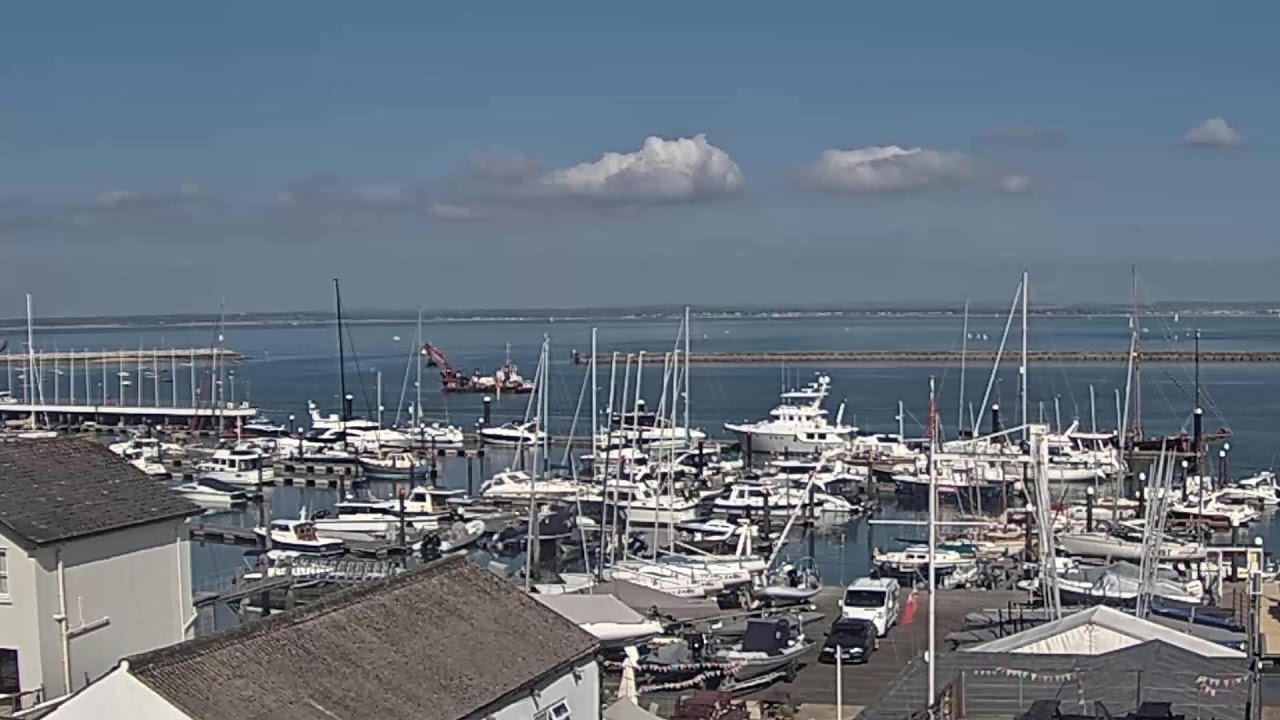
History and the Sea — Why Kiel is Called the Maritime Capital of Germany
Kiel stands on the shore of one of the most beautiful fjords of the Baltic Sea, and the city's history is inextricably linked with the sea. During its heyday in the times of Prussia and the Reich, the city became the main naval hub of northern Germany. The Kiel Naval School, founded in 1867, trained naval officers for the Kaiser's empire. It was here that the first echo sounder in Germany was built — a device that allowed measuring the depth beneath a ship's hull, a revolutionary technology of its time. But the port capital lived not only by war. Kiel received the status of a German imperial military port and was connected to the North Sea through the famous Kiel Canal, opened in 1895. This waterway, about 98 km long, linked the Baltic Sea with the North Sea and made German trade more important than ever. In the same year, Kiel Week became the place where the thunder of famous guns heralded the opening of a new era — a canal that now sees more than 30,000 ships pass through annually.
Kiel Fjord and Its Unique Features
Kiel Fjord is an elegant arc of the Baltic Sea, curving 17 km and dividing the city into eastern and western parts. Locals call the end of the fjord "Hörn," which in German means horn, and it is here, on the picturesque strait, that on one side stretch industrial docks, and on the other — shores full of promenades, cafes, and student apartments. Across the fjord, crossing it at the most interesting point, flies the Hörn Bridge, a three-span structure that opens for passing ships. This modern, functional bridge has become a symbol of the city, connecting the old center with the Kiellinie district, a promenade with a view of the water. The Kiel Canal flows along the edge of the city, but the fjord itself creates a special atmosphere — in clear weather, tourist ferries sail along it, and in the mornings the water is covered with mirror-like ripples reflecting the rays of dawn.
Kiel Regatta — The Heart of German Sailing
Every June, the fjord fills with sails — it's time for Kiel Week, the largest sailing regatta in the world. It was first held on June 23, 1882, with only 20 yachts participating, and today thousands of participants start at the distances. Emperor Wilhelm II made the regatta his personal holiday: from 1889, he regularly attended Kiel Week, gracing the event with his presence. But the history of the event is more complicated than it seems. In 1934, the Nazis turned the holiday into large-scale propaganda, and during World War II, the competitions were halted. Recovery began in post-war 1945, when the British occupation authorities themselves organized the first Kiel Week. Today, Kiel Week is fifteen days of races, cultural events, and concerts. Sailing yachts and dinghies alternate on the water, and on land life boils: after races, participants gather with beer, sometimes in traditional Bavarian costumes — lederhosen and dirndls. This celebration of sail is called the "father and mother of all regattas," and the opinion that every Olympic skipper must be able to win at Kiel Week has long become a rule. The Olympic Center in Schilksee, built in 1972, hosted athletes and rowers, as well as sailors who moved here from Munich after the Summer Olympics.
Architecture and City Attractions
Walking through the streets of Kiel, you can see a mix of eras: medieval winding streets, Soviet high-rises of post-war construction, modern snow-white offices, and coastal terminals where tourist ferries scurry. The city center, lying closest to the fjord, suffered particularly badly: as a result of bombing during the war, more than 80 percent of the historic center was destroyed. But Kiel was reborn, turning destruction into modern architecture. Next to the Hörn Bridge grew Kai-City — a complex of residential and office buildings built on a former shipyard between the Norwegian Quay and the Hörn Quay. In one of the oldest surviving buildings in Kiel, the St. Nicholas Church, dating from around 1242, only the cross passage and tower remained during the war. The facade of the church is decorated with the sculpture "Christ the Fighter" by Ernst Barlach, a complex composition of stone and metal. Kiellinie, a promenade with cafes, a view of the fjord, and access to the research vessels of the Leibniz Institute of Marine Sciences, is the place where cymbals and bottlenose dolphins meet with likes and flamingos. Next to the promenade is an aquarium, and in the waters of the fjord, seals can be seen calmly walking on the water.
Student City and University Atmosphere
Today, Kiel is a city of students and scientists, famous for its positive mood and maritime romance. The Christian Albrecht University, founded in 1665, is one of the oldest in Germany, attracting tens of thousands of students, many of whom live in former monastery buildings. The former Franciscan monastery, founded in 1227, with its arched vaults and tower — is now a dormitory for the theology faculty. Every first Saturday of the month, the chime of 50 bronze bells rings from its tower — a melody in which ancient traditions and modern times intertwine. Here, on Kiellinie, are the research vessels of the Leibniz Institute of Marine Sciences, where scientists prepare new discoveries. Students love this city not only for its history but also for its traditions — Kiel smoked herring, or Kieler Sprotte, is traditionally served for breakfast with a slice of dark bread. Fish sandwiches, Fischbrötchen, in which freshly caught fish neighbors with mayo, onion, and cucumber — is another dish that locals know and love. In every cafe on the promenade, you can meet students in shorts and t-shirts, with laptops solving tasks, and with beer, discussing the latest news from the world of sailing.
How to Get There and Modern Kiel
Getting to Kiel is easy: taking a high-speed ICE train from Berlin or Hamburg, you will be here in about two to three hours. The city is a major port, connected by ferry services to Scandinavia and the Baltic states. From the Norwegenkai terminal, Color Line ferries depart every morning and evening, connecting Kiel with Oslo. One of the largest ferries in the world — Color Fantasy, built in 2004 at the Aker Yards shipyard in Turku, is 224 meters long, takes up to 2,400 passengers and up to 750 cars on board. The city that was once the main naval base is today a center of tourism, science, student life, and maritime entertainment. It has changed, and these changes are reflected not only in architecture but also in the atmosphere. New embankments, ferry docks, shipyards, museums — all this coexists with ancient streets and monuments, reminding us that the history of Kiel is both naval power and students with avocado toast, and adults with children's laughter, running to the fjord to sunbathe.
What the Cameras Show
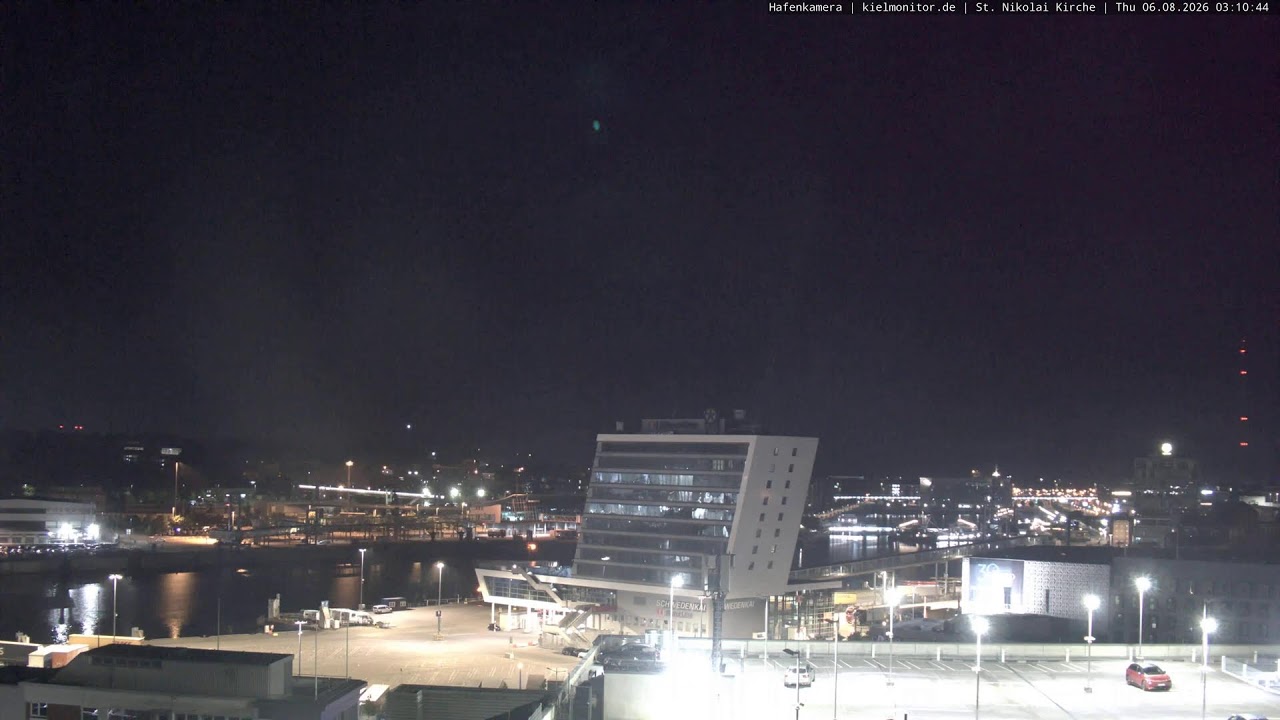
Kiel webcams allow you to immerse yourself in the atmosphere of this port city in real time. You can see yachts sailing along Kiel Bay, the Hörn Bridge opening, the port being busy, how in spring and summer the sunny day paints the fjord in golden tones, and in winter a thin ice cover forms. At any time of day or night, you can see how life boils on the promenade, how ferries approach or depart, how cafes on the embankment are bustling, selling beer and schnitzels. The cameras give you the opportunity to touch history and modernity, to see the fjord from the side of the old center and from the side of the new Kai-City, to evaluate the architecture of the city and its people. You can follow the sailing races that take place right in the frame, the change of time of day, the weather, the news on the streets. All this is available — you just need to turn on the webcam and watch Kiel in real time.