

🏙️ Pskov Webcams Online — Watch the City in Real Time
9 cameras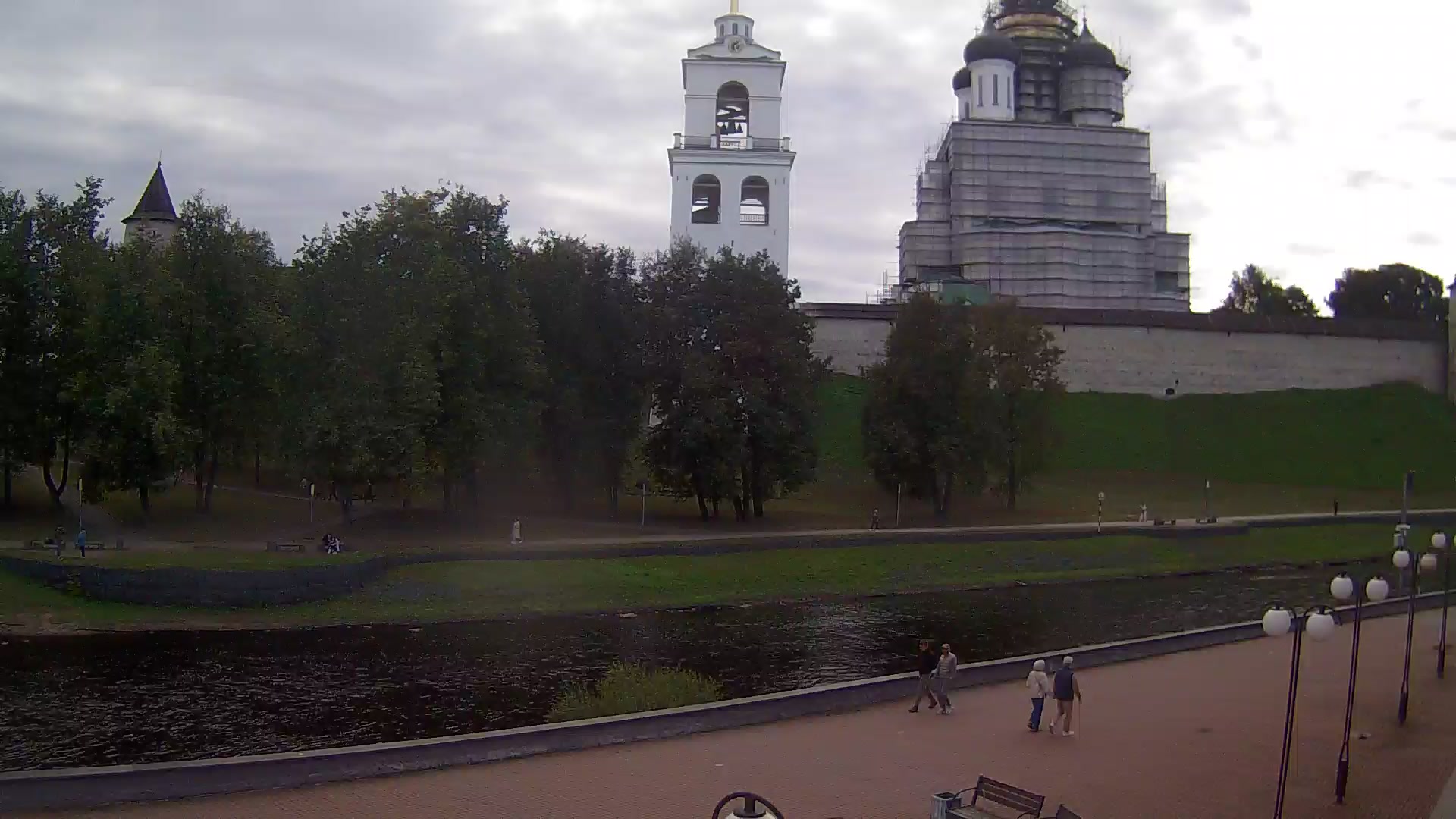
Pskov — A City with a Thousand-Year History at the Confluence of Rivers
Located in the northwestern part of Russia at the confluence of the Velikaya River and its tributary the Pskova, Pskov has a unique geographical position. The city's historic center is surrounded by fortress walls and occupies a promontory between these two waterways. The city's territory covers an area of about 24.6 square kilometers, and the population numbers over 200,000 people. The historic center attracts guests from all over the country thanks to its combination of ancient fortifications, Orthodox churches, and the cozy atmosphere of old architecture.
The Ancient Kremlin as the Heart of the City
The Pskov Kremlin, also known as the Trinity Kremlin, is one of the oldest fortified structures in Russia. According to legend, the foundation of the fortress is associated with Princess Olga and a three-rayed light that illuminated the promontory at the confluence of rivers. Archaeological data confirms that fortress structures existed here as early as the 10th century, and the current walls were erected in the 13th–15th centuries. The Kremlin's territory covers more than 30 hectares, making it one of the largest fortress complexes of Northwestern Rus. It was here, among stone towers and moats, that the independent Pskov Republic was formed, which existed for more than two and a half centuries.
Trinity Cathedral — The Symbol of the City
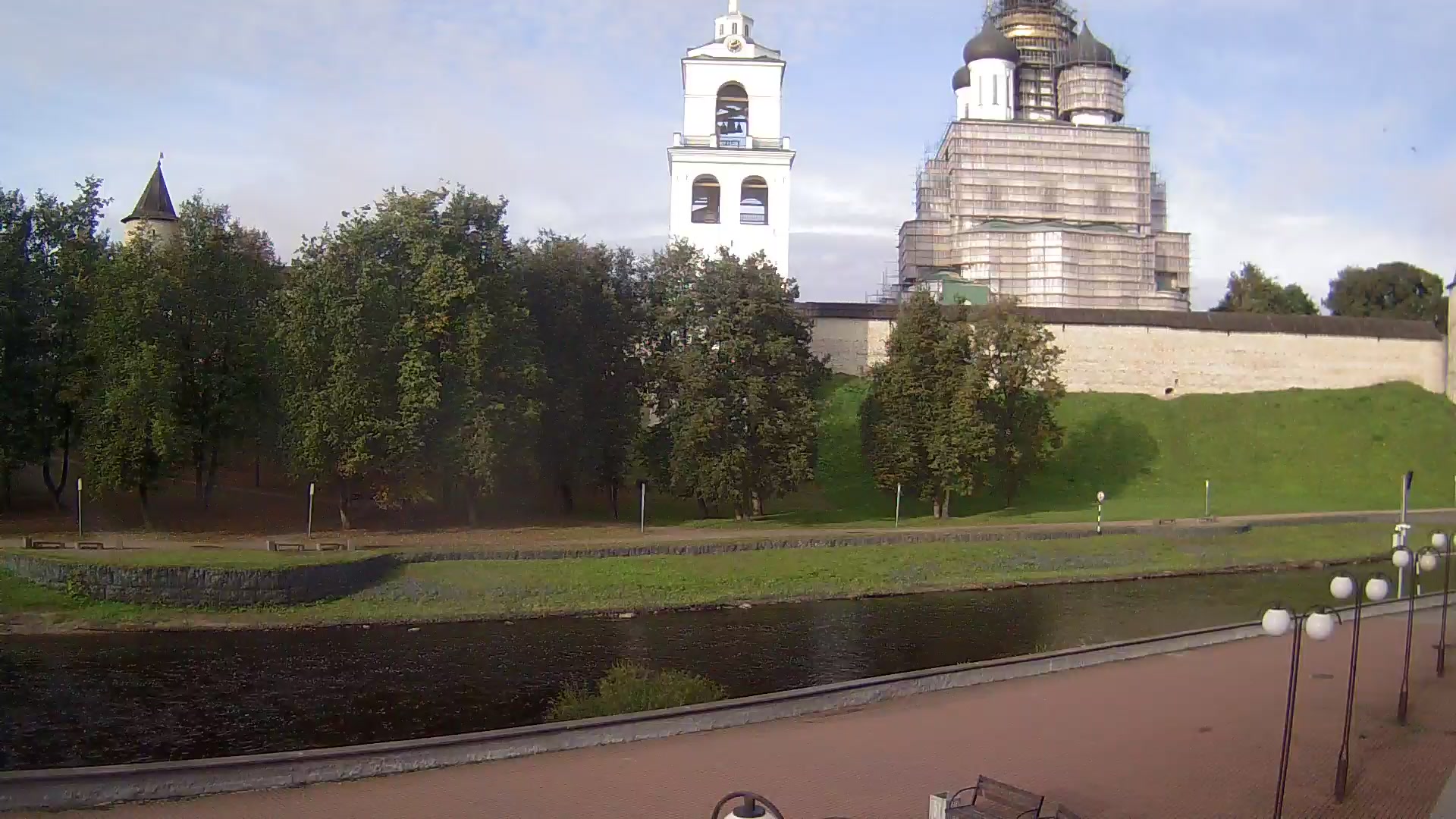
The Trinity Cathedral on the Kremlin grounds is one of the city's dominant landmarks, its spire rising to a height of 72 meters, making the cathedral visible from many points in Pskov. The current cathedral building was constructed in the late 17th century on the site of a 10th-century wooden church. The cathedral's history is inseparably linked with famous historical events — within these walls, Prince Alexander Nevsky prayed before the Battle on the Ice, the famous 1242 battle on Lake Peipus. The cathedral has preserved its unique architectural structure with characteristic elements of the Pskov architectural school, and its interior is adorned with fresco paintings and an ancient iconostasis. The cathedral's visual dominance creates a recognizable silhouette of the city, visible in many modern photos and videos from city squares.
Mirozhsky Monastery — A Pearl of Pre-Mongol Architecture
Located 4 kilometers from the historic center, the Mirozhsky Monastery is one of the oldest and best-preserved monuments of 12th-century Orthodox architecture. The monastery complex, built in 1156, is known for its pre-Mongol frescoes, which were executed on wet plaster and still amaze with their colors and detail. Within the monastery walls, important cultural and literary work took place — the Pskov chronicle was kept here, an extensive library was assembled, and the first church books were copied. The monastery's scriptorium workshops participated in copying the "Tale of Igor's Campaign," the most famous literary work of Ancient Rus. The monastery walls and cathedral, despite two centuries of neglect during the Soviet era, have been fully restored and are now open to visitors from all over Russia.
Holy Trinity Cathedral
Despite the already mentioned cathedral in the Kremlin, the city has another large church of the same name. The Holy Trinity Cathedral, located on the historic square, continues to serve as the spiritual center of the city. Its bell tower is 72 meters tall, making it one of the city's tallest landmarks. Unlike the Kremlin cathedral, this building was constructed much later, in the late 17th century, yet it combines features of both Baroque and traditional Russian architecture. The cathedral has a rich icon-painting collection and regularly holds services for parishioners from across the Pskov region.
Pskovo-Pechersky Monastery — A Living History
The uniqueness of the Pskovo-Pechersky Monastery lies in its continuous spiritual life spanning more than five centuries. The monastery was founded in 1473 by the Venerable Jonah, who consecrated the first Dormition Church that appeared in the caves. The monastery's special fate was shaped in the period after World War I. In 1920, under a peace treaty, Soviet Russia ceded the Pechory district to Estonia, which included the monastery's territory. This event effectively saved the monastery from closure, as the new Estonian authorities did not touch the religious institution. Since then, the monastery has been the only spiritual institution in Russia that has never been closed throughout its entire history. The cave section of the monastery, created by the labor of monks over the centuries, has preserved a unique system of passages and chapels, accessible for viewing with a guide.
Velikaya Embankment — A Viewpoint with Panoramic Views
The Velikaya River Embankment in Pskov is an important urban development, stretching 1.7 kilometers along the fortress walls. The embankment has a two-tier structure: the upper tier was created in the 1960s, and the lower tier was arranged during a major reconstruction in the 2010s. From the Olga Embankment, a panoramic view opens up of several UNESCO World Heritage sites at once — the Trinity Cathedral, the Mirozhsky Monastery, and the walls of the Krom with the Dovmontov town. Walks along the embankment allow you to simultaneously see the picturesque river landscape, historical buildings, and modern Pskov neighborhoods. The embankment serves as a gathering place for city residents and guests for relaxation, photo sessions, and observing the life of the great river.
Podzoev Court — Merchant Heritage
Podzoev Court is a restaurant and hotel complex housed in two historic buildings — 17th-century merchant chambers. The two-story chambers were built in the forms of classicism with Baroque elements and have preserved fragments of ancient interior decoration. In 1799, the estate passed to the Pskov merchant Matvei Sergeevich Podzoev, from whom it received its name. Until the 1917 revolution, the court was the center of merchant life in the city — it housed trading shops, guest rooms, and offices. Today, Podzoev Court continues to serve the same function as a cultural and social center, offering visitors a combination of historical atmosphere and modern comfort.
What the Cameras Show of the City
Modern webcams allow you to observe the life of Pskov in real time from various perspectives. City views are often broadcast from historic squares and embankments, showing the movement of people, parks, and ancient architecture. The fortress walls and towers of the Pskov Kremlin are available for online viewing, allowing you to appreciate the scale of the ancient fortifications. The beach and river embankment near the Velikaya River attract the attention of many viewers who follow weather conditions and the recreation of city residents. The Trinity Cathedral is one of the most popular points for visual observation, as its spire is clearly visible from many city cameras. Also available are views of the railway station and historic streets, giving an idea of transport connections and the rhythm of life in the modern city. Also in the repertoire are landscape shots conveying the beauty of Pskov's gardens and embankments. City broadcasts are available free of charge without registration and are accessible around the clock, making viewing convenient for guests and residents from any part of the country.