

🏙️ Webcams Omsk online — watch the city in real time
19 cameras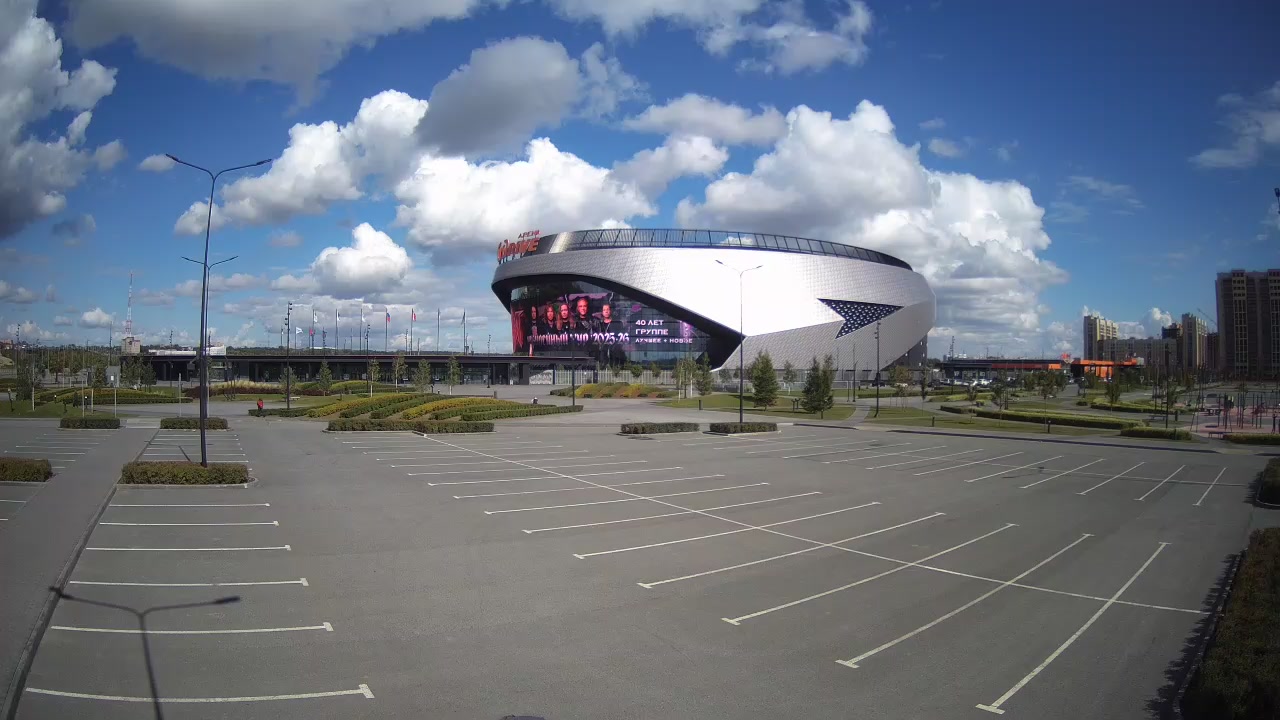
History of Omsk: from fortress to major Siberian metropolis
Omsk is a city with a rich history that began over three hundred years ago. Omsk was founded as a fortress in 1716 by decree of Peter I to protect the southern borders of the Russian Empire and as a base for the exploration of Siberia. Since then, the city has come a long way from a wooden stockade to one of the largest cities beyond the Urals.
The first Omsk fortress was located on the left bank of the Om River, but over time it was replaced by a new fortification on the right bank. Today, a historical and cultural complex operates on the site of the ancient fortress, where architectural monuments from the 18th–20th centuries have been preserved. It was here, within the walls of the Omsk stockade, that the great Russian writer Fyodor Mikhailovich Dostoevsky served his sentence.
Dostoevsky in Omsk: penal servitude and rebirth
One of the most dramatic periods of Fyodor Mikhailovich Dostoevsky's life is connected with Omsk. On January 23, 1850, Dostoevsky was brought to Omsk, sentenced to four years of penal servitude for participating in the meetings of the Petrashevsky Circle. The writer was sentenced to death, but literally on the scaffold he was pardoned and the execution was replaced with penal servitude.
Four years in the Omsk stockade — from January 1850 to February 1854 — became the period of Dostoevsky's formation as a great writer. Without this period, "Notes from the House of the Dead" and "Crime and Punishment" would hardly have seen the light of day. The building of the commandant's office and military court, where the writer worked as a plasterer during his sentence, has survived to this day.
Siberian Chicago: the economic boom of the late 19th century
At the turn of the 19th–20th centuries, Omsk experienced an incredible economic boom. In 1894, the first train arrived in Omsk, which completely changed the city's development and turned it into a major transportation hub. It was during this period that Omsk earned the nickname "Siberian Chicago" for its rapid economic development, architectural ambitions, and incredible leap in trade development.
The city was also called the "Siberian Leipzig" because of its role as a major trading center in Siberia. Omsk merchants actively built mansions, opened shops and banks, shaping the unique appearance of the city. Omsk was one of the first cities in Russia to have electric lighting — as early as 1898.
Architectural heritage: Lyubinsky Prospekt and merchant mansions
Lyubinsky Prospekt is the soul of Omsk, preserving the outstanding architecture of merchant mansions from the late 19th — early 20th century. This is a pedestrian street where every house has its own story. Here are the two most photographed art objects in the city: the sculpture "Lyuba" (Omsk Lyubochka), depicting a young woman with an umbrella, and the monument to plumber Stepanych.
The Omsk merchants Kozmin left the city a rich architectural heritage, including the first stone building in Ilinsky Fortstadt at 6 Lermontova Street, built in 1852, and mansions at 9 and 21 Lenina Street. The House-Shop of Maria Shanina at the intersection of Lyubinsky Prospekt and Gasfora Street still adorns the city with its vibrant architecture.
Holy Dormition Cathedral: the pearl of Omsk
Holy Dormition Cathedral is one of the most recognizable architectural landmarks in the region, built in the late 19th century. In the summer of 1891, construction of the cathedral began, and the first stone in the foundation of the temple was laid by the future Emperor Nicholas II. The consecration of the monumental cathedral took place on September 9, 1898.
In Soviet times, the cathedral was destroyed, but in the early 21st century it was restored with funds collected from all over the world. Today, the Dormition Cathedral once again adorns Cathedral Square and is the main temple of the Omsk Diocese. Its domes are visible from many points in the city, and in clear weather the cathedral serves as a landmark for residents and guests of Omsk.
Omsk — the capital of White Russia: the Kolchak era
During the Civil War, Omsk played a crucial role in Russian history. On the night of November 18, 1918, a military coup took place in Omsk, as a result of which Admiral Alexander Kolchak was proclaimed the Supreme Ruler of Russia, and Omsk became the capital of White Russia.
Kolchak arrived in Omsk in mid-October 1918, initially not planning to stay long, but changed his intentions after the coup. The status of the capital lasted about a year — on November 14, 1919, units of the Red Army entered Omsk, putting an end to Kolchak's government. There is a legend about the gold reserves of the Russian Empire, brought to Omsk by Admiral Kolchak and hidden somewhere in the city or region.
Legends and myths of old Omsk
Omsk is shrouded in many legends that are passed down from generation to generation. One of the most famous is the legend of the gold reserves of the Russian Empire, brought to Omsk by Admiral Kolchak during the Civil War and hidden somewhere in the city or region.
An equally fascinating story is connected with merchant families. There is a legend about a merchant named Batushkin, who received the most expensive plot of land, but in the morning he himself refused it and left the city. The Shanin family built a mansion on Lyubinsky Prospekt, after which all the men in their family disappeared without a trace exactly one year after receiving their inheritance. These stories give Omsk a special mystical charm.
Embankment of the Irtysh: a walk along the river
The Irtysh Embankment is one of the favorite recreation spots for Omsk residents and guests of the city. The Irtysh is the main waterway of Omsk, one of the longest rivers in Russia. The embankment stretches along the right bank of the river and offers picturesque views of the water surface, the opposite bank, and the cityscape.
In the warm season, the embankment is crowded: families with children walk here, people ride bicycles and scooters, cafes and souvenir shops are open. In winter, the embankment transforms — the river freezes, and the pedestrian area becomes a place for winter walks. From the embankment, there is a beautiful view of the historical center of the city and the Dormition Cathedral.
Modern Omsk: a city of contrasts
Today, Omsk is a major industrial, transportation, and cultural center of Western Siberia with a population of over one million people. The city continues to develop while preserving its historical heritage. New residential areas coexist with merchant mansions, modern shopping centers — with architectural monuments.
Omsk is famous for its theaters, museums, and educational institutions. The Omsk Academic Drama Theater is one of the oldest in Siberia, and the Omsk State Literary Museum named after F.M. Dostoevsky houses unique exhibits related to the writer's stay in the city. Webcams of Omsk allow you to see all this diversity in real time.
What the cameras show
This page features webcams of Omsk that broadcast the city in real time. You can observe the life of the historical center, the Irtysh embankment, squares, and streets of the city. The cameras are located at key points in Omsk: on Cathedral Square, Lyubinsky Prospekt, in the area of the Omsk Fortress, and other iconic locations.
Webcams of Omsk online are an opportunity to see the city without having to travel there. You can watch the weather in real time, assess road traffic, or simply enjoy the views of the Siberian metropolis. Broadcasts are available around the clock, allowing you to see Omsk both day and night.