

🏙️ Webcams Rotterdam online — watch in real time
10 cameras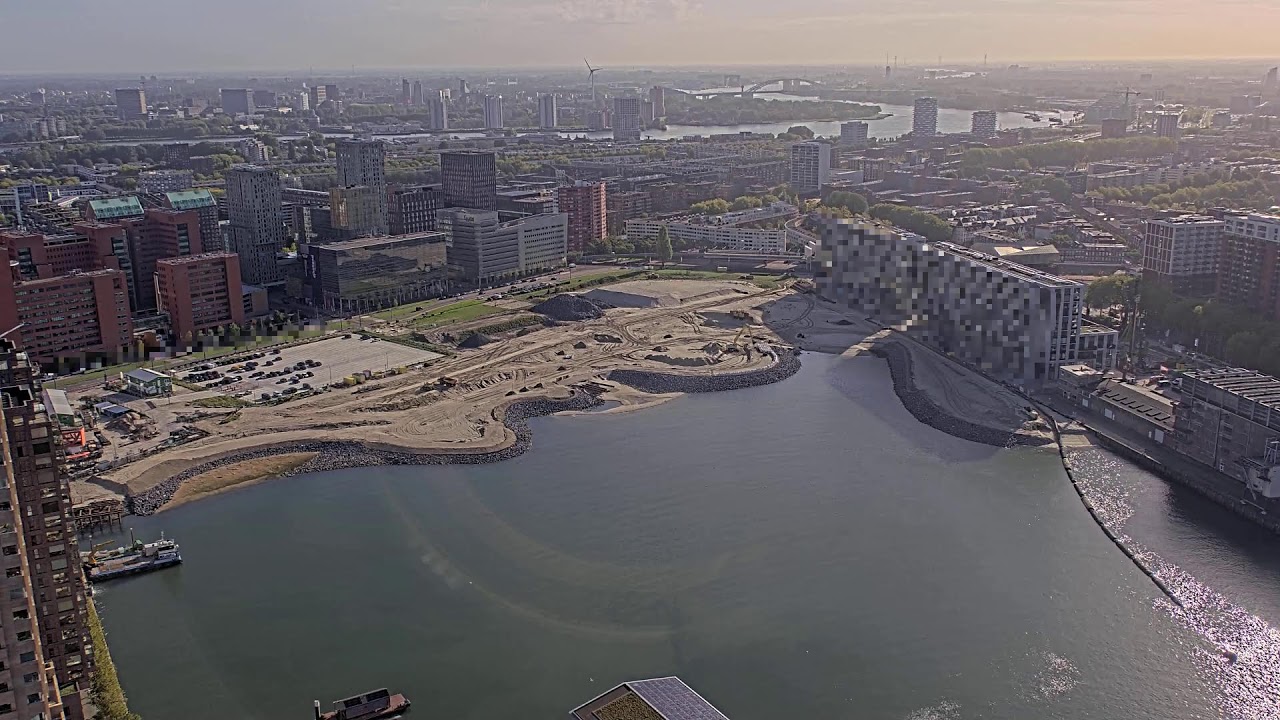


Architectural Laboratory on the Banks of the Maas
Rotterdam is the only city in the Netherlands that doesn't look like any other. There are no cozy Amsterdam canals lined with rows of narrow houses — instead, the horizon is pierced by bold skyscrapers, and the embankments host architectural experiments that any world metropolis would envy. It all started with a catastrophe: on May 14, 1940 German aviation virtually wiped the historic center off the face of the earth. But instead of restoring the old buildings brick by brick, the people of Rotterdam chose the path of radical modernization.
The result is a city that today is called the Manhattan on the Maas. Rotterdam webcams online allow you to observe this architectural boldness in real time: from cubic houses balancing on supports to the mirrored dome of the museum depot reflecting the clouds.
From Ruins to Avant-Garde: How the City Found a New Face
After the 1940 bombing that destroyed about 2.5 km² of the historic center, architects were given a unique chance — to build a city from scratch. The motto of post-war reconstruction became three words: "Light, air, and water!" Johan van der Held, Jo van den Broek, and Pieter van Teylingen developed a plan that radically differed from pre-war development.
Only a few buildings survived: the town hall, the exchange, the post office, and Witte Huis — Europe's first skyscraper, built back in 1898. This 43-meter Art Deco mansion survived the bombing and became a symbol of the city's resilience. Today it is included in the list of the 100 best Dutch monuments.
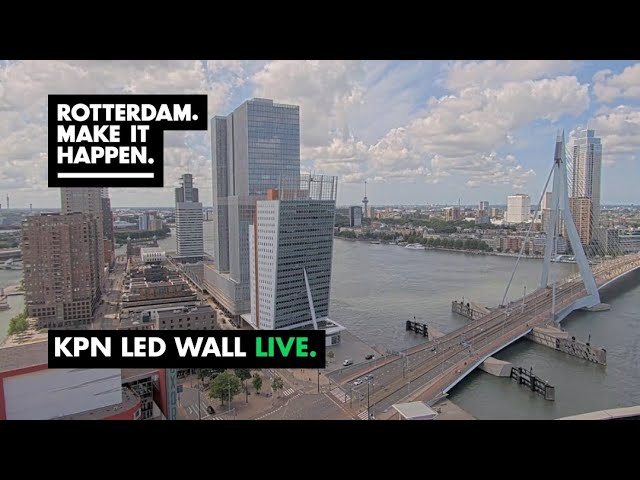
Key milestones in Rotterdam's transformation into an architectural capital: in 1962 the Erasmus Bridge connected the north and south of the city, in the 1970s the cubic houses appeared, and in 1996 the famous Erasmus Bridge opened — the 800-meter "Swan of Rotterdam," which became the city's calling card.
Cubic Houses and Other Architectural Provocations
If you want to understand the character of Rotterdam in one minute — look at the Cubic Houses by architect Piet Blom. 38 small cubes and two "super-cubes" are tilted at a 45-degree angle and mounted on hexagonal concrete supports. Blom's concept — "life as a city roof": he wanted to create the feeling of a village on the roof of a metropolis within a dense urban area.
Inside each cube there are three floors. The first is the entrance and kitchen, the second is the living room, the third is bedrooms and bathroom. The roof turns into a garden. But there's a nuance: the walls and windows are positioned at an angle of 54.7 degrees, which means about 25% of the area (approximately 100 m²) is unusable. One of the cubes is open to visitors as a "Show Cube," and another houses a hostel.
Next to the cubic houses rises Blaaktoren — a 13-story hexagonal tower nicknamed the "pencil." And on the Maas embankment stands the De Rotterdam complex by Rem Koolhaas — three interconnected towers forming a vertical city with offices, a hotel, and apartments.
Markthal: The Sistine Chapel of Rotterdam
The Markthal Market Hall is not just a market, but an architectural masterpiece, under whose vaults are located 96 retail outlets, 20 restaurants, and 228 apartments. But the main treasure is overhead. The ceiling fresco with an area of 11,000 m², created by artists Arno Coenen and Iris Roskam, depicts giant flowers, insects, and fruits. This is the largest work of art inside a building in the world, earning the hall the nickname "The Sistine Chapel of Rotterdam."
The arched shape of the building spans the historic Buitengracht street, creating the effect of a tunnel with vaults. In the evening, the lighting turns the fresco into a glowing screen visible from kilometers away.
The Port That Feeds Half of Europe
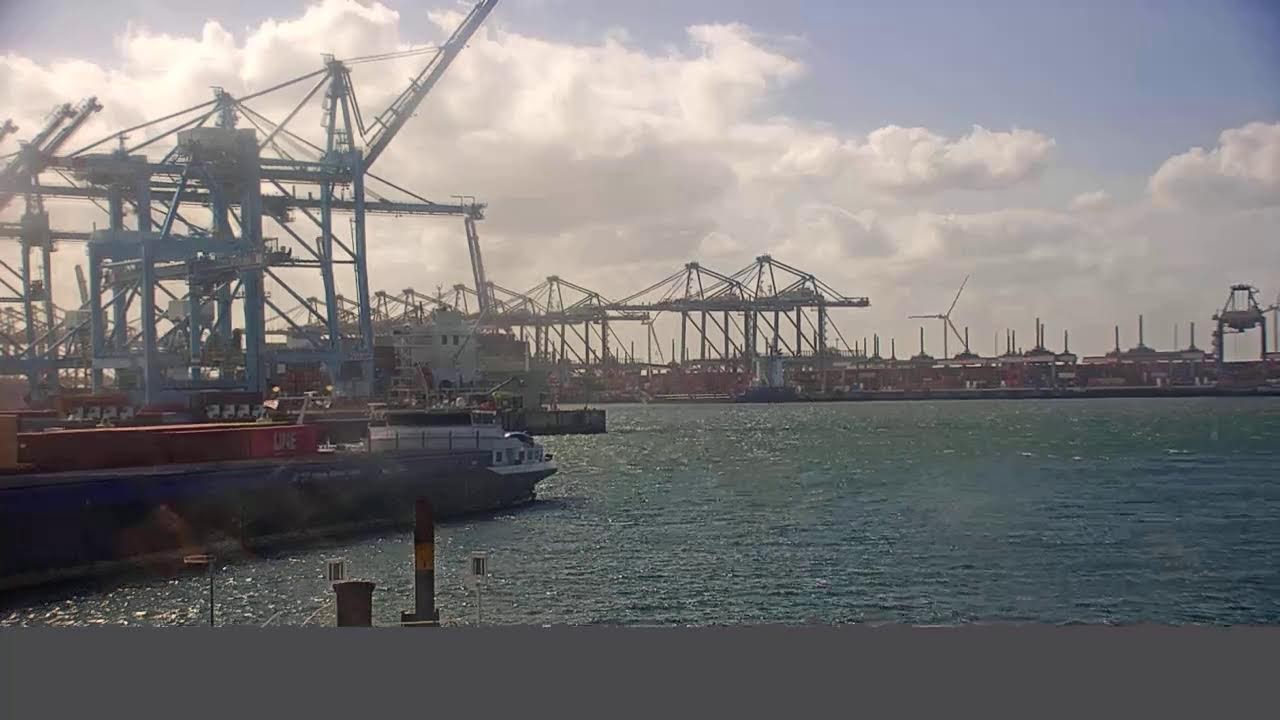
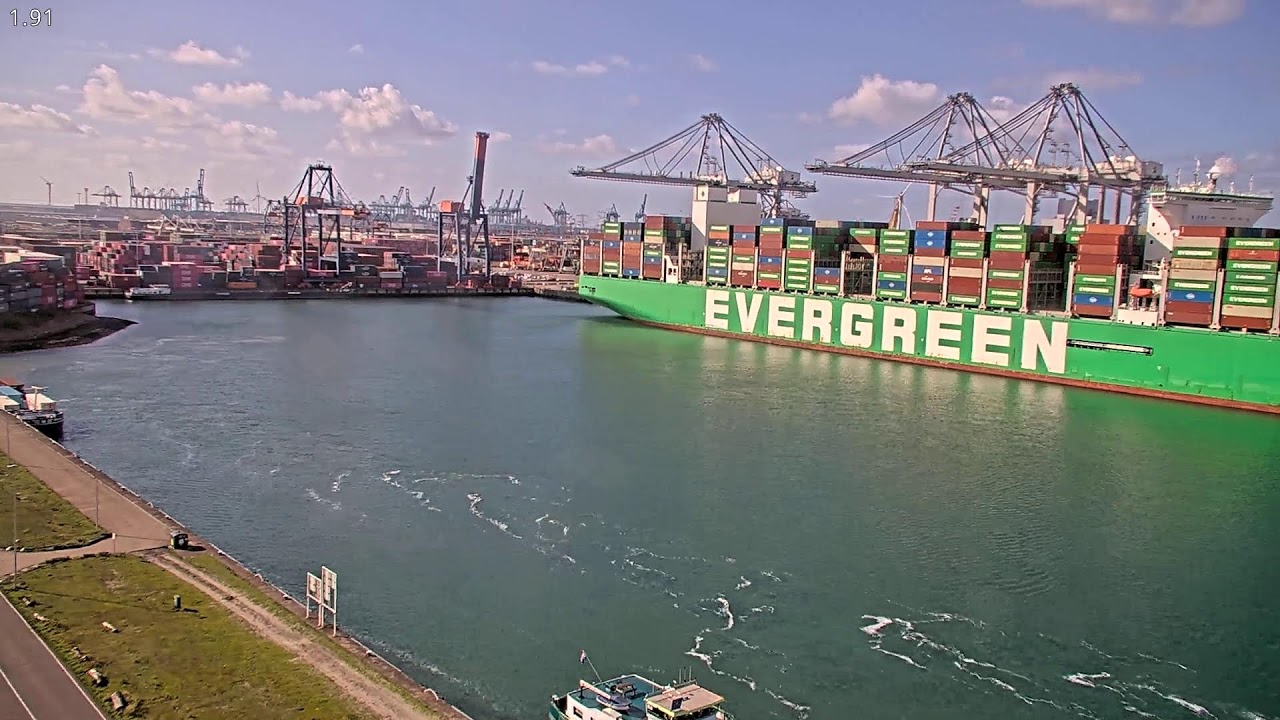
Rotterdam is not only the architectural capital, but also Europe's largest port. Its length is about 42 kilometers, and its area is 12,500 hectares of land and water. In 2022, 467 million tons of cargo and 14.4 million containers were handled here. Annually, about 30,000 ocean-going vessels and 130,000 river vessels enter the port, connecting the city with more than 1,000 ports worldwide.
From 1962 to 2004, Rotterdam held the title of the world's largest port until it was overtaken by Shanghai. Today it is the third in the world in total cargo tonnage. The nickname "Gateway to Europe" the city wears deservedly: its terminals handle almost as much cargo as all the ports of Great Britain combined. About 180,000 people are employed in the port industry and related sectors.
In 1993, the world's first automated container terminal ECT opened here, and today the port is actively implementing green technologies and hydrogen infrastructure.
Boijmans Depot: The Museum Turns Its Pockets Inside Out
In 2021, Rotterdam revolutionized the museum world. Depot Boijmans Van Beuningen became the world's first public art storage facility. Previously, 99% of museum collections gathered dust in storage, inaccessible to the public. Now 150,000+ objects — from medieval relics to works by Dalí and Van Gogh — are displayed in glass cases and pull-out racks inside the mirrored dome.
The building was designed by MVRDV: its facade of 1,664 mirrored panels reflects the city, making the depot invisible and simultaneously hypnotically attractive. On the roof there is a garden with 75 birch trees and a restaurant. This is a place where you can see restorers working with paintings right in front of visitors' eyes.
Euromast and Other Viewpoints
Euromast at 185 meters high is the tallest observation tower in the Netherlands. Opened in 1960, it offers a view from 100 meters up, from which all of Rotterdam, the port, and in clear weather — even The Hague can be seen. The tower is part of the World Federation of Great Towers along with the Eiffel Tower and Empire State Building.
But Euromast is not the only vantage point. The Luchtsingel pedestrian bridge, funded by the community (donors engraved their names on planks), connects three previously isolated districts and offers a view of the city's rooftops. And from the Willem Alexander embankment, a panorama of the Erasmus Bridge and the skyscrapers of Kop van Zuid opens up.
Districts That Survived the War
Not all of Rotterdam was destroyed. The Delfshaven district is a fragment of the 17th century that miraculously survived the bombing. Here there are narrow streets, canals, and the oldest buildings in the city. The Pilgrim Fathers Church is where the Pilgrim Fathers prayed before sailing to America in 1620. Today Delfshaven is an oasis of historical atmosphere amidst a modernist metropolis.
Oude Haven (Old Harbor) is another historic district, where among bars and restaurants stands the statue "The Destroyed City" — a figure with a hole in its chest, created by Ossip Zadkine in 1951 as a memorial to the bombing. And in one of the alleys hides a bronze gnome known as the Buttplug Gnome — a gift from artist Sally Henschaw, which became an unofficial symbol of Rotterdam humor.
Floating Farm and Other Green Experiments
Rotterdam is a city not only of concrete and steel, but also of green innovations. On a floating barge in the harbor operates Floating Farm — the world's first floating dairy farm with 40 cows. They are fed grass from city lawns and food waste, and on the roof of the barge there is a garden. Milk and yogurt are sold in local stores.
The harbor also features Recycled Park — an island made of recycled plastic collected from the Maas River. And on the roofs of former port warehouses, secret gardens have been arranged, open to visitors. Rotterdam is actively combating the effects of climate change: squares are designed as water reservoirs during floods, and buildings receive green roofs and solar panels.
Food, Drinks, and Local Color
Rotterdam is a city of immigrants, and this is reflected in its cuisine. Here they invented kapsalon — a dish of fries, shawarma, cheese, and salad, baked in a tray. It was created by hairdresser Nathaniel Diaz in 2003, and today it has become a national Dutch fast food.
On the Kop van Zuid embankment operates Fenix Food Factory — a craft food market in a converted port warehouse. And in a basement bar, beer is served over 16th-century graves — the remains were discovered during renovation and left as part of the interior. For the best apple pie, head to Dudok — a café that bakes according to a 1930s recipe.
What the Cameras Show
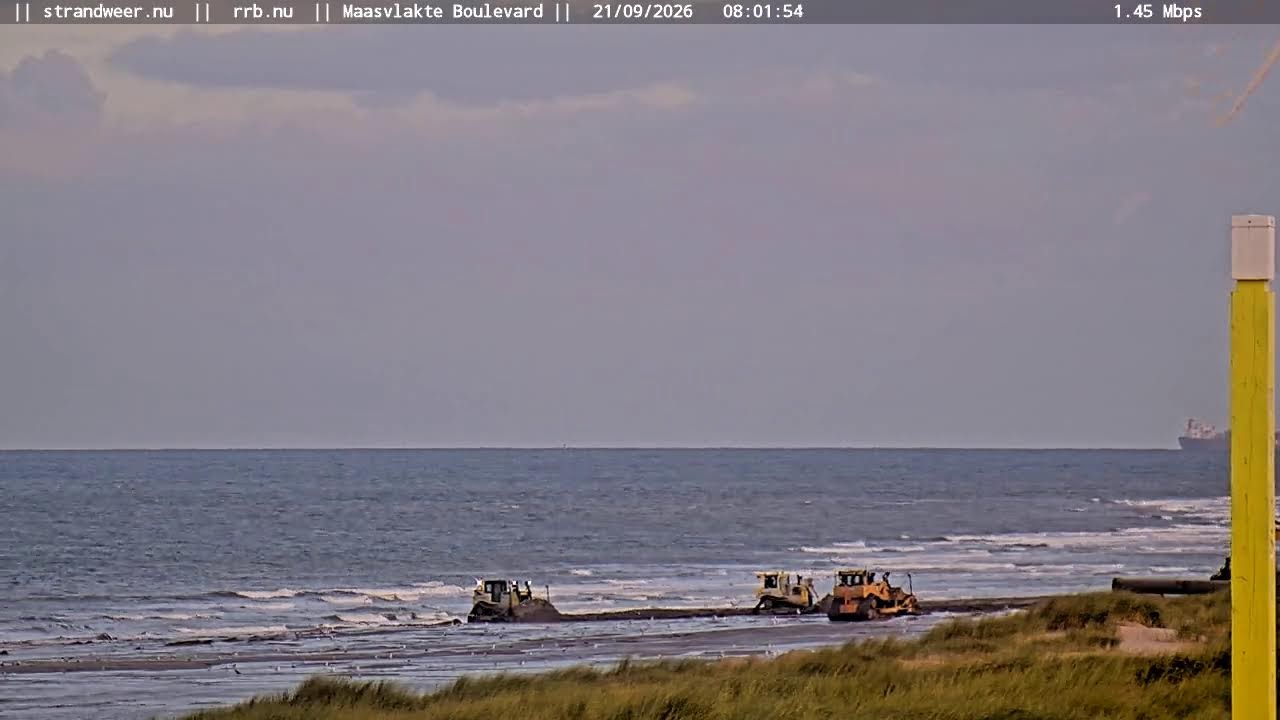
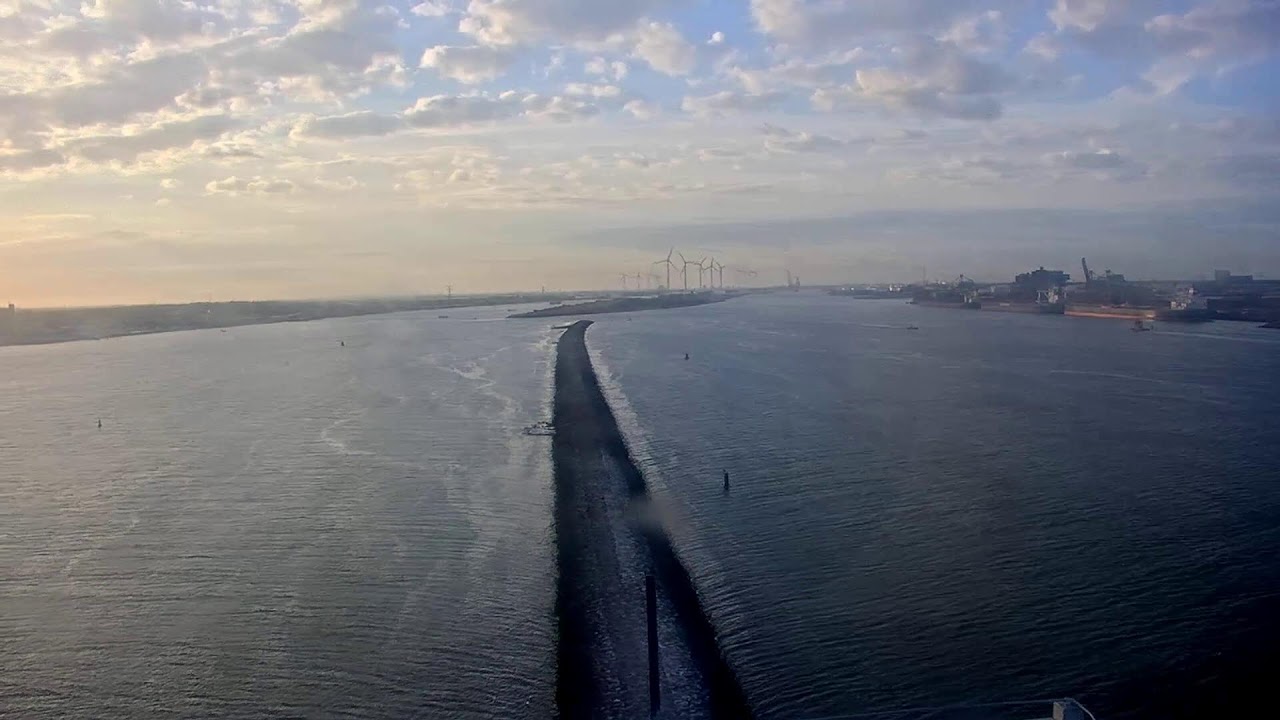
Rotterdam webcams online are located at key points in the city: on the Maas embankment with a view of the Erasmus Bridge, at the foot of the Euromast, in the square in front of Markthal, and in the port area. City center cameras broadcast the cubic houses and the busy streets of Linbaan and Blaak, while panoramic cameras on rooftops show the entire city from above — from historic Delfshaven to the modern skyscrapers of Kop van Zuid.
You can watch Rotterdam webcams online at any time of day: during the day you will see the movement of river vessels along the Maas and the busy embankments, and at night — the illuminated Erasmus Bridge and the glowing dome of the Boijmans Depot. Live broadcasts from port cameras show the operation of cranes and the movement of container ships — the living pulse of Europe's largest port.