

🏙️ Webcams Assisi online — watch the city in real time
6 cameras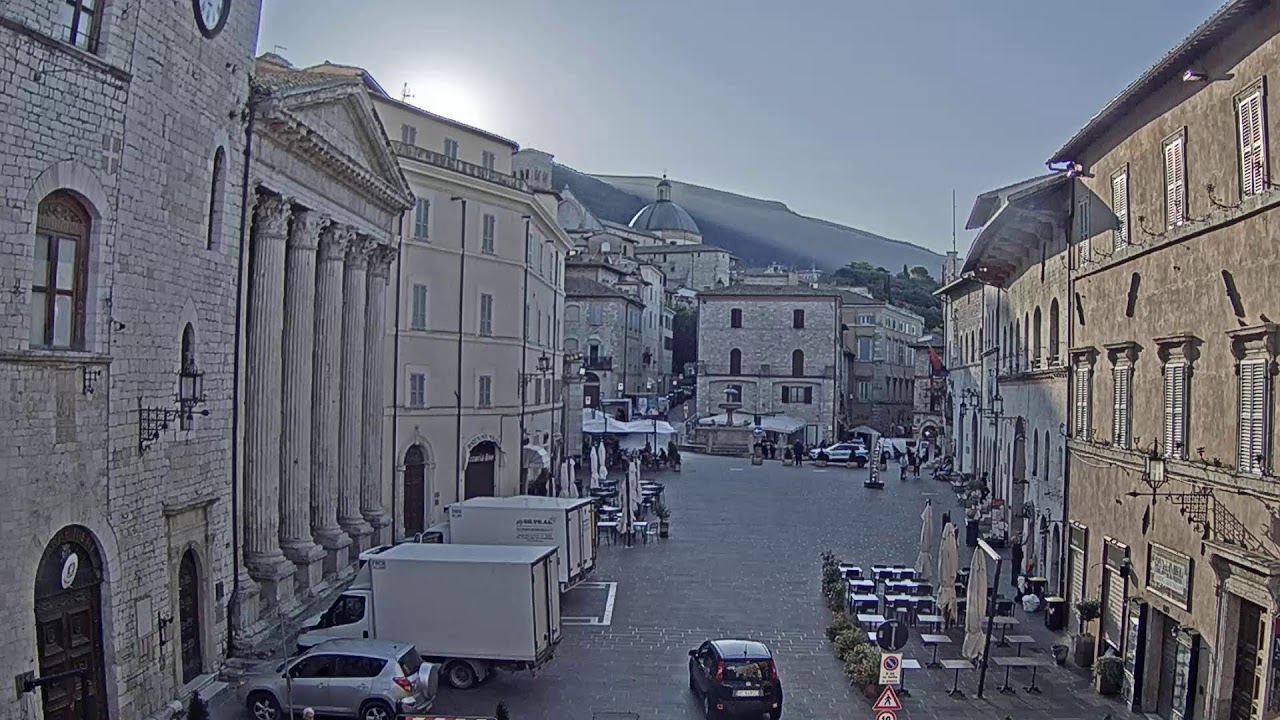

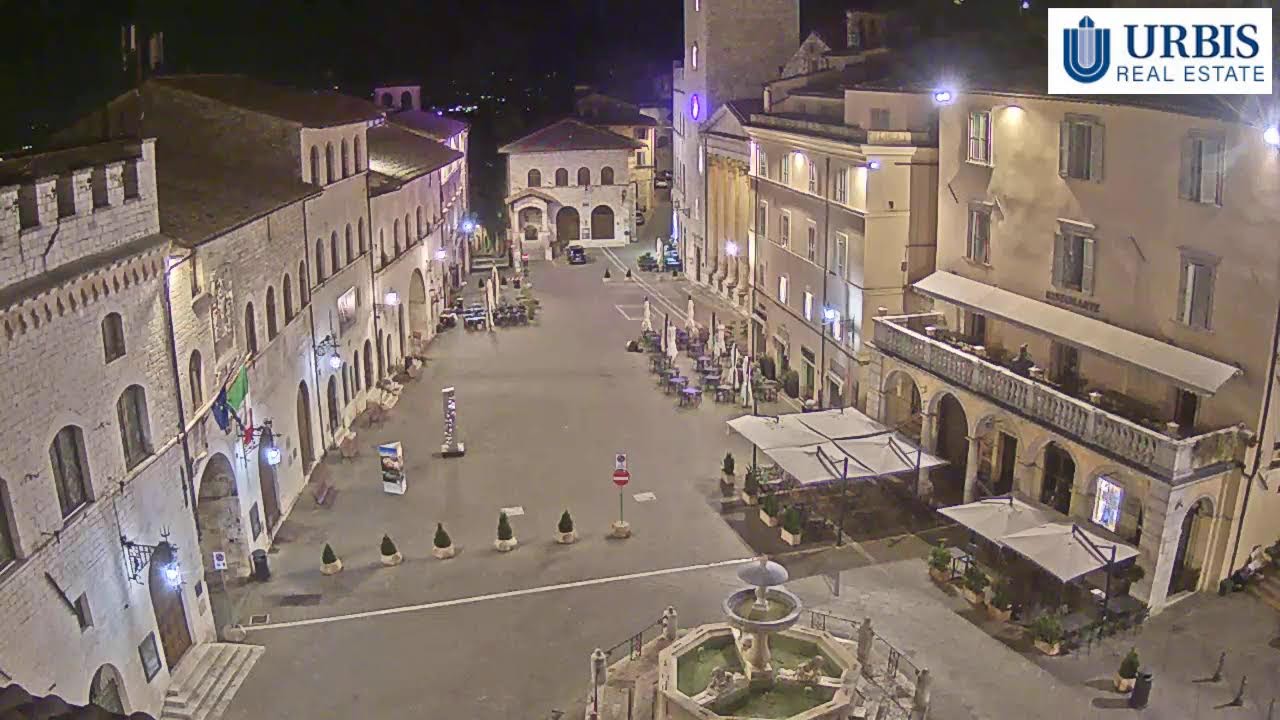
Assisi — the pink city on the slope of Subasio
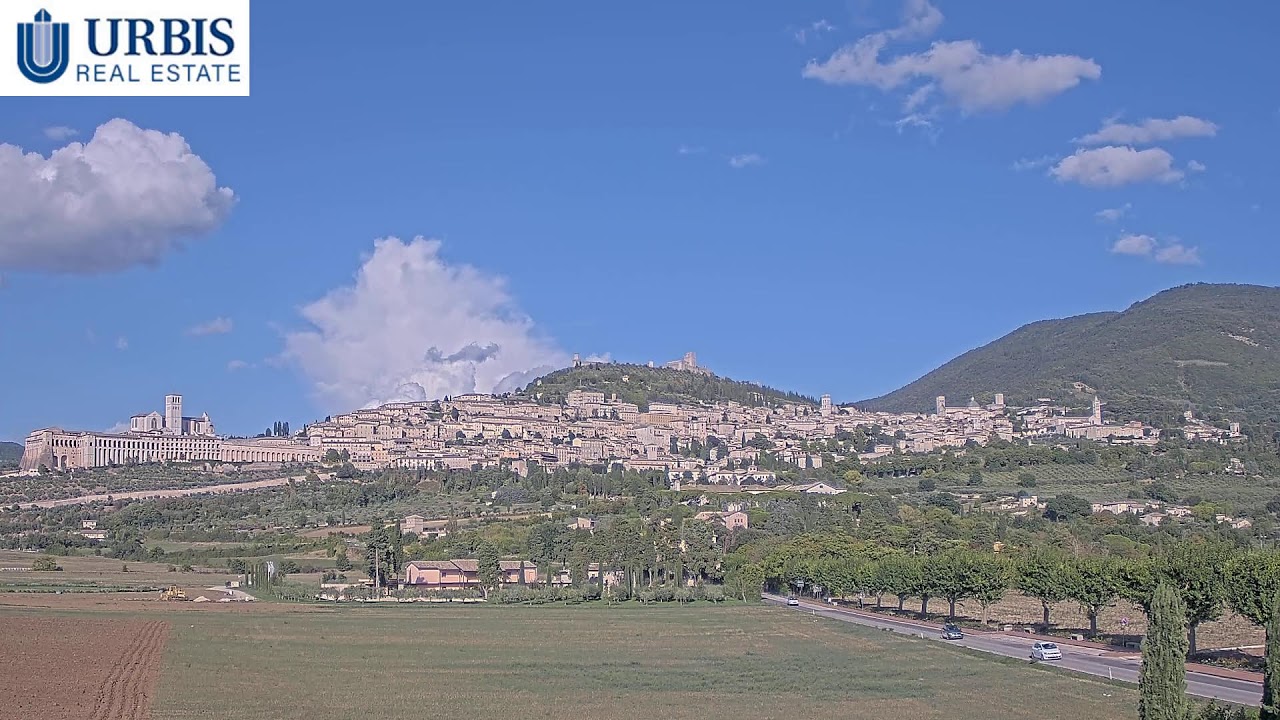
Assisi is located on the western slope of Mount Subasio in the Umbria region of central Italy. It is one of the most famous medieval towns in the country, attracting pilgrims and tourists from all over the world. The city is known primarily as the birthplace of St. Francis of Assisi, founder of the Franciscan order. Assisi has preserved its medieval structure with narrow streets, stone houses, and impressive churches. The local limestone and sandstone from which the buildings are constructed have warm pink and reddish hues, especially vivid at sunset and dawn. When sunlight falls on the city, the entire settlement is enveloped in a soft pinkish glow, which has become Assisi's calling card. This glow gave the city its nickname "The Pink City" (città rosa). For those who want to see this glow in person, there are Assisi webcams online that allow you to observe the city in real time.
Basilica of Saint Francis: two churches stacked on top of each other
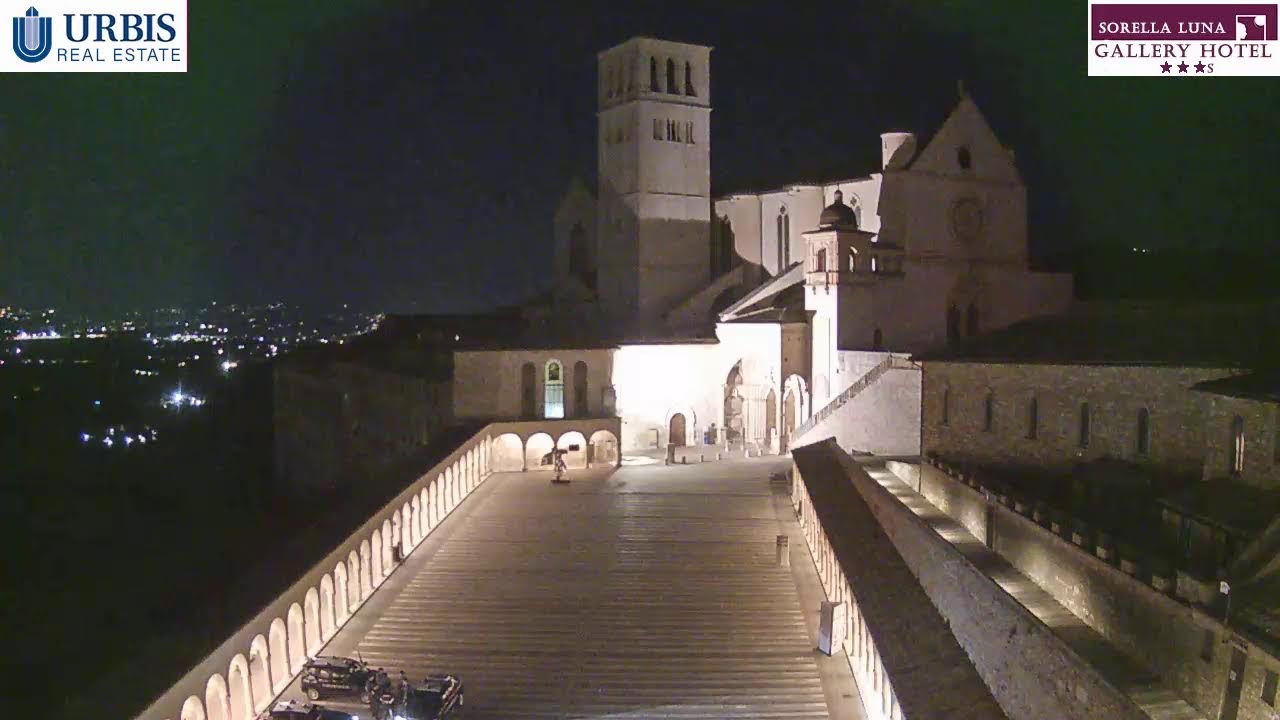
The main attraction of Assisi is the Basilica of Saint Francis, a unique architectural complex consisting of two churches built one on top of the other. The Lower Basilica (Basilica Inferiore) was built first, has a low ceiling painted blue with gold stars. It contains the oldest cycle of frescoes in the complex, painted by an unknown "Maestro di San Francesco." On the right wall are five scenes of the Passion of Christ, on the left — five scenes from the life of Saint Francis. The Upper Basilica (Basilica Superiore) is located directly above the lower one, distinguished by an abundance of light and magnificent frescoes by Giotto depicting the life of the saint.
Under the Lower Basilica is a crypt where the remains of Saint Francis rest. The saint's body was originally buried in the church of San Giorgio, then transferred to the new basilica in 1230. The Franciscans hid the body from looters, and the location of the burial was lost. The remains were accidentally discovered only in 1888 — after almost six centuries! Today the body is enclosed in a glass reliquary inside a simple stone chest above the altar of the lower level of the basilica. Inside the walls there is a secret staircase connecting the lower and upper levels, originally used by monks for private movement and liturgical processions. The basilica has been included in the UNESCO World Heritage List since 2000.
Saint Francis: from merchant's son to patron of animals
At birth around 1181, the future saint was named Giovanni (after John the Baptist). His father, a wealthy silk merchant Pietro di Bernardone, renamed him Francesco ("Frenchman") due to his love of French culture and the possible French origin of his wife. At about age 19, Francis participated in the war between Assisi and Perugia, was captured, and spent almost a year in captivity — an experience that deeply influenced his spiritual conversion.
Hearing God's call to "rebuild my church," Francis publicly renounced his family's wealth. Before the bishop and townspeople, he stripped naked and returned everything to his father, declaring that from now on his only father was "Our Father in Heaven." Contrary to popular belief, Francis was ordained only as a deacon and never became a priest. Due to his deep reverence for the Eucharist, he considered himself unworthy of the priesthood. Literary critics consider Francis one of the first Italian poets. His "Canticle of the Creatures" combines love of God with poetic mastery.
Within the first year, Francis attracted 11 followers, forming the early Franciscan community — a mirror image of the 12 apostles. In 1224, during a retreat on Mount La Verna, Francis received stigmata — wounds resembling the crucifixion of Christ. Pope Innocent III approved the Franciscan order after a supernatural dream in which he saw Francis holding up the Lateran Basilica. Francis founded not only the Order of Friars Minor but also the women's order of the Poor Clares (together with Saint Clare), as well as the Third Order for laypeople. Patron of animals, ecology, and poets. Feast day — October 4.
Hidden treasures: what to see besides the basilica
Besides the Basilica of Saint Francis, Assisi has many lesser-known but equally interesting places. The Roman Forum (Foro Romano) — excavations of the ancient Roman forum are located just a few steps from Piazza del Comune. Often overlooked by tourists. Admission is 5 euros, open daily from 10:00 to 17:30. Temple of Minerva (Tempio di Minerva) — an ancient Roman temple from the 1st century BC, now the functioning church of Santa Maria sopra Minerva. Classical columns contrast with the unexpectedly Baroque interior.
The Roman amphitheater is hidden among the city streets, with an elliptical outline preserved, surrounded by medieval houses. The former arena is now a central garden. Carceri (Eremo delle Carceri) — a secluded hermitage on Mount Subasio where Saint Francis and his followers retreated for prayer. The stone complex includes several chapels, a cloister, and the cave of Saint Francis. Silence and peace away from the bustle of the city.
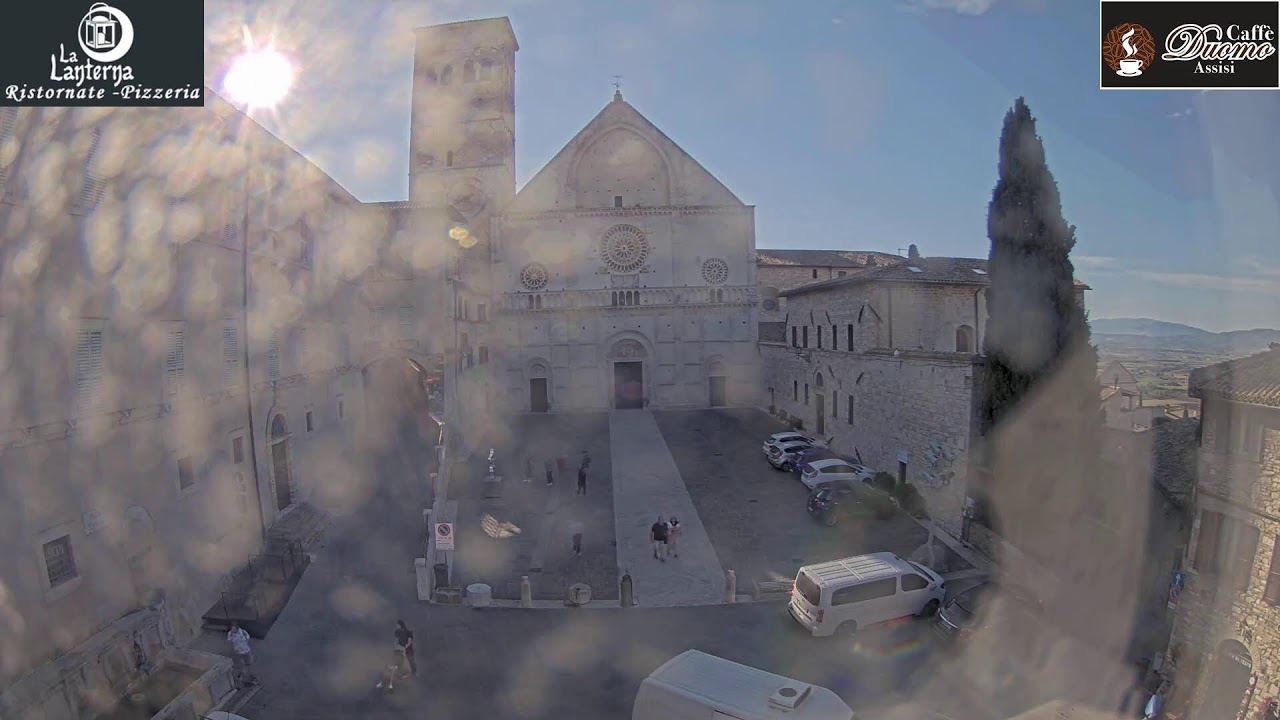
Basilica of Santa Maria degli Angeli — a huge church at the foot of Assisi, inside which is the tiny Porziuncola chapel — the birthplace of the Franciscan order. Basilica of Santa Chiara — a candy-striped church (alternating pink and white stone) with massive buttresses and a Gothic rose window on the facade. The remains of Saint Clare rest here. Cathedral of San Rufino — a Romanesque cathedral with three rose windows on the facade and a beautifully carved portal. Both Saint Francis and Saint Clare were baptized here (at the fountain inside). Inside — a crypt, Diocesan Museum, frescoes by Giotto, and ancient books. You can climb the bell tower.
Rocca Maggiore Fortress — a medieval castle on a hill that defended the city for 800 years. Breathtaking views from here. Admission — 8 euros. Terrazza Don Aldo Brunacci — a hidden viewpoint accessible via the parking lot on Viale Galeazzo Alessi (near the Cathedral of San Rufino). Beautiful views of the city and the Basilica of Santa Chiara. Vicolo Illuminati — a medieval alley with the atmosphere of an old town. The Rose Garden and the Rose Chapel — remnants of an ancient forest where Francis lived. According to legend, one night, overcome by doubts, Francis rolled naked in the thorns, and the bushes became thornless dog roses. Bosco di San Francesco — a forest trail owned by FAI, leading to the monastery and the "Third Paradise" — one hundred olive trees planted in three circles as a symbol of infinity.
Legends of Assisi: The Devil's Bridge and Thornless Roses
The famous "Devil's Bridge" (Ponte del Diavolo) in Italian tradition is widely known in Umbria and Tuscany. According to legend, the construction of the bridge could not be completed. The foreman made a deal with the devil: the latter would help build the bridge in one night in exchange for the soul of the first creature to cross the bridge. The foreman repented and consulted with a local priest. Together they decided that a dog would be the first to cross the bridge. When the bridge was ready, a dog was sent across it (or a piece of bread was thrown that attracted the dog). The devil, deceived, threw himself into the river with the dog and disappeared forever. They say that a white Maremma sheepdog sometimes appears on the bridge on late October evenings — it is the devil, still seeking the foreman's soul. Historically, the bridge was probably built by order of Countess Matilda of Tuscany in the 11th century and was part of the Via Francigena pilgrimage route.
Another legend is connected to the rose garden of Assisi. According to legend, Saint Francis, overcome by doubts and temptations, one night rolled naked in thorny bushes, praying for the gift of faith. And the bushes miraculously turned into thornless dog roses. Today these roses grow in the Rose Garden near the basilica — a reminder of the power of faith and the transformation of nature through holiness.
Cuisine of Assisi: from torta al testo to Sagrantino
The cuisine of Assisi is based on the principles of cucina povera ("peasant cuisine") — simple but high-quality dishes made from local seasonal ingredients. Torta al testo — a flat unleavened flatbread, a universal bread that is eaten on its own or used as a base for fillings. Pancaciato (or pan nociato) — a small savory bun with pieces of cheese, pepper, and walnuts. Has ancient roots connected to the celebration of Saint Martin's Day. A variant with the addition of a glass of red wine or raisins. Crostini al tartufo all'Umbria — toasts with a paste of black truffles, anchovies, and local olive oil.
Strangozzi alla Norcina — thick eggless pasta with a sauce from Norcia sausage, cream, white wine, and black truffle. Zuppa di farro — spelt soup with legumes, seasonal vegetables, sautéed onion, and garlic. Especially popular in winter. Porchetta — roasted stuffed piglet. In Umbria, it is sold in white buns straight from vans at the markets. Prosciutto di Norcia — cured mountain ham from Norcia, one of the best types of prosciutto in Italy.
Rocciata — an aromatic dessert made of puff pastry with apples and dried fruits, rolled into a roll ("arrocciata"). Traditionally prepared for religious holidays (All Saints' Day, Christmas), now available year-round. Variants with pears, rum, cocoa, cinnamon, jam, figs, pine nuts, Vin Santo, Alchermes. Ciaramicola — a traditional Easter cake made with red wine, covered with white icing and colored sprinkles. A symbol of celebration and joy. Pane di San Francesco — bread similar to strudel.
Among local wines, it is worth trying Sagrantino di Montefalco — a powerful red wine from the Montefalco area (north of Spoleto). Grechetto (Cervara) — an elegant white wine from the local Grechetto grape, often aged in oak (produced by Antinori). Vin Santo — a sweet white wine traditionally used in desserts.
What the cameras show
Assisi webcams online allow you to see the city in real time without leaving home. The cameras are installed at key points in the city: at Piazza del Comune, at the Basilica of Saint Francis, on the approaches to the Rocca Maggiore fortress, and in other picturesque locations. With their help, you can observe the pink glow of the limestone at sunset, follow the life of medieval streets, see pilgrims and tourists filling the squares of Assisi. The online broadcast is available around the clock, allowing you to appreciate the atmosphere of the city at any time of day or night — from morning silence to evening bustle. This is a convenient way to plan a trip or simply enjoy the beauty of one of the most charming cities in Umbria.