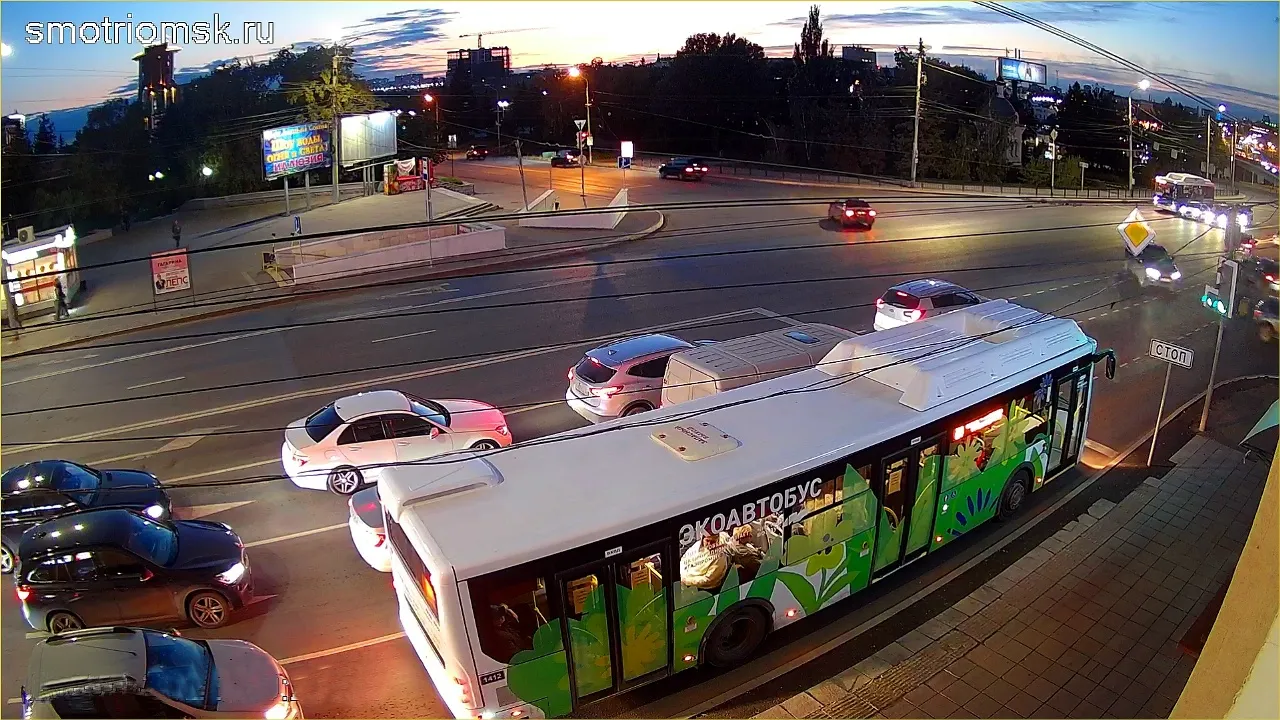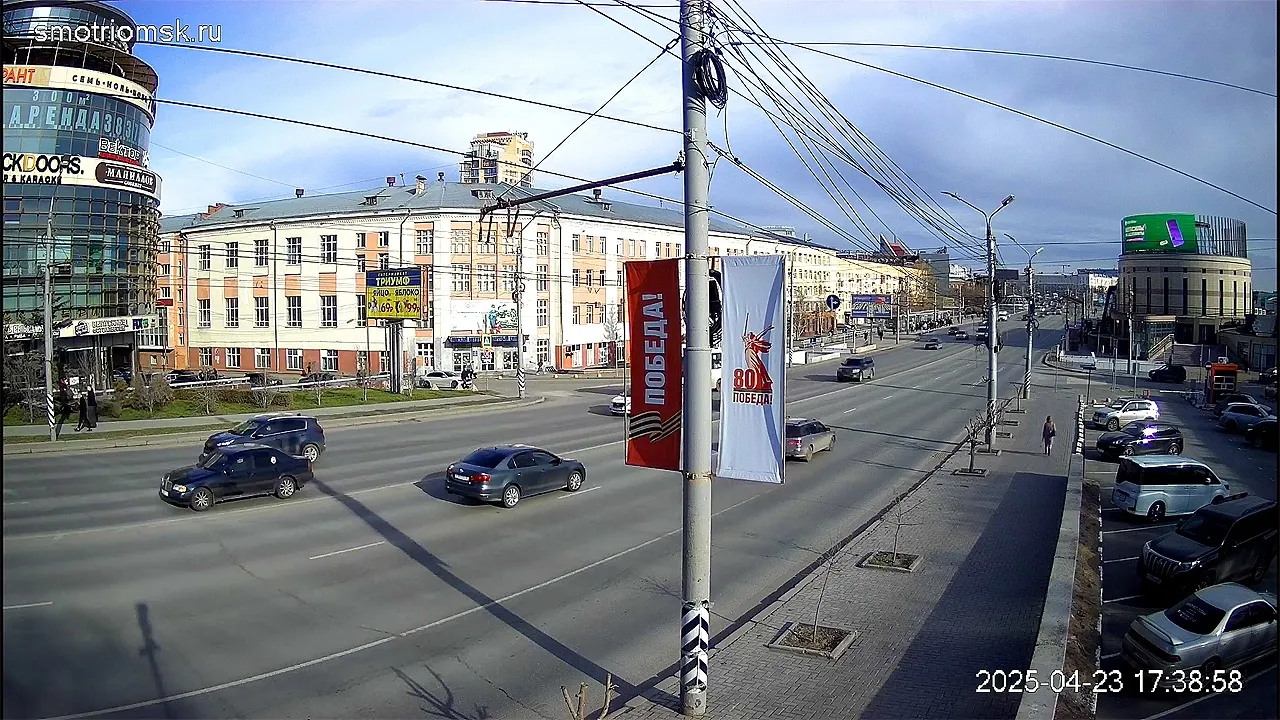
Gagarin Street in the historic center of Omsk — online webcam
Gagarin Street: A Cosmic Name in the Heart of Omsk
Omsk is a city with a rich history, where every central street bears the imprint of different eras. Gagarin Street holds a special place in the layout of the historic center: it is neither the longest nor the widest, yet it is here that traffic flows, architectural heritage, and the city's cultural life intertwine. The online camera installed on this street allows you to see the real Omsk — without tourist pomp, but with its authentic rhythm.
The street's name immediately evokes a cosmic theme. It is named after Yuri Alekseyevich Gagarin — the first human in space, a pilot-cosmonaut, and Hero of the Soviet Union. This name was given to the street in 1968, the year of the cosmonaut's tragic death, and has remained unchanged on the map of Omsk ever since.
From MOPR to Gagarin: How the Name Changed
The street's history encompasses several names, each reflecting its own era. Before the revolution, it was one of the merchant streets with its own historical character. In the 1920s, it was named MOPR Street — in honor of the International Organization for Assistance to Fighters for the Revolution. This name lasted for several decades until 1968, when the street was renamed in memory of the space pioneer.
Interestingly, Omsk commemorates both "Gagarin" figures: Yuri Alekseyevich — the first cosmonaut, and Matvey Petrovich Gagarin — the first Siberian governor. Streets bearing their names exist in parallel, creating a unique double reference: to the celestial expanse and to the earthly history of Siberia.
Merchant Heritage: Buildings That Survived the Ages
The architectural appearance of Gagarin Street was formed primarily in the 19th and early 20th centuries, when Omsk was one of the largest trade centers in Western Siberia. Many buildings belonged to Omsk merchants and have survived to this day in remarkably pristine condition — they have endured changes of political regimes, fires, and reconstructions.
One of the most notable landmarks is the Veterans' Hospital at 28 Gagarin Street. The building was constructed in 1895 and originally belonged to Omsk merchants. Behind it were warehouses, which was typical for merchant development of that time. Today, this building continues to serve a social function while preserving its historical identity.
At 24 Gagarin Street is the All-Russian Society for the Protection of Historical and Cultural Monuments (VOOPIiK). The placement of this organization in a historic merchant building is symbolic: heritage is preserved by those who professionally engage in its protection.
Also located here are the School of Arts and the Ministry of Culture of Omsk Region — both in former merchant buildings. It creates a kind of cycle: buildings erected by merchants now serve the cause of culture and art.
Transport Role in Omsk's Infrastructure
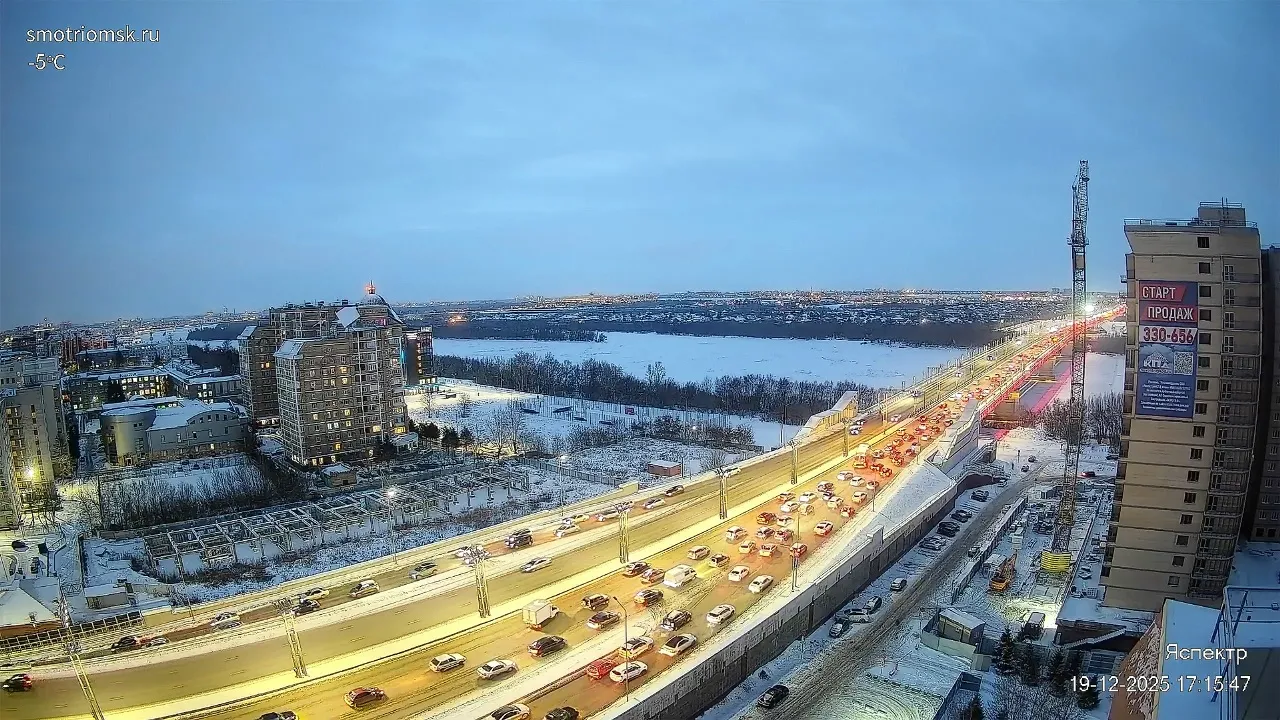
Gagarin Street is an important link in the city's transport network. After the construction of the bridge across the Irtysh, connecting the street with Karl Marx Avenue, it became part of Omsk's main transport artery. The 60th Anniversary of Victory Bridge is a two-tier structure, where the lower tier is intended for a metro line and the upper tier for automobile traffic.
To relieve traffic flows in the historic center, an interchange at Gagarin and Shcherbaneva streets was built. This engineering solution allowed for the redistribution of traffic flows: drivers gained the ability to travel from Budarin and Lenin streets to the city center without detouring through congested areas. The expansion of the roadway also contributed to improved traffic capacity.
Contact wires stretch above the roadway — evidence that a trolleybus line runs along the street. This is characteristic of Omsk's central streets, where electric transport remains an important element of urban mobility.
Cultural Life and Symbolic Transformation
Gagarin Street is not just a transport artery, but also a cultural space. The presence of the School of Arts, the Ministry of Culture, and the VOOPIiK department creates a unique concentration of institutions dedicated to the preservation and development of cultural heritage.
Merchant buildings constructed for commercial purposes in the late 19th century now serve entirely different functions. This is an example of how historical development adapts to modern needs without losing its architectural character. Omsk's cosmic toponymy — a system of names linking the city to the starry sky — finds its reflection in this street as well.
The Omsk City Administration is also located on Gagarin Street, underscoring its status as one of the key locations in city governance. The mayor's office building is a prominent part of the development that often appears in views of the city's central streets.
What You Can See on the Camera
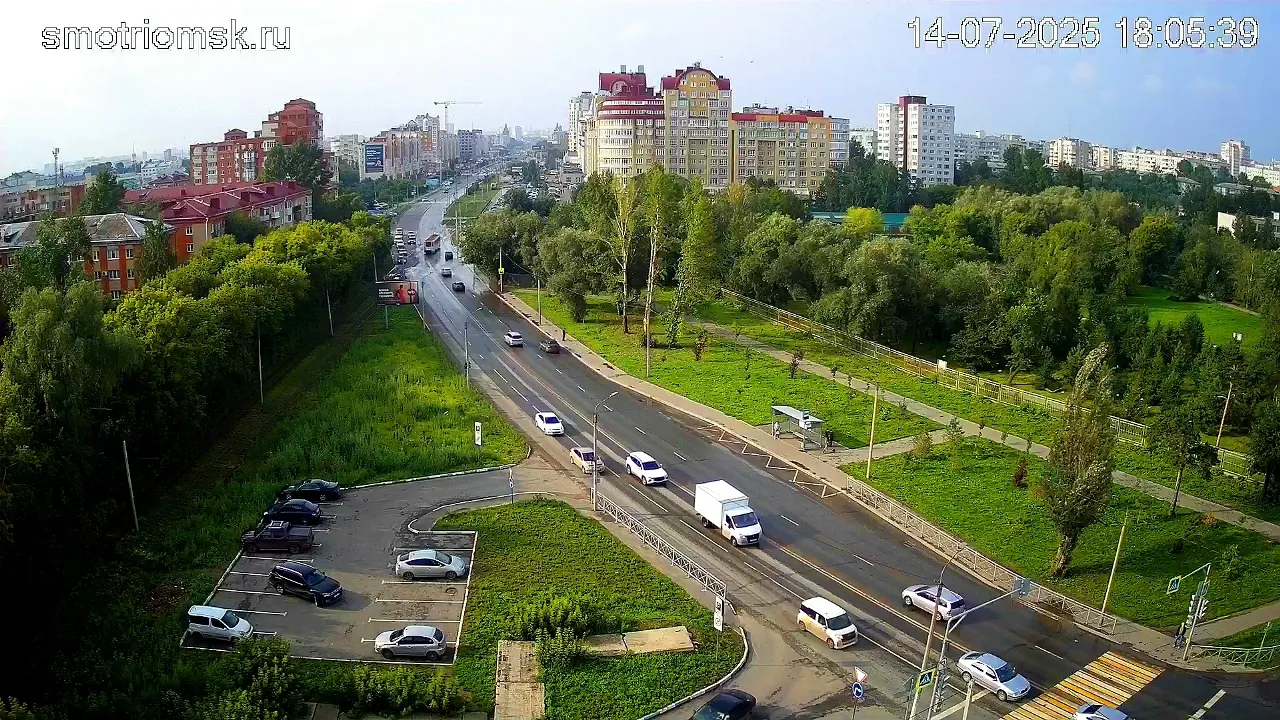
The online camera on Gagarin Street in Omsk broadcasts a multi-lane intersection — a typical urban scene with streams of cars, trolleybuses, and pedestrians. In the foreground is a pole with vertical street banners, which does not obstruct the view but adds a sense of real urban space.
Multi-story buildings line the street — both residential and commercial. Among them stands out a modern glass building with advertising signs, contrasting with the older merchant development. Pedestrians are visible on the sidewalks, and parked cars are seen in the parking lot on the right. Contact wires of the trolleybus line stretch above the road, street lamps and traffic lights are installed — all this creates a sense of a living, breathing city.
The webcam in real time shows Gagarin Street as it is: without embellishments, with its transport bustle, historical buildings, and modern urban environment. It is an opportunity to see Omsk from within — not a postcard version, but the real one.
Similar cameras
Find similar