Irtysh Embankment in Omsk — online web camera
Irtysh Embankment — the main promenade on the left bank
The Irtysh Embankment stretches along the river for 3.5 kilometers in the historical center of Omsk. This space has long become a magnet for locals and visitors alike — the wide pedestrian zone with greenery is separated from traffic lanes and allows for leisurely walks while watching the water surface. In 2006, the embankment was reconstructed: new benches, recreation areas, and children's playgrounds appeared, making it even more comfortable for walks.
The location of the embankment was not chosen by chance — it was here, on the high left bank of the Irtysh, that the city's core was formed. Today it is a place where historical architecture neighbors modern landscaping, and views of the river open from picturesque angles.
Irtysh River: the record-holder among tributaries
The Irtysh is not just a river — it is the longest tributary in the world. Its length is 4,248 kilometers. The river originates in the Mongolian Altai Mountains in China, where its upper reaches are known as the Black Irtysh, then crosses Kazakhstan and flows into the Ob near Khanty-Mansiysk. Within Russia, the Irtysh runs for 1,957 kilometers, and Omsk is one of the largest cities along its path.
In the Omsk area, the Irtysh appears as a full-flowing river with a channel width that allows active navigation. The average gradient of the river from Omsk to its mouth is 22 mm/km, and the current speed varies from 0.5 to 1.5 m/s. This is an international waterway connecting three countries — China, Kazakhstan, and Russia — giving it special economic and strategic significance.
Batyushkov Mansion: the Palace of Celebrations and the "Kolchak House"
One of the most notable buildings on the embankment is the mansion of merchant Batyushkov, built in 1901–1902 in an eclectic style. Today it houses the Omsk Civil Registry Office, and the building is known as the Palace of Celebrations — a popular venue for wedding ceremonies and photo sessions.
The house's history also has a dark page: in 1919, the mansion was occupied by Admiral A.V. Kolchak, leader of the White movement, which is why it is still popularly called the "Kolchak House." Architecturally, the building stands out among the surrounding development — it is an architectural monument with facade details characteristic of eclecticism.
Sculpture Ensemble of the Embankment
The Irtysh Embankment is rich in art objects that turn a walk into a kind of excursion. The most famous sculpture is "Lyuba", created in the image of the wife of Omsk Governor-General Gustav Gasford. In 1851, the couple arrived in Omsk, but a year later Lyuba fell ill and died — the monument became a touching reminder of this story.
Nearby stands an unexpected character — the monument to Stepanych, a plumber who became a crowd favorite and a photo spot. Among other objects are the monument to Don Quixote by Omsk sculptor Alexander Kapralov, the decorative "Flagpole," and the sculpture "Dynamic Equilibrium" near the Vrubel Museum. Each of these objects adds individuality to the embankment.
Leningrad Bridge and the Kirovsky District Panorama
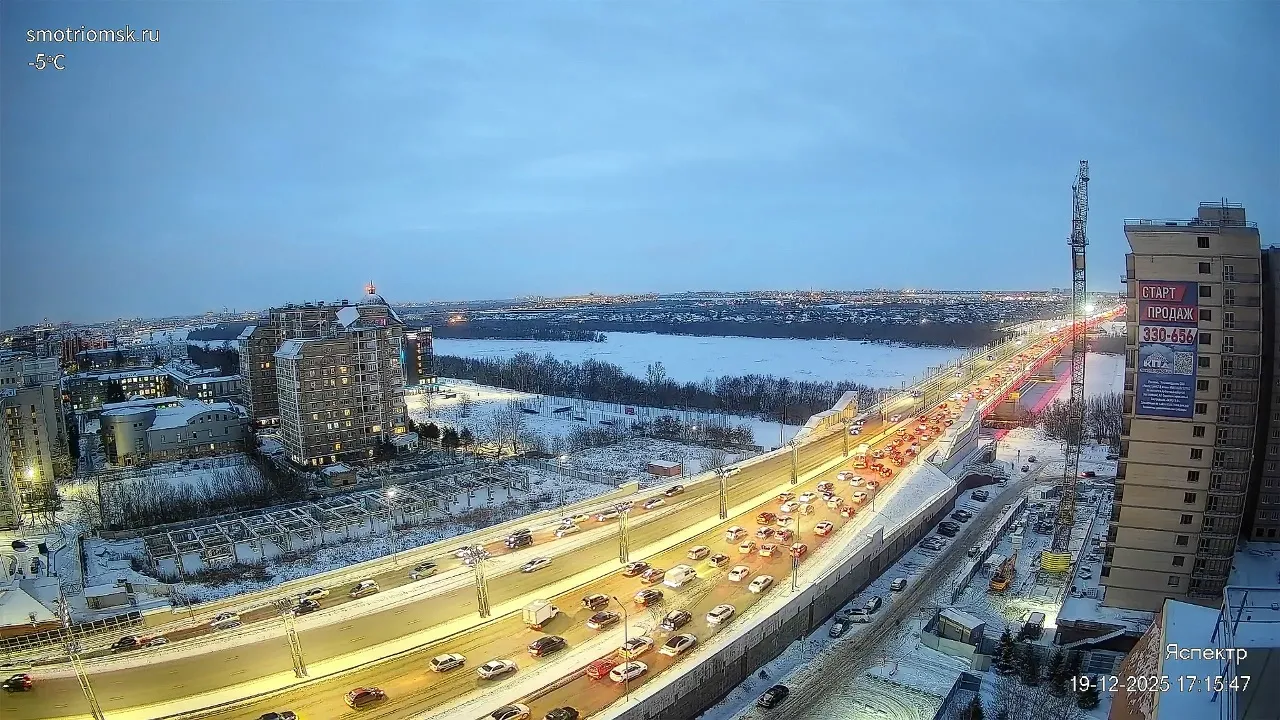
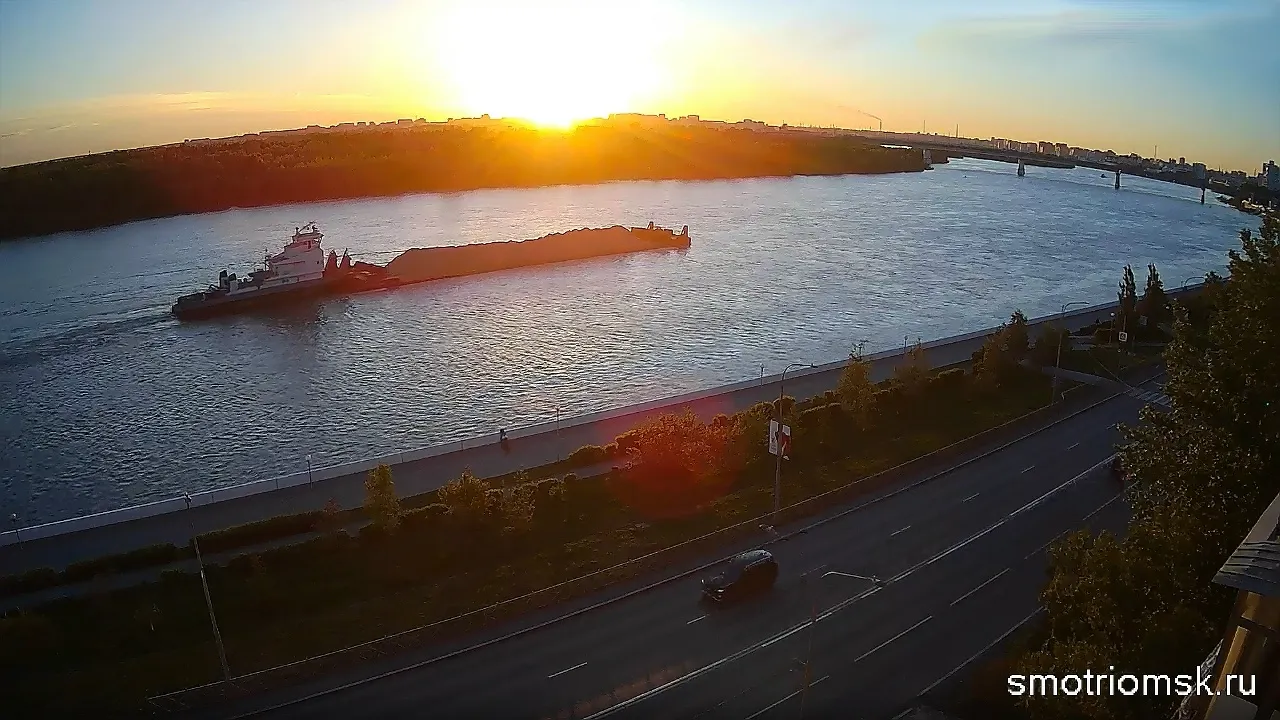
In the distance from the embankment, there is a view of the Leningrad Bridge across the Irtysh — an important transport artery connecting the left and right banks of Omsk. Beyond the bridge stretches the urban development of the Kirovsky District with a characteristic tree line on the opposite bank. This landscape creates a sense of the city's scale — from the historical center to the modern neighborhoods across the river.
The bridge is not only functional but also looks impressive against the wide river, especially during peak traffic hours when a continuous stream of vehicles crosses it. From the embankment, it is convenient to observe how the bridge's lighting changes depending on the time of day.
Omsk Fortress: the origins of the city by the water
Within walking distance of the Irtysh Embankment is the Omsk Fortress — the place where in 1716 a fortress was founded that gave rise to the city. Today it is a historical museum complex with reconstructed fortification elements that allows one to imagine what Omsk looked like three centuries ago.
The combination of the embankment and the fortress creates a unique route: you can start a walk from the historical walls, stroll along the Irtysh, and finish at the modern sculptures. This is a journey through eras — from the wooden palisades of the 18th century to the concrete embankments of the 21st century.
Lyubinsky Avenue and the pedestrian space
Next to the embankment runs Lyubinsky Avenue — Omsk's main pedestrian street with historical architecture. It is named after the same Governor-General Gasford, whose wife became the model for the Lyuba sculpture. The street connects the embankment with the city center and offers visitors cafes, souvenir shops, and pre-revolutionary buildings.
The pedestrian zone of the embankment is equipped for comfortable relaxation: benches are positioned with a view of the water, paths are paved, and greenery provides shade on hot days. This space is equally pleasant for morning jogs and evening walks with views of the lights across the river.
Serafimo-Alexeyevskaya Chapel and spiritual heritage
On the embankment is also the Serafimo-Alexeyevskaya Chapel — a historical religious structure that adds a spiritual dimension to the landscape. The chapel reminds us that Omsk is a city with deep Orthodox traditions, where churches and chapels coexist with secular architecture.
Nearby is the Nikolsky Cossack Cathedral — another significant temple near the embankment, connected to the historical Cossack presence in the region. These sites attract not only pilgrims but also architecture enthusiasts.
Tara Gates and the fortification past
On the embankment, you can see the Tara Gates — a historical architectural object reminiscent of the times when Omsk was a fortress city. The gates were part of the defensive system and served as the entrance to the city from the Tara Tract side. Today they are a monument of 18th-century engineering and a popular photo backdrop.
The combination of the gates, the embankment, and the river creates a panorama that often appears on postcards and guidebooks of Omsk. This is a place where history is literally laid out in stone.
What the camera shows
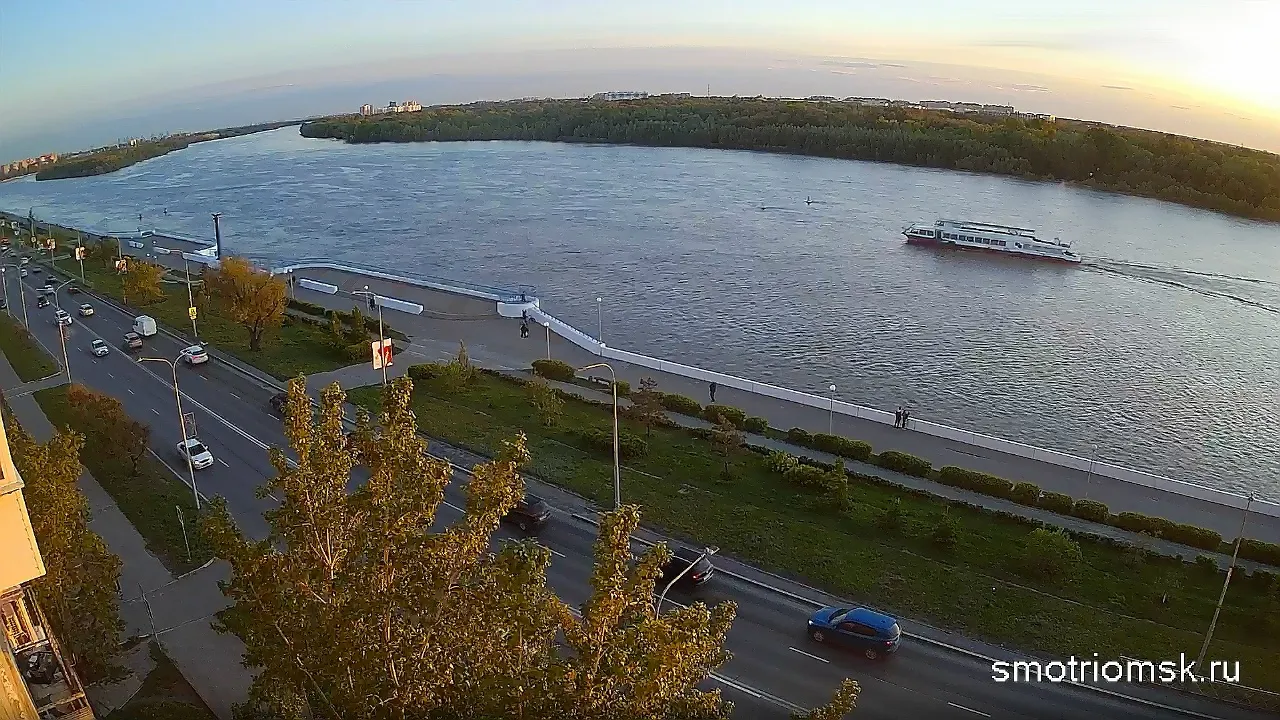
The web camera in real time broadcasts a view of the Irtysh River from the Irtysh Embankment in Omsk. In the frame is a wide river, along which a tugboat moves with a long barge carrying bulk cargo. Along the shore runs a multi-lane highway with street lighting, and between the road and the water is a pedestrian embankment with greenery. In the distance, the Leningrad Bridge across the river and the urban development of the Kirovsky District with a tree line on the opposite bank are visible. The online broadcast allows you to observe the movement of ships, the flow of cars, and the life of the embankment at any time — it is a living portrait of the city by the great Siberian river.
Similar cameras
Find similar