Frunze Street in Omsk — Online Webcam with Live View
Frunze Street: From Tarsky Suburb to Modern Omsk
Frunze Street is one of the key thoroughfares of Omsk's Central District, stretching through the historic part of the city. Today it is a multi-lane highway with heavy traffic, but its history dates back to the pre-revolutionary era. Before being renamed, it was called Tarskaya Street — named after the town of Tara located north of Omsk. The renaming took place during the Soviet era in honor of Mikhail Vasilyevich Frunze — an outstanding military figure, revolutionary, and military theorist.
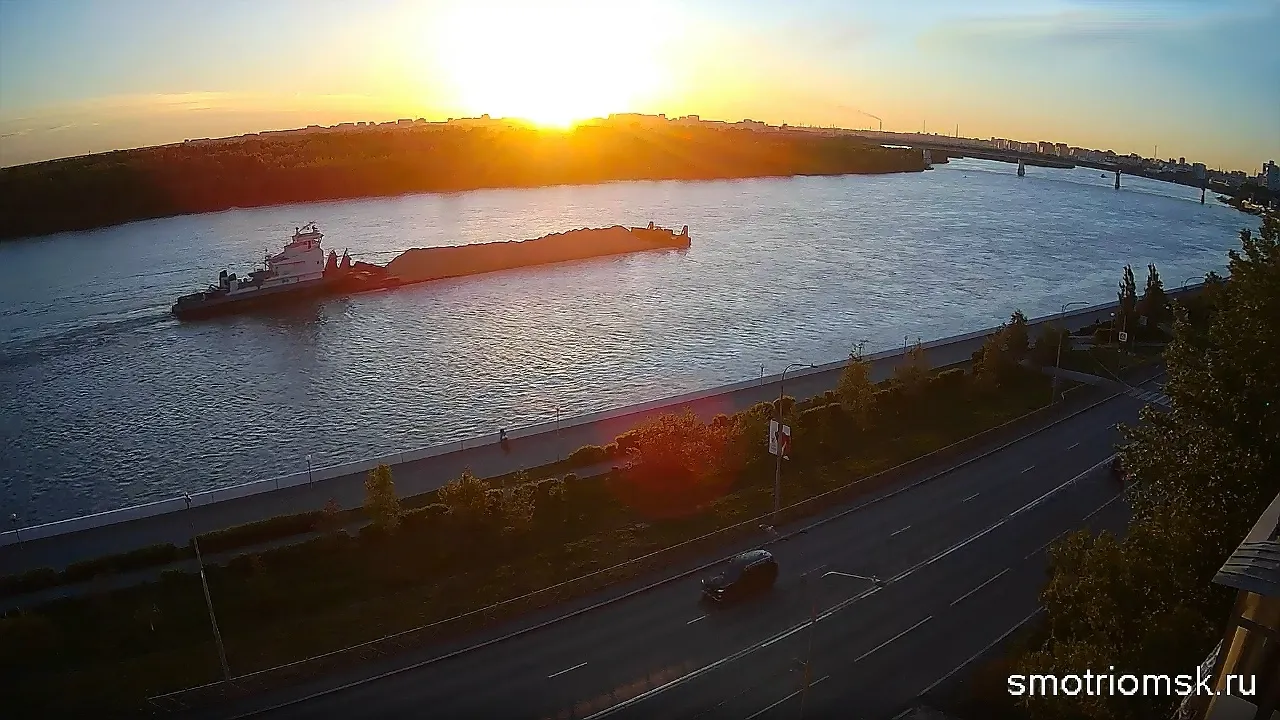
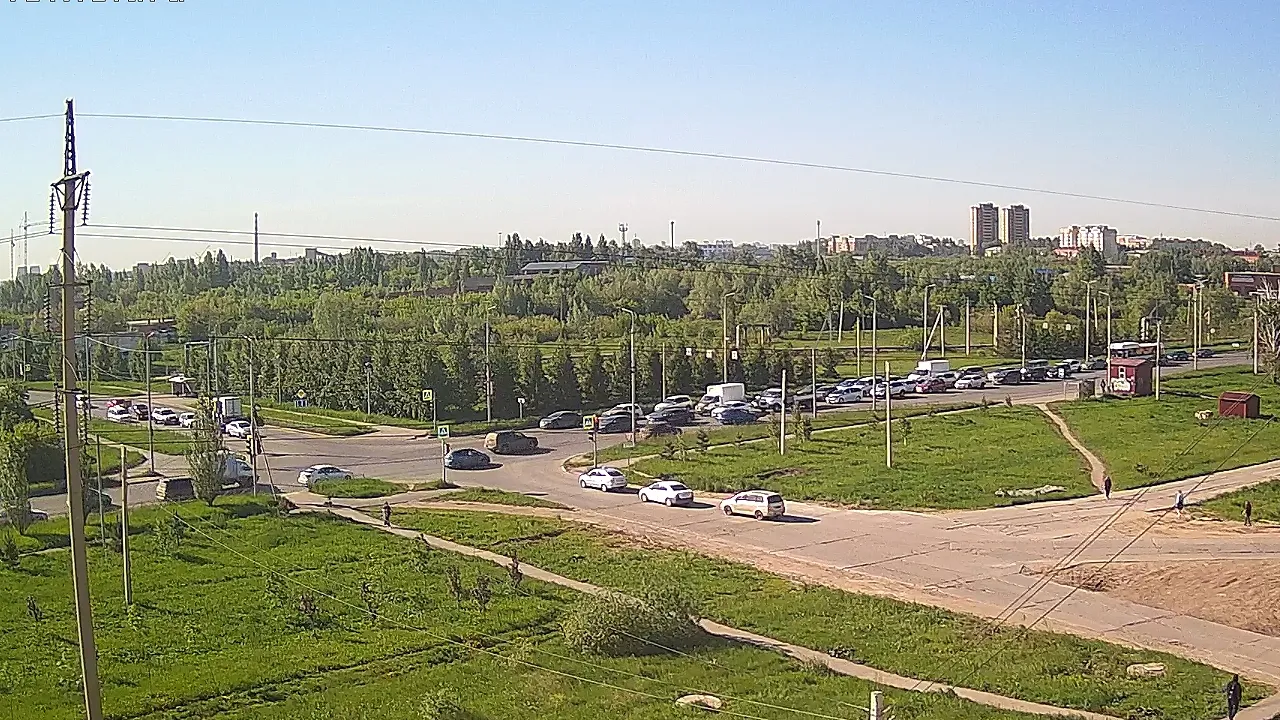
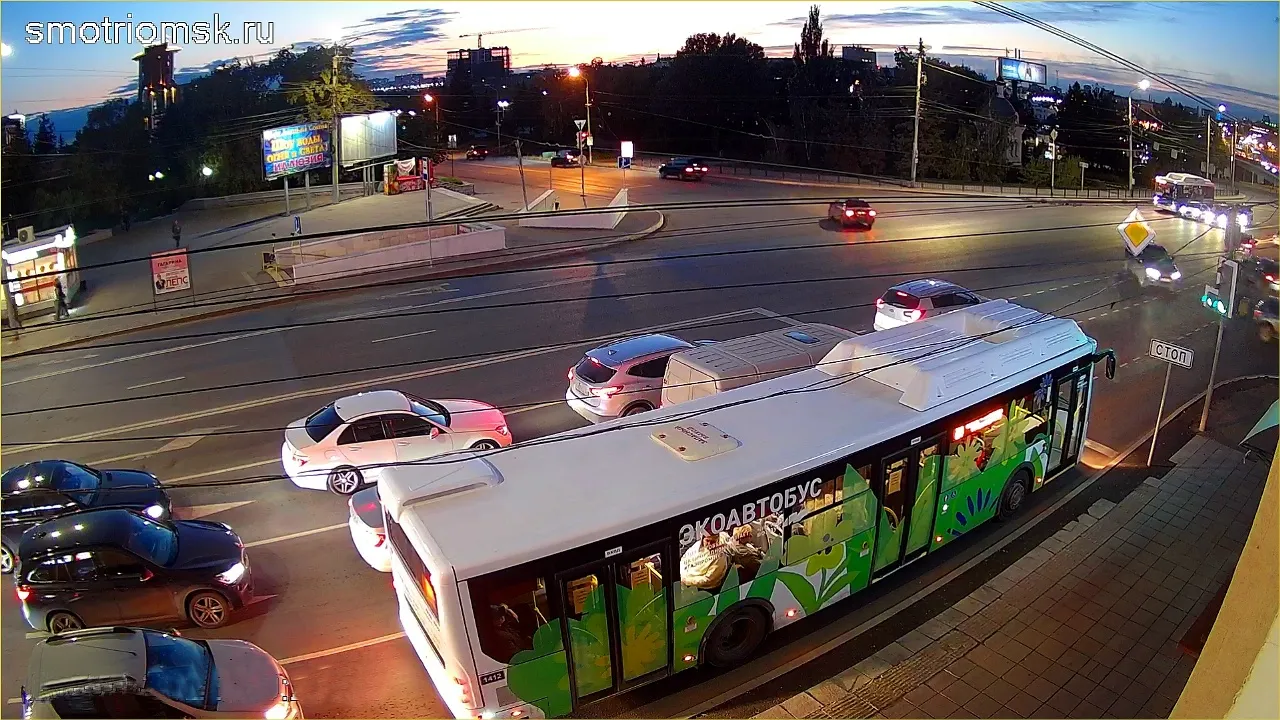
The webcam on Frunze Street allows you to observe the life of this part of the city in real time — from traffic flows to the architectural surroundings, which combine pre-revolutionary mansions and modern buildings.
Architectural Heritage: Merchant Mansions and Monuments
Frunze Street is rich in historic buildings dating from the late 19th to early 20th century. One of the most notable landmarks is the house of Mikhail Pospeev at Frunze, 4. The brick mansion was built in the late 19th century and belonged to Captain Mikhail Pospeev, who was executed in 1937. The building miraculously survived the construction of the metro bridge and was subsequently recognized as an architectural monument.
Another landmark is the Batyushkin merchant mansion, also known as the "Kolchak House." During the Civil War, it housed the residence of Admiral Alexander Kolchak, giving the building special historical significance. The mansion is a 19th-century architectural monument and one of the symbols of the so-called "third capital" — Omsk, where the anti-Bolshevik government was based in 1918–1919.
Military History: The Frunze Military School and Cadet Corps
The street's name is inextricably linked to Omsk's military history. It was home to the Omsk Higher Combined Arms Command School named after M.V. Frunze, which operated from 1937. After the school was disbanded in 1999, a cadet corps was established on its basis, continuing the traditions of military education in the region.
In the courtyard of the cadet corps stands a monument to M.V. Frunze — a life-size sculpture of the Soviet military commander, which has become one of the street's landmarks. For tourists interested in the military history of Siberia, this part of Omsk is of particular interest.
The Metro Bridge: A Modern Symbol of the City
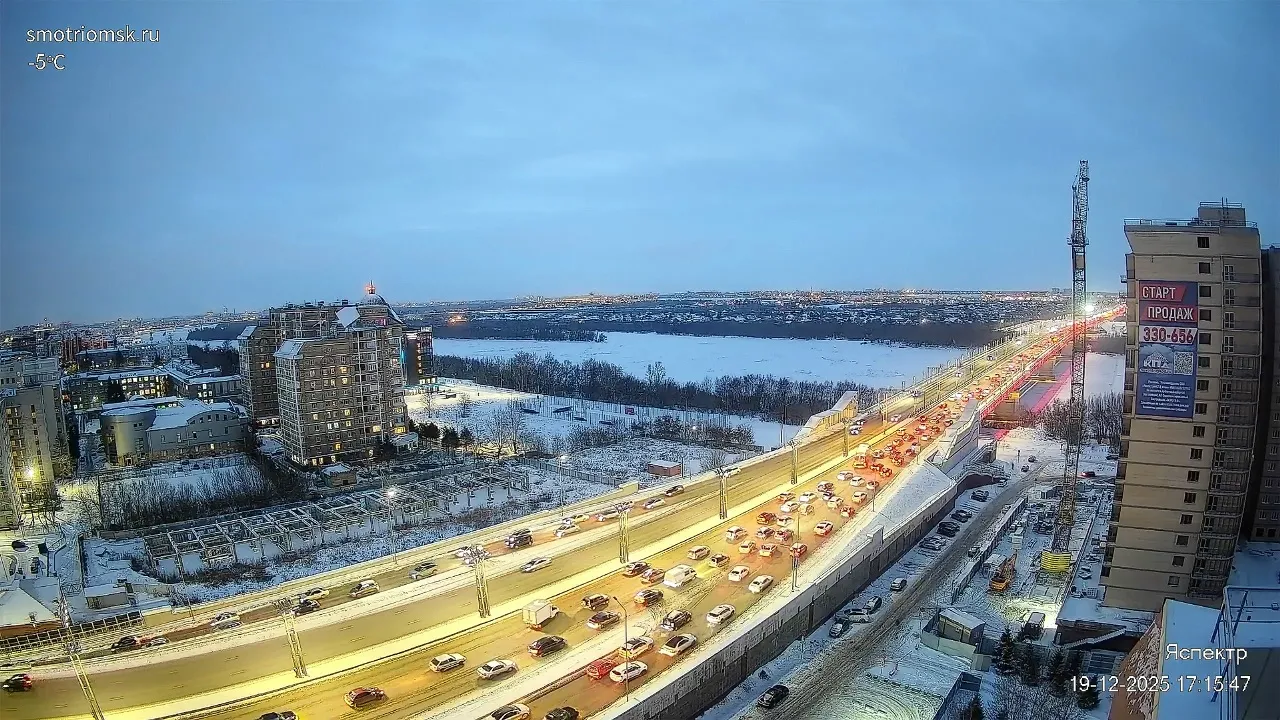
One of the main architectural landmarks visible from Frunze Street is the metro bridge across the Irtysh River, opened in 2005. Construction of the bridge began back in the 1990s and stretched over many years, but ultimately it became one of the symbols of modern Omsk. The metro bridge combines the functions of a road and pedestrian bridge with metro elements (although the Omsk metro was never fully completed).
The bridge spans the Irtysh, connecting the central part of the city with the left-bank districts. For visitors to Omsk, the metro bridge is a popular spot for photos and walks, offering panoramic views of the river and the cityscape.
The Transport Role of Frunze Street
Frunze Street remains an important transport artery of Omsk. Numerous public transport routes run here: buses No. 20, 44, 63, 69, 73, 94, 110, as well as trolleybus lines. The "Frunze Street" stop is one of the key stops in the Central District, connecting various parts of the city.
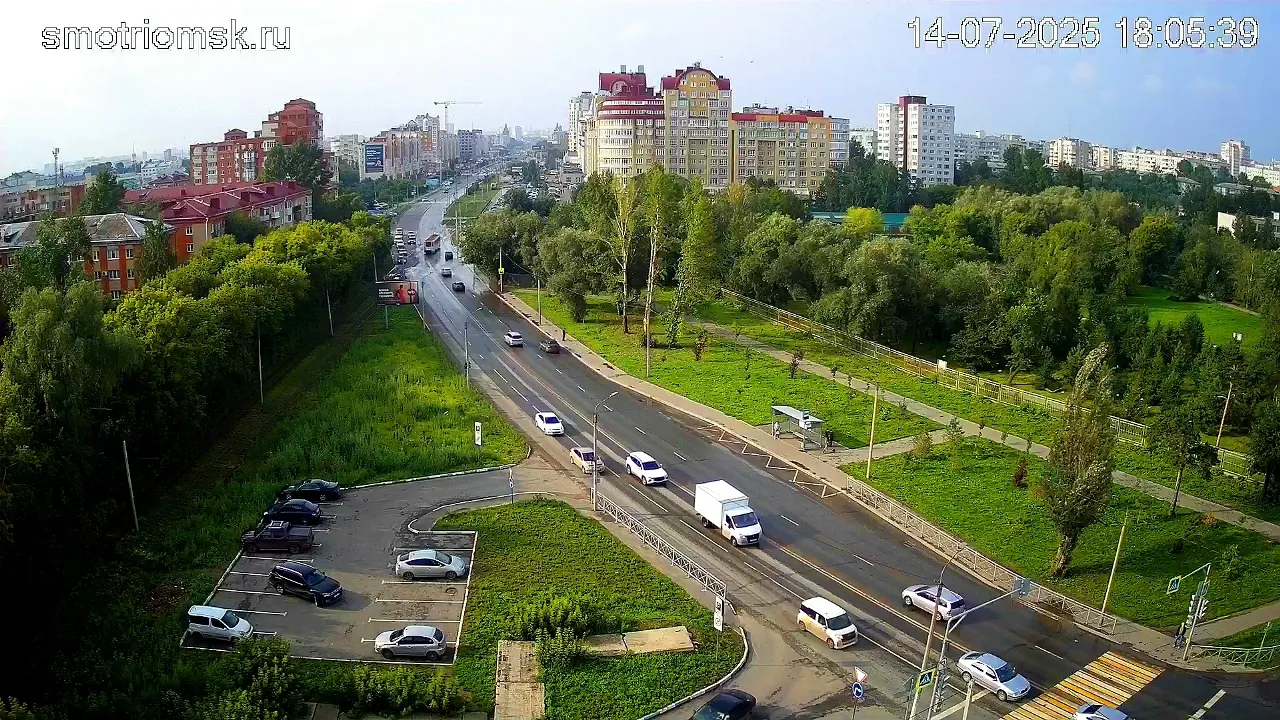
The multi-lane highway with parking zones provides access to administrative and commercial facilities located along the street. Traffic intensity is high at any time of day, making the webcam on Frunze Street a useful tool for assessing the traffic situation in central Omsk.
What Attracts Tourists on Frunze Street
For travelers visiting Omsk, Frunze Street is interesting as a concentration of historic architecture and military monuments. The Batyushkin mansion attracts enthusiasts of the Civil War and the "white" history of Russia. Merchant houses from the late 19th century showcase the pre-revolutionary way of life of a Siberian city, what Omsk was like before the revolutionary upheavals.
The metro bridge and views of the Irtysh attract photographers and lovers of urban landscapes. The proximity of the river embankment makes the street convenient for walks — you can combine sightseeing with access to the water and panoramic views of the city.
Modern Development and Urban Landscape
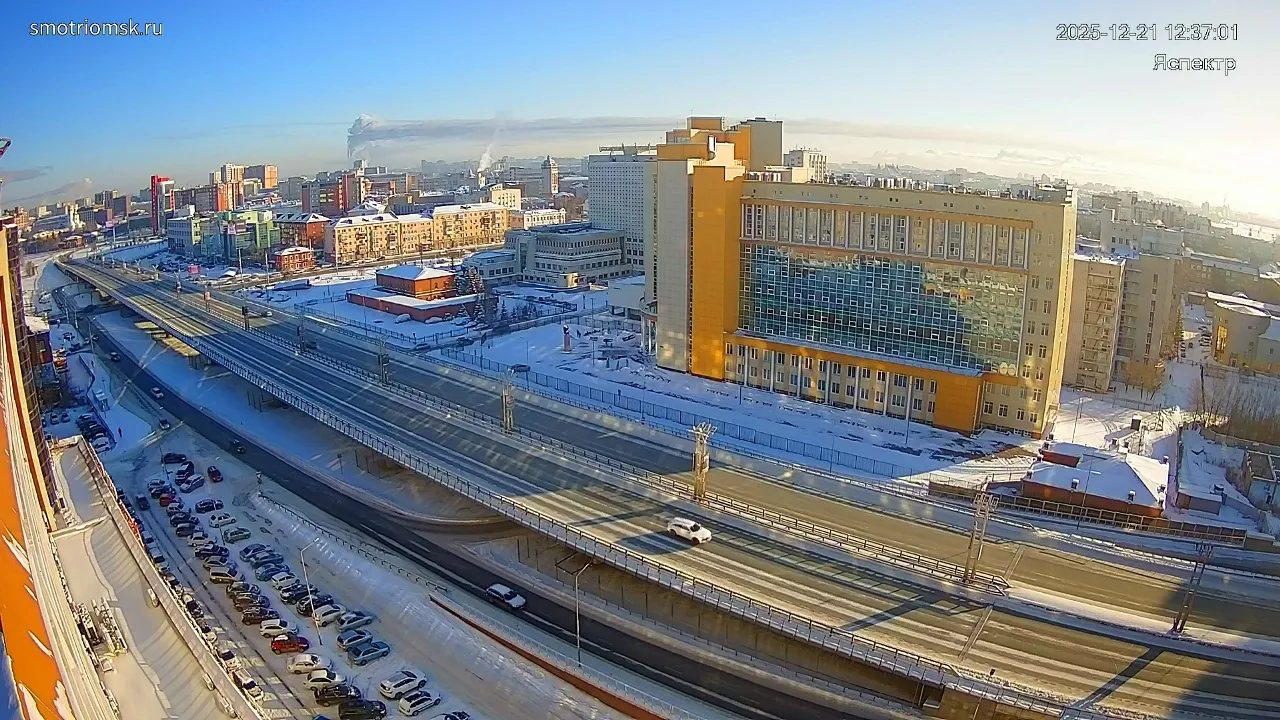
In addition to historic buildings, Frunze Street features modern structures — office centers with glass facades, shopping complexes, and residential high-rise buildings. The contrast between pre-revolutionary mansions and modern architecture creates the distinctive look of central Omsk, where different eras coexist side by side.
Street lighting, road infrastructure, and green zones along the roadway — all of this shapes the urban landscape that can be observed through the online camera. The residential high-rise buildings in the background remind us that Omsk is a city with a population of over one million people, a major industrial and cultural center of Siberia.
What the Camera Shows
The webcam on Frunze Street in Omsk broadcasts a panoramic view of a city street with a multi-lane highway. In the frame — a parking area with numerous cars, a large modern building with a glass facade and yellow-orange panels, residential and public buildings in the background. The urban landscape is complemented by multi-story residential buildings, street lighting, and road infrastructure. The camera operates in real time, allowing you to observe traffic and the life of central Omsk at any time of day.
Similar cameras
Find similar