

🏳️ Costa Rica Webcams Online — Watch Live in Real Time
3 cameras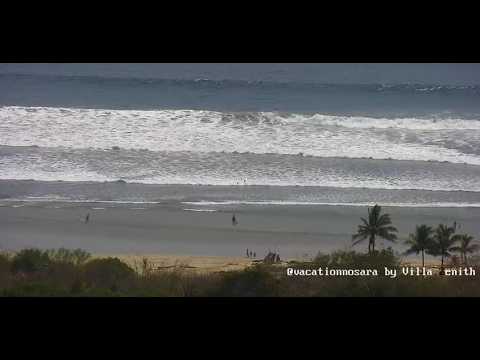
Nature of Costa Rica
Central America holds an amazing heritage on its southeastern edge. Here, on a narrow strip of land between two oceans, a unique ecosystem has formed, preserved in some areas practically untouched. Volcanic chains and forest cover create a living mosaic of landscapes where lava flows meet dense tropical forests. A special place in biodiversity is occupied by national parks, which protect rare species of animals and plants that have become symbols of the entire region. Biologists often cite an estimate: on less than 0.03% of the Earth's surface, about 5% of the world's biodiversity is concentrated. Attempts to assess this quantity in more detail are being made by scientists throughout the country.
Volcanic Territories
Volcanoes play a notable role in the landscape: their craters and cones form a scenery that ranges from light haze to violent eruptions. A prominent example is the Arenal volcano, whose nearly perfect cone rises above the surrounding landscape. Since it is about 7 thousand years old, impressive natural phenomena can be observed here. In the vicinity of this object, there are cities whose streets were traditionally named after landmarks — gas stations, shops, and sleeping animals. This creates an atmosphere that can be observed through modern cameras: you can see how life flows around the giant volcanic body.
National Parks
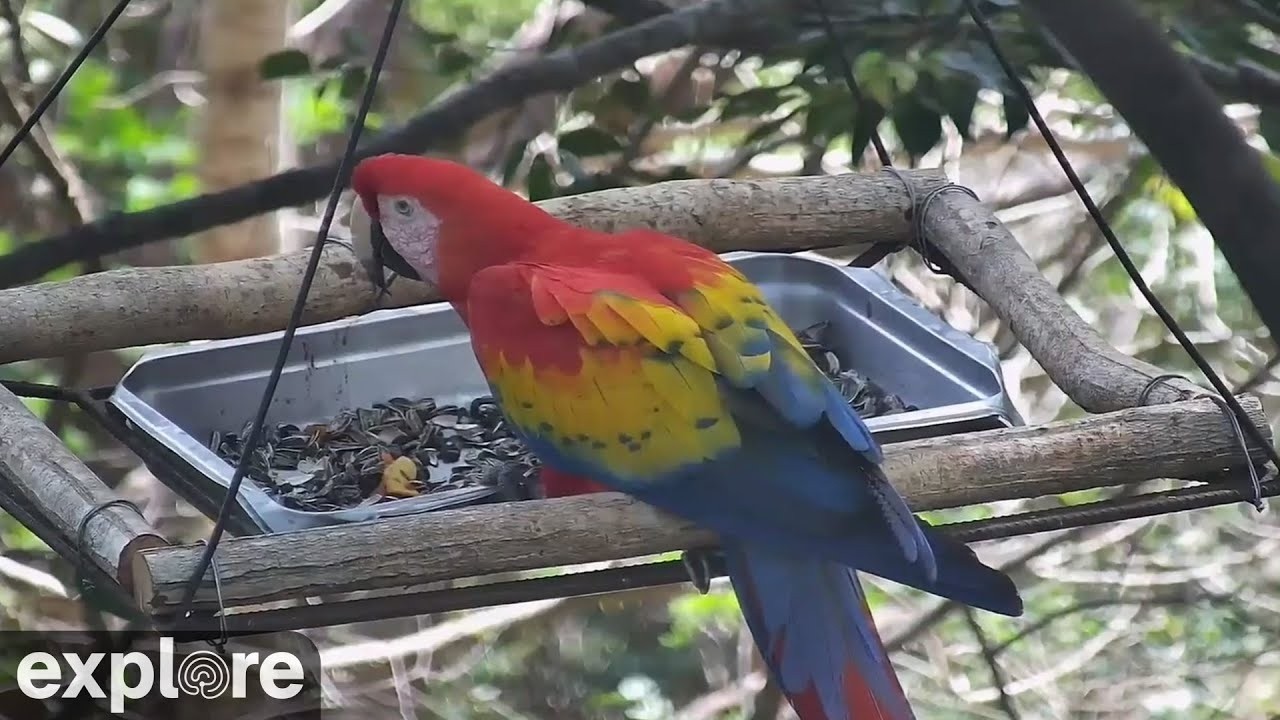
Protected natural areas extend over a significant part of the country. For example, one of the most visited parks occupies a very small area but attracts many visitors from around the world due to its rich wildlife. Here you can meet many birds, which serves as a sign of the preservation of ecological connections. Another object is located in a zone of high humidity, where trees are constantly shrouded in fog, forming a special microclimate. These parks serve as an important place for the conservation of species, many of which are found only here.
Culture and Society
The local population uses the diminutive suffix «tico», which is present in many words of everyday communication. The phrase «pura vida» has become a symbol of the philosophy of life, expressing the value of simple and joyful existence. The country's largest city is located on the central plateau at an altitude of about 1170 m, its historic core was formed from the mid-18th century. In the very center of the city, important cultural and commercial objects are concentrated, also available for camera observation. Often, even after the appearance of new navigation systems, landmarks remain the same — cafes, shops, streets with characteristic buildings, which makes any broadcast interesting.
Coastal Territories
On the western and eastern edges of the country, the shores turn into wide strips of beaches. Picturesque bays and reef systems are formed here, where diverse marine life and tropical vegetation can be seen. Many tourists strive to visit island areas and coves where conditions are preserved for the life of a large number of marine organisms. In such places, street numbering is traditionally not used, orientation is often based on natural and household objects — esplanades, cafes, piers. Modern cameras capture these scenes, allowing you to remotely feel the atmosphere of coastal areas.
San Jose and Its Surroundings
The capital is located in the center of the country, on a mountain plateau, which affects the climate and architectural style of urban neighborhoods. Since the mid-18th century, the city was formed as a trade and administrative center, gradually turning into a modern metropolis with an agglomeration exceeding 2 million inhabitants. The center concentrates theaters, markets and museums, many of which are available for viewing in real time through broadcasts. Due to the peculiarities of orientation on the ground, even after the appearance of street name signs, people continue to rely on familiar landmarks. This gives a chance to see live urban rhythms on camera that are hard to see from a bird's eye view.
Attractions and Nature
Among natural objects, volcanic mountains with active craters attract special attention, as well as dense forest areas with an abundance of flora. In the region washed by the Caribbean Sea, you can see how tropical forests descend to the water, creating transitional zones where mosquitoes, birds and other organisms coexist with marine inhabitants. On the Pacific coast, lagoons and beaches are formed that attract not only tourists but also ecosystem researchers. Protected areas play an important role, where protected species live in conditions as close to natural as possible.
What Cameras Show the Country
Modern webcams allow you to follow live scenes of nature and cities: from the dynamics of volcanic processes to the rhythm of life in the capital. With their help, you can observe natural phenomena and the urban atmosphere, linger on beautiful sunsets and sunrises, see flora that changes depending on the season. Often such objects are available around the clock, which allows you to get into a tropical forest, to the ocean shore or to the center of a metropolis without interruption from current affairs. The combination of natural and urban subjects in video broadcasts gives a holistic impression of the country. Even on a small sample of cameras, you can appreciate the scale of national parks and the scale of capital life, see the city in real time and even look into cozy city cafes. Whatever point on the map you choose, the broadcast shows vivid, unique images of life, filling the observation of the country with living meaning. Cameras capture not only the weather, but also the atmosphere, which in Costa Rica is uniquely its own and always in motion.