

🏙️ Webcams Tofino online — watch in real time
5 cameras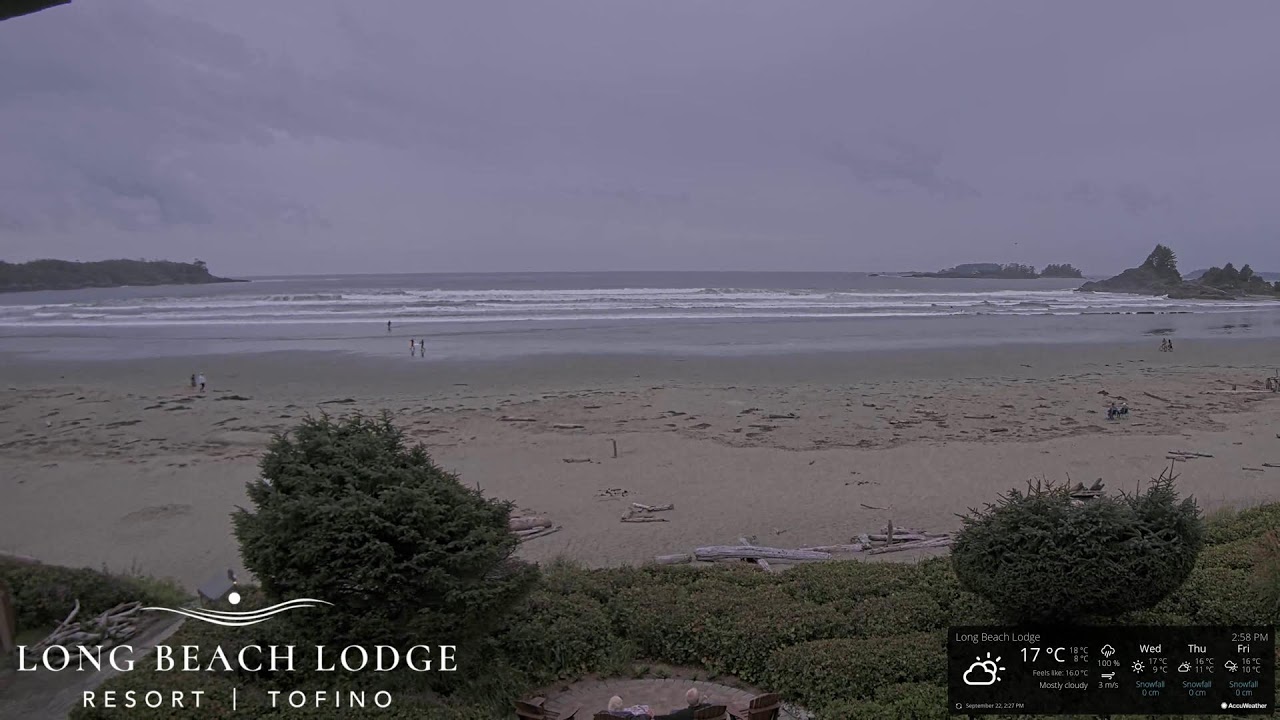


Tofino: the edge of the earth on the west coast of Vancouver Island
Tofino is the place where the Trans-Canada Highway ends in the Pacific Ocean. A small town on the western edge of Vancouver Island in British Columbia attracts travelers seeking wild nature, powerful storms, and endless beaches. With a population of 2,516 according to the 2021 census, Tofino swells to the size of a small city in the summer months when surfers, tourists, and wildlife enthusiasts flock here.
Located on the Esowista Peninsula at the southern edge of Clayoquot Sound, Tofino is surrounded by water on three sides. To the east is Tofino Inlet, to the west the vast Pacific Ocean, and to the south the islands of the Broken Group archipelago. This isolation has created a unique ecosystem and preserved the atmosphere of a remote coastal settlement accessible only by one road — Highway 4 from Port Alberni.
From Spanish maps to surfing: the history of the town
The history of Tofino begins with European explorers. Spanish captain José Pérez Hernández first charted these shores in 1774. British explorer James Cook followed in 1778. The name of the bay — Tofino — appeared in 1792 when Spanish explorers Galiano and Valdés named it in honor of Admiral Vicente Tofino de San Miguel, under whom Galiano served.
The first non-Indigenous settlement appeared in 1854 when British colonial agent William Banfield established a trading post on Stubbs Island (now Clayoquot Island). The steamer "Princess Maquinna" began bringing the first tourists in 1913, and the real tourist boom began after 1964 when the logging road from Port Alberni to Tofino opened to public use. The creation of Pacific Rim National Park in 1970 cemented the region's status as a tourist destination.
In the late 1980s, Tofino became a center of environmental activism. Protests against logging on Meares Island, known as the "War in the Woods," led to the largest act of peaceful civil disobedience in Canadian history. Today, Tofino is a blend of environmental consciousness, surf culture, and Indigenous traditions.
Nuu-chah-nulth: roots and traditions of the west coast
Tofino is located on the traditional territory of the Tla-o-qui-aht and Ahousat peoples of the Nuu-chah-nulth group. Archaeological evidence indicates that the Nuu-chah-nulth have inhabited these lands for at least 5,000 years. The name "Nuu-chah-nulth" translates to "along the mountains and sea" — an accurate description of Tofino's landscape.
Nuu-chah-nulth culture centers on a deep connection to the land and sea. Traditional activities include fishing, whaling, gathering, and woodcarving. The philosophical principle hishuk'ish tsawalk — "everything is connected, everything is one" — reflects a worldview in which humans are not separate from nature. Key ceremonies include the Wolf Ritual — a winter initiation rite — and the Potlatch — a celebration for redistributing wealth.
Today, Indigenous peoples are actively involved in Tofino's tourism industry. Tla-o-qui-aht Tribal Parks offer an alternative to commercial tourism based on the principle of ƛaayaksiinḥ iʔin — "Let us be generous and helpful." Visitors can learn about traditional woodcarving, try local cuisine, and hear stories passed down through generations.
Capital of storm tourism and surfing
Tofino has earned a reputation as Canada's "storm watching capital." Its exposed location on the west coast of Vancouver Island puts the town directly in the path of Pacific low-pressure systems. There is no landmass between Tofino and Japan, allowing wind to build waves to enormous sizes. The storm season lasts from November to March, bringing up to 492 mm of precipitation in November — the wettest month.
But Tofino is known for more than just storms. It is Canada's "surfing capital" with over 35 kilometers of sandy-bottom beaches. Unlike rocky reefs in other parts of Vancouver Island, the sandy bottom creates a safer environment for learning. Cold water (7°C — 14°C) requires wetsuits but forms clean, powerful waves that attract surfers from around the world.
Main spots include Long Beach with gentle waves for beginners, Cox Bay for intermediate surfers, and Chesterman Beach — the most consistent spot with waves year-round. Surf culture here is inclusive: roughly equal numbers of men and women ride the waves. In 2010, Cox Bay Beach hosted the O'Neill Coldwater Surf Classic — the first ASP professional tournament in Canada.
Wildlife: whales, bears, and ancient cedars
Tofino is located on the border of Pacific Rim National Park, providing access to rich wildlife. Whale watching season runs from February to October. Gray whales migrate from late February through late May, with a peak in March-April when the Pacific Whale Festival takes place. Humpback whales and orcas can also be seen.
Black bears are frequent visitors to Tofino's beaches, especially in the morning and evening hours. Boat tours allow you to observe bears in their natural habitat — on the tidal flats near the shore. Sea lions, seals, otters, and even wolves (especially near Vargas Island) complement the region's fauna.
Trails into the island lead to ancient cedars. The Ancient Cedars & Rocky Bluffs trail near Ucluelet leads to giant red cedars over 800 years old with a circumference of up to 12 meters at the base. These trees are living witnesses to the region's history, having survived centuries of storms and change.
Gastronomy and culture: from a taco truck to a chocolate factory
Despite its small size, Tofino surprises with its culinary diversity. Tacofino — a cult taco truck with portions described as enormous — has become a symbol of local street food. Chocolate Tofino — a chocolate factory and gelateria — was founded by a couple who came to surf and fell in love with the local chocolate shop.
Wolf in the Fog — a bar with craft cocktails made from local ingredients — has been recognized as one of Canada's top culinary destinations. Shelter Restaurant offers cocktails and dishes made with local products. Tofino Brewing Company brews craft beer and kombucha. Rhino Coffee House is famous for its beer donuts — with beer in the dough — and bacon in maple syrup.
Art thrives in numerous galleries: Mark Hobson Gallery, Jeremy Koreski Gallery, Tofino Gallery of Contemporary Art. Henry's Carving Shed at Wickaninnish Inn is a place where you can watch traditional west coast woodcarving. The workshop was founded by Henry Nolla in the 1970s; after his death, the tradition is carried on by a new generation of carvers.
Climate: one of the wettest cities in Canada
Tofino's climate is maritime, with mild winters and cool summers. November is the wettest month with about 492 mm of precipitation. However, extreme temperatures do occur: the record high temperature is 35.4°C (June 28, 2021), and the record low is -15.0°C (January 30, 1969).
Morning fog is a common summer phenomenon, especially in July and August. It clears by noon, revealing sunny beaches and turquoise water. Autumn brings powerful storms that can be observed from safe viewing platforms. Wickaninnish Inn, specially built for storm watching, offers rooms with huge windows capable of withstanding 100 mph winds.
In winter, Tofino slows down but doesn't sleep. It's a time for storm watching, walks on deserted beaches, and enjoying the coziness of local cafes. In spring, nature awakens, and the town prepares for a new tourist season.
What the cameras show in the city
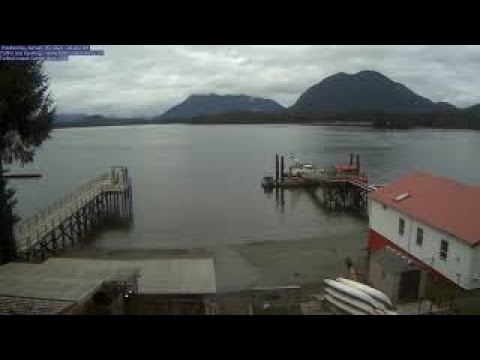
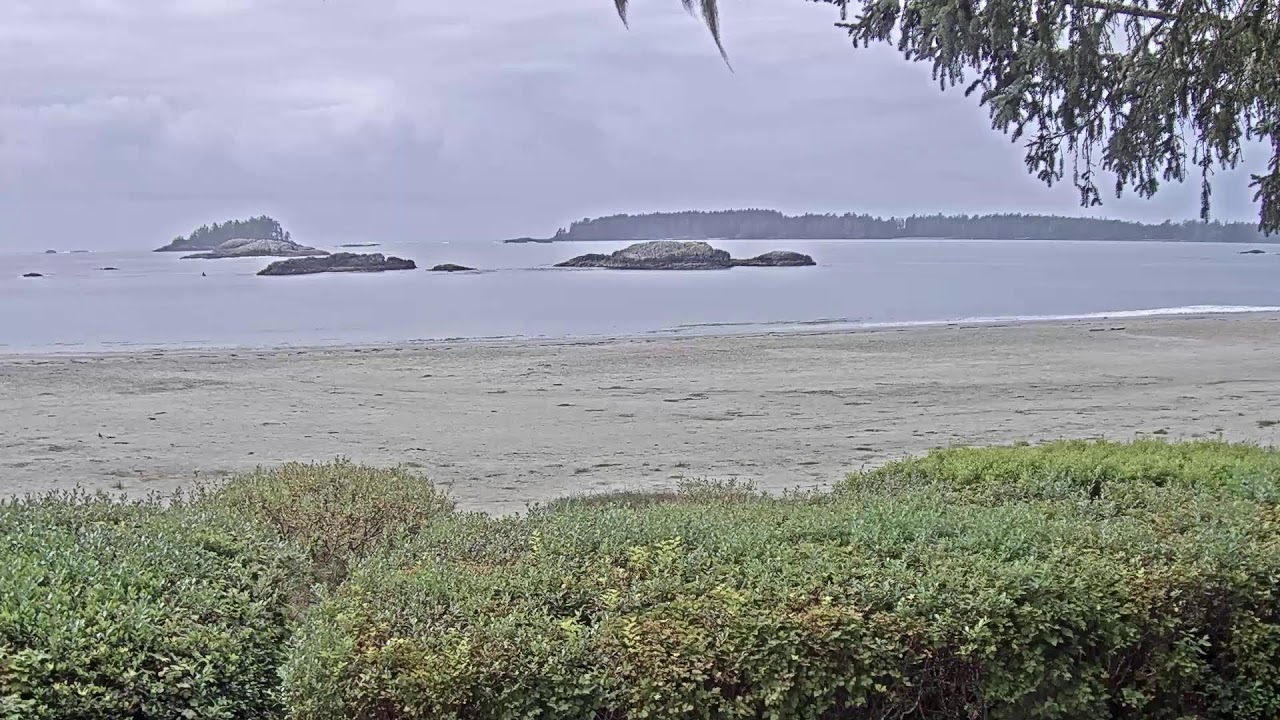
Tofino webcams online offer views of key points in this coastal town. Cameras are installed at Long Beach and Cox Bay, allowing you to watch surfers and storms in real time. Other cameras show Tofino Harbor with yachts and boats, as well as a panorama of Clayoquot Sound with islands on the horizon.
Watching Tofino webcams is especially interesting during the storm season — from November to March, when powerful waves crash against the coast. In summer, the cameras show sunsets, surfers on the waves, and tourists on the beaches. The morning fog that often envelops the town creates a mystical atmosphere on the broadcasts.
Tofino online streaming is available 24/7, allowing you to choose the best time for observation. Beach cameras show real surfing conditions, while harbor cameras show water and weather conditions. It's a convenient way to plan a trip or simply enjoy the beauty of Vancouver Island's west coast without leaving home.