

🏙️ Usinsk webcams online — watch the oil capital of Komi in real time
1 cameras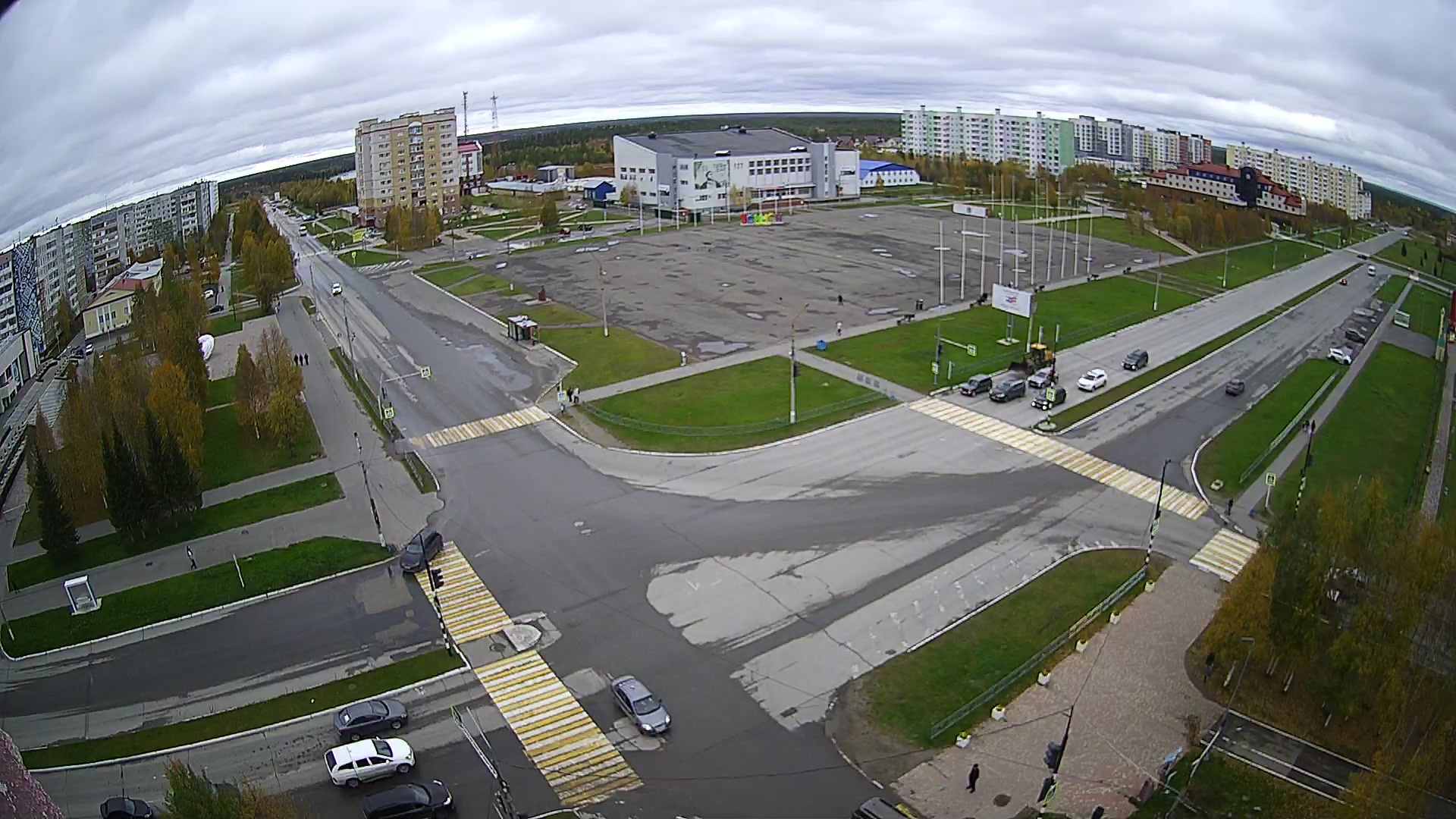
Usinsk — a city born from oil
In the north of the Komi Republic, where the taiga meets endless swamps and winter reigns for most of the year, stands a city with a difficult but proud destiny. Usinsk is not just a dot on the map — it is the true oil capital of the region, a place where geologists once discovered black gold that changed the life of the entire territory. Today, this city is one of the key industrial centers of Russia's Arctic zone, and its history is inseparably linked with the development of oil production in the European North-East of the country.
The city is located 60 kilometers from the Arctic Circle, although formally it lies just south of this imaginary line. This circumstance leaves its mark on everything — from the climate to the rhythm of life of local residents. Usinsk stands on the right bank of the Usa River, a tributary of the Pechora, and is surrounded by nature typical of these places: coniferous forests, river valleys, and vast marshy expanses. You can observe the life of this northern city through Usinsk webcams online, which show the streets and squares in real time.
How oil created the city
It all began in October 1960, when geologists from the Pechora-neftegazrazvedka trust expedition arrived in these parts and began drilling a deep reference well No. 1 on the Usinsk structure. It was then that the foundations of the future Usinsk oil field, located 30 kilometers north of the modern city, were laid. Already in 1966, the settlement of Usinsk was founded to develop the Arctic's great oil, and in March 1970, active construction of the city began.
The early years were harsh. Builders lived in simple wooden houses, worked in conditions of impassable roads and extreme frosts. But already on December 24, 1974, the first secondary school was built, and on May 1, 1975, the first stone residential building was commissioned. An important milestone was January 17, 1975, when the development of the Usinsk and Vozheyskoye oil fields and the construction of the city were declared an All-Union Komsomol shock construction project. This brought thousands of young specialists from all over the country, turning Usinsk into a real center of attraction for oil workers.
On February 21, 1975, the Usinsk district was formed with its center in the workers' settlement of Usinsk, and in 1984 the settlement finally received city status. Since then, Usinsk has continued to develop as the most important oil-producing center of the Komi Republic, providing more than 70 percent of all industrial production in the region.
Climate and nature: life on the border of the subarctic
The climate of Usinsk is moderately continental, but in its parameters it is close to subarctic. Winter here is long and severe, taking hold early and reluctant to retreat. The minimum temperature in winter reaches −45 degrees and below, while in summer the thermometer sometimes rises to +30 degrees. Such fluctuations are common for this northern city, where nature dictates its own rules.
The Usinsk oil field is located 30 kilometers north of the city and 115 kilometers north of the Pechora. Two major companies — Lukoil and Rosneft — develop oil fields on the territory of the Usinsk district. It is thanks to their activities that Usinsk provides about 60 percent of oil and 3 percent of gas from the total production volume in the Komi Republic, earning the title of oil capital of the region.
The nature around Usinsk is harsh but picturesque. Coniferous forests, river valleys, swamps — all this creates a unique Arctic landscape. The Usa River, on which the city stands, is a tributary of the Pechora and plays an important role in the lives of local residents. In the warm season, you can observe the white nights here, when the sun barely hides behind the horizon, and in winter — the northern lights, which sometimes illuminate the sky above Usinsk.
Attractions: what to see in Usinsk
Usinsk is a relatively young city, so there are no ancient estates or ancient ruins here. But there are unique objects reflecting the spirit of oil workers and the distinctive culture of the North. The main attraction, perhaps the most unusual one, is the mosquito monument, installed on October 12–13, 2012, in the Student Square behind the UGTU building.
The initiators of the monument's creation were the student council of the Usinsk branch of Ukhta State Technical University, and the idea was brought to life by the well-known Siberian sculptor Valery Chaloy. In winter, the monument is dressed in a hat, boots, and a coat, and on the eve of the New Year it is decorated as a true symbol of the city. This tradition has become one of Usinsk's calling cards, attracting tourists and bringing smiles to passersby.
In addition to the mosquito monument, in Usinsk you should visit the museum with minerals and local folklore, the heavy Mi-6 helicopter in the park, the Yak-40 aircraft, the House of Pioneers and Schoolchildren, established in 1976, as well as the Palace of Culture and the Tomlun cinema. Each of these objects tells its own story — about the heroism of the pioneers, about the development of aviation in the North, about the cultural life of an oil city.
Districts and infrastructure of the city
Usinsk is a compact city with a clear layout typical of settlements built in Soviet times. The central streets — Neftyanikov, Lenina, 60 Let Oktyabrya, Komsomolskaya — form the core of the city, where the main administrative buildings, shops, and cultural facilities are concentrated. Residential quarters are mainly represented by five-story and nine-story buildings, although there is also a private sector on the outskirts.
Neftyanikov Street is the main artery of Usinsk, the symbol of the city and its main transport highway. It is here that the key objects of urban infrastructure are located, and on both sides stretch residential houses and institutions. In the center of the city there is a square where the main festive events take place, and nearby — a park area with the Mi-6 helicopter, which has become a kind of open-air museum.
Usinsk has an airport connecting the city with Syktyvkar and other settlements of the republic. Railway communication also plays an important role in the logistics of the region. For those who want to see the city before traveling, Usinsk webcams online allow you to assess the situation on the streets and weather conditions in real time.
Cultural life and leisure
Despite the harsh climate and remoteness from major cultural centers, Usinsk lives a rich cultural life. The Palace of Culture and the Tomlun cinema are the main venues for events, concerts, and film screenings. The House of Pioneers and Schoolchildren, founded in 1976, continues to operate as a center for children's creativity and additional education.
The local museum houses a unique collection of minerals found in the Usinsk area, as well as exhibits telling about the folklore and traditions of the indigenous population of these places. For the city's residents, cultural life is not entertainment, but a necessity that helps them survive the long winter and preserve human warmth in Arctic conditions.
Sports competitions, festive concerts, and folk festivals are regularly held in Usinsk. City Day, Oil Worker's Day, and the New Year are celebrated especially grandly. In winter time, the city is transformed: ice sculptures, building illumination, and a decorated Christmas tree on the central square create the atmosphere of a true northern holiday.
Economy and industry
The economy of Usinsk is almost entirely dependent on oil production. The Usinsk oil field is the largest in the Komi Republic, producing more than a third of the region's total hydrocarbons. Two giant oil companies — Lukoil and Rosneft — operate on the territory of the district, providing jobs for most local residents.
The Usinsk district provides more than 70 percent of all industrial production of the Komi Republic, making it the most important economic asset of the region. Oil extraction here is carried out using modern technologies, and enterprises constantly upgrade their equipment. In addition to oil production, the city has enterprises servicing the oil industry, construction organizations, and housing and communal services facilities.
The youth of Usinsk often link their careers with the oil industry. The Usinsk branch of Ukhta State Technical University trains specialists for the region's enterprises, and school graduates have the opportunity to continue their education in specialized universities across the country.
What the cameras show in the city
For those who want to see Usinsk with their own eyes without leaving home, there are webcams broadcasting the life of the city in real time. Online streaming from the streets of Usinsk allows you to observe the weather, road conditions, and the atmosphere of the northern city. Cameras are installed at key locations: central squares, intersections, and near attractions.
You can watch Usinsk webcams online at any time of day — during the day, when the city lives its normal life, and at night, when streetlights turn on and buildings are illuminated. The live feed from the cameras gives you the opportunity to assess the scale of snowfall in winter, see the first greenery in spring, or enjoy the white nights in summer. Streaming from the streets of Usinsk is available free of charge and without registration, making it a convenient tool for planning a trip or simply getting to know this unique Arctic city.