

🏙️ Webcams Tomsk Online — Watch Siberian City in Real Time
6 cameras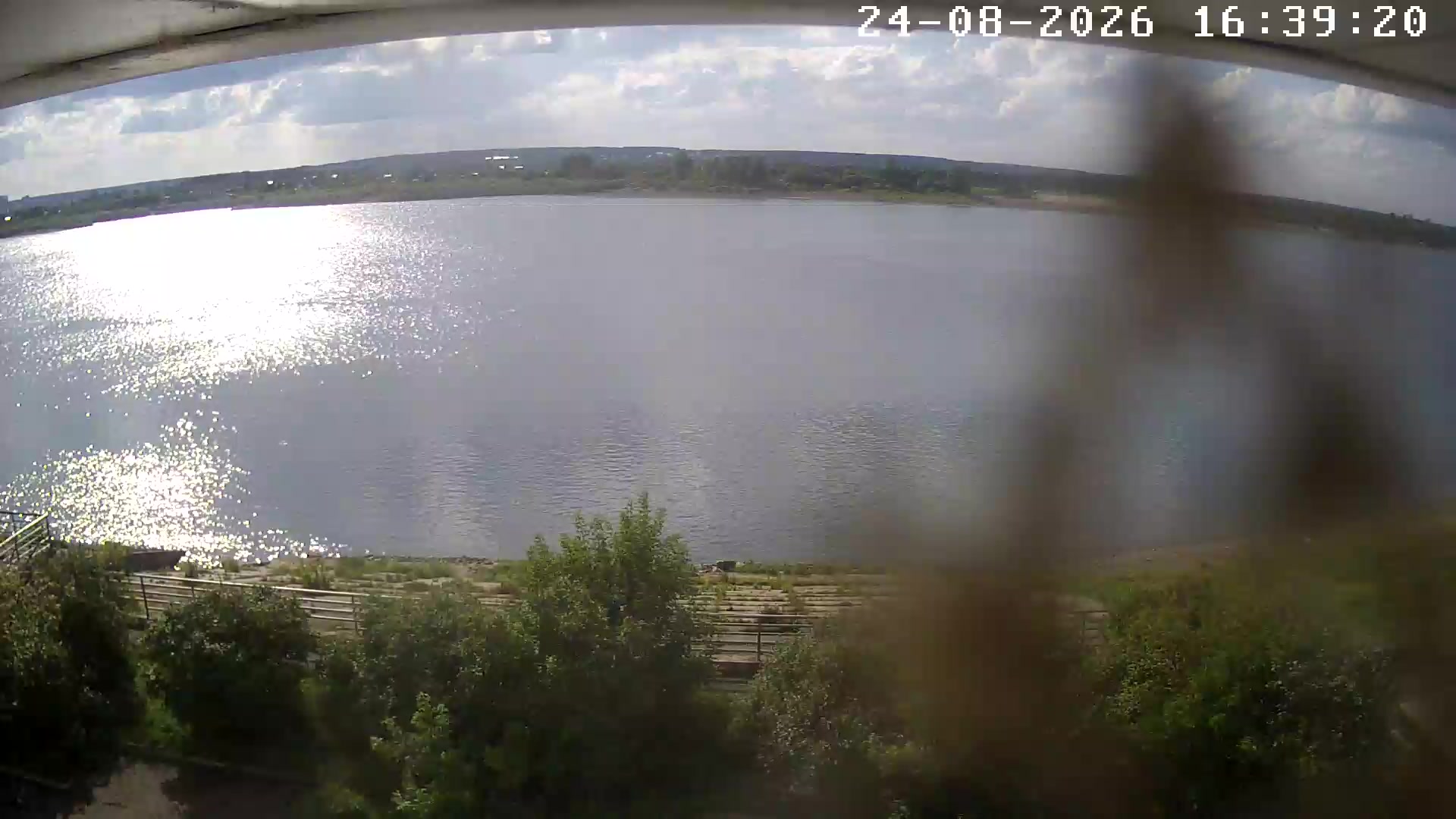


Tomsk — Wooden Poetry of Siberia
Imagine a city where out of one and a half thousand buildings only five are stone. Where carved window frames adorn the facades, and firebirds are carved from wood so skillfully they seem alive. Before the 1917 revolution, Tomsk was almost entirely wooden — in 1810, out of 1,508 structures only 5 were stone, and by 1855, out of 2,500 buildings only 45 were stone. Today, about 1,800 wooden houses from the late 19th to early 20th century have been preserved, making Tomsk home to the world's largest intact array of wooden architecture.
The city was founded in 1604 by decree of Boris Godunov and at the personal request of Tatar prince Toyan. From Resurrection Hill, where the fortress once stood, there is a view of the Tom River and the vast Siberian expanses. The city's population today is about 545 thousand people — it is the seventh largest city in Siberia and the thirtieth in Russia.
Carved Tomsk: Houses That Remember a Century
Tatar Sloboda is a gem of wooden architecture. Here every house tells its own story. Akhmetov's House at 46 Tatarskaya Street was built in 1902 by Tatar Akhmedulla Akhmetov: two wooden floors above a brick semi-basement, rich geometric ornamentation on windows, balconies, and arches. In 2007 it underwent major restoration and appears before viewers in all its glory.
At 67/1 Krasnoarmeyskaya Street stands the house with firebirds — built in 1903 by architect Pyotr Fedorovsky for a retired sergeant major, later owned by merchant Leonty Zhelyabo. The carved firebirds became a symbol of Tomsk's wooden architecture and formed the basis of the city's 400th anniversary symbolism. Today these birds can be seen on logos and souvenirs.
Since 2017, the city has hosted the annual "Tomsk Carpenter" festival, where volunteers restore old houses. There is a "Rent for a Ruble" program — anyone can rent a historic building for a symbolic fee on the condition of its restoration. Experts from the Karlsruhe Institute of Architecture have estimated that many wooden buildings could stand for another 300 years.
Student Capital Beyond the Urals
Tomsk is often called "Siberian Athens" or "Student Capital of Russia". Six universities, dozens of research institutes — there are so many students here that during rush hour it seems the whole city is rushing to classes. Tomsk State University, founded in 1888, became the first university beyond the Urals. Its 19th-century old building is shrouded in legends — they say you can meet the White Lady in the corridors — a ghost that appears at dusk.
The university grove near the main building holds its own mysteries: stone babas stand here — mysterious statues brought from the steppes, which have become a symbol of the city's secret histories. And in the square in front of the university, the noisiest celebrations take place — from Student Day to graduation.
Legends and Myths of the City on the Tom
Tomsk has its own ghosts and prophets. Elder Fyodor — a mysterious hermit who appeared in different parts of the city and told strange prophecies. The Walking Dead — a man in ragged clothes appearing at night by the bridge over the Tom. The Black Raven — a ghost guarding the cemetery of the old monastery. Local residents tell of mysterious underground tunnels connecting old mansions and the former psychiatric clinic.
The city is home to the Museum of Slavic Mythology — the world's first museum dedicated to ancient gods, rituals, and legends. Here exhibits on local folklore and Slavic traditions have been collected. And if you want to touch the mystical — head to the Resurrection Spring, a picturesque natural spring known mainly to locals.
Chekhov Monument and Other Paradoxes
On the Tom embankment stands one of Russia's most ironic monuments — Anton Pavlovich Chekhov through the eyes of a drunk man lying in a ditch who never read "Kashtanka". That is exactly the inscription on the pedestal. The fact is that Chekhov, passing through Tomsk on his way to Sakhalin, spoke unflatteringly about the city in his letters. Tomsk residents were not offended — they responded with humor, creating a monument that has become one of the most popular attractions.
On the embankment you can watch the life of the city for hours: students walk across the bridge, temple domes are reflected in the water, and endless forests are visible beyond the river. In winter it is especially beautiful — frost covers the trees, and Tomsk turns into a fairy-tale city of ice and snow.
Cuisine and Traditions: From Strganina to Festivals
Tomsk cuisine is a Siberian soul on a plate. Pelmeni with maral meat, sterlet and muksun ukha, strganina — thinly sliced frozen fish, reindeer meat with lingonberry sauce. Traditional pancakes here are a symbol of hospitality, served with honey, sour cream, and pine cone jam.
The city lives through vibrant festivals. "Axe Festival" — an international wooden architecture festival since 2008. "Crystal Tomsk" — a winter ice sculpture festival since 2014. "Golden Birch Bark", the Cossack festival "Bratina", "Sabantuy" — each reveals different facets of Siberian culture. And local slang adds color: baganyuk — dreary weather, ryam — swampy place, sletovye — dry and sunny weather, zdanut' — to add steam in a bathhouse.
City Districts: From the Center to Akademgorodok
Tomsk is divided into four districts: Kirovsky, Leninsky, Oktyabrsky, and Sovetsky. The historical center is Resurrection Hill, NovoSobornaya Square, and the Tom embankment. The main attractions, museums, and restaurants are concentrated here. Leninsky District is Tatar Sloboda and merchant mansions. Oktyabrsky is the largest by area, home to almost a third of the city. Sovetsky District is famous for Akademgorodok — the scientific center of Siberia, where research institutes and laboratories are concentrated.
The city's area is 294.6 km², the center's elevation is 80 meters above sea level. The climate is continental-cyclonic: in winter frosts down to minus 30, in summer heat up to plus 35. But it is this contrast that makes Tomsk so different in different seasons — from a snowy fairy tale to a green oasis.
City of Labor Valor and Scientific Discoveries
By decree of the President of the Russian Federation on July 2, 2020, Tomsk was awarded the title of "City of Labor Valor" — for its contribution to the victory in the Great Patriotic War. During the war years, factories and institutes were evacuated here, Tomsk residents worked for the defense industry, and hospitals received thousands of wounded.
Today Tomsk is also the scientific capital of Siberia. The Tomsk urban agglomeration with the satellite city of Seversk and suburbs numbers about 766 thousand people (2024). The distance from Tomsk to Moscow is 3,553 km, the time difference is 4 hours (UTC+7). The average age of residents is 39 years (2023), making the city quite young by Siberian standards.
What the Cameras Show
Tomsk webcams allow you to see the city in real time — from the historic center to modern districts. Watch the life of the Tom embankment, follow the weather on Resurrection Hill, observe student life near university buildings. Cameras at Tatar Sloboda will show famous wooden houses with carved window frames, and broadcasts from Lenin Prospect will show the rhythm of the business center.
Choose a camera and watch Tomsk — a city where the past meets the future, where wooden huts neighbor scientific laboratories, and Siberian hospitality is felt even through a screen.