

🏙️ Verbania Webcams Online — Watch Live Streams in Real Time
1 cameras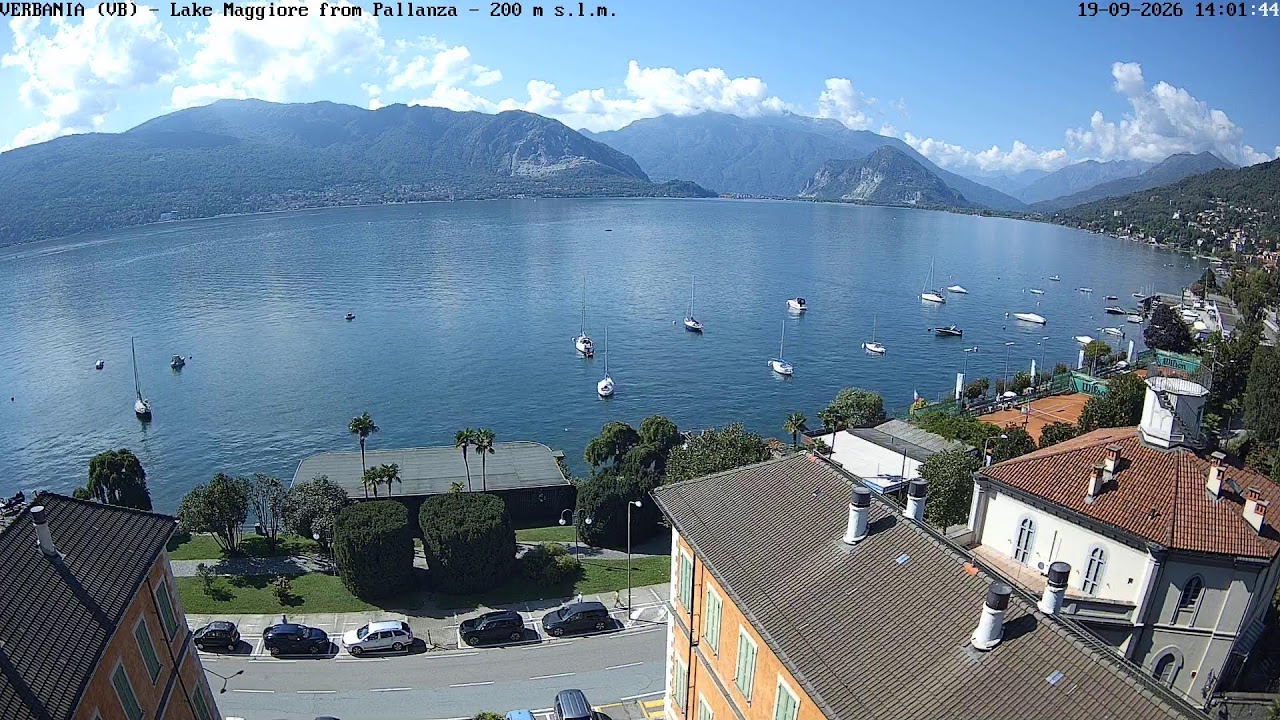
Verbania Webcams Online — A Guide to the City on Lake Maggiore
Lake Maggiore in northwestern Italy is famous for its picturesque shores and ancient cities, and Verbania holds a special place among them — it is the largest city on this large body of water. Modern webcams allow you to remotely experience the atmosphere of this cozy coastal center and its numerous historical districts. The word "Verbania" itself speaks to the centuries-old history of the region: it derives from the Latin name of the lake — "Verbanus Lacus". The city's name is inextricably linked with nature, which has served as its foundation for millennia.
History of Verbania: From Antiquity to Modern Times
The regions around modern Verbania were settled even in prehistoric times — Lepontii lived here, and from the 1st century AD the territory became part of the Roman Empire. However, in the form that the city exists today, it is much younger. In 1939, an important event took place that determined its appearance: three independent settlements were merged — Intra, Pallanza, and Suna — which formed the new city of Verbania. Despite its youth in official history, each of these districts has preserved its own identity and unique historical heritage.
The most important event in the city's history occurred in 1992, when Verbania became the capital of the province of Verbano-Cusio-Ossola. This gave the city administrative status and additional opportunities for the development of culture and tourism. Today the city plays a key role in the life of the entire region, attracting travelers from around the world who want to see it with their own eyes.
Special attention is drawn to the Intra district, which before the merger was an autonomous municipality and has retained its historical significance. This is the central core of Verbania with rich architecture and the atmosphere of a medieval town. The former Pallanza district and the historic settlement of Suna are also part of the modern city, making Verbania a unique formation where different eras and styles meet.
Geographical Location and Unique Features
Verbania's location on Lake Maggiore makes it attractive for observation from the shore or from the water. The city is located on the right bank of the lake, opposite the famous city of Stresa, situated on the left bank. The straight-line distance between them is only 3.7 km, although by road it is more difficult to reach — about 16 km. This proximity to another popular tourist center makes the area around Verbania especially picturesque and rich in attractions.
The city's population is about 30,000 people, making it large enough for a regional center while maintaining the cozy atmosphere of a small town. Verbania is located in the Piedmont region, known for its mild climate and rich landscape from the Alps to Lake Maggiore. The city's climatic conditions promote the flourishing of vegetation and make possible the existence of impressive gardens and parks.
The main natural feature associated with the city's history and modernity is Lake Maggiore. The second largest lake in Italy after Garda, Maggiore is famous for its crystal-clear waters, picturesque shores, and islands. Webcams broadcasting views of the city often show the panorama of the water surface and its coastline, emphasizing Verbania's connection with nature.
City Districts and Their Features
The structure of the modern city was formed historically, and today Verbania is represented by several centers, each with its own specifics. The Intra district is the largest and most important residential area, which has become the historical center of Verbania. Before the merger in 1939, Intra was an independent municipality, and its streets preserve the architectural appearance of the old town. Cameras aimed at this district allow you to observe the life of a real Italian commune with tiled houses, narrow streets, and traditional architecture.
The Pallanza district was historically one of the key settlements in the region, and after the merger became part of the city. A rich heritage has been preserved here, including historic mansions and 17th-18th century estates that testify to the region's wealth in the past. The district center of Pallanza maintains a rural character while being part of the modern city. Its location at the foot of the mountains makes this district a picturesque place with panoramic views of the lake.
Equally interesting is the Suna district, which in the past was an independent settlement and historically played an important role in the life of the region. Its merger with other districts formed the cohesive territory of modern Verbania. Each district has contributed to the formation of the city's culture and architecture, creating a unique mosaic that can be observed through webcams. This is especially valuable for those interested in the history and architecture of Italian cities.
Attractions and Natural Sites
The city is located in a region with rich cultural and natural resources. One of the main natural attractions of Verbania is Villa Taranto, considered one of the largest botanical gardens in Europe. This villa with its adjacent garden covers an area of about 16 hectares and contains over 20,000 plant species. Among them you can find many rare species, including the famous tulip maze. The gardens of Verbania are presented in different styles — from European parks to exotic gardens, making them a unique object for observation at any time of year. The villa's location on Lake Maggiore adds panoramic views of the water to the already rich plant diversity.
The cultural heritage of Verbania is reflected in various museums and exhibitions. The Museo del Paesaggio (Museum of Landscapes), located in the Pallanza district, is an important cultural attraction of the region. The history of this museum dates back to 1909, when it was founded by an erudite and patriot of the region, Antonio Massara. The museum has collected a collection of paintings by local artists dedicated to the landscapes of the region, making it one of the few institutions of its kind in Italy.
The museum also houses the Troubetzkoy Plaster Cast Collection — a collection of plaster models by the famous sculptor Paolo Troubetzkoy (1866-1938). This is a unique collection of sculptural works by one of the most famous sculptors of the late 19th — early 20th century. The collection provides an opportunity to study the creative path of the master and his influence on world art.
The historic district of Verbania, especially Palazzo Viani-Dugnani, represents a hidden gem of the city. Located at via Ruga 44, this palace is an example of the region's rich heritage. The palace's opening hours are from 10:00 to 18:00, and it is closed on Tuesdays. The palace has preserved historical architecture and is an interesting place to explore the cultural heritage of the region. Although some sources indicate that the palace apartments may be accessible only by prior request, the facade and surrounding area are often available for viewing, making it a visual attraction of the city.
Proximity to Other Attractions
Thanks to its location on Lake Maggiore, Verbania is at the center of a tourist zone known for its picturesque nature and historical sites. Opposite the city lies Stresa, which is one of the most popular tourist destinations on the lake. Both cities are clearly visible to each other thanks to their proximity across the water, and tourists often take boat trips between them to appreciate the panorama of the entire coastline.
The Borromean Islands, located between Verbania and Stresa, represent another point of attraction for tourists. These islands are known for their palaces and historic buildings, as well as natural treasures. The view of the islands from the shore of Verbania can be observed through webcams broadcasting panoramic views of the lake. The surrounding nature makes this place special for lovers of nature and history.
Atmosphere of the City and Life on Lake Maggiore
Verbania's webcams allow you to appreciate the atmosphere of this city, where life flows in a peculiar rhythm characteristic of Italian coastal centers. The communal life of the city's districts unfolds with regularities typical of Italy — outdoor cafes, walks along the promenades, exchanging news on the squares. The life of Verbania revolves around Lake Maggiore, and it is this dynamics that can be observed in real time through online cameras.
The uniqueness of the city lies in the combination of historical districts with modern urban infrastructure. The Intra district with its historic center, Pallanza with its palace heritage, and the modern streets of the city create a diverse landscape. Observing the city through cameras helps to understand how these elements interact with each other in the everyday life of local residents.
What the Cameras Show in the City
The list of Verbania webcams includes devices located in various districts of the city and on the lake coast. Main objects for observation: panoramic views of the city from the water, cameras of historic streets and squares of Intra, directions to piers and promenades, as well as views of hotels and lake hotels. These cameras allow you to appreciate the architectural diversity of the city, its coastal areas, and the atmosphere of communal life in real time.
The cameras also broadcast views of the surroundings of Verbania, including suburbs and historic lakeside areas. In some directions of view, you can see views of mountain slopes and surrounding villages, which emphasizes the geographical position of the city. Many cameras are installed in locations where there is a panoramic view of the lake and surrounding area, making observation particularly interesting.
Using Verbania's webcams allows you to appreciate the atmosphere of the city regardless of geographical location. This is especially valuable for those planning a trip to Lake Maggiore, as it allows you to study the districts of interest in advance and choose the optimal time to visit. The city with its combination of historical districts and natural sites represents an interesting object for observation and study.