

🏙️ Bevagna webcams online — watch the city in real time
1 cameras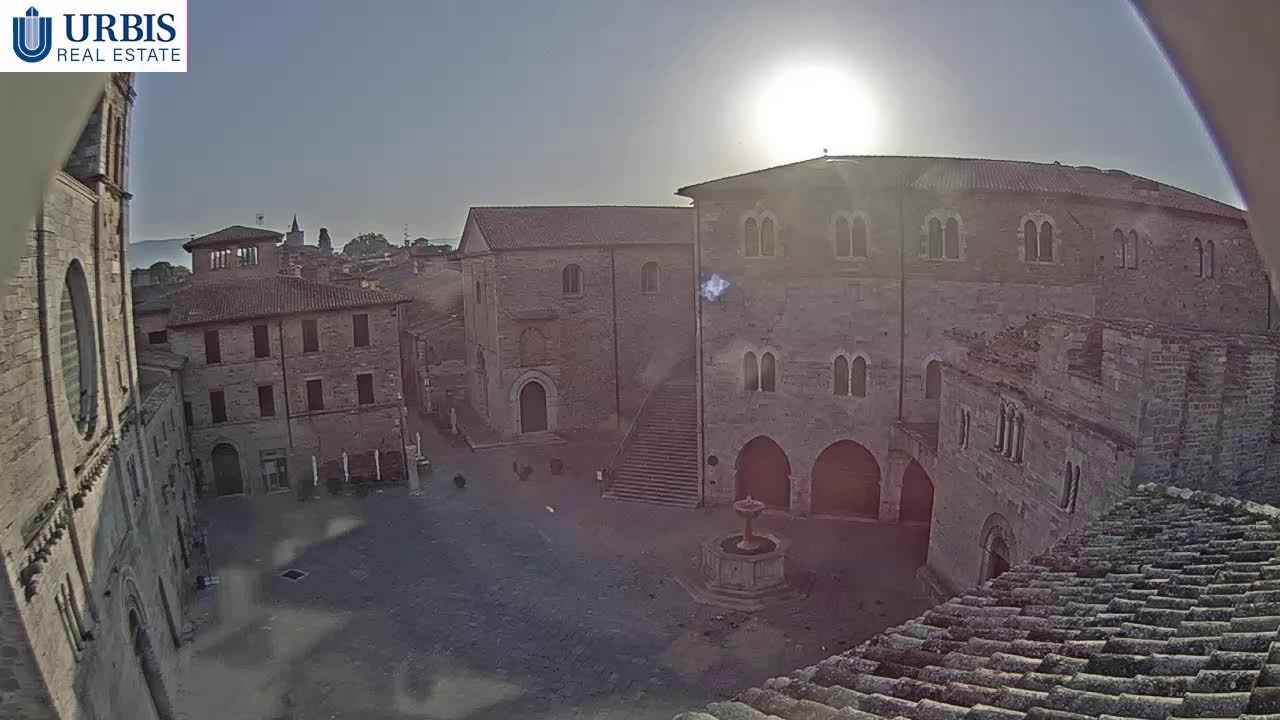
Bevagna: the heart of Umbria on the ancient Via Flaminia
Twenty-five kilometers southeast of Perugia, on a hill in the Topino river valley, lies a town that has managed to preserve the spirit of antiquity and the Middle Ages untouched. Bevagna was founded in the 3rd century BC as the Roman colony of Mevania — an important stop on the legendary Via Flaminia, the road that connected Rome with the Adriatic coast. Today the historic center is almost completely closed to cars, and only pedestrians walk its cobblestones, as if transported seven hundred years back in time.
This town is part of the prestigious list of «I Borghi più belli d'Italia» — an association of the most beautiful villages in the country. Umbria is generally generous with such gems, but Bevagna stands apart: there are no crowds of tourists, but there is an authentic atmosphere of the Italian province, where time flows according to its own laws.
Roman heritage: mosaics and ruins of Mevania
Beneath the medieval facades lies a Roman skeleton. Archaeological excavations have uncovered remains of the forum, theater, baths, and residential villas. Of particular note are the mosaic floors from the 3rd–4th centuries, discovered in the southern areas of Bevagna. Geometric ornaments, hunting scenes, mythological figures, and allegories of the seasons — all this can be seen in the Archaeological Museum of Bevagna, where the exhibition traces the evolution of Roman decorative art from simple patterns to complex narrative compositions of the late Roman period.
Part of the ancient walls still surrounds the town, woven into the medieval fortifications. The Roman theater can still be traced in the curve of the streets, and the baths remind us that Mevania was not just a provincial village but a thriving municipium of imperial scale.
Medieval splendor: churches and squares
The main square of Bevagna — Piazza Silvestri — is considered one of the most beautiful medieval squares in Italy. On it, two 12th-century Romanesque churches face each other with their facades: San Michele Arcangelo and San Silvestro. Their strict stone volumes, decorated with blind arcades and rose windows, create a sense of monumentality unusual for such a small town.
Nearby rises the Palazzo dei Consoli — the palace of the consuls, reminiscent of Bevagna's communal independence in the era of free communes. Ancient towers and bastions still serve, only now they protect not from enemy hordes but from the bustle of the outside world. The monastery of San Domenico, converted into the hotel «Chiostro di Bevagna», offers accommodation in the atmosphere of a Renaissance cloister.
Mercato delle Gaite: living Middle Ages
Every year, at the end of June, Bevagna turns into a town from the era of 1250–1350 for ten days. The Mercato delle Gaite festival is not a costumed show for tourists but a serious historical reenactment event, evaluated by experts from Italian and international universities. Four historic districts — San Giorgio, San Giovanni, San Pietro, and Santa Maria — compete in four disciplines: crafts, gastronomy, market trade, and archery.
From six in the evening, the streets fill with craftsmen in historical costumes: blacksmiths forge iron, chandlers pour candles, papermakers produce parchment. Medieval taverns serve dishes from ancient recipes. The winner receives the Palio di Vittoria — an honorary standard that adorns the district until the next festival.
Gastronomic traditions: truffles and wine
Umbria is a land of truffles, and Bevagna is no exception. Local farmers supply black and white truffles to the best kitchens in the region. The classic dish is tagliatelle with slices of fresh truffle with a light cream sauce that doesn't overpower the aroma of the mushroom. Equally good is strangozzi — thick homemade pasta, which here is prepared with truffle sauce or tomatoes.
The wine list of the region is built around Sagrantino di Montefalco — a powerful red wine that perfectly complements meat dishes with truffle. For light snacks, Grechetto di Orvieto is suitable — white, fresh, with a fruity character. Be sure to try porchetta — roast pork with rosemary and fennel, and the local olive oil, which has been produced here for centuries.
Legends and mysteries of the Umbrian hills
Four kilometers from Bevagna hides Lago dell'Aiso — a lake that locals call either "magical" or "hellish." Dozens of legends are associated with it: about underground tremors that unexpectedly drain the reservoir, about mystical creatures inhabiting its depths. Umbrian folklore generally differs from neighboring Tuscany: there are fewer ghosts and more saints, fewer devilish stories and more divine miracles.
Bevagna itself survived centuries of wars between the Guelphs and Ghibellines, repeatedly passing from the Papal States to the Duchy of Spoleto and back. From 1100 to 1860, the town changed several masters before becoming part of the unified Kingdom of Italy. Each period left its layer in the architecture and character of the locals — somewhat reserved but incredibly hospitable when it comes to a feast.
What the cameras show
If you are planning a trip to Umbria or just want to feel the atmosphere of this place, Bevagna webcams online allow you to see the city in real time. Broadcasts from key points of the historic center show Piazza Silvestri, Romanesque churches, and quiet alleys where life flows just as it did centuries ago. Watching Bevagna webcam is also convenient before a visit — you can assess the weather, street congestion, and the overall mood of the city at a specific moment. Online streaming from Bevagna is your window into the heart of the Italian province, available at any time of day.