

🏙️ Medina webcams online — watch the holy city in real time
1 cameras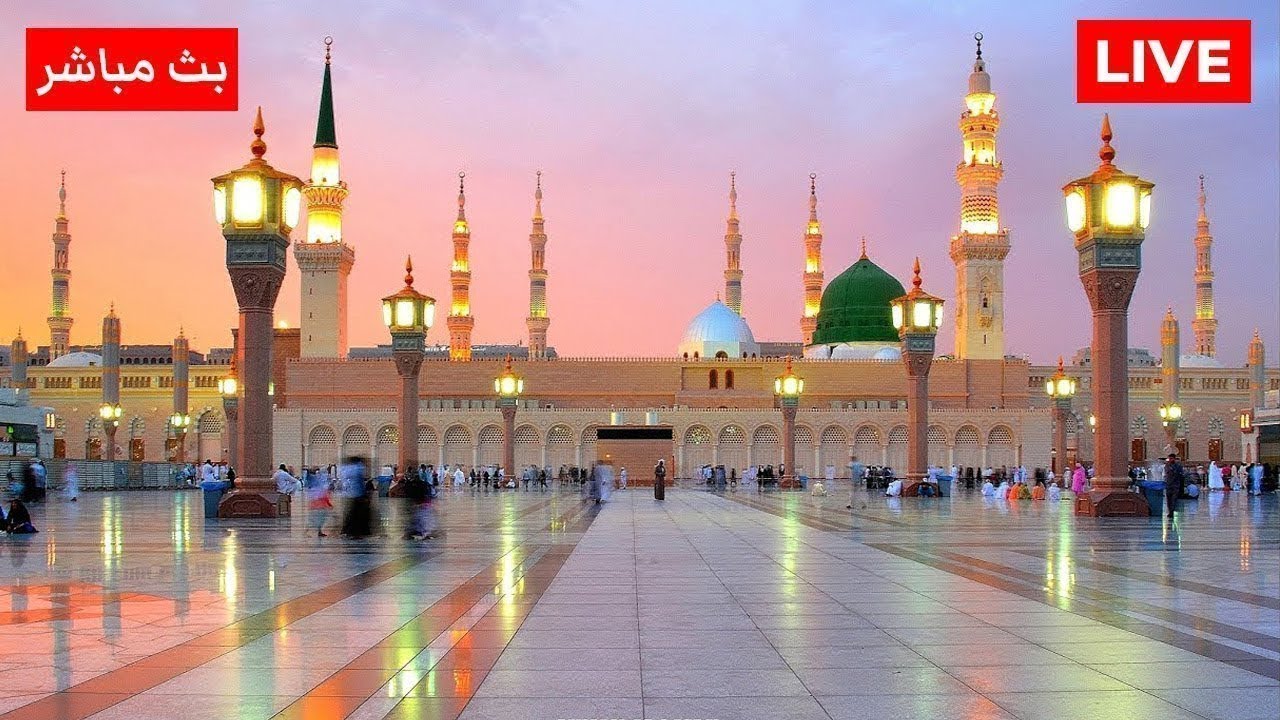
Introduction and geography of holy Medina in Saudi Arabia
Medina is one of the most important cities in the world, located in the western part of Saudi Arabia on the Arabian Peninsula. This city with the status of madina occupies a strategic position — it lies approximately 210 kilometers north of Mecca, in an oasis surrounded by desert landscapes. Historically, Medina developed as a cultural and religious center that became a magnet for millions of pilgrims from around the world. The city is located at coordinates 24.466553, 39.611293 and serves as a major pilgrimage site in Islam.
The geographical location of Medina was a decisive factor in its early development. The oasis lands provided the population with water and fertility, allowing the cultivation of dates, grain, and other crops. Trade routes passed through the city, connecting Arabia with Syria, Egypt, and other regions of the Middle East. Today, Medina is a modern metropolis with a population of over 1.5 million people, where ancient traditions and modern technologies coexist. For travelers and those who wish to follow the life of the city online, Medina webcams provide a unique opportunity to observe the city in real time.
Nature and climate of Medina are determined by its location in a desert region. Summers here are hot and dry, with temperatures that can exceed 40 degrees Celsius in the summer months. Winters are cooler, with temperatures ranging from 10 to 25 degrees. The city is surrounded by palm groves that play an important role in the ecosystem and economy of the region. The palm groves serve as a source of water and create picturesque landscapes that make the city visually unique. For those interested in the current weather conditions in Medina right now, webcams offer a view of the city's streets and landmarks at any time of day.
Demographics and culture Medina is a city with a predominantly Muslim population, which defines its unique cultural atmosphere. Strict religious traditions are observed in the city, especially in pilgrimage centers. The architecture of Medina reflects its history — ancient Islamic monuments, modern buildings, restored old city neighborhoods, and new residential complexes coexist here. The ethnic composition of the population is diverse: Arabs, Turks, Indians, Bangladeshis, and other nationalities make up the overall demographic picture. This multicultural environment creates a dynamic and interesting urban landscape that can be observed through online broadcasts from various points in Medina.
Transport and infrastructure Modern Medina is developing its transport infrastructure to serve the growing number of pilgrims. Highways, an airport, and bus routes connect the city with other destinations in Saudi Arabia and international locations. Internal transport includes taxis, buses, and bicycles. The city is developing new projects to reduce transport problems, especially during periods of high pilgrim traffic. Infrastructure improvements make Medina more accessible and convenient to visit. For those who want to observe traffic, public transport, and city squares, webcams provide a convenient and free way to monitor traffic and urban life.
Historical heritage and the cradle of Islam
Medina has a rich history dating back to ancient times. The city was founded in the 9th century BC, making it one of the oldest settlements on the Arabian Peninsula. Before the advent of Islam, Medina was called Yathrib — this name is mentioned in historical sources, including the Harran inscription of King Nabonidus (6th century BC) and in the Quran. Etymologically, the name "Yathrib" is associated with the ancient tribe of Banu Asad, who settled these lands. Over time, the city transformed and received its current name, reflecting its spiritual significance in the Islamic world.
The historical significance of Medina cannot be overestimated — it was here that Islamic civilization was born. After the migration of Prophet Muhammad from Mecca to Medina in 622, the city became the center of the spread of the new religion and lost its status of conflict. This date, known as the Hijra, marks the beginning of the Muslim era and is a key point in the historical calendar. Medina became the first state in the history of Islam, the first Muslim council was created here, and a legal and political system was established that served as the foundation for subsequent Muslim civilizations. Medina webcams allow you to observe modern neighborhoods where historical traditions and the heritage of the ancient city are traced in the rhythm of life.
A special place in the history of Medina is occupied by the period when the city was the capital of the first Muslim state. Prophet Muhammad and his followers held important state and religious events in Medina, formulated principles of law, trade, and social organization. The city became an example of a multicultural society where mutual respect and solidarity became the foundation of social life. These historical principles continue to influence the cultural and public values of the population. Online broadcasts from the streets of Medina demonstrate how modern residents maintain these traditions in everyday life.
The period of dynasties and Ottoman rule After the death of Prophet Muhammad, Medina remained an important religious center, although political leadership changed among various dynasties. During the Umayyad period, the city reached economic prosperity, new mosques, markets, and residential complexes were built. The Golden Age of the Umayyads was marked by the development of sciences, architecture, and trade, making Medina one of the centers of Islamic culture. In the 11th-12th centuries, the city was under the influence of the Buyid dynasty, and then the Seljuks. In the 13th century, the Mongols captured and plundered part of the Muslim lands, but Medina preserved its religious significance thanks to the protection of rulers and spiritual authority.
From the 14th to the early 20th century, Medina was under the rule of the Mamluks, and then the Ottomans. The Ottoman era left a noticeable mark on the city's architecture — mosques were expanded, new caravanserais were built, and water supply and irrigation systems were developed. The Ottoman Empire ruled the Hejaz region until World War I, ensuring stability but also carrying out centralization that sometimes provoked resistance from local tribes. During World War I, Medina became the scene of Ottoman-Arab conflicts, but after its end, the city came under the control of Saudi Arabia. The historical heritage of these eras is preserved in architecture, street names, and cultural practices that can be observed through online cameras.
The Green Dome and the Prophet's Mosque — the heart of Medina
The Prophet's Mosque, also known as Al-Masjid an-Nabawi, is the central and most sacred landmark of Medina. The mosque stands on the site where Prophet Muhammad built his first residence after the Hijra in 622. Today, it is one of the largest prayer buildings in the world, capable of accommodating over a million people. The most important element of the mosque is the Green Dome — an architectural masterpiece that attracts the attention of travelers and observers from around the world. Beneath the dome are the grave of Prophet Muhammad, as well as the graves of the first two righteous caliphs — Abu Bakr and Umar ibn al-Khattab. This shrine is a place of pilgrimage for millions of Muslims annually.
The Green Dome has a rich history. It was built in the 13th century, originally had a white color, then was repainted blue, and in 1839 acquired its current green hue. The materials used in construction included marble, wood, and decorative elements that give the dome a majestic appearance. The architectural style of the dome combines Arab, Persian, and Ottoman influences. Webcams directed at the Prophet's Mosque allow you to see the grandeur of the Green Dome and the movement of people around it, creating a vivid picture of one of the main shrines of Islam.
The interior of the Prophet's Mosque amazes with its scale and nobility. The spacious inner courtyard, columns, marble finishes, and complex geometric ornamentation create an atmosphere of reverence. The walls are decorated with Arabic calligraphy, quotes from the Quran, and verses celebrating wisdom. Light penetrates through high windows, falling on floors with intricate mosaics. At night, the dome is illuminated with lights, making the mosque a recognizable symbol of Medina that can be seen in photographs and video broadcasts from around the world. Online observation of the Prophet's Mosque provides an opportunity to study architectural details, follow Muslim prayers, and feel the spiritual atmosphere of this place.
Ritual activities of the Prophet's Mosque are not only a place of prayer but also the center of religious life for Medina and the entire Muslim Ummah. Friday prayer gathers thousands of believers who come to listen to the sermon and pray together. Daily morning and evening prayers take place, visitors attend the mosque to read the Quran and meditate. The sacred boundaries of the Haram include the Prophet's Mosque and adjacent territories, which serve as a place where believers can feel a spiritual connection with the history of truth. For those who cannot visit Medina in person, webcams offer access to sacred places, allowing you to observe ritual activities in real time.
Modern maintenance of the mosque requires enormous efforts to maintain cleanliness, safety, and comfort for millions of visitors. Special services provide cleaning, plumbing, electricity, and ventilation systems, making the mosque convenient for the modern public. There is also a service system for pilgrims: changing rooms, showers, food points, currency exchange offices. Webcams installed around the mosque allow you to observe security, movement of people, crowd management, and the overall condition of the sacred complex. This is especially useful for those planning a pilgrimage and wanting to study the infrastructure and movement scenarios.
Quba Mosque — the first mosque in Islam
Quba Mosque, located approximately 5 kilometers from Medina, is considered the first mosque in the history of Islam. The mosque was built by Prophet Muhammad and his followers in 622 during the Hijra from Mecca to Medina. This event marks the beginning of the Muslim era and the establishment of Medina as the new center of Islam. Quba Mosque has a unique significance as an example of a simple yet functional architectural structure that reflects the spiritual values of the early community. Unlike the luxurious mosques that appeared later, Quba Mosque demonstrates the modesty and faith of the first Muslims.
Quba Mosque was founded by Prophet Muhammad and his followers when they stopped in the village of Quba on their way to Medina. The prophet prayed in a simple building made of reeds and clay, then erected a new mosque with a minbar (pulpit), and the mosque became a symbol of Islamic unity and spirituality. Historical evidence indicates that the mosque was reconstructed and expanded over the centuries to accommodate the increasing number of pilgrims. Currently, Quba Mosque has a modern structure but preserves architectural elements of early Muslim mosques.
The interior of Quba Mosque is distinguished by a calm atmosphere, simple decorative elements, and soil brought from Mecca. Carpets, lighting, and color schemes create a sense of tranquility. Pilgrims and guests of Medina often visit Quba Mosque as part of their ritual to touch the very beginning of Islamic history. Unlike the Prophet's Mosque, there is less crowd here, and a more authentic spiritual atmosphere can be felt. Online broadcasts from Quba Mosque provide an opportunity to observe prayers, ritual actions, and communication among parishioners, which is especially interesting for those studying Islamic architecture and history.
Around Quba Mosque, a neighborhood has formed that has become a place for residential buildings, commercial enterprises, and social institutions. The village of Quba has evolved into a modern suburb of Medina, maintaining connections with history and religious significance. The neighborhood demonstrates continuity between the ancient past and modern development, showing how historical places are integrated into the urban fabric. Webcams directed at Quba Mosque and the surrounding area allow you to see how the space around the shrine is used in the daily lives of citizens and how religious values fit into the modern urban context.
Mount Uhud: the historic battle
Mount Uhud, located northeast of Medina, has special historical and spiritual significance. On the mountain is the famous site of the Battle of Uhud, which took place in 625 between the forces of Prophet Muhammad and a coalition of hostile tribes. This battle left a noticeable mark on the history of Medina and Islam, becoming an example of courage, faith, and resilience of the first Muslims. At the top of the mountain stands the Mosque of the Leader of the Martyrs, named after the uncle of Prophet Muhammad Hamzah ibn Abdul Muttalib, who died in this battle. The mosque serves as a memorial to the martyrs and a place of pilgrimage for believers who come to offer prayers at the grave of Hamzah and other companions.
Mount Uhud is the historic battle site near Medina, sacred to Muslims. The Battle of Uhud was the second major armed conflict after the Battle of Badr and became a test for the young Muslim community. The course of the battle reflects the complexity and drama of the early period of Islamic history. Losses on the Muslim side were high, including Hamzah and other important figures, which made Uhud a symbol of sacrifice and patriotism. Since then, the mountain has become a place where believers come with prayers and reflections on the significance of these events for Muslim identity.
On Mount Uhud, there is also the Mosque of the Leader of the Martyrs with the mausoleum of Hamzah and other important personalities. The architecture of the mosque includes simple elements but gives nobility and respect to the memory of the martyrs. A garden with trees and flowers is laid out around the mosque, creating a peaceful atmosphere. The horizontal lines of Mount Uhud and the sky covered with clouds here and there create a picturesque landscape that can be seen in photographs and video broadcasts. Webcams directed at Mount Uhud and the mosque provide an opportunity to observe religious activities, weather conditions, and picturesque landscapes that make this place special.
Spiritual significance Mount Uhud is not only a site of military operations but also a space where Muslims pay tribute to the martyrs and show gratitude for the trials they have endured. Prayers on the mountain serve as an expression of faith and respect for those who sacrificed their lives for Islam. Pilgrims come here with pilgrimage intentions to touch the ground where key historical events took place and to express faith through prayers. For those interested in history and religion, Mount Uhud provides an accessible educational resource. Online observation of Mount Uhud provides an opportunity to study history, weather, and cultural activity without physical travel.
Old Medina and architecture
Old Medina, known as Masjid al-Madinah or the historic city center, preserves many features of the ancient Islamic city. The historic district of Medina was reconstructed in the 18th-19th centuries when Sultan Abdulaziz ibn Saud financed projects to renovate ancient buildings. Old Medina is surrounded by fortress walls that were built during the Ottoman dynasty to protect the city. Inside the walls are narrow streets, markets, mosques, residential quarters, and public spaces, forming a dense and unique archaeological landscape. This district attracts researchers, tourists, and history enthusiasts who want to touch the ancient layers of Medina.
Architectural style of old Medina reflects a mixture of Arab, Ottoman, and local traditions. Buildings often have high density, narrow facades, inner courtyards, and verandas that create coolness and shade in the hot climate. Decorative elements include arabesques, geometric patterns, mosaics, wooden carved panels, and marble inserts. Mosques in old Medina have complex domes, minarets, and inner spaces designed for prayer and religious events. Markets in the historic center have preserved their traditional structure, where stalls are arranged along narrow streets, creating a lively rhythm of trade and communication.
Market activity The central square of old Medina, Al-Madinah Central, was a place where trade, communication, and community life unfolded. Markets in the old city specialize in various goods: clothing, footwear, household items, spices and seasonings, materials and tools, traditional items, and modern goods. The dates market (Al-Tumor) is a vivid example of a market in old Medina. The central dates market in Medina has over 100 stalls and offers more than 150 varieties of dates. The "Ajwa" variety, grown only in Medina, is considered the favorite variety of Prophet Muhammad and holds high value for pilgrims and tourists. The market is a vivid example of traditional trade and information exchange between merchants and customers. Webcams directed at the markets of old Medina allow you to observe trade, communication, weather, and the general rhythm of life.
Pedestrian zones and public spaces In old Medina, there are pedestrian zones that allow visitors to take walks in a safe and comfortable environment. Wide alleys, inner courtyards, and squares create space for communication, studying architecture, and participating in religious events. Al-Baqi Cemetery is a necropolis with the graves of many important figures, including the wives of the Prophet who died after the Hijra. This cemetery is a place of pilgrimage and spiritual reflection. Webcams from alleys and public spaces allow you to observe activities, rest, and rituals.
The Hejaz Railway and transport
The Hejaz Railway is a historic transport corridor that connected Damascus with Mecca and Medina during the Ottoman Empire. This railway was built by the Ottomans in the early 20th century to facilitate the journey of pilgrims performing Hajj. The railway was an important infrastructure asset for the region, providing connections between cities as well as trade in goods. After World War I and the Arab Revolt, the road was abandoned and fell into disrepair. The Medina railway station was converted into a museum that has preserved historical objects, carriages, and documents.
The Hejaz Railway is the Ottoman railway on which pilgrims arrived from Damascus. After World War I and the Arab Revolt, the road was abandoned, and the Medina railway station was converted into a museum preserving historical objects related to this project. In the museum, you can see preserved railway carriages, equipment, diagrams, and photographs demonstrating the historical significance of the railway. Also preserved are depots, track facilities, and other structures that show the scale and complexity of the project. Webcams directed at the Medina railway station and museum allow you to observe activities, exhibitions, weather, and the general condition of the historic site.
The Hejaz Railway has important historical and symbolic significance for Medina. It is an example of Ottoman engineering and architectural mastery that contributed to the development of the region and provided connections between important religious centers. The project demonstrated the capabilities of modern infrastructure and became part of the cultural heritage. The railway symbolizes a period when Medina was connected with other cities of the Middle East through transport corridors that facilitated the exchange of ideas, goods, and people. Online observation of the museum and historic station provides an opportunity to study history and understand the significance of this infrastructure for the development of Medina.
Sacred boundaries of the Haram
The sacred boundaries of the Haram in Medina are limited territories that surround the Prophet's Mosque and are considered sacred places for Muslims. These boundaries include Al-Masjid an-Nabawi and adjacent territories. These territories have a special status: they are places where Muslims can express their religious activity, perform prayers, attend religious events, and carry out religious rites. Within these boundaries, special rules are in effect that respect religious and cultural values. The sacred boundaries of the Haram in Medina include Al-Masjid an-Nabawi and adjacent territories where Muslims can carry out religious activities.
The sacred boundaries of the Haram are defined ritually and legally. They include the central shrine and territories where religious activities are permitted, as well as restrict activities that may not comply with religious norms. For non-Muslims, there are certain restrictions on access to the central sacred zone. These boundaries are not physical walls but create an atmosphere of the special status of the place. Any Muslim can enter the boundaries of the Haram to perform prayer, have breakfast, perform a ritual, etc. To observe these boundaries and activities within them, webcams directed at the Prophet's Mosque and adjacent territories are used.
Ritual activity In the sacred boundaries of the Haram, important religious events take place: Friday prayers, evening prayers, Quran reading, meditation, religious gatherings, education, and upbringing. Believers come to the Prophet's Mosque to touch the shrine, offer prayers, and express their faith. Holiday events also take place here: Eid al-Fitr, Eid al-Adha, Dhu al-Hijjah, and others. Webcams directed at the Prophet's Mosque allow you to observe ritual activity, crowd size, weather, lighting, and the condition of the shrine at any time of day.
The territory around the Prophet's Mosque, bounded by sacred boundaries, includes many interesting places: squares, boulevards, retail outlets, educational institutions, warehouse facilities, and religious centers. The main pilgrimage infrastructure is concentrated in this area: changing rooms, showers, food points, currency exchange offices, and medical services. All these places serve pilgrims and make visiting the Prophet's Mosque comfortable. Online broadcasts allow you to observe activities, the condition of the territory, weather, and the general rhythm of life within these boundaries. This is especially useful for those planning a pilgrimage and wanting to study the infrastructure and movement scenarios.
What the cameras show
This page collects webcams that provide the opportunity to observe the life of Medina in real time. The cameras are located at different points in the city: streets, squares, mosques, markets, and other objects. Choose a camera to watch the Medina webcam online. By observing the city through webcams, you can study the atmosphere, weather, traffic, religious activity, trade, and other aspects of urban life. Medina webcams provide free and convenient access to real information, which is especially useful for those interested in Saudi Arabia and its cultural heritage.
The camera locations cover key points of the city: the central Prophet's Mosque, old Medina, the dates market, the railway station, Mount Uhud, and other landmarks. Brief descriptions are available for each camera direction, helping to determine exactly what can be observed. The cameras operate around the clock, providing a view at any time of day or night. Medina webcams online allow you to follow the weather, lighting, traffic, and developments in the city. Choose the camera that interests you and start watching. This is a safe and convenient way to explore Medina without the need for physical presence.