

🏙️ Niigata Webcams Online — Watch the City in Real Time
2 cameras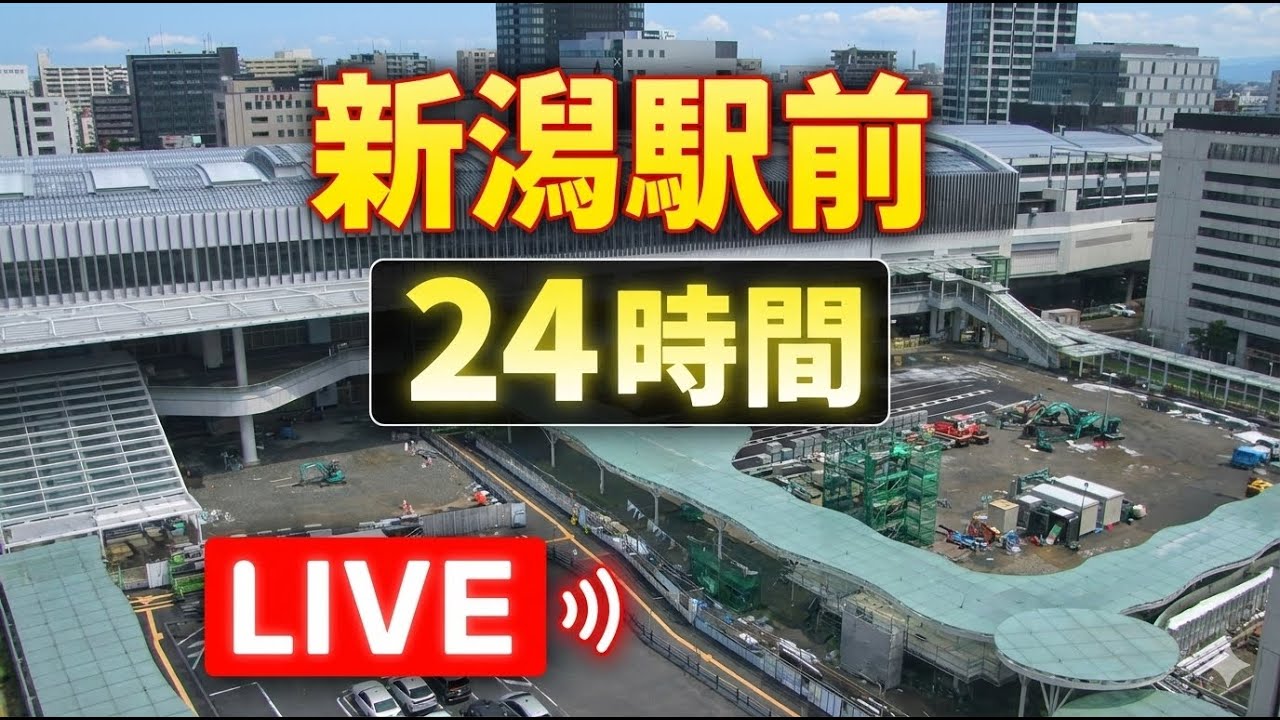
Niigata — Where the River Meets the Sea
On the northwestern coast of Honshu, where the waters of the Sea of Japan meet the mouth of the country's longest river, lies a city with a complex yet remarkable destiny. Niigata is a place where mercantile history intertwines with modern urbanism, and winter snowfalls coexist with blazing summer fireworks. For a long time, the city remained the main maritime gateway of the Hokuriku region, and its port heritage is still felt in the rhythm of its streets and the architecture of its embankments.
Niigata webcams allow you to see this contrast in real time: the business-oriented eastern district with its office high-rises and the bustling western waterfront, where life hums from early morning until late evening. The city isn't as tourist-polished as Tokyo or Kyoto, but that's precisely where its genuine charm lies — here you can observe everyday Japanese life without tourist filters.
Bandai Bridge: The Steel Guardian of the Shinano
If Niigata has a calling card, it is definitely the Bandai Bridge, built in 1929, which has long become the city's main symbol and is recognized as a national treasure. The six-span arch structure, approximately 306 meters long, stretches across the Shinano, uniting the two banks into a single whole. But Bandai's fame isn't only about architectural elegance. The bridge underwent three reconstructions and became famous for its incredible strength, withstanding the devastating 1964 earthquake when buildings and other bridges collapsed around it.
The history of the crossing at this site dates back to the Edo period: the first bridge across the Shinano at the site of the modern Bandai appeared in 1886 — wooden, private, and toll-charged until 1900. Since then, the structure has changed repeatedly but has always remained a center of attraction. Today, a folk dance parade is held annually on the Bandai Bridge, in which anyone can participate — from schoolchildren to retirees. This transforms an engineering monument into a living public space.
Hakusan Shrine: A Sanctuary Among Lotuses and Cherry Blossoms
In the very heart of Niigata, surrounded by park greenery, hides one of the region's most revered spiritual sites. Hakusan Shrine serves as the main pilgrimage center for most of the city's residents, and its history is shrouded in the mists of centuries. The exact founding date of the shrine is unknown — old records perished in two fires during the Eiroku period (starting from 1558). Nevertheless, Hakusan survived and continues to fulfill its spiritual mission.
The shrine is dedicated to the god of marriage, and people come here with prayers for family well-being. On the grounds of Hakusan Park, a lotus pond has been laid out, a cherry grove has been planted — the largest in terms of tree count in all of Niigata, decorative koi swim in the ponds, and fountains create a sense of tranquility. The shrine festival takes place on August 7–9, and on the last day visitors can observe numerous events — from traditional dances to tea ceremonies.
The Shinano River: The Artery That Divides the City in Two
The Shinano is not merely a geographical feature but a living organism around which all city life has been built. The river divides Niigata into two parts: the eastern — business district with administrative buildings and the train station, and the western — with shopping and entertainment quarters. The Shinano River embankment is a favorite spot for walks, morning jogs, and evening dates. The water here is calm and wide, and the views of the bridges are picture-perfect.
In summer, the river transforms into a stage for a grand fireworks festival — one of the largest pyrotechnic shows in the country. The evening sky above the Shinano blossoms with thousands of lights, reflecting in the dark water. Niigata webcams on these days capture thousands of spectators filling the embankments and bridges. And in early August, another notable event takes place — a festival whose folk dance parade involves more than twenty thousand participants.
Snow, Rice, and Fireworks: The Three Faces of Niigata
Niigata's climate is a separate story, full of records and paradoxes. In winter, the city becomes the snow capital of the planet. In December 2020, meteorologists recorded a snowpack increase of 113 centimeters in a single day — an absolute record with no analogues in world practice. And in the Arai ski area, located in Niigata Prefecture, the snow depth once reached 6 meters. For comparison: that's the height of a two-story house.
But snow is not a hindrance — it's a resource. It is the abundance of moisture that made the surroundings of Niigata the breadbasket of Japan. The city became the main port for kitamaebune trading ships, which carried rice from the rich fields of the Echigo Plain to Osaka and other megacities. Rice trade became the foundation of Niigata's prosperity, and to this day the local koshihikari variety is considered one of the best in the country. Summer fireworks over the Shinano are not merely entertainment but an ancient ritual marking the beginning of navigation and praying for a bountiful harvest.
Port Heritage and Modern Rhythm
Niigata is one of the few Japanese cities that was built from the very beginning as an international port. After the Meiji Restoration, consulates of European powers opened here, and trading houses built entire quarters in Western style. Many of these buildings have survived to this day, forming the Minami district, where you can wander for hours examining the facades of the Meiji era.
Modern Niigata is a city of contrasts. On one hand — quiet temple courtyards and parks with lotuses, on the other — a bustling port receiving cargo ships and ferries to Sado Island. Niigata webcams online allow you to see this duality: here is the business district near the train station, and two kilometers away — fishing boats at the mouth of the Shinano. The city doesn't rush, doesn't fuss, it lives at its own pace, which is easy to feel if you simply watch it through a lens for a while.
Cultural Landscape: From Tea Houses to Pyrotechnics
The cultural life of Niigata flows measuredly but never stalls. In addition to summer festivals, the city is renowned for its tea ceremony tradition, which here acquires a special, port-town flavor — merchants and sailors for centuries gathered in tea houses near the wharves, discussing rice prices and the weather. Today these establishments have become museums and cultural spaces, but the spirit of merchant solidarity has been preserved in them.
In winter, when snow envelops the city in a white blanket, Niigata doesn't fall asleep — it changes its scenery. Snow sculptures on the embankment, hot sake from local breweries, warm soups at street kiosks — all this creates an atmosphere that cannot be put into words but can be seen through a webcam. The city proves that snow is not a natural disaster but a gift that one must know how to accept.
What the Cameras Show
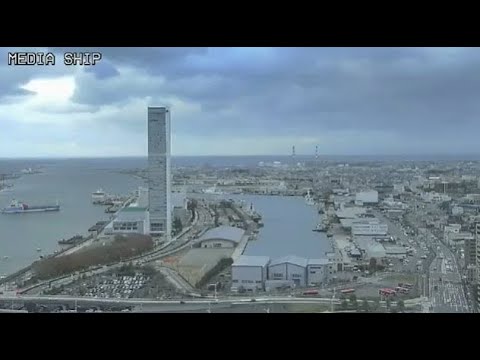
Niigata webcams cover key points of the city: Bandai Bridge with a panoramic view of the Shinano, the Furumachi district embankment, the territory of Hakusan Shrine and its park, as well as the station square and business center. Broadcasts are in real time, allowing you to observe the weather, traffic, and street life without being tied to a schedule. For those planning a trip to Niigata Prefecture, online webcams are a great way to assess the situation in advance: check whether the city is snowed in, whether it's raining or sunny. And for those who simply want to touch the atmosphere of a Japanese port city, it's enough to choose any broadcast and watch — the slow splash of water beneath Bandai, rare passersby in Hakusan Park, the lights of fireworks over the river on an August night.