

🏙️ Kyoto Webcams Online — Watch the Ancient Capital in Real Time
11 cameras
A Thousand Years as the Capital: Why Kyoto Is the Heart of Japan
Kyoto is a city where time flows differently. Here, every building breathes history, and narrow streets preserve the memory of a thousand-year capital. When Emperor Kanmu moved the capital here from Nara in 794 AD, he could hardly have imagined that the city he founded would become the symbol of Japanese civilization for centuries to come. The name "Kyoto" literally translates as "capital city," and this name proved prophetic — for over a thousand years, the heart of Japan beat right here.
The city's layout is a tribute to the Chinese capital of Chang'an. A perfect grid of streets intersecting at right angles, the broad Suzaku-oji avenue dividing the city into left and right halves — all of this was copied from the great Tang dynasty capital. Remarkably, this layout has remained virtually unchanged over the centuries. Even after numerous fires and wars, Kyoto was rebuilt within its original boundaries, preserving its medieval geometry.
An Architectural Sanctuary: 17 UNESCO Sites and 2000 Temples
Kyoto is an open-air museum where every temple tells its own story. The city is home to 17 UNESCO World Heritage sites, united under the common name "Historic Monuments of Ancient Kyoto." Kinkaku-ji (the Golden Pavilion), the rock garden of Ryoan-ji, Nijo Castle — these names are known to anyone interested in Japanese culture.
But Kyoto's true wealth lies not in the famous tourist spots, but in thousands of lesser-known temples and shrines. By various estimates, the city has over 2,000 religious structures — from majestic Buddhist complexes to tiny household altars. Many of them are open to visitors, but most keep their secrets behind walls of dark wood and bamboo.
How Kyoto Escaped Bombing in World War II
One of the most remarkable pages in Kyoto's history is its salvation during World War II. The city stood first on the list of targets for atomic bombing. However, U.S. Secretary of War Henry L. Stimson insisted on its removal from this list. In the 1920s, he had spent his honeymoon here and was deeply captivated by the city's cultural heritage.
Stimson justified his decision not only with emotional but also strategic considerations. He believed that preserving Kyoto would facilitate postwar engagement with the Japanese people and would not embolden the nation by depriving it of its cultural capital. Conventional carpet bombing of the city was also not carried out — the historic center was recognized as having low military value but high cultural significance. Thanks to this, thousands of ancient wooden buildings survived the war and have reached our days in their original form.
Geiko, Maiko, and the Hidden World of Karyukai
In the shadowy alleys of the Gion district, a centuries-old tradition still lives on. Geiko (geisha) and their apprentices, maiko, are not merely entertainers but guardians of Japanese classical arts. Maiko undergo extensive training lasting from several months to five years, living in special okiya houses.
The white oshiroi makeup we see in photographs originally had a practical purpose — it was applied to make faces more visible by candlelight. The world of geiko and maiko is a closed subculture called "karyukai" ("The Flower and Willow World"), governed by strict hierarchy and its own unspoken rules. Geiko rarely interact with outsiders, and their daily routines remain hidden from tourists' eyes. One important ritual is "mikayi," when a maiko changes her red collar to white, symbolizing the transition to a new stage of training.
Cuisine of the Ancient Capital: From Yudofu to Hamo
Kyoto cuisine is a distinct art form, reflecting the refinement and restraint of the former capital. A special place is held by kyo-yasai — ancient Kyoto vegetables that have been cultivated exclusively in this region for centuries. Kamo-nasu (round small eggplants), tokin (thick white carrots), and fudimodji (a type of turnip) — these varieties cannot be found outside the prefecture.
In summer, Kyoto serves hamo — a snake-like eel abundant with tiny bones. Before cooking, it is chopped into the finest pieces with a special knife in a process called "hamo-no-shippo-gata." And in winter comes the time for yudofu — hot tofu simmered in a light kombu seaweed broth. This dish originated in Zen Buddhist temples, where monks followed a strict vegetarian diet.
Temples That Guidebooks Stay Silent About
Beyond the famous attractions, Kyoto hides true gems that aren't mentioned in popular guidebooks. In the Arashiyama district stands Otagi Nenbutsu-ji temple, known for its 1,200 rakan statues — disciples of Buddha. Unlike other temples, these statues depict people in various everyday situations: they laugh, play golf, drink beer, and hold cameras.
Hidden among the bamboo groves is Adachi no Nenbutsu-ji — a temple dedicated to the memory of those who died without family care. This is a very quiet and atmospheric place, rarely crowded with tourists. And Seiryo-ji temple is famous for its moss garden and absence of noise — here you can sit peacefully by the pond and enjoy the silence away from the beaten tourist paths.
Myths and Legends: From Kappa to the Demon Gate
Kyoto is a city where ancient myths still live among people. In the Kamo River, according to local beliefs, live kappa — mythical water creatures resembling a hybrid of a turtle and a monkey. They say if a person doesn't bow to them by the river, the kappa will drag them underwater. Japanese people still throw cucumbers into the river to appease these creatures.
In the Fushimi Inari shrine area, people believe that foxes can possess women's bodies. There are stories of people going mad, becoming obsessed with fox spirits. And in the northeast of the city, there is an intersection that in feng shui is called the "demon gate." To prevent demons from entering the city, Kennin-ji temple was built there to block this ominous entrance.
The Ancient Capital in the Digital Age: Nintendo and Smart Temples
The paradox of Kyoto is that this ancient city became the cradle of Japanese technology. It is home to the headquarters of global giants: Nintendo, Kyocera, and Omron. The combination of millennia of history and an IT hub makes Kyoto a unique place on the world map.
The city has strict building height laws — no higher than 31 meters — to avoid blocking the view of mountains and temples. Because of this, modern technology companies are forced to build their offices with facades styled to resemble traditional Japanese buildings, or go underground. As part of the "Smart Kyoto" program, Internet of Things technologies are being introduced in the fields of energy saving and ecology. Sensors are installed on temples to monitor wood wear and prevent fires, and in traditional machiya houses, "smart" air conditioning systems are installed that do not disturb the external appearance of the buildings.
What the Cameras Show
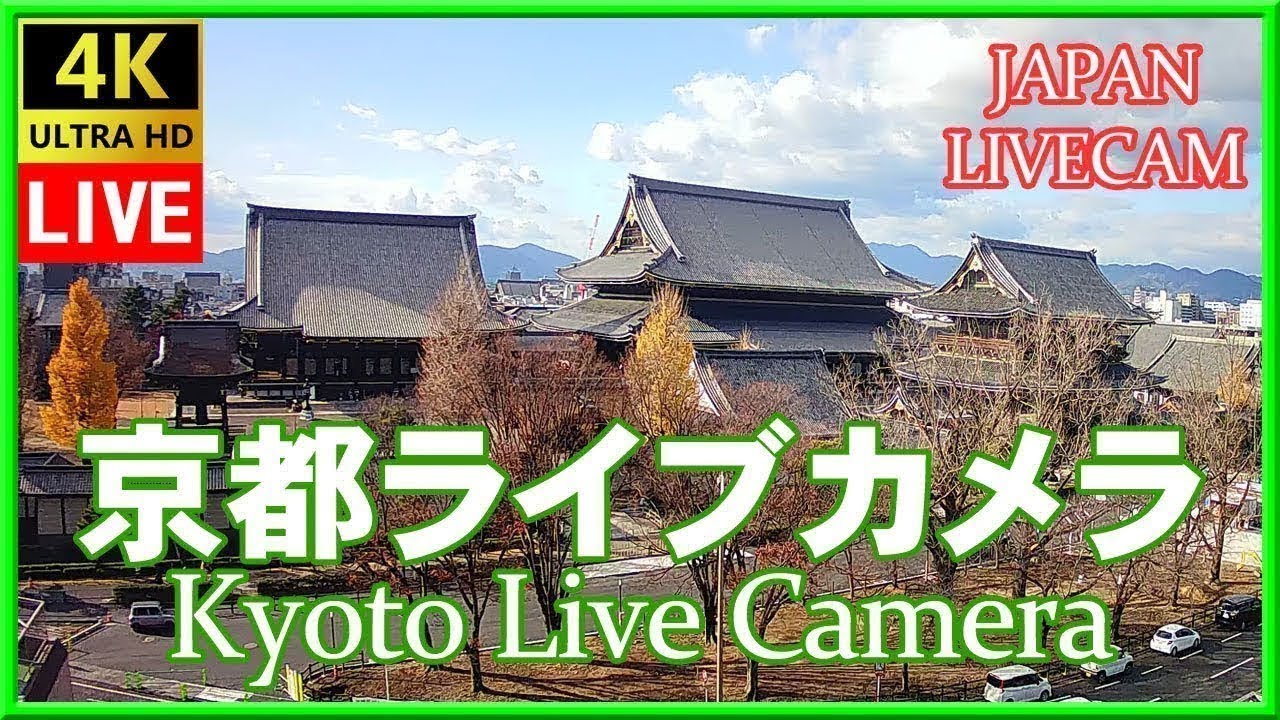
For those who want to see Kyoto with their own eyes without leaving home, there are online streams. Kyoto webcams are installed at key points in the city — from busy intersections to quiet temple courtyards. You can watch the streams at any time of day: morning mist over Fushimi Inari, evening lights of Gion, rainy landscape of Arashiyama — each moment reveals the city from a new side. Online streaming from Kyoto is an opportunity to touch eternity without leaving home.