

🏙️ Legazpi Live Webcams — Watch the City in Real Time
2 cameras
Gateway to the Perfect Cone
Legazpi holds a special place on the map of the Philippines — it is not just the administrative center of Albay province, but a city whose identity is inextricably linked to the majestic Mayon Volcano. Legazpi is the most populous city in Albay province and the Bicol Region, accounting for nearly one-fifth of the province's total population. The city stretches across the southeastern tip of Luzon Island, where the Pacific Ocean meets Albay Gulf, creating landscapes of striking beauty.
The city's name immortalized a Spanish conquistador, but today Legazpi lives its own vibrant life. Narrow downtown streets coexist with modern shopping centers, and fishing boats in the harbor reflect the setting sun against a perfect volcanic silhouette. Legazpi webcams allow you to see this panorama in real time — the haze above Mayon's crater, the movement of ships in the port, and the rhythm of city life unfolding at the foot of one of the most active volcanoes on the planet.
Four Centuries of History
Legazpi's history traces back to the era of Spanish colonization. The city was founded around 1639 and named after Miguel López de Legazpi — the first Spanish Governor-General of the Philippines. Over the centuries, the settlement has experienced many upheavals: pirate raids, volcanic eruptions, revolutions, and world wars. Remarkably, Legazpi has been declared a city three times in its history — a rare case even for the Philippines.
In the mid-1800s, a royal decree opened Legazpi to world trade, transforming it into an important commercial port of the Bicol Region. Coconut plantations, abaca (Manila hemp), and mineral extraction shaped the city's economy for generations. Today, Legazpi is a modern city with developed infrastructure, which in 2018 was first recognized as the country's most competitive component city.
Mayon Volcano — The Ever-Present Companion
It is impossible to talk about Legazpi without mentioning Mayon. Rising 15 kilometers from the city is the active Mayon Volcano, standing 2,450 meters tall, whose nearly perfect symmetrical shape has made it one of the most recognizable volcanoes in the world. Over the past five centuries, Mayon has erupted more than 47 times, and each of these eruptions left its mark on life in Legazpi and surrounding settlements.
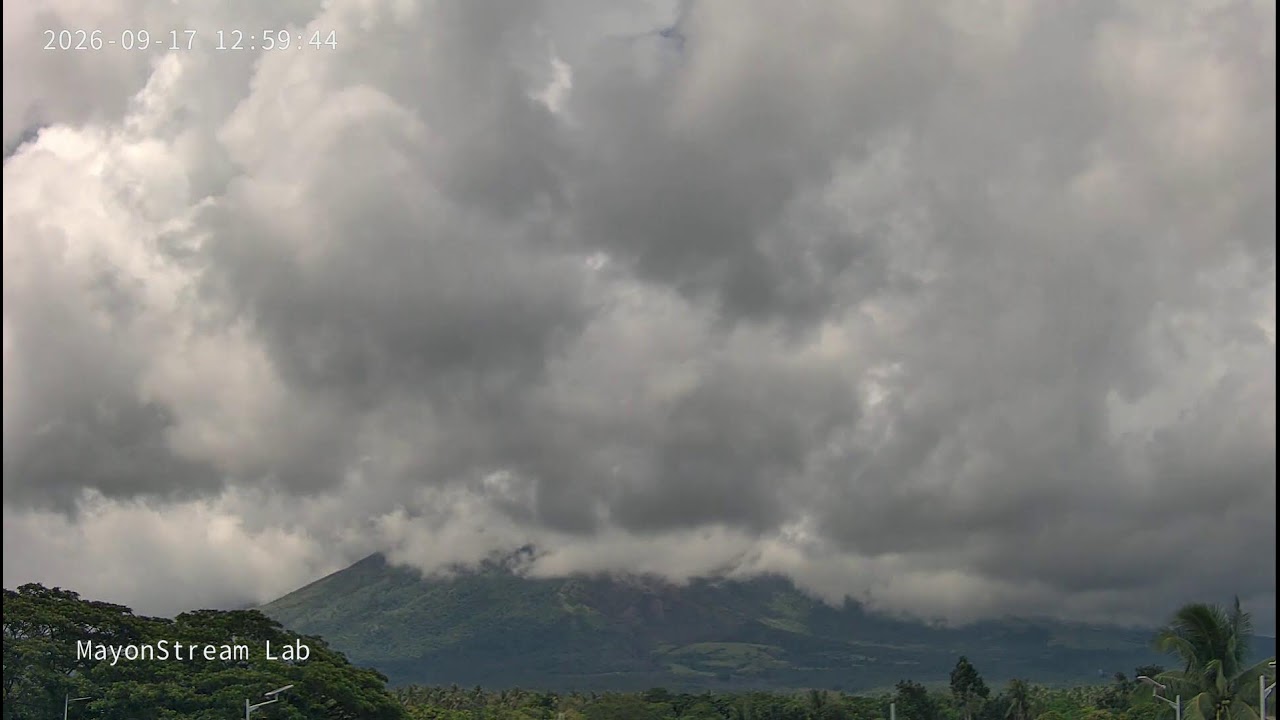
City residents have long learned to coexist with their fire-breathing neighbor. Volcanic ash enriches the soil, making the surroundings of Legazpi fertile for agriculture. But this friendship is fragile — and city life is always governed by an unspoken protocol of readiness for possible evacuation. Webcams pointed at Mayon show the current state of the volcano: steam plumes above the crater, the outlines of slopes in morning fog, or sunset illumination on the summit.
Cagsawa Ruins — A Stone Witness to Tragedy
The most visited landmark in the Legazpi area is the Cagsawa church ruins, whose history is inextricably linked to the catastrophic eruption of 1814. The Franciscan church was originally built in 1587, burned by Dutch pirates and rebuilt in 1724. But nothing prepared the residents of Cagsawa for what happened on February 1, 1814.
The most destructive eruption in Mayon's recorded history wiped the entire town of Cagsawa off the face of the earth. More than a thousand people died, many of them right in the stone church where they sought shelter from lava flows and ash. Today, only the bell tower and fragments of walls remain from the church, standing against the backdrop of the majestic Mayon — a grim reminder of the forces of nature. Survivors evacuated to Daraga, which was then a barrio and has since become a first-class municipality that includes the famous ruins.
Taste of Bicol: Fire on a Plate
Food culture in Legazpi is as vibrant as the surrounding landscapes. The Bicol Region is famous for its cuisine, where coconut milk and chili peppers are not just ingredients but a philosophy. The region's signature dish is Bicol Express, also known as sinilihan. This is a spicy stew of pork simmered in coconut milk with an abundance of chili peppers and shrimp paste.
The dish's name has a direct connection to Legazpi. According to a popular version, the dish was named after the Manila-Legazpi Express train that ran between the capital and the city at the foot of Mayon. According to another legend, the recipe was invented by Cely Kalaw at her restaurant in Manila, but it was the Bicolano cooking tradition — the generous use of chili and coconut milk — that made this dish a symbol of the region. In Legazpi, Bicol Express is prepared all over the city: from street cafes to waterfront restaurants.
Districts and Urban Fabric
Legazpi consists of several districts, each with its own character. The central area is the business core with municipal buildings, markets, and shopping streets. The Capantilan district stretches along the coast, offering views of Albay Gulf and fishing harbors. Carangcang and Bonga are residential neighborhoods where life flows calmly to the rustle of coconut palms.
The Legazpi waterfront is where the city reaches out to the ocean. Walking areas, seafood restaurants, and sunset viewing spots coexist here. Highland Park offers a panoramic view of the city and Mayon Volcano from above. The National Museum of the Philippines in Legazpi houses artifacts telling the rich history of the Bicol Region — from the precolonial period to the present day.
Adventures at the Foot of the Volcano
Legazpi is the adventure tourism capital of the Philippines. ATV tours to Mayon Volcano are the most popular way to get close to the active giant. Routes pass through lava fields, riverbeds, and tropical forests, leading tourists to the foot of the volcano. The Black Lava Wall — a formation of volcanic debris from the 2006 eruption — is one of the stops on this route.
Beyond ATVs, Legazpi offers whitewater rafting on mountain rivers, trekking on Mayon's slopes, diving in the waters of Albay Gulf, and whale watching off the neighboring shores of Donsol. Quitinday Ranch is another attraction combining nature and entertainment. The city has become a base for travelers exploring the entire Bicol Region with its caves, waterfalls, and pristine beaches.
Climate and Natural Environment
Legazpi lies in a tropical monsoon climate zone. The rainy season lasts for most of the year, making the city's surroundings incredibly green. Coconut palms, rice terraces, and tropical forests are typical landscapes around Legazpi. Air temperature rarely drops below 24°C, making the city comfortable to visit at any time.
Legazpi's natural environment is not just Mayon Volcano. Mangrove forests, coral reefs, and mountain rivers have been preserved in the city and its surroundings. The biodiversity of the Bicol Region is striking: rare bird species, sea turtles, and endemic plants inhabit the area. Webcams installed at various points in Legazpi allow you to observe this natural life — from birds in parks to seascapes from the waterfront.
What Cameras Show the City
Legazpi webcams cover key points of the city and its surroundings. Waterfront cameras broadcast a panorama of Albay Gulf with views of fishing boats and sunset over the ocean. Broadcasts from the city center show traffic on main streets, the municipal square, and busy intersections. Separate cameras are aimed at Mayon Volcano, allowing you to observe the condition of the crater and slopes in real time.
For those planning a trip to the Bicol Region, Legazpi webcams are a convenient way to assess current weather and volcano visibility. Cameras at the Cagsawa Ruins show the famous bell tower against the backdrop of Mayon — one of the most photographed views in the Philippines. Choose a broadcast and embark on a journey through a city where history, nature, and modern life intertwine at the foot of a perfect volcanic cone.