

🏙️ Webcams St. Augustine online — watch in real time
10 cameras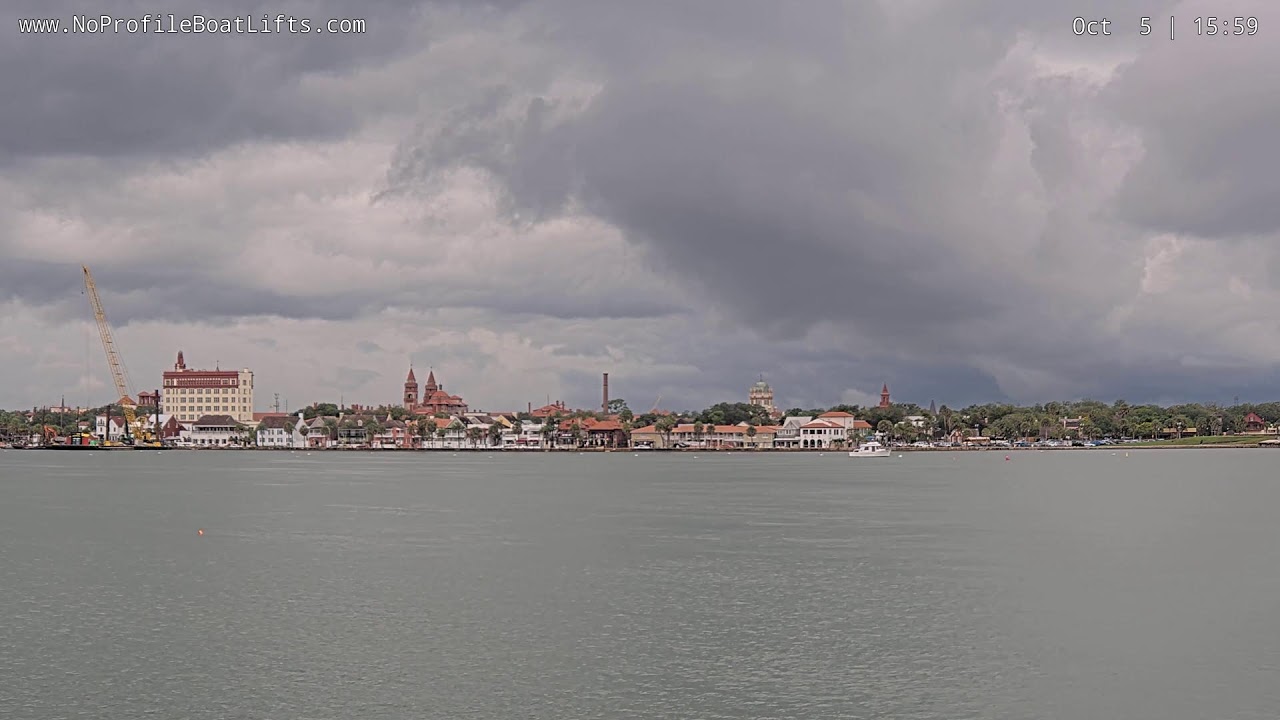




History of the "Ancient City"
On the Atlantic coast lies one of the oldest cities in the USA. St. Augustine was founded by Spanish admiral Pedro Menéndez de Avilés on September 15, 1565. This city is recognized as the oldest continuously inhabited European settlement in the continental United States. More than 450 years have passed, and the historic center has survived to this day, inviting guests to stroll along the cobblestone streets of the colonial era.
These places are of particular interest to tourists who want to immerse themselves in the atmosphere of the past. With St. Augustine webcams online you can observe the living life of the historic city, see the elegant square and the flow of life through the centuries. Digital observation allows you to touch history not only by reading books, but also with your own eyes.
How the city survived several eras
St. Augustine is known as the "Ancient City" for a reason. An important historical event occurred during the American Revolutionary War, when the city served as an important British military center and supply depot. Over the centuries, St. Augustine changed hands, but its historic appearance has been preserved thanks to its architectural heritage. In the historic district you can see buildings constructed in the 17th–19th centuries that still stand in their places, patiently welcoming guests and tourists from around the world.
Given the city's rich historical past, a walk through its streets turns into a real educational excursion. Many tourists come specifically to see with their own eyes monuments of history that seem fictional in movies. Watch St. Augustine webcam allows you to assess the scale of the preserved historic center and understand how this town managed to remain inhabited for half a thousand years.
The oldest stone fort in the continental USA
The central symbol of the city's defense is Castillo de San Marcos. This is the oldest stone fort in the continental United States, built by the Spanish between 1672 and 1695 to protect the city from pirates and British raids. A unique feature of the fort is its walls made of local coquina limestone, mined on Anastasia Island. This material reacts unusually to impacts, absorbing the energy of projectiles instead of cracking.
International recognition came to the fort thanks to its resilience — it was never taken by storm, despite numerous attacks, including the siege of 1702 and the British attempt to capture it. Today St. Augustine webcam often shows this majestic monument of history, allowing you to remotely assess the scale of the fortifications and imagine the defensive lines of the 16th–17th centuries. The fort is part of the National Historical Park and continues to attract the attention of researchers and tourists.
Bridge of Lions and Anastasia Island
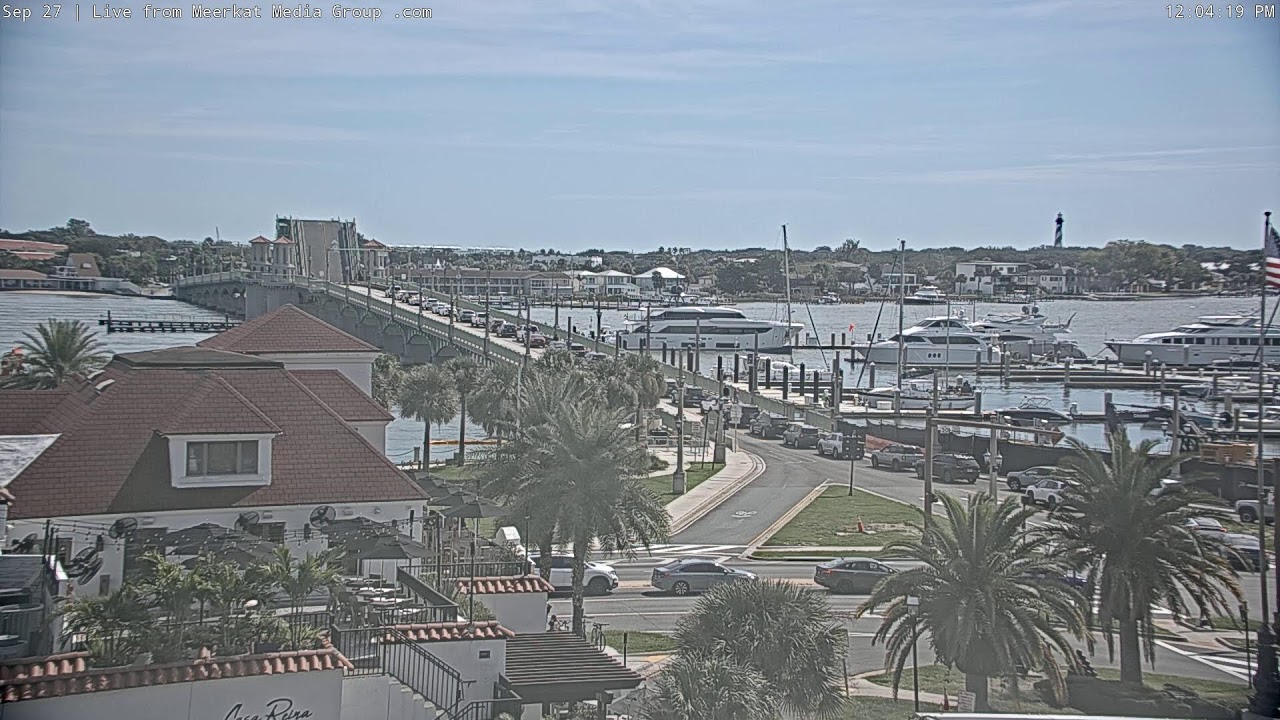
The combination of nature and architecture creates a special charm in this area. The Bridge of Lions is a double-leaf bascule bridge connecting downtown St. Augustine with Anastasia Island across Matanzas Bay. Its construction in 1925–1927 was made possible by the Florida real estate boom. The bridge project was developed by a renowned engineer, and construction was carried out taking into account the latest achievements in bridge building of that time.
The artistic decoration of the bridge gives it uniqueness — two marble lion statues, copies of the lions from Loggia dei Lanzi in Florence, were donated to the city by Henry Flagler and installed at the opening in 1927. These symbols of strength complement the silhouette of the bridge, creating a memorable image. From the Bridge of Lions webcam you can watch vessels approaching the pier and the movement of vehicles, assessing the dynamics of life on the Atlantic coast. The unique location of Anastasia Island makes it a popular place for observing marine scenes and natural landscapes.
Main historic street
St. George Street is a pedestrian historic street in the center of St. Augustine, leading to the Gates of St. George, which have existed for over 400 years. In colonial times it was the main thoroughfare of the city, and today it houses shops, restaurants and historic buildings. The street offers guests an immersion in the atmosphere of the old city, enjoying the flavor of the unique historic district. Among the buildings of particular interest is the Governor's House Museum, located at 214 St. George Street.
The pedestrian zone creates comfortable conditions for walks and observations of city life. Tourists coming to St. Augustine often start sightseeing from here. For those who for any reason cannot personally visit the city, the St. George Street camera online allows you to observe the situation on the street, the mood of residents and tourists who relax here. This is a living mirror of city life in the historic center.
Lighthouse on the northern tip of the island
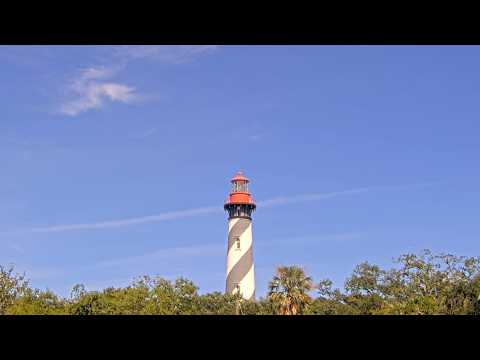
In the northeast of Anastasia Island rises the oldest navigation landmark in the region — the St. Augustine Lighthouse. The current tower was built in 1871–1874 and is 165 feet tall. The lighthouse uses a first-order Fresnel lens, the original 1874 construction, which still functions and is visible up to 24 nautical miles away. This is why this place is considered one of the most significant navigation landmarks on the Atlantic coast.
The lighthouse marks an important milestone in the history of navigation — the first lighthouse on this site was built by the Spanish in the late 1600s. Today this site is among the oldest in the USA where navigation lights were used. From the St. Augustine lighthouse online you can watch the panorama of the Atlantic Ocean, vessels approaching the shores and seabirds. Remote observation allows you to assess the strategic importance of this place and the atmosphere of the coastal zone at any time of day or night.
Southern fort and Matanzas River
In the south of the city, at the mouth of the Matanzas River, lies another important historical site — Fort Matanzas. This fort was built by the Spanish in 1740–1742 to protect the southern approach to St. Augustine from British attacks. The name is associated with the area where in 1565 the Spanish executed about 250 French Huguenots — "Matanzas" in Spanish means "slaughters." Today Fort Matanzas is a US National Monument and is managed by the National Park Service.
The uniqueness of the fort lies in its location — it can only be reached by a free ferry across the Matanzas River. From the water and coast, this place creates a picturesque landscape that attracts photographers and connoisseurs of scenic views. From the St. Augustine webcam you can track information about the ferry operating schedule and see vessels entering the harbor. This view allows you to understand exactly how historical defensive structures interacted with river and sea transport in the past.
Oldest public square
Plaza de la Constitución occupies a special place in the history of the city — it is the oldest public square in the USA, founded in 1598 by Spanish colonists according to the Laws of the Indies. The square is part of the National Historic Site of St. Augustine and served as a public market and meeting place for over 400 years. Important documents were read here, public meetings were held and historical events took place.
The architectural appearance of the square, surrounded by historic buildings, creates a unique atmosphere of a colonial city. Guests of the city can observe life here and communicate with local residents, who often use the square for various events. For remote observation, the Plaza de la Constitución webcam shows the panorama of the square, allowing you to assess the historic development and the mood of visitors. This center of public life embodies the ideas of the ancient city that the meeting space of people creates community.
Unique college building
The jewel of the city's architectural heritage is the former Ponce de León Hotel, which now houses Flagler College. The hotel was built by millionaire and Standard Oil co-founder Henry Flagler between 1885 and 1887 as Florida's first winter luxury resort for the American elite. It became the first large monolithic concrete building in the United States. The opening of the hotel on January 10, 1888 was an important event in the history of the region's tourist infrastructure.
Flagler College was founded on September 1, 1968 and welcomed its first students in this historic building, which was purchased for a symbolic sum. The unique architecture of the hotel with its mosaic floors, arched openings and artistic decoration attracts attention and curiosity. From the Flagler College webcam you can watch the facade of the building and the surrounding area, see students and visitors who come to appreciate the historical heritage. This place illustrates how modern educational tasks have been successfully combined with the preservation of the historic appearance.
What the cameras show
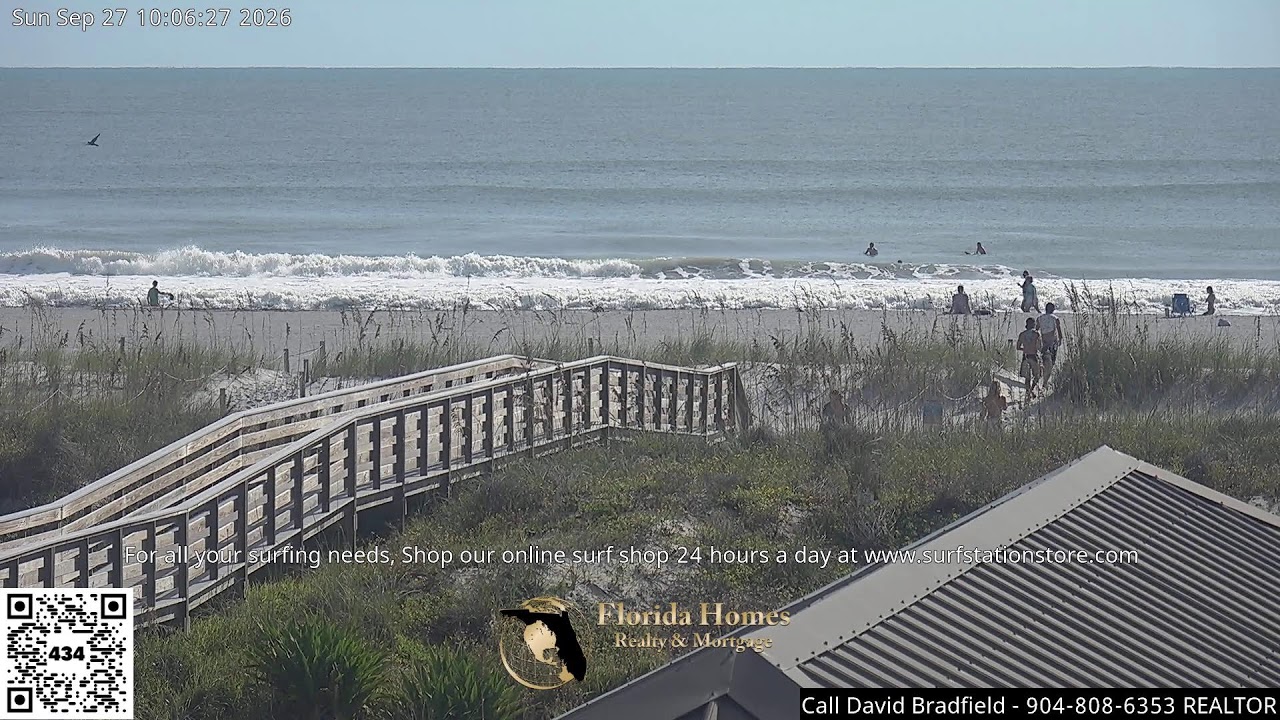
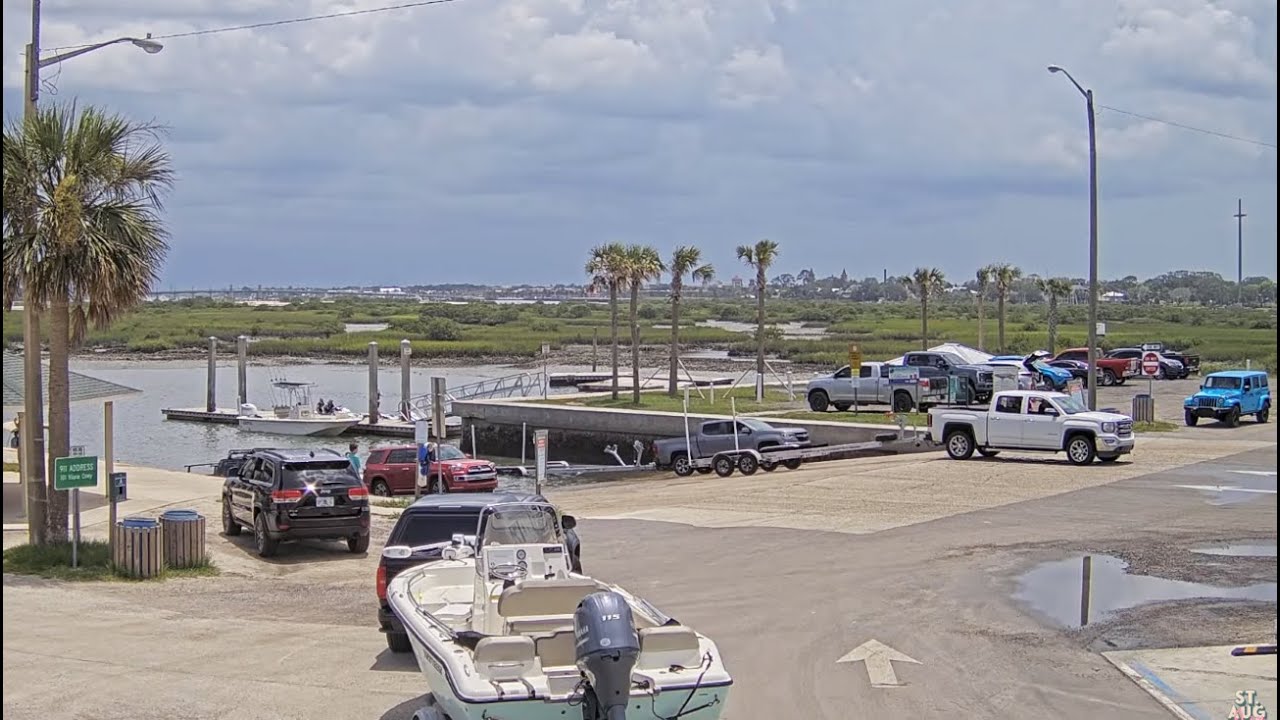
The page offers users St. Augustine webcams located in different areas of the city and at key attractions. Guests can watch the historic plaza, Bridge of Lions, Fort Matanzas, the lighthouse on Anastasia Island and the famous St. George Street. Each broadcast provides a unique perspective on city life — from daily activity on the streets to sea views and panoramas of historic parks. For those planning a trip, the available footage allows you to assess the atmosphere of the city and choose interesting directions for independent exploration. Real-time observation helps to better understand the rhythm of life of this historical place and its attractiveness for tourists from all over the world.