

🏙️ Miami webcams online — watch in real time
5 cameras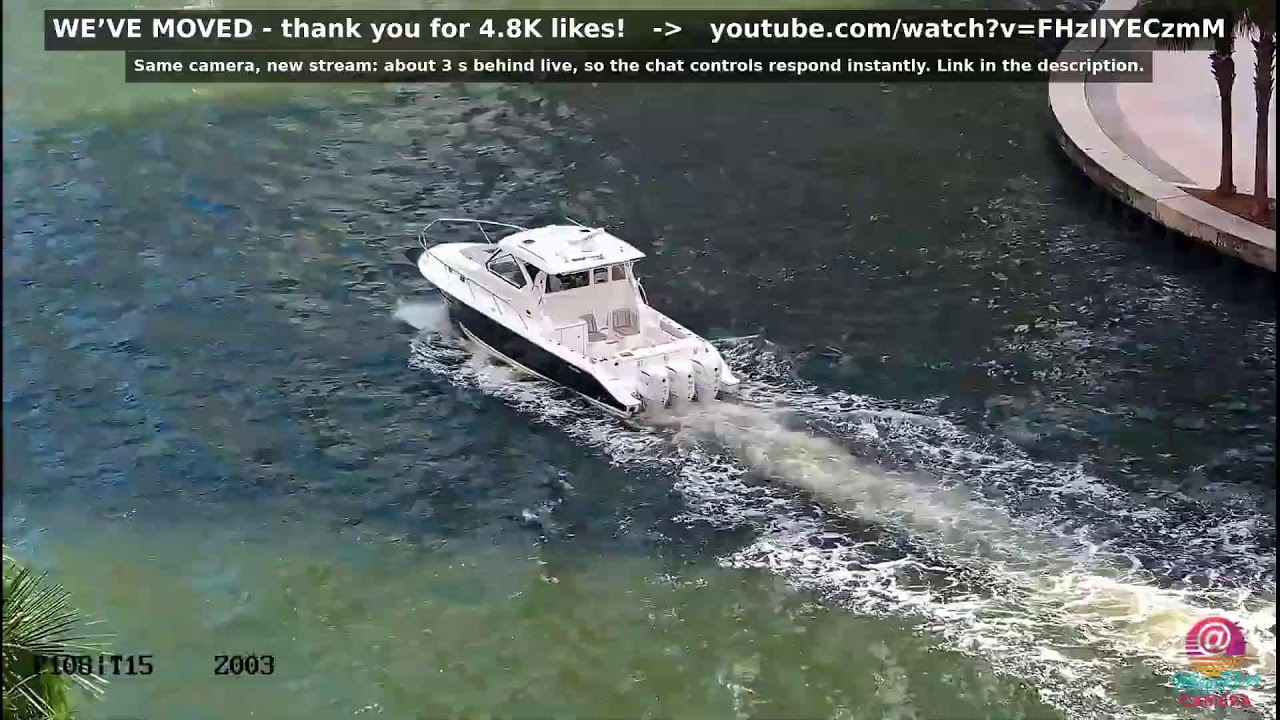


The Magic City: How Miami Became the Capital of the Sun
There are places on the map that you recognize at a glance — by the silhouettes of skyscrapers, by the curve of the waterfront, by the pastel facades along the ocean. Miami is one of them. This city in southeastern Florida transformed in just a few decades from a swampy outskirts into one of the most photographed metropolises on the planet. The nickname "Magic City" was given not for the sake of a catchy phrase — winter guests literally could not believe their eyes when they saw year after year how rapidly the skyline was changing.
Today Miami is a crossroads of cultures, where a coffee shop sits next to a glass skyscraper, and the sunset over Biscayne Bay gathers hundreds of people on the waterfront with phones at the ready. The city lives at a pace that never slows down for a second, and that is why Miami webcams online are so popular — you want to return here again and again.
Art Deco Under the Scorching Sun: 800 Buildings of One Style
Miami Beach preserves something that exists nowhere else in the world. About 800 buildings in the historic Art Deco district make up the largest concentration of architecture of this style on the planet. But the local version is unlike the dark dramatic facades of New York or Chicago. A unique "Tropical Deco" was born here — a style with pastel walls, rounded corners, porthole windows, and marine motifs. Pink, mint, lavender — these colors seem created to reflect in the ocean water.
The building boom that gave the city this legacy began after the devastating 1926 hurricane, when old wooden hotels were replaced by concrete masterpieces. Today you can walk for hours along Ocean Drive and Collins Avenue, examining bas-reliefs with palm trees and fish, neon signs, and rooftop terraces. A Miami real-time camera aimed at this neighborhood shows not just a street — it broadcasts a postcard that became the symbol of an entire era.
Little Havana: A Cuban Square Kilometer
West of downtown begins a world where Spanish sounds more native than English. Little Havana is Miami's Cuban neighborhood, formed after 1959, when hundreds of thousands of people left the island of freedom. They brought with them dominoes on the squares, strong coffee from a mokko press, hand-rolled cigars, and the feeling that real life happens on the street, not behind closed doors.
Calle Ocho — the main artery of the neighborhood — smells of fried black beans and pork. Here elderly men in guayaberas play dominoes in Domino Park, and on the walls are murals with Che Guevara and tropical palms. The architecture and style of Miami have absorbed the character and traditions of the numerous cultures coexisting here, and the Cuban one became one of the loudest notes in this chorus. If you watch Miami online and see bright colors, Spanish signs, and people on open verandas — most likely the camera is aimed right here.
South Beach: Sand, Neon, and Endless Night
The peninsula between the Atlantic and Biscayne Bay is South Beach, the city's most famous beach neighborhood. But reducing it to just sand and waves means missing half the story. South Beach is famous not only for its beach but also for being the heart of Miami's nightlife with numerous clubs, bars, restaurants, and the Ocean Drive waterfront, where Art Deco buildings, fashion boutiques, and local cuisine are concentrated.
During the day, people sunbathe and play volleyball here, and after sunset, neon lights turn every hotel into a stage. Surfers catch waves at the pier, skaters race along paths by the ocean, and tourists from dozens of countries take selfies against pastel facades. A Miami Beach webcam installed at this point gives an almost cinematic picture — it seems that heroes of an 80s movie are about to walk out the doors.
The Woman Who Built a Metropolis
The history of Miami could have gone quite differently if not for one woman with vision and perseverance. Julia Tuttle — the only female founder of a major city in the United States, officially recognized as the "Mother of Miami." She owned extensive lands on the north bank of the Miami River and understood that without a railroad, these lands would remain swamps.
Tuttle convinced Henry Flagler, the railroad magnate, to extend his line to Miami. Legend has it that she sent him a branch of oranges after a frost that destroyed the crop throughout Florida except for this plot — proof that the climate here was unique. Flagler listened, the railroad came, and on July 28, 1896, Miami was officially incorporated as a city. Without Julia Tuttle, the Magic City might have remained just a point on the map among mangrove thickets.
Three National Parks at the Doorstep
Miami is not just concrete and glass. Right beyond the city limits begins a different Florida — wild, watery, full of alligators and pink pelicans. Three national parks — Everglades, Biscayne, and Dry Tortugas — plus the Big Cypress nature reserve surround the city with a ring of untouched nature.
The Everglades lies to the west — it's a huge slow river tens of kilometers wide, where flamingos run among the grass and turtles rest. Biscayne is an underwater park with coral reefs, where divers and snorkelers go. Dry Tortugas is a group of islands with Fort Jefferson, which can only be reached by ferry or seaplane. A Miami camera aimed to the west sometimes catches the sunset over the endless Everglades plain — a sight that will not be repeated in any other metropolis.
Cruise Port and Biscayne Bay
The Port of Miami is one of the largest cruise hubs in the world, the gateway through which millions of passengers begin their journeys across the Caribbean Sea. Giant liners at the pier create a contrast with the downtown skyscrapers that rise right behind them. Biscayne Bay is a shallow lagoon around which the modern financial district with towers of glass and steel has been built.
The Bayfront waterfront is a popular place for walks, shopping, and outdoor dining. It offers views of park islands, yachts, and the MacArthur Causeway bridge. If you choose a Miami webcam in the center, most likely you will see exactly this panorama — water, skyscrapers, and an endless stream of yachts.
A Climate That Needs No Compromises
Miami's tropical monsoon climate means hot summers with thunderstorms and mild winters when the temperature rarely drops below 20 degrees. Hurricane season lasts from June to November, and it is during these months that the city tests its infrastructure for strength. But even after storms, Miami recovers with remarkable speed — apparently, that same "magic" spirit that the first settlers spoke of is at work.
In winter, northerners fleeing the snow flock here — the so-called "snowbirds." In summer, the city belongs to locals and tourists who are willing to put up with the humidity for empty beaches and sunsets over the ocean. Watching Miami online in any season is always a good idea: even a rainy day here looks cinematic.
What the Cameras Show
The Miami webcam catalog covers key points of the city: from the beaches of South Beach and the Ocean Drive waterfront to the business center and the port. You can watch a Miami webcam in real time, choosing the angle — a panorama of downtown, life in Little Havana, the water surface of Biscayne Bay, or the endless Atlantic Ocean. The broadcasts work around the clock, allowing you to see the city both in the rays of sunset and in the lights of the night sky. Choose a camera — and the Magic City is before you.