

🏙️ Crescent City Webcams Online — Watch in Real Time
1 cameras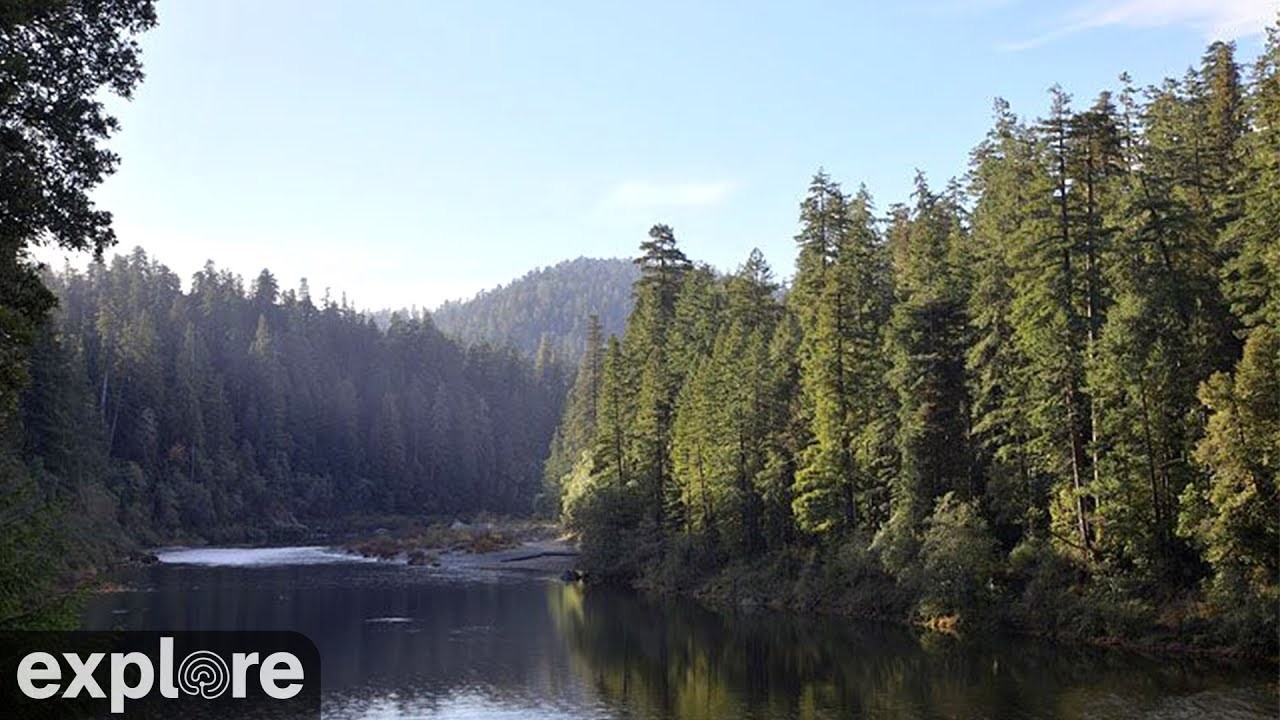
Crescent City: The Pacific Outpost of Northern California
At the very northern tip of California, where the state border nearly touches Oregon, lies a small coastal city that travelers racing along Highway 101 to more famous destinations often overlook. Crescent City is the only incorporated city in Del Norte County and serves as its county seat. It's a place where the Pacific Ocean dictates the rhythm of life, and fog is not a meteorological phenomenon but a constant companion to the locals.
The city stretches along the shore of a bay with a distinctive crescent shape that gave it its name. On one side lies the endless expanse of water, on the other a wall of ancient redwoods disappearing into the fog. Crescent City is a gateway to a world where nature still overpowers civilization, and this is felt in every yard, on every street, in every gust of wind from the ocean.
Battery Point Lighthouse: Guardian of the Harbor Since 1856
The city's main symbol is visible from afar — the white tower of a lighthouse on a tiny island connected to the mainland by a narrow sand spit. Battery Point Lighthouse was first lit on December 10, 1856, when California was experiencing the gold rush and the timber industry was just beginning to develop these shores.
The lighthouse didn't appear by chance. It was built specifically to guide lumber ships carrying redwood timber from the port of Crescent City to construction sites in San Francisco. In those years, redwood was gold of a different kind — strong, rot-resistant, perfect for a rapidly growing city by the bay. Ships approached the docks one after another, and the lighthouse was their only landmark in the frequent fogs and storms.
An interesting detail: in 1855, a year before the lighthouse was launched, the ship America burned in the port. Three cannons were recovered from the wreckage and installed on the point at the harbor entrance — hence the name Battery Point. Today the lighthouse is listed on the National Register of Historic Places under number #83001177, and it can be visited during low tide by walking along the spit directly to the tower.
The Port and Fishing Harbor: The Heart of the Economy
The port of Crescent City is not a tourist decoration but a working mechanism. Fishing vessels dock here, whose crews head out into the Pacific Ocean for crab, salmon, and cod. The harbor serves as a home port for a fleet that feeds not only Del Norte County but also supplies seafood far beyond California.
In the mid-19th century, the port experienced a boom thanks to redwood logging. Timber was loaded onto ships and sent to San Francisco, where demand for building materials was growing. Today the scale is different, but the port remains the economic backbone of Crescent City. Observing its life means understanding how the city is truly organized, without the polished facade.
A Surprising Climate: Coolness in the Middle of California
When people talk about California, they imagine palm trees, heat, and tanned surfers. Crescent City shatters this stereotype. Summer temperatures here often hover around 55°F (13°C), which is an anomaly for a state where most of the territory swelters from the heat.
The reason is the cold California Current that flows along the coast. Summers in Crescent City are cool, with frequent fog and drizzling rain. In winter, precipitation increases, but temperatures rarely drop below freezing. This climate creates a special atmosphere: the city lives to the rhythm of the ocean, not the sun. Morning — fog, daytime — overcast, evening — refreshing wind. And only occasionally, when the clouds part, does a panorama of clear sky and endless water open up.
Pebble Beach Drive: A Road Along the Edge of the World
One of the most scenic routes in the city is Pebble Beach Drive, a road that runs along the coast and offers breathtaking views. There are several parking areas from which panoramic views of the ocean, rocks, and cliffs open up. Brother Jonathan Vista Point is one of the best viewpoints along Pebble Beach Drive.
The road merges into Highway 101 and is located a few miles from downtown Crescent City. It's a place where you can stop, get out of the car, and simply watch the waves crash against the rocks. In winter, you can observe whale migration here, and on stormy days, see the full power of Pacific swells that crash onto the shore with a roar audible from a mile away.
Jedediah Smith Redwoods: Forests Thousands of Years Old
A few miles from the city begins a territory where time flows differently. Jedediah Smith Redwoods State Park is named after explorer Jedediah Smith, who in the 1820s became the first white man to explore the interior of Northern California. The park was founded in 1929 thanks to a donation of a small parcel of land by a lumber family to the Save the Redwoods League.
Redwoods grow here — not as tall as their southern relatives, but surpassing them in trunk diameter. The park is home to the largest coast redwood tree in the world by volume. Walking among these giants is an experience that changes your sense of scale. You feel like a grain of sand next to trees that stood here long before humans appeared and will continue to stand long after.
Redwood National Park: Headquarters in Crescent City
Crescent City is not just the nearest city to the redwood forests. The headquarters of Redwood National Park is located here, making it the administrative and information center for everyone who comes to see these trees. The city has visitor centers where you can get maps, route advice, and learn about current conditions in the park.
Proximity to the national park defines the character of the city. People whose lives are connected to the forest live here — scientists, rangers, guides, tourism workers. This is not a resort town but a working community that exists thanks to and around the natural heritage.
City Atmosphere: Life on the Edge of the Continent
Crescent City is a place where you feel on the edge of civilization. The population is small, the streets are quiet, and the horizon is always occupied by the ocean. There are no skyscrapers, traffic jams, or the hustle and bustle of megacities. But there is the smell of salt water, the cries of seagulls, and the rhythm of waves that lulls you to sleep at night.
The city has weathered many trials — tsunamis, storms, economic downturns. But it stands, like that lighthouse on the island — stubbornly and unshakably. Locals are accustomed to the rugged beauty of their home and don't trade it for more comfortable places. Perhaps this is what true California freedom means — living where you want, not where it's trendy.
What the Cameras Show: Crescent City Live
If you want to see Crescent City without a flight, live webcams are the best way to feel the atmosphere of this coastal city. Cameras installed at various points allow you to observe the port where fishing vessels dock, the Battery Point Lighthouse visible from the waterfront, and the coastline where waves eternally crash against the rocks.
The live stream from Crescent City webcams is an opportunity to see how the city lives at any given moment: what the weather is like on the coast, whether there's fog, what the harbor looks like during daylight hours. It's not a replacement for a real trip, but a good way to plan a journey or simply enjoy the view of the Pacific coast without leaving home.