

🏙️ Webcams Mexico City Online — Watch Live in Real Time
3 cameras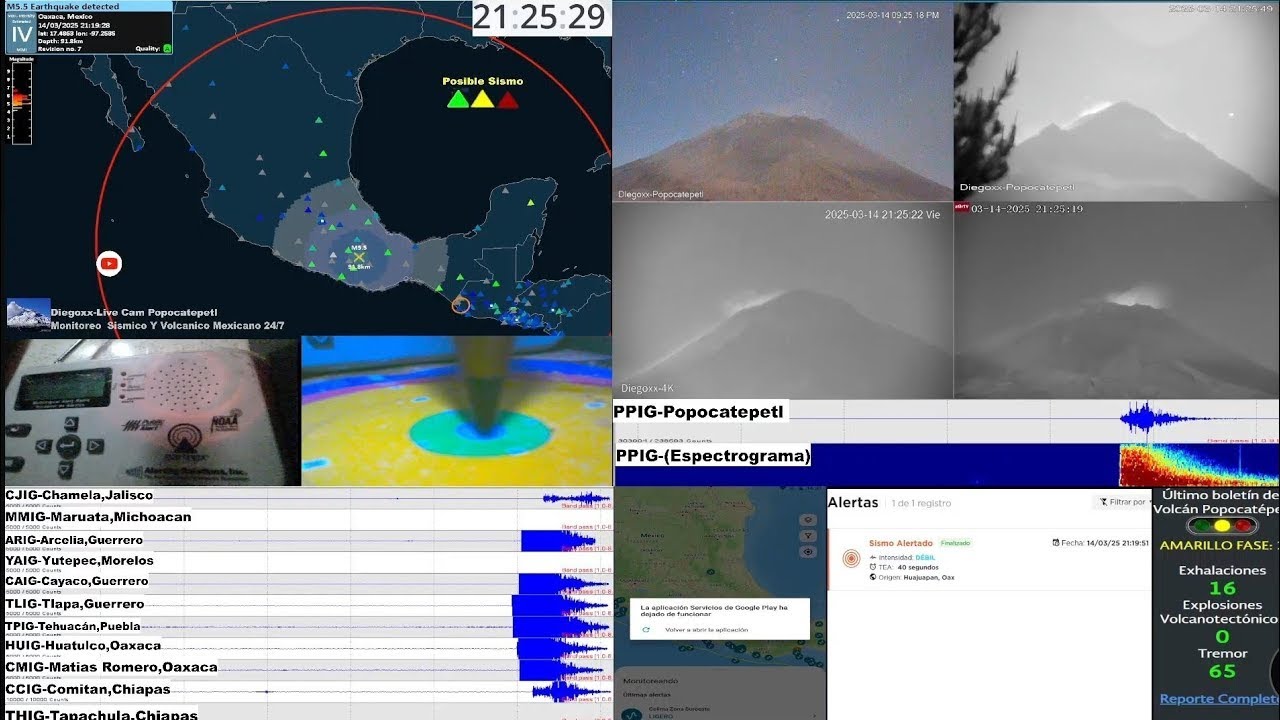

History of the City: From Tenochtitlan to a Metropolis
Mexico City is one of the few cities in the world whose history dates back to the pre-Columbian era. The modern capital of Mexico grew on the ruins of Tenochtitlan — the legendary Aztec city, founded around 1325 on an island in the middle of Lake Texcoco. Today, looking at the endless metropolis through Mexico City webcams online, it's hard to imagine that there was once water and canals where boats sailed. The Aztecs built a complex system of dams and aqueducts, and the city's population reached 200,000 people — making it one of the largest cities in the world at the beginning of the 16th century.
In 1521 Tenochtitlan fell to the onslaught of Spanish conquistadors led by Hernán Cortés. After the conquest, Cortés personally oversaw the restoration of the city, and on its ruins grew colonial Mexico City — the capital of the Viceroyalty of New Spain. The architectural heritage of that era can still be seen in the historic center, where baroque facades sit alongside the foundations of Aztec pyramids. The Metropolitan Cathedral, towering over the Zócalo Square, was built over nearly 250 years — from 1573 to 1813 — and incorporates features of several architectural styles.
Geography and Climate: A City at 2240 Meters Altitude
Mexico City is located in a high-mountain basin between mountains and volcanoes at an altitude of 2240 meters above sea level. It is one of the highest megacities on the planet. The population of the metropolitan area is almost 25 million people, making it the most populous city in North America. The city is surrounded by mountain ranges that hinder air circulation, creating a specific climate with moderate temperatures and high solar radiation.
The unique location also determines the city's serious problems. Mexico City was built on the site of the drained Lake Texcoco, and beneath it lie thick layers of soft clay and silt. As a result, the city is sinking — in some periods, subsidence of up to 50 centimeters per year was recorded. Over the past two decades, the ground has settled by 10 meters. Scientists first noticed this phenomenon in the early 1900s, when the rate of subsidence was 8 centimeters per year, and by 1958 it had reached 29 cm. After that, water pumping from wells in the city center was restricted, but the process can no longer be stopped.
Historic Center: Zócalo Square and the Metropolitan Cathedral
The heart of Mexico City is the Constitution Square, known as the Zócalo. It is one of the largest city squares in the world, surrounded by two monumental buildings: the Metropolitan Cathedral and the National Palace. The cathedral, whose construction began in 1573, combines several architectural styles — from Renaissance to Neoclassicism. Its facade is decorated with columns and sculptures, and inside there are five naves and 16 chapels.
The National Palace, occupying the entire eastern side of the square, is the residence of the President of Mexico. It is here that the famous murals by Diego Rivera are located, depicting the history of the country from ancient times to the revolution. Zócalo Square is the perfect place to start exploring the city, and many tourists use Mexico City webcams in real time to assess the scale of this space before visiting. The square can accommodate up to 200,000 people during mass events and holidays.
Chapultepec Park: The Green Heart of the Metropolis
Chapultepec Park, which locals often simply call "the forest," is the largest urban park in Latin America. Its area is twice that of New York's Central Park. It is not just a park, but a whole cultural complex, home to museums, a zoo, and historical monuments. Every day, thousands of citizens visit the park to go for runs, have picnics, or simply escape the hustle and bustle of the city.
The main jewel of the park is the National Museum of Anthropology with 23 exhibition halls. Among the most famous exhibits is the Aztec Sun Stone. The museum received its own building in the park in 1964. On Chapultepec Hill rises Chapultepec Castle — the only imperial palace in North America, built in the 18th century at an altitude of over 2000 meters above sea level. Today it houses the National History Museum.
Cultural Life: Palace of Fine Arts and Muralists
The Palace of Fine Arts is the main cultural center of Mexico City and a symbol of the city. Its construction began in 1904, but due to the Mexican Revolution it was halted in 1913 and was only completed in 1934. The building is made of white marble and topped with a colored glass dome, and the architecture combines Art Nouveau and Art Deco styles. The building's facade, entwined with sculptures and columns, has become one of the most photographed landmarks in the city.
Inside are the famous mural frescoes by Diego Rivera, David Alfaro Siqueiros, and José Clemente Orozco — three of the greatest Mexican muralists. The palace hosts opera and ballet performances, as well as contemporary art exhibitions. The auditorium seats over 1,500 spectators, and the stage is considered one of the best in Latin America. In 2009, the Palace of Fine Arts was designated a UNESCO monument.
City Districts: From Polanco to Coyoacán
Mexico City is a city of contrasts, and each district has its own unique character. Polanco is a prestigious neighborhood with luxury boutiques, fine dining restaurants, and modern skyscrapers. Embassies and business centers are located here, and the safety and infrastructure meet the standards of world capitals. The streets of Polanco are lined with trees, and the sidewalks are decorated with sculptures by contemporary artists.
Coyoacán is the complete opposite: a bohemian neighborhood with cobblestone streets, colonial mansions, and art galleries. This is where Frida Kahlo lived and worked, and her house-museum "The Blue House" has become a pilgrimage site for tourists. The Roma district, once aristocratic, is now experiencing a revival with trendy bars and coworking spaces. You can observe the life of these districts through Mexico City webcams online — they convey the pulse of the city without embellishment.
Street Food: The Gastronomic Symbol of Mexico
Mexico City street food is an essential element of urban culture. On every corner you can find stalls with tacos — traditional corn tortillas with a variety of fillings. Al pastor — marinated pork with pineapple, carne asada — grilled beef, barbacoa — stewed lamb. Tortillas are made by hand right in front of the customer, using different varieties of corn — white, yellow, blue.
In addition to tacos, it's worth trying elotes — corn on the cob with mayo, cheese, and chili, quesadillas with various fillings, tamales — corn cakes with filling wrapped in leaves, and atole — a hot corn drink. Street food here is not just a snack, but part of the national identity recognized by UNESCO. In 2010, Mexican cuisine was inscribed on the list of Intangible Cultural Heritage of Humanity.
Transport: Metro and Traffic Jams
The Mexico City Metro is the second largest in America and one of the busiest in the world. It was opened in 1969, and today its network comprises 195 stations, 24 of which are transfer stations. The daily passenger traffic is 4.5 million people. 115 stations are underground, 55 are at ground level, and 25 are elevated. The maximum depth reaches 36 meters on Line 7.
A distinctive feature of the Mexico City metro is separate cars for women and children up to 12 years old. The two front cars in each train during morning and evening rush hours are exclusively for them. Stations use pictograms instead of text names — a tribute to Aztec cultural traditions, where iconography played a key role. Each station has a unique symbol, making navigation convenient even for illiterate passengers and tourists.
What the Cameras Show
This page features Mexico City webcams in real time. You can watch the main landmarks of Mexico's capital: Zócalo Square, Chapultepec Park, Benito Juárez Airport, Aztec Stadium, and Paseo de la Reforma. The broadcasts are available free of charge and without registration — choose the location you're interested in and enjoy the view of the city that never sleeps.
The cameras broadcast live and convey the atmosphere of the city with its traffic jams, green parks, and historic squares. It's a convenient way to plan a trip, check the weather, or simply enjoy the view of one of the most colorful cities on the planet without leaving home.