

🏙️ Webcams Niagara Falls Online — Watch City and Waterfalls of Canada
3 cameras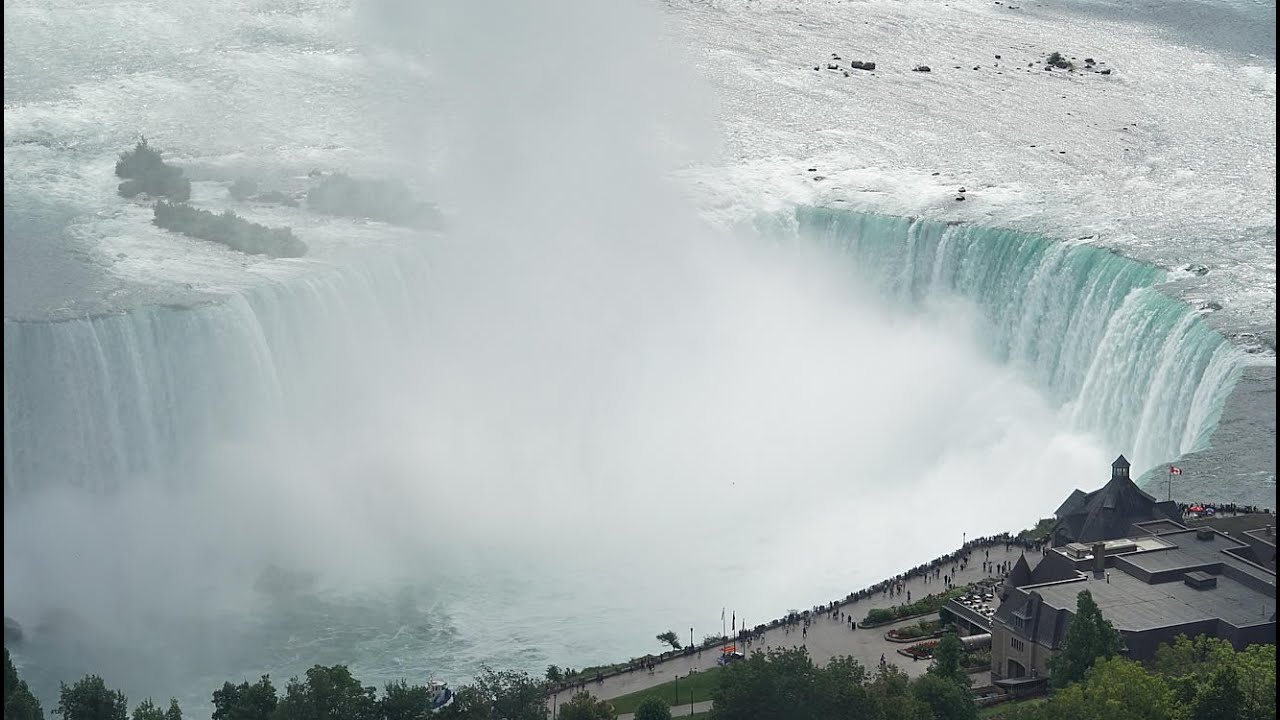

Niagara Falls: A City on the Edge of the Falls
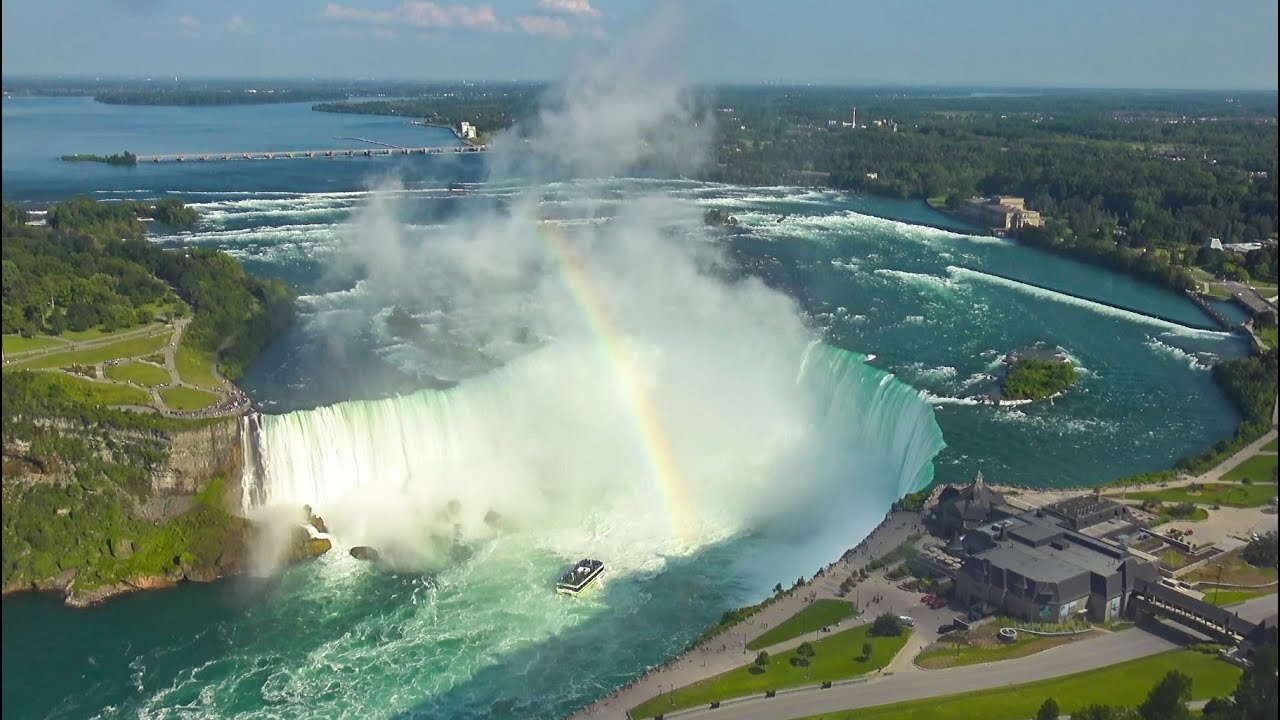
Niagara Falls in Canada is a place where civilization stands right on the edge of one of the planet's most powerful waterfalls. The city stretches along the Niagara River gorge, and its silhouette is unmistakable: the Horseshoe Falls arc dominates the entire landscape, while mist from the falling water drifts over rooftops and promenades. Niagara Falls received its modern name in 1903 after the merger of several settlements — before that, the city bore the name Clifton. Today it is the main tourist hub of the Canadian shore, where millions of people come to see the water element in person. For those planning a trip or simply wanting to feel the atmosphere of the place, Niagara Falls webcams online offer a view of the city and waterfalls without the need to show a passport at the border.
Three Waterfalls, One Border
Niagara Falls is not one waterfall, but three. "Horseshoe," "American," and "Bridal Veil" span the Canada-US border, and each has its own character. Horseshoe Falls is the widest and most majestic, its curved line stretching 790 meters. It belongs mostly to Canada and is the one visible from the Niagara Falls waterfront. The American Falls stands on the other side of the border, and Bridal Veil Falls — the narrowest of the trio — is separated from it by tiny Luna Island. Together they discharge about 168,000 cubic meters of water per minute during peak flow. Watching this colossus is endless — and webcams in Niagara Falls provide this opportunity around the clock.
Clifton Hill: From Ferry Road to Street of Fun
The city's main tourist artery is Clifton Hill, known here as "Street of Fun by the Falls". But it wasn't always like this. Before 1833, it was just a regular road to the ferry crossing. Ferry Road from 1834 was used to ferry people across the Niagara River in small boats. The first Clifton Hotel appeared here in 1833 at the foot of the road and became the finest hotel of its time. Today Clifton Hill is a kaleidoscope of attractions, wax museums, mini-golf, and restaurants, stretching from the waterfront up to the city center. Walking along it is an adventure in itself, and webcams on Clifton Hill let you gauge the street's liveliness before stepping out of your hotel.
Skylon Tower: A View from 158 Meters High
If the view from below is impressive, the view from above is overwhelming. Skylon Tower was opened on October 6, 1965 by New York Governor Nelson Rockefeller and Ontario Premier John Robarts. Its height is 158.5 meters (or 236 meters from the base of the falls). At the top sits the Revolving Dining Room, where the waterfalls glide past the windows during dinner. The tower's structure is a mid-20th-century engineering landmark: it stands on piles and withstands wind loads created by the sheer weight of falling water. Niagara Falls from Skylon's height looks like a model — tiny tourist figures, the emerald ribbon of the river, and the white band of foam at the base of the Horseshoe.
Table Rock: At the Very Edge of the Abyss
Table Rock is the point where you find yourself literally two steps from the falling water. Once a large rock ledge jutted out here, exposed in the mid-18th century as Horseshoe Falls retreated. After erosion and several collapses, the rock disappeared completely, but the spot remained the first stop for travelers. Today the Table Rock Centre operates here, and on its roof are spotlights for the evening illumination of the falls. This is where fireworks are launched on holidays, and this is where tourists take the most dramatic photographs. Niagara Falls from this vantage point seems like a completely different place — not a city, but a natural portal into the world of the elements.
Queen Victoria Park: The Green Heart of the City
Between the waterfront and Clifton Hill stretches Queen Victoria Park, opened in 1888 as the first recreational district covering 154 acres. This is not just a lawn with paths — it's a full-fledged botanical garden, famous for its spring daffodils and roses planted as carpet beds. In winter, the park becomes the center of the annual Festival of Lights, when trees and alleys are covered with millions of garlands. Niagara Falls in evening illumination with the lit waterfall in the background is a spectacle worth watching via online broadcast from the park after dark.
MarineLand: Sea Shows and Attractions
A few minutes' drive from the falls sits MarineLand of Canada, founded in 1961 by John Holer. For generations of visitors, this place was a true kingdom of wonders: marine mammal shows, stadiums with whales and dolphins, roller coasters, and land animal exhibits. The park became an integral part of childhood for millions of Canadians and Americans who came to Niagara Falls. Today MarineLand continues to operate, offering attractions and educational programs. For families with children, it's a must-visit stop after seeing the waterfalls — and another reason to linger in the city a little longer.
What the Cameras Show in the City
Webcams in Niagara Falls cover key points of the city: the waterfront with a view of Horseshoe Falls, the panorama from Skylon Tower, Clifton Hill, Queen Victoria Park, and the Table Rock area. Online broadcasts allow you to see the city in any weather — from a sunny day when rainbows play in the spray, to a snowy winter when trees near the falls are covered in frost. Choose the camera closest to your route and set off for a walk through Niagara Falls — even if only on your monitor screen.