

🏳️ Vatican City Webcams Online — Live Broadcast from the Heart of Rome
5 cameras


Vatican City — a state within a city
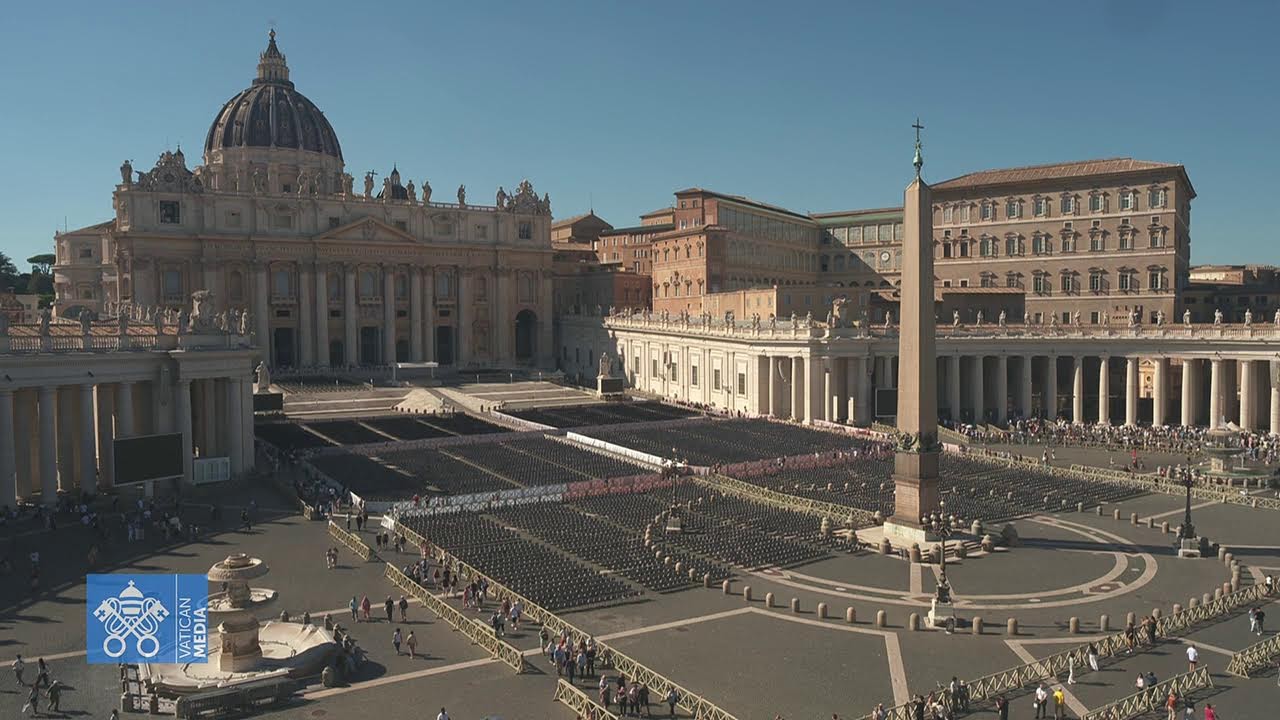
Imagine a country you can walk around in half an hour. Vatican City is a unique formation on the world map, an enclave in the middle of eternal Rome, the residence of the Pope and the center of the Catholic world. This is not just an open-air museum, but a full-fledged state with its own flag, anthem, post office, and even a railway. For those who want to experience this atmosphere, there are Vatican City webcams online — they allow you to see St. Peter's Square and the dome of the basilica in real time, without leaving home.
The area of this dwarf state is just 44 hectares — that's about 60 football fields. The border stretches for 3.2 kilometers, and it can be walked in an hour at a leisurely pace. Despite its tiny size, it houses treasures of world significance: St. Peter's Basilica, the Sistine Chapel, the Vatican Museums, and the Gardens.
History and Status of the Holy See
Modern Vatican City gained independence on February 11, 1929 thanks to the Lateran Treaty between Italy and the Holy See. This agreement ended the long-standing conflict that arose after the capture of the Papal States in 1870. Since then, Vatican City has become a sovereign state recognized by the international community.
The uniqueness of Vatican City lies in the fact that it is a theocratic monarchy, where the Pope has absolute legislative, executive, and judicial power. There are no elections in the usual sense — the pontiff is elected for life by the conclave of cardinals. Interestingly, the official language of the state remains Latin — the only case in the world where a dead language has the status of a state language.
Architectural Masterpieces and Landmarks
The heart of Vatican City is St. Peter's Square, Bernini's oval colonnade, and the majestic basilica. The dome of the cathedral, designed by Michelangelo, is visible from many points in Rome. Inside are stored masterpieces of world art: Michelangelo's "Pietà", Bernini's baldachin over the main altar, the bronze statue of St. Peter.
The Sistine Chapel is another gem that millions of tourists flock to. Michelangelo's frescoes on the ceiling and "The Last Judgment" on the altar wall amaze with their scale and mastery. The Vatican Museums feature collections of ancient Roman and Hellenistic sculptures, Egyptian artifacts, tapestries, and map galleries. All of this can be seen through Vatican City webcams — live broadcasts show the halls and courtyards at different times of the day.
Secrets of the Vatican Archives
Beneath the ground of Vatican City lie rooms surrounded by legends. The Vatican Apostolic Archive is a repository of documents stretching for tens of kilometers of shelves. Here are stored manuscripts of the Inquisition trials, documents of the Crusades, manuscripts of famous thinkers and scientists. Access here is restricted — only for Vatican servants and invited researchers with special permission.
The existence of the archive is real, but surrounded by legends. One of them says that in the dungeons is kept a "chronovisor" — a device that allows you to view any historical event. This story has no scientific confirmation, but it fuels interest in the secrets of the Vatican. Other legends speak of hidden treasures, ancient scrolls, and even alien artifacts.
Everyday Life of a Dwarf State
Life in Vatican City is governed by special rules. Citizenship here is not passed by birth — it is granted only to those who hold certain positions in the Holy See. These are clergy, Roman Curia employees, and the Swiss Guard. Women make up about 5.5% of the Vatican's population — mostly wives of employees who receive citizenship through marriage.
The birth rate in Vatican City is zero — women give birth in Italian cities. Divorce is not possible here — only annulment. At the same time, the crime rate per capita here is one of the highest in the world — overcrowded museums become a paradise for pickpockets. Vatican City even has a cinema, located in an old closed church, where the Pope and employees can attend film screenings.
Climate and Best Time for Observation
Vatican City is in the Mediterranean climate zone — mild winters and hot summers. The best time for virtual walks through Vatican City webcams is spring and autumn, when the weather is comfortable and the tourist flow is not so dense. In summer it can be stuffy and crowded, in winter — cool and rainy.
St. Peter's Square is beautiful at any time of the year: in spring the gardens turn green, in summer it is bathed in sunlight, in autumn it is enveloped in golden light, in winter — it is deserted and mysterious. The Vatican City online broadcast allows you to see these changes in real time, watching how the lighting and movement of people change.
What Can Be Seen on Vatican City Cameras
Vatican City webcams online cover key points of this miniature state. You can find broadcasts from St. Peter's Square, where pilgrims and tourists gather every day. Cameras on the dome of the basilica offer a panoramic view of Rome and the Vatican Gardens. Some broadcasts show the inner courtyards of the museums and approaches to the Sistine Chapel.
For those interested in life behind the walls of the Vatican, there are cameras in Castel Gandolfo — the Pope's summer residence on the lake shore. The live broadcast from the Vatican operates around the clock, allowing you to observe the change of day and night, papal audiences, and holiday masses. This is a unique opportunity to see what is hidden from ordinary tourists — the everyday life of a state that has existed for almost a thousand years.