

🏙️ Wakefield Webcams Online — Watch in Real Time
1 cameras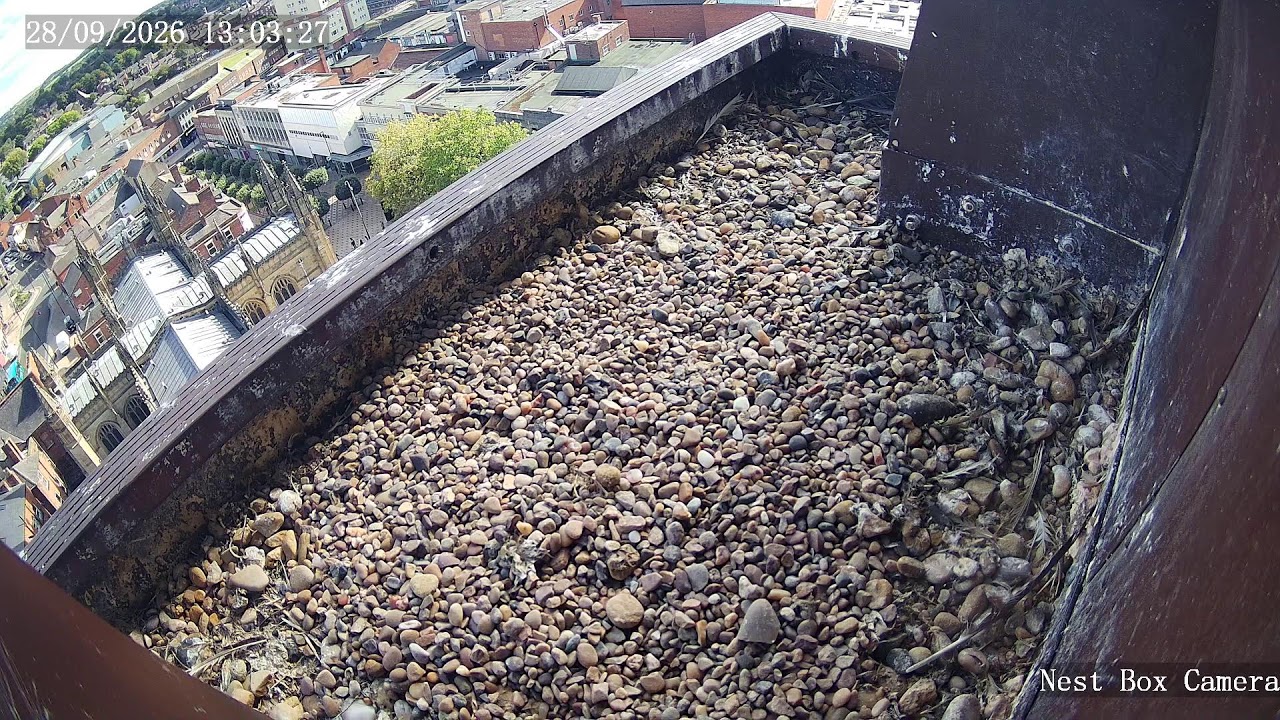
A city where history flows with the Calder
Wakefield has stood on the banks of the River Calder for more than eight centuries, and its appearance is layers of time superimposed on one another. A market settlement has existed here since 1203, when William de Warenne, 5th Earl of Surrey, granted these lands the corresponding status. Just a year later, King John added the right to hold a fair on All Hallows' Day, and in 1258 Henry III secured a second one — on St John the Baptist's Day. Trading blood ran through the veins of this place from the very beginning.
The River Calder made Wakefield a navigable inland port through which wool, grain, coal, and textiles flowed. The houses of merchant wool traders and warehouses still stand along the waterfront, reminiscent of the times when the city was one of Yorkshire's key commercial hubs. The stone bridge across the Calder, construction of which began in 1342, still carries the Chapel of St Mary — one of the few surviving medieval bridge chapels in England.
The cathedral visible from everywhere
Wakefield's parish church with its 75-metre spire is the highest point among all churches in Yorkshire. In 1888 it became the cathedral of the new diocese, and this year is considered the official date the city received city status. The spire dominates the centre, and if you look at the panorama of Wakefield, it is the first thing that catches the eye.
The cathedral has survived many rebuilds — from Norman times to Victorian restoration — but has retained the spirit of a place where people have gathered for over a thousand years. Inside — stained glass windows, carved benches, and an atmosphere unlike any other church in the region.
Blood and roses: the battle that changed the course of the war
On 30 December 1460, a few miles from the city, one of the most dramatic scenes of the Wars of the Roses unfolded. The Battle of Wakefield became a trap for Richard, Duke of York — a claimant to the English throne. He was lured from the safety of Sandal Castle (or made an ill-advised sortie himself — historians still argue), and the Lancastrian forces set an ambush.
The Duke of York was killed in battle. His seventeen-year-old son, Edmund, Earl of Rutland, was killed trying to cross Wakefield Bridge. The Earl of Salisbury, one of York's key allies, also fell. The Lancastrians impaled all three heads on stakes and displayed them above Micklegate Bar in York — York's head was adorned with a paper crown inscribed "Let York overlook the city of York." The Lancastrian victory proved temporary, but the echo of that battle ran through the whole of English history.
The black swan and other ghosts of the past
On Silver Street stands the Black Swan pub — a timber-framed building dating from around 1590, one of the oldest surviving drinking establishments in the city. Its dark beams and low ceilings remember the era of Shakespeare and James I. Nearby — traces of medieval building work that are constantly discovered during facade restoration.
In the 14th century, Wakefield bore the nickname "Merrie City". It was called this thanks to popular archery competitions and folk games that drew crowds. The spirit of that merriment still shows through in places today — especially during festivals and markets.
The Rhubarb Triangle: a Yorkshire agricultural anomaly
Few people associate industrial Yorkshire with delicate pink rhubarb, but this is where the famous Wakefield Rhubarb Triangle is located — an area of about 9 square miles bounded by Wakefield, Morley, and Rothwell. At the industry's peak, before 1939, the area supplied up to 200 tonnes of rhubarb daily and provided 90% of the world's winter forced rhubarb.
The technology is striking: the stems are grown in dark, low sheds, harvested by hand from January to March, often by candlelight — light would cause the stems to turn green and toughen. Between January and March, special night trains with rhubarb ran from Ardsley station straight to London's Spitalfields and Covent Garden markets. In 2010, Yorkshire forced rhubarb received PDO — Protected Designation of Origin status, the same as Parma ham or feta cheese.
Every February, Wakefield hosts the Rhubarb Festival — with tastings, cookery masterclasses, and processions. And in Holmfield Park stands a rhubarb sculpture, installed in 2005 — a monument to the humble plant that fed the region.
Coal: black gold beneath your feet
Coal mining in the Wakefield area began at least from Roman times — archaeologists have found traces of coal-fired pottery kilns at the Roman settlement of Lagentium (now Castleford). In the 13th century, Augustinian monks from Nostell Priory worked coal seams, and from the 14th century, licences for iron smelting were recorded.
By 1831, about 300 people worked in the city's mines; by 1869, there were 46 small pits. The National Coal Board became Wakefield's largest employer. Manor Colliery and Park Hill Colliery remained open until 1982. And the large-scale open-cast operation Wakecoal near the River Aire, at peak production, yielded about 2 million tonnes of high-quality bituminous coal per year and closed only in 2012.
Today, the legacy of the coal era is preserved by the National Coal Mining Museum for England at Caphouse Colliery in Overton. Here you can descend into the mine, feel the darkness and heat that thousands of Yorkshire miners experienced daily. The museum is visited by about 138,000 people a year.
Henry Moore and the sculptural legacy
Henry Moore was born in 1898 in neighbouring Castleford, the seventh of eight children, but his connection to Wakefield proved deeper than mere geography. He became president of the Wakefield Permanent Art Foundation and regularly donated works to the district until his death in 1986.
Wakefield's collection includes the sculpture "Reclining Figure" from 1936, made of elm, purchased in 1942 and becoming one of the first major public acquisitions of Moore's work. There is the drawing "Four Grey Sleeping Figures" from 1941 — evidence of his work as a war artist, when he drew miners. In 1979, Moore placed his sculpture "Draped Reclining Figure" on long-term loan to the Wakefield district.
Moore insisted that references to landscape in his works were always connected to Yorkshire — a place where the land can be seen "as primitive man saw it." Today, the Hepworth Wakefield museum continues this line, participating in the Yorkshire Sculpture International festival and reminding us that Yorkshire is the cradle of British sculpture.
Districts and atmosphere: from the centre to the suburbs
Wakefield city centre is a pedestrian zone around the cathedral and market square, where medieval planning is mixed with Victorian and modern development. The Kirkgate quarter is one of the oldest streets, running from the bridge to the cathedral. The Westgate area — a former trading artery, now undergoing transformation. Ossett and Normanton are former industrial settlements that have been absorbed into the city boundary.
Along the Calder waterfront — restored warehouses and new residential complexes. Thornes Park in the south of the city is a green space with views over the centre. And in February, when rhubarb harvesting begins, the air in the surrounding villages — Carlton, East Ardsley, Lofthouse — fills with the characteristic scent of ripe stems.
Climate and the best time for observation
Wakefield lies in a temperate maritime climate zone — cool summers, mild winters, rainfall distributed evenly throughout the year. The wettest months are October and November, the driest are May and June. In winter, temperatures rarely drop below zero, but the damp and wind create a feeling of greater cold.
For observing the city, spring and early autumn are best, when the light falls softer and the trees in the parks and along the Calder have not yet shed their leaves. In winter on overcast days, the centre looks particularly atmospheric — street lamp reflections shimmer on the pavements, and the cathedral spire is lost in low clouds.
What the cameras show
Wakefield webcams allow you to see the city as it is right now — with its streets, the Calder embankment, squares, and parks. Broadcasts come from locations covering central areas, transport hubs, and scenic spots along the river. You can watch the activity around the cathedral, follow the weather in real time, or simply enjoy the view of a Yorkshire city that remembers the Wars of the Roses, coal trains, and night trains laden with rhubarb. Choose a camera and watch — Wakefield does not hide its history, it lives by it.