

🏙️ Webcams Romsey online — watch the city in real time
1 cameras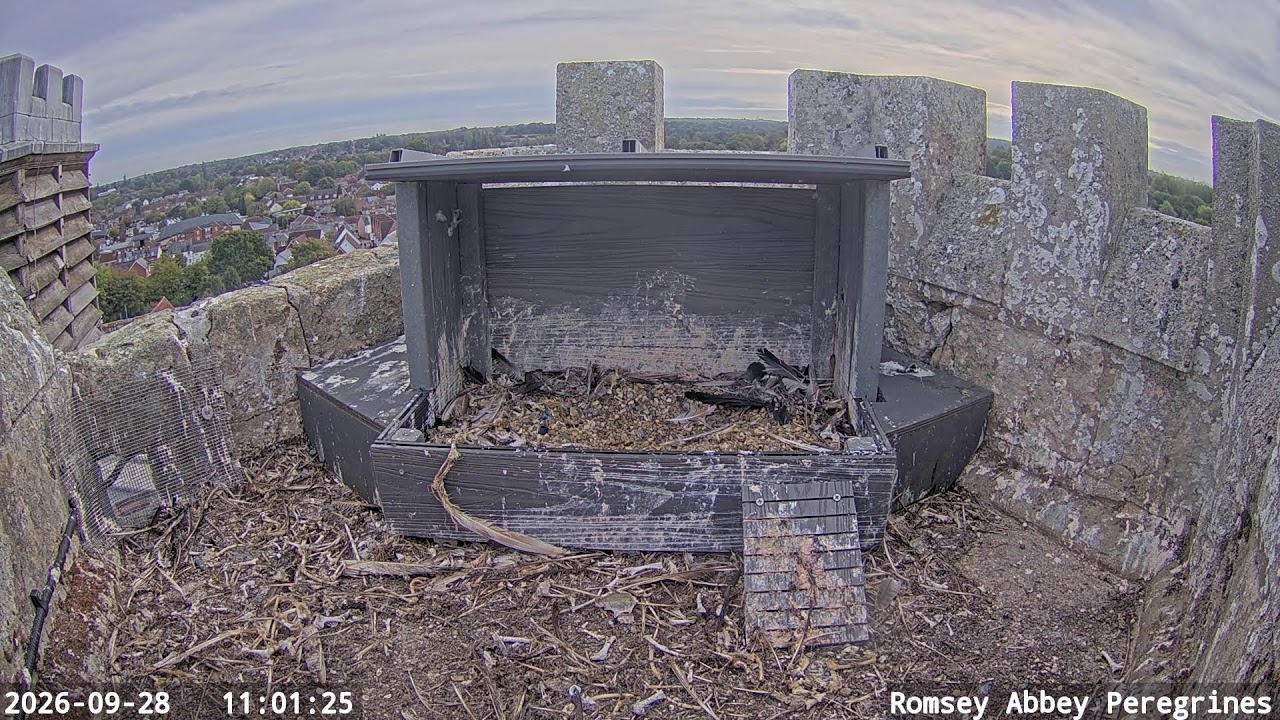
Romsey — the jewel of Hampshire on the banks of a chalk river
The town of Romsey is nestled in the southern part of Hampshire, about 12 kilometres northwest of Southampton. It's a place where time seems to have slowed down — medieval timber-framed houses sit alongside Victorian shops, and the narrow streets still carry the breath of 19th-century English provincial life. The town's name, according to one version, derives from the Old English expression "Rum's eg" — "Rum's dry land surrounded by marsh", which eloquently describes what this area once looked like — islands of dry land among the marshes.
Today Romsey is a living, breathing town with a population of around 18,000 that has managed to preserve its authenticity despite its proximity to the major port city of Southampton. There's no metropolitan hustle here, but there is a genuine English atmosphere: pubs with long histories, independent shops on Broad Street, and the feeling that every cobblestone holds memory of centuries past.
Romsey Abbey: a Romanesque giant among parish churches
The town's landmark, visible from virtually any point, is Romsey Abbey, the largest functioning parish church in Hampshire, which uninformed tourists often mistake for a cathedral. And it's no wonder: the scale of the building is truly cathedral-like. Construction of the current Romanesque building took place between 1120 and 1140 on the site of an earlier Saxon temple, and today it is considered the best-preserved Romanesque church in England.
The abbey's history dates back to 907, when a Benedictine monastery was founded here. By 1240, about 100 nuns lived within its walls — for those times, this was a huge female religious community. The abbey became a place of significance for royalty: Princess Joan, daughter of King John, was educated within its walls, and Mary de Blois, daughter of King Stephen, served as abbess for five years. These facts transform Romsey from a mere provincial town into a place where English history was made.
Inside the abbey you can see the famous "Romsey Rood" — one of the most expressive medieval sculptures in the country — as well as the tombs of prominent historical figures. The north transept retains traces of early Norman masonry, making the building a true open-air architecture textbook.
Market Square and the bronze Lord Palmerston
The centre of Romsey — Market Place, or Market Square — has been the heart of town life for over a thousand years. King Henry I granted the town its first charter to hold a weekly market, which initially took place on Sundays. Over time the day changed, but the tradition of trading in the square has survived — and today you can still find bustling trade here.
In the centre of the square stands a bronze statue of Lord Palmerston — the 19th-century British Prime Minister, erected in 1867 through public subscription. Henry John Temple, 3rd Viscount Palmerston, was a native of these parts, and the townspeople immortalised his memory in the very heart of Romsey. The statue has become not just a monument but a landmark — all the main streets of the town radiate from it, and it's where locals arrange to meet.
Around the square stand buildings of different eras: medieval timber-framed houses with criss-cross beams sit alongside Georgian facades and Victorian shopping arcades. Each building has its own history — former taverns, coaching inns, homes of wealthy merchants. A walk through Market Place is a journey through the architectural layers of English history.
River Test: a chalk artery of world significance
Flowing through Romsey is the River Test — a 40-mile (64 km) chalk stream, which empties into Southampton Water. It is one of the most famous rivers in the world among fly fishing enthusiasts. The clear water, rich in oxygen thanks to the chalk bed, creates ideal conditions for trout — the Test brown trout has become a legend among anglers.
Local fishermen begin fishing before dawn, following the so-called "morning rituals for brown trout," when the club stove hisses and tea is poured into tin mugs. Along the river banks there are footpaths where you can watch herons, otters and other representatives of river wildlife. Within the town, the Test forms picturesque loops, and its banks have been turned into green recreation areas — the perfect spot for a picnic or a leisurely walk.
The chalk streams of Hampshire are a unique natural phenomenon. The water in them is filtered through chalk rock from the Cretaceous period, acquiring a characteristic turquoise hue and exceptional purity. The Test is a classic example of such a river, and its ecosystem is under state protection.
Mottisfont: roses, Augustinians and the National Trust
A few kilometres from Romsey, on the opposite bank of the Test, lies Mottisfont Abbey — a former Augustinian priory, now owned by the National Trust. In 2019, this place was visited by 393,250 people, making it one of the county's most popular attractions.
The history of Mottisfont begins in 1201, when an Augustinian priory was founded. After the dissolution of the monasteries under Henry VIII, the monastery was converted into a country estate and has changed owners many times since. In 1957 the estate was handed over to the National Trust, and since then it has been open to visitors.
The main pride of Mottisfont is the famous collection of historic shrub roses, created in 1972 on the site of a former vegetable garden. This is the largest rose collection in the National Trust, comprising over 500 varieties. During the flowering season — from June to September — the garden becomes a sea of fragrances and colours, attracting gardening enthusiasts from across the country.
The abbey building itself is a mixture of architectural styles: medieval vaulted cellars sit alongside Georgian drawing rooms and Victorian kitchens. Inside, 13th-century frescoes and traces of monastic life have survived, which can be spotted upon close inspection.
Royal traces: from King John to Princess Joan
Romsey holds the memory of several generations of the English royal family. One of the most intriguing stories is connected with King John's House — a 13th-century hunting lodge, which is traditionally attributed to King John. However, research has shown that the building was erected after the king's death, which does not diminish its historical value.
The connection between Romsey and King John's daughter — Princess Joan — is well documented. She was educated within the abbey walls and later became Queen of Scotland, marrying Alexander II. Her sister, Princess Isabella, also spent her childhood in the monastery. Mary de Blois, daughter of King Stephen, not only studied here but became abbess — managing the monastery for five years and leaving a notable mark on its history.
These royal connections make Romsey a place where the threads of English and Scottish history intertwine. The abbey was not just a religious centre but also a place of education for the elite — a kind of school for daughters of noble families.
Town atmosphere: from Sunday markets to modern life
Modern Romsey is a balance between historical heritage and everyday life. Broad Street, the main shopping artery, is filled with independent shops, cafés and restaurants. There are no chain giants here, but there are family bakeries, antique shops and bookshops that have been run by the same family for several generations.
On Sundays, trading still takes place on Market Square — a tradition dating back to Henry I's charter. Local farmers bring farm products, craftsmen bring their wares, and the atmosphere resembles a festival more than ordinary trade. In summer, festivals and fairs are held here, turning the town centre into a magnet for the whole county.
Romsey is a town best explored on foot. Narrow streets, hidden courtyards, sudden views of the abbey around a corner — all this creates a sense of discovery. And if you want to see the town before visiting, Romsey webcams online allow you to assess the situation and plan your route.
Surroundings and natural riches
Romsey is located in the New Forest National Park, making it an ideal base for exploring one of the most beautiful natural regions of England. Just a few minutes' drive away are ancient oak woodlands, heather moors and freely roaming ponies that have become the symbol of these places.
The River Test with its tributaries creates a network of walking routes of varying difficulty. You can head upstream to Mottisfont or downstream to Southampton, enjoying landscapes that have barely changed over the last three hundred years. Information boards along the banks tell about the local flora and fauna.
For outdoor enthusiasts, Romsey offers cycling routes, horse riding and, of course, trout fishing — with permission from local clubs, of course. The chalk streams of Hampshire are not just water bodies but entire ecosystems requiring careful treatment.
What the cameras show
This page features Romsey webcams — from panoramic views of the centre to broadcasts from key landmarks. You can watch Romsey online and see Market Square with the bronze Lord Palmerston, the abbey facade in the rays of the setting sun, or the picturesque banks of the River Test.
The camera on Broad Street shows the everyday life of the town — pedestrians hurrying about their business and the independent shops that make Romsey so special. The broadcast from the abbey allows you to appreciate the scale of the Romanesque building and its role in the town's skyline. And if you're interested in nature, the webcams on the River Test show the chalk waters and green banks.
All Romsey webcams work in real time — you see the town exactly as it is right now. It's a convenient way to plan a trip, check the weather, or simply enjoy the view of one of the most authentic towns in Hampshire without leaving home.