

🏙️ Webcams Newcastle upon Tyne online — watch in real time
1 cameras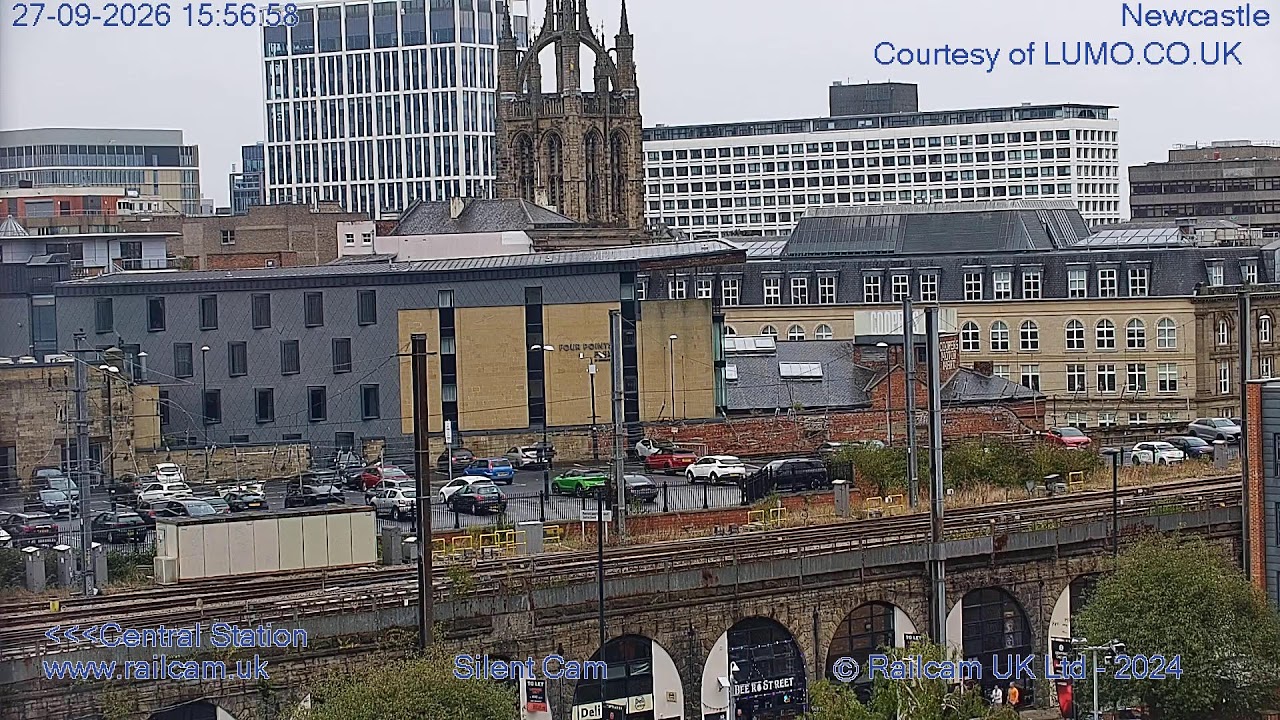
Newcastle upon Tyne: a city on the banks of the Tyne
Newcastle upon Tyne stretches along the northern bank of the River Tyne, a few miles from the North Sea. It is one of the largest cities in North East England, known for its industrial history, unique dialect, and the hospitality of its residents. The city has evolved from a Roman outpost to a centre of shipbuilding and today remains an important cultural and economic hub of the region.
Roman roots and the legacy of Hadrian's Wall
The history of Newcastle dates back to the times of the Roman Empire. In the 2nd century AD, the fortress of Pons Aelius was founded here, named after Emperor Hadrian. The fort guarded the crossing over the Tyne and the eastern end of the famous Hadrian's Wall — a defensive structure that crossed northern England along the Tyne-Solway fault. The population of the Roman settlement at its peak was around 2,000 people. Fragments of the wall can still be seen along West Road, and its course can be traced east to the fort of Segedunum. On the site of the modern Swing Bridge once stood a Roman bridge where altars to water gods were located.
Newcastle Castle and medieval heritage
The modern name of the city comes from the castle built on the site of the Roman fortress. In the Middle Ages, the city bore the Latin name Novum Castellum — "new castle". Newcastle Castle has dominated the city skyline for nearly a thousand years, reminding of the times when the city was an important outpost on the northern borders of England. From here there is a view of the River Tyne and the bridges connecting Newcastle with Gateshead.
Bridges across the Tyne: engineering masterpieces
The River Tyne has always played a key role in the life of the city. Today several bridges span it, but the most famous is the Tyne Bridge, built in 1925–1928. Its height is 59 metres, and its unique arch design has become a symbol of Newcastle. There is a widespread belief that the famous Sydney Harbour Bridge was modelled after it. Be that as it may, after the opening of the Tyne Bridge, one of the engineers stated: "This is being seen as a trial run for the Sydney bridge". The bridges and the river can be observed through webcams installed in different parts of the city.
Shipbuilding glory and industrial past
Newcastle is unimaginable without its shipbuilding heritage. Legendary liners were built on the Tyne shipyards, including the Titanic and the Mauretania. Shipbuilding shaped the character of the city for decades, forming its working culture and the character of its residents. Although heavy industry has given way to other sectors, the memory of it is preserved in museums and the architecture of the waterfront.
Culture and the Geordie dialect
The residents of Newcastle are called "Geordies" — this nickname is connected to a dialect with deep historical roots. There is a theory that the name originated from the citizens' support of King George II during the Jacobite rising of 1745. The dialect itself goes back to the Anglo-Saxon language spoken by mercenaries who came to the region in the early Middle Ages. Even the word "netty" (the local word for toilet) possibly comes from the Roman slang of Hadrian's Wall soldiers. The unique speech remains a source of pride for local residents and an important part of the region's identity.
Modern Newcastle: metro and architecture
Today Newcastle is a modern city with developed infrastructure. In 1980, the first metro outside London in the UK began operating here. The Tyne and Wear Metro carries around 37 million passengers a year, remaining the busiest light rail system in the country. Construction of the system began in 1974, and the official opening took place on 6 November 1981 in the presence of the Queen. The city combines Victorian architecture with modern buildings, creating a unique urban landscape.
Angel of the North and regional symbols
Although technically the sculpture is located in Gateshead, the Angel of the North has become an unofficial symbol of the entire Tyneside and Newcastle. The monumental work by Antony Gormley was completed in 1998. Thanks to its proximity to the A1 and A167 motorways, it is seen by approximately 33 million people annually. The steel figure with a wingspan of 54 metres has become one of the most recognisable art objects in the UK.
What the cameras show
Newcastle's webcams allow you to see the city in real time: from the historic centre with the castle and waterfront to modern neighbourhoods and bridges. The broadcasts cover key landmarks, including the Tyne Bridge, St Nicholas' Cathedral, and St James' Park stadium. Watching through the cameras gives you a feel for the city's atmosphere, rhythm, and mood without leaving home.