

🏙️ London webcams online — watch the British capital in real time
7 cameras

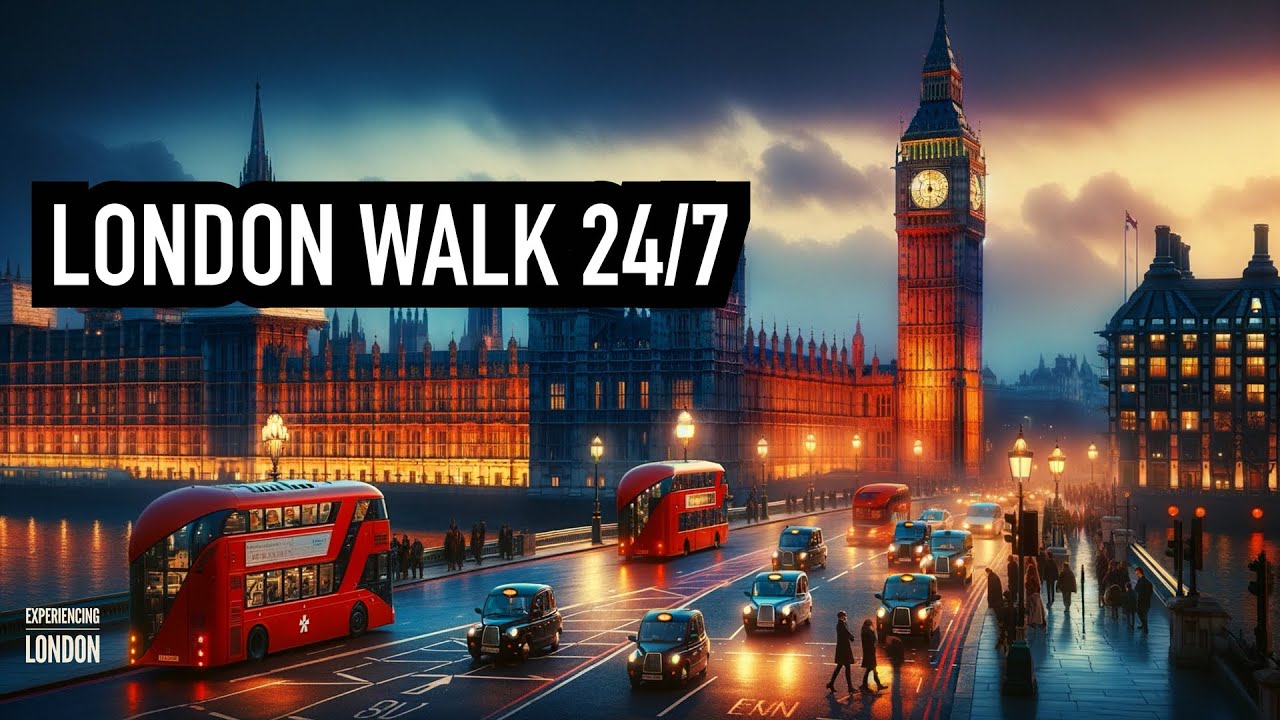




London — a city where history meets modernity
London is a place where every building holds centuries of history, and a street can tell more than any textbook. The capital of the United Kingdom attracts millions of travelers with its unique character: strict architecture coexists with avant-garde skyscrapers, royal ceremonies with street musicians at Covent Garden. The city lives at its own pace, measured and yet relentlessly fast. Westminster, Kensington, Camden — each district has its own face and atmosphere that cannot be conveyed through photographs, but can be felt through a live stream from the streets.
Few people know that London is home to the world's smallest statue — two tiny mice with a piece of cheese. It hides on the facade of a building and remains unnoticed by most tourists. And beneath the feet of passersby lies an entire network of waterways: over 1000 kilometers of underground rivers flow beneath the city, invisible and forgotten. These details make London truly multi-layered — not only culturally, but literally, physically.
Tower Bridge and the Thames — the heart of the city
Tower Bridge is one of London's most recognizable symbols, and its silhouette is familiar even to those who have never been to England. Built in 1894 during the reign of Queen Victoria, it is a two-level bascule bridge in Victorian Gothic style. The lower deck opens to let ships pass, the upper deck is always open to pedestrians. The bridge's history is full of curiosities: in 1968, American businessman Robert McCulloch bought it, thinking he was purchasing London Bridge. The real London Bridge was later indeed sold and moved to Arizona, but that's another story.
The Thames divides the city into two parts, and its banks offer completely different experiences. The north bank is the historic center with its palaces and cathedrals, the south bank is the more modern and creative part with Shakespeare's theaters and art galleries. Watching the river and its embankments is especially interesting in the early morning hours when the city is just waking up, or at dusk when the bridge lighting creates a magical picture.
Big Ben and Westminster — symbols of British monarchy
The Elizabeth Tower, which the whole world calls Big Ben, is the cradle of parliamentary democracy and one of London's main landmarks. At the same time, the name "Big Ben" itself refers not to the tower, but to the bell inside it. The tower's height is 96 meters, and the bell weighs 13.7 tons. During World War II, the House of Commons was destroyed by bombing, but Big Ben stood firm and continued to strike the hour — it became a symbol of the nation's resilience.
The Westminster district concentrates power and grandeur: Parliament sits here, coronations take place at Westminster Abbey, and nearby stretches St. James's Park with its pelicans and views of Buckingham Palace. The palace has been the official residence of British monarchs since 1837, when Queen Victoria ascended the throne. The Changing of the Guard at the palace is a ceremony that draws crowds of spectators, and every second visitor to the capital strives to see it with their own eyes.
The Great Smog of 1952 and London fog
London fog is not just a meteorological phenomenon, but part of the city's cultural code. But fog comes in different forms, and the worst of them occurred in December 1952. The Great Smog lasted 5 days — from December 5 to 9 — and claimed the lives of about 12,000 people. It was not just a veil of water vapor, but a poisonous mixture of sulfuric acid particles and other toxic substances emitted by industrial enterprises and household stoves.
The tragedy forced the authorities to act: in 1956, the Clean Air Act was passed, which changed the face of British cities. Since then, London's air has become significantly cleaner, although a light haze still envelops the Thames in the cold season, creating the very atmosphere we know from films and books. Modern cameras on the embankments allow you to observe how visibility changes throughout the day, and catch moments when the city seems to dissolve in a gray veil.
London districts: from the West End to the City
London is a conglomerate of villages, each of which has preserved its identity. The West End is theaters, shops on Oxford Street and the vibrant nightlife of Soho. The City is the financial heart with its glass towers, among which stand out the Gherkin and the Shard. Camden is famous for its market and alternative culture, and Notting Hill for its pastel houses and carnival.
Kensington and Chelsea offer a more respectable atmosphere: museums, parks, quiet streets with Victorian terraces. Greenwich in the southeast is the observatory, the Prime Meridian and views of the Canary Wharf skyscrapers. Each district of London deserves separate study, and that's why it's so convenient to be able to switch between different angles — from busy intersections to quiet residential quarters.
Trafalgar Square and the National Gallery
Trafalgar Square is London's main square, a place of meetings, demonstrations and celebrations. It was here that on May 8, 1945, Winston Churchill announced victory in World War II, and since then the square has remained a symbol of national unity. Nelson's Column, 52 meters high, dominates the space, and the four lions at its base have become a favorite spot for photographs.
The square houses the National Gallery with its collection of over 2,000 works by Western European artists — from the Middle Ages to the 20th century. Van Gogh, Monet, Leonardo da Vinci — masterpieces are gathered here, worth crossing the English Channel for. And the annual Christmas tree, gifted by Norway in gratitude for help during World War II, turns the square into a center of winter magic.
The London Eye and panoramic views
The London Eye Ferris wheel is a relatively young symbol of the city, but it has already become as recognizable as the Tower or Big Ben. The structure's height is 135 meters, and the 32 capsules symbolize the 32 boroughs of London. A full rotation takes 30 minutes, and during this time passengers can see the city from a bird's eye view — from the bends of the Thames to green parks, from the historic center to modern districts.
The panoramic view reveals London from an unexpected side: you can see how densely built up the center is, how the river winds through the city, how green spaces alternate with concrete jungles. The view is especially impressive at sunset, when skyscrapers are illuminated with gold, and the Thames reflects the last rays of the sun. For those not ready to go up on the wheel, there are alternative observation points — gallery roofs, bar terraces, and, of course, webcams on elevated parts of the city.
What the cameras show in the city
London's webcams cover key points of the city: from Tower Bridge and the Victoria Embankment to the busy intersections of Piccadilly and Leicester Square. Cameras on Big Ben and near the Houses of Parliament allow you to observe the life of the UK's political center, and broadcasts from Trafalgar Square show tourists, pigeons and street performers in their natural habitat.
For those interested in the city's atmosphere, cameras on the Thames embankments are especially interesting — they convey the play of light on the water, the movement of ships and the famous London fog rising over the river in the morning hours. Cameras in the City district demonstrate the rhythm of business life: office workers, taxis and the famous red double-decker buses. And broadcasts from parks — Hyde Park, Regent's Park, St. James's — reveal the green side of the metropolis, where Londoners relax, jog and feed squirrels.
Choose a camera according to your mood: want to see the historic center — turn on the broadcast from Westminster; interested in modern London — switch to the City; need a peaceful picture — park cameras are at your service. Live streaming from the streets of London is available around the clock, and every hour brings new scenes: from a morning jog near Buckingham Palace to the evening illumination of the London Eye.