

🏙️ Webcams Cowes online — watch in real time
2 cameras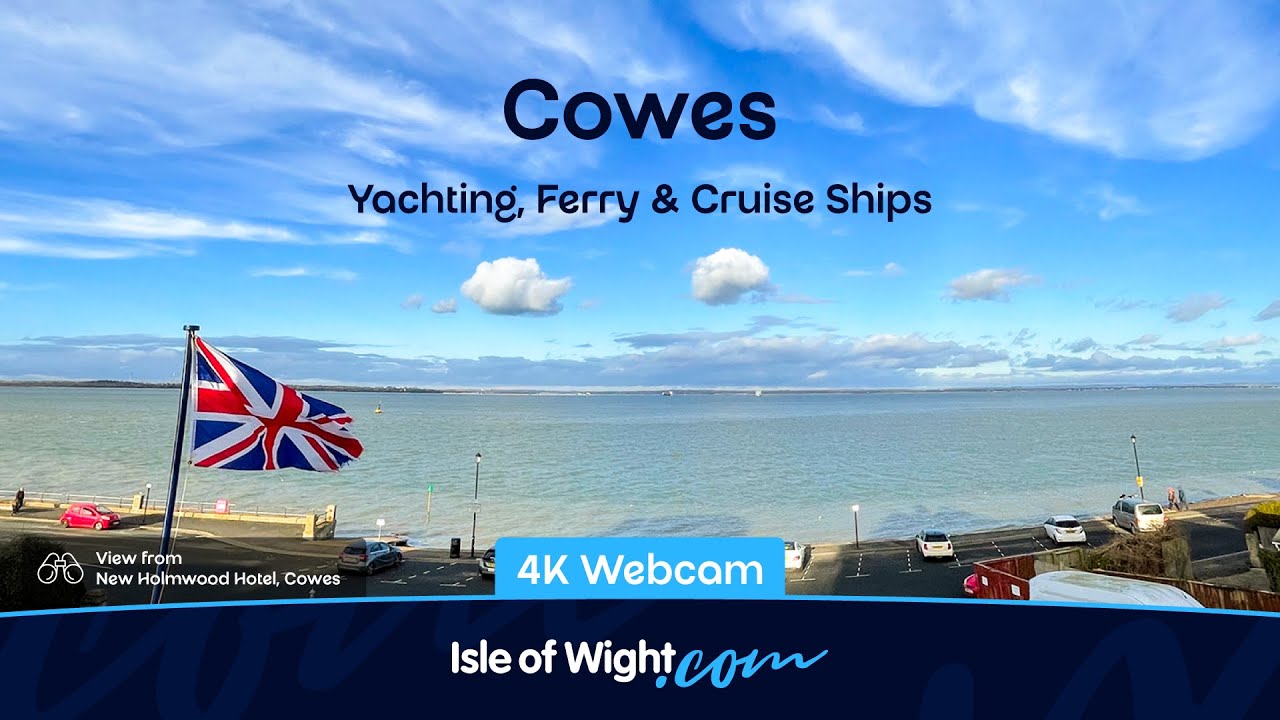
History of Cowes: From Henry VIII's Forts to the Sailing Capital
The name Cowes has military origins — it derives from fortifications called "cowforts" or "cowes" which were built on the eastern and western banks of the River Medina to protect against French invasion during the era of Henry VIII. These fortifications gave birth to two settlements — West Cowes and East Cowes, which retain their distinct identities to this day. The River Medina, flowing into the Solent Strait, served as a natural boundary and transport artery connecting the Isle of Wight to mainland England for centuries.
The architectural heritage of Cowes is inextricably linked with Britain's maritime history. The western shore became home to elite yacht clubs, while the eastern shore developed as a commercial and transport hub. Today Cowes attracts not only sailing enthusiasts but also tourists interested in British history and maritime traditions. You can observe the life of this unique town through webcams in Cowes, which broadcast views of the waterfront and harbour in real time.
West Cowes and East Cowes: Two Banks of the River Medina
Divided by the River Medina, the two districts of Cowes have distinct characters and functions. West Cowes — the historic centre of yachting with the Royal Yacht Squadron and castle, while East Cowes is known for the Red Funnel ferry terminal connecting the island with Southampton. This duality creates a unique atmosphere: one shore exudes the ambiance of sailing elite and regattas, the other pulses with the rhythm of a transport hub.
West Cowes concentrates the main tourist infrastructure: yacht marinas, restaurants with harbour views, marine equipment shops. East Cowes is more focused on locals and transit passengers, but it is here that the ferry terminal is located, providing the main link with mainland England. The two districts are connected by a ferry across the River Medina, making travel between them part of the local character.
Cowes Castle: 16th Century Fortification and Royal Yacht Squadron HQ
Cowes Castle (West Cowes Castle) was built by Henry VIII in 1539 as a fortification to protect against the threat of invasion from France and the Holy Roman Empire. Since 1856 the castle has been the headquarters of the Royal Yacht Squadron. Architecturally, the castle consists of a round blockhouse flanked by two rectangular wings, with a semicircular barbican on the sea side and a protective moat on the land side; guns were mounted on the barbican and on the roofs of the two-storey main tower.
Today Cowes Castle is not only a historic monument but also an active yacht club with centuries-old traditions. Its towers are visible from many points in the harbour, and the Royal Yacht Squadron flag flies over the Solent waters as a symbol of Britain's maritime heritage. You can watch Cowes Castle online via webcams located on the West Cowes waterfront and in the harbour, which show views of the River Medina and the historic part of town.
Cowes Harbour: World Sailing Capital and Cowes Week
Cowes is considered the world's sailing capital thanks to Cowes Week — the oldest and largest yachting regatta in the world, as well as being home to the Royal Yacht Squadron (founded in 1815). Cowes hosts an unparalleled number of yacht races every season, including Cowes Week — the main event of the British sailing calendar. During the 1897 regatta, 250 yachts worth £2.5 million (equivalent to £227 million today) were in the harbour.
Cowes Harbour is famous as the base for major yacht clubs and international regattas, while the ferry terminal in East Cowes provides the main transport link with mainland England via the Southampton—Cowes route. During regatta season, the town's population increases severalfold: sailors from around the world flock here, and the waterfront becomes a continuous celebration of sailing. Even outside the season, the harbour remains lively — leisure yachts and fishing vessels create a picturesque picture of maritime life.
Weather and Tides in the Solent
Weather conditions in Cowes are characterised by complex tidal currents in the Solent: the maximum eastern tide reaches 4.5 metres, while the western tide reaches about 2.8 metres, which affects yacht racing tactics. These tidal differences create unique conditions for navigation and require sailors to have a deep understanding of local hydrology.
The climate in Cowes is typical of southern England's coast: mild winters, warm summers, and frequent sea breezes. However, it is the wind conditions that make the Solent so attractive for yachting — steady wind flows form here, ideal for sailing races. For those planning to visit Cowes or monitoring the weather before heading out to sea, it is useful to check current weather conditions via the town's webcams, which show sea state and cloud cover in real time.
Which Cameras Show the Town
In Cowes, webcams are available showing the harbour and ferry terminal: East Cowes Ferry Terminal (River Medina), West Cowes (waterfront), as well as cameras for observing ferries. These broadcasts allow you to see the life of Cowes port at any time of day — from morning tides to evening sunsets over the Solent.
When choosing a Cowes webcam, it is worth paying attention to the angle: cameras on the West Cowes waterfront show the historic centre and castle, while broadcasts from the ferry terminal demonstrate the transport connection with Southampton. For observing the yacht harbour, it is better to choose cameras with a view of the marina — there you can always see sails fluttering in the wind and find out what the wind is like in Cowes right now.