

🏙️ Horton-in-Ribblesdale Webcams Online — Watch Live
2 cameras
A Village That Has Survived Centuries: The History of Horton-in-Ribblesdale
Horton-in-Ribblesdale is a place where time flows differently. This small village in North Yorkshire traces its history back to the days of William the Conqueror: Horton-in-Ribblesdale is mentioned in the Domesday Book of 1086 as an already established settlement. For more than nine centuries, life has thrived here — from medieval farming to industrial limestone quarrying.
But not all chapters of this history were peaceful. In 1597, the plague struck the village with devastating force: 74 residents died in a short period, whereas normally around 17 deaths were recorded per year. This tragedy left a deep mark in the parish burial records and the memory of local families.
A Geological Wonder Under the Open Sky
The Horton-in-Ribblesdale area is a true textbook of geology. Here you can see extensive limestone pavements — rock formations cut by deep cracks (grikes) and divided into blocks (clints). These intricate patterns were formed over millions of years by the action of water and wind.
Of particular note are the Norber Erratics — glacial boulders that an ancient glacier carried for tens of kilometres and deposited atop limestone rocks. The stones, resting on pedestals of softer rock, create surreal landscapes that attract geologists and photographers from around the world.
Ribblehead Viaduct: An Engineering Masterpiece of the Victorian Era
A few kilometres from the village rises one of Britain's most impressive railway viaducts. Ribblehead Viaduct was built by the Midland Railway between 1870 and 1875 as part of the legendary Settle–Carlisle line. The first stone was laid on 12 October 1870, and the arches were closed in August 1874.
The project was designed by engineer John Sydney Crossley, who worked for the Midland Railway from 1857 to 1875. The viaduct became the longest and third-tallest structure on the entire Settle–Carlisle line. Its 24 arches, rising 32 metres above the marshy valley, are a testament to the ambition and skill of Victorian engineers.
Interestingly, the construction of this monumental structure inspired the creators of the ITV series "Jericho" (2016), which revolves around the building of a similar viaduct in the Wild West — only relocated to Yorkshire.
Yorkshire Three Peaks: A Test for the Strong in Spirit
Horton-in-Ribblesdale is known far beyond Yorkshire as the traditional starting point for the Yorkshire Three Peaks Challenge. This circular route of 24 miles (about 39 km) includes ascents of three peaks: Ingleborough (723 m), Pen-y-Ghent (694 m), and Whernside (736 m).
The tradition of completing all three peaks in one day has existed since 1887. Every year, thousands of hikers come to the village to challenge these mountains. Locals joke that on peak days the village is "under siege" — the influx of visitors sometimes forces them to even leave their own homes.
Village Attractions: From the Church to the Quarry
In Horton-in-Ribblesdale itself, it's worth paying attention to St Oswald's Church, located in the southern part of the settlement. This church has served as the spiritual centre of the community for centuries, witnessing the ups and downs of local families.
Near the village lies Horton Quarry — a limestone quarry that has been operating since at least 1889. Limestone extraction for more than a century shaped the region's economy and left a noticeable mark on the landscape. Today, the quarry serves as a reminder of the industrial past of these places.
Walking Routes and Trails: Gateway to the Yorkshire Dales
Horton-in-Ribblesdale provides convenient access to Pen-y-Ghent and the famous Pennine Way trail, as well as having its own railway station on the Settle to Carlisle line. This makes the village an ideal base for exploring the Yorkshire Dales.
Routes of varying difficulty start here — from leisurely walks along the River Ribble to challenging ascents of the Three Peaks. Each season brings its own colours: in spring the slopes are covered with wildflowers, in summer hikers fill the trails, in autumn the mountains turn crimson, and in winter the peaks are covered with snow.
Atmosphere and Village Life Today
Modern Horton-in-Ribblesdale strikes a balance between preserving traditions and welcoming the tourist flow. Local pubs and guesthouses welcome weary hikers, while the railway station connects the village to major cities in the region.
Life here is measured, governed by the rhythms of nature and seasonal changes. In the morning, mists drift through the streets; during the day, the sun illuminates the limestone walls; and in the evening, the sky above the viaduct is painted in incredible hues. Those who come here often stay for a long time — the pull of these places is hard to put into words.
What the Cameras Show
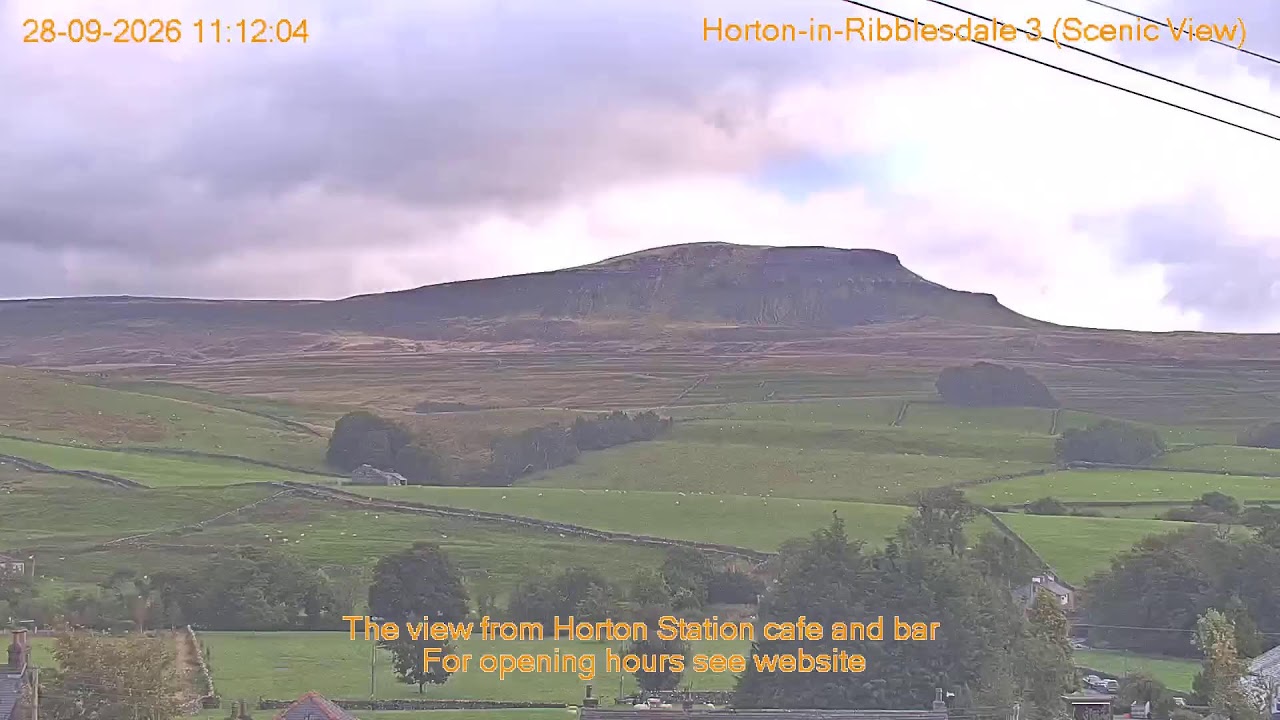
Horton-in-Ribblesdale webcams online allow you to see the village and its surroundings in real time. The broadcasts cover key locations: central streets, approaches to Ribblehead Viaduct, as well as panoramic views of the surrounding hills and valleys.
Watching the Horton-in-Ribblesdale webcam is especially interesting during the Yorkshire Three Peaks Challenge — you can observe the participants' preparation and their return after the gruelling route. The online broadcast also shows weather conditions in the region, which is useful for planning hikes.
Watching the Horton-in-Ribblesdale centre webcam online is an opportunity to experience the atmosphere of a Yorkshire village without leaving home. Watch the changing times of day, trains crossing the viaduct, and the life of a small settlement that has remained the heart of the Yorkshire Dales for centuries.