

🏙️ Corfe Castle webcams — watch the castle and village online
2 cameras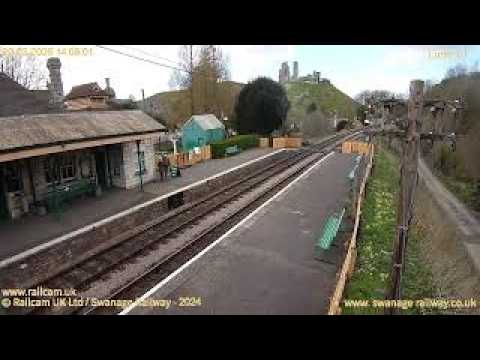
Corfe Castle: a medieval castle on the Isle of Purbeck
Lost among the hills of southern Dorset, Corfe Castle rises above the village of the same name as a silent witness to a thousand years of history. This is a place where every stone breathes the Middle Ages, and the mist rolling through the gap between the Purbeck Hills seems to transport the observer to an era of knights and kings. Corfe Castle webcams online allow you to see this magnificence from anywhere in the world — just look at the ruins towering over the village to feel the breath of the past.
The Isle of Purbeck, where the castle is located, has always been a strategically important place. The narrow gap between two rows of hills created a natural obstacle for any army, and it was here, at the crossroads of ancient roads, that a settlement was founded, whose name derives from the Old English word "ceorfan" — to cut through, a passage. Today, Corfe Castle webcams show not only the castle ruins but also the picturesque streets of the village, paved with Purbeck stone, and the green slopes of the surrounding hills.
History of the castle from William the Conqueror to the present day
The roots of Corfe Castle go deep into the Anglo-Saxon era. It was here, on the site of the future castle, that a bloody tragedy occurred in 978 — King Edward the Martyr was stabbed by his stepmother. This event forever inscribed Corfe Castle in the history of England as a place where loyalty and betrayal were woven into one fateful knot.
However, the castle itself appeared much later. William the Conqueror built it around 1086, turning the strategic gap into an impregnable fortress. Stone walls erected on the hilltop commanded all approaches to the settlement. Over the centuries, the castle was expanded and fortified, becoming one of the most important royal residences in southern England.
Archaeological excavations in the western part of the village have uncovered Bronze Age burials dating back approximately 6,000 years, indicating that people lived here long before the Roman conquest. The land of Corfe Castle holds traces of many eras — from ancient Celtic settlements to medieval fortifications.
Lady Bankes and the siege of 1643
The English Civil War became a turning point for Corfe Castle. When the country split into Royalists and Parliamentarians, the castle found itself at the very center of the conflict. Command of the garrison was taken by Lady Mary Bankes, who defended the castle from 1643 to 1646. This woman became a legend — she withstood a 6-week siege by Parliamentarians in 1643, when a few dozen defenders held out against superior enemy forces.
The siege of 1643 went down in history as an example of incredible resilience. Lady Bankes and her garrison repelled attacks, hurling stones and burning logs at the attackers from the crenellated walls. The Parliamentarians could not take the castle by force — and so they resorted to treachery. In 1646, a garrison officer betrayed Lady Bankes and let the enemy inside. The castle was destroyed by Parliamentary troops, its walls blown up, and its towers reduced to ruins.
Today, looking at the silhouette of the ruined castle through a Corfe Castle webcam, it is hard not to be moved by the tragedy of this story. The ruins stand as a monument to the courage of one woman and loyalty to her oath — and to the bitter betrayal that erased everything.
Ghosts and legends of Corfe Castle
A place where blood was shed and swords clanged could not remain without ghosts. Corfe Castle is considered one of the most haunted castles in England. Locals and visitors tell of several phantoms dwelling among the ruins.
The most famous ghost is the headless "White Lady" who betrayed the castle and let the Parliamentarians inside. Her ghost wanders the crenellated walls without a head, and it is said that the appearance of the White Lady foretells disaster. But Edward the Martyr is not the only phantom. The castle is inhabited by several ghosts: a crying child and the phantom of Lady Bankes, whose tragic fate forever bound her spirit to these walls.
At night, when mist envelops the ruins, the galloping hoofbeats of an invisible horse are said to be heard. Many paranormal researchers come here to record anomalies. Even if you are a skeptic, a Corfe Castle webcam at twilight will show you ruins that exude something inexplicable and unsettling.
Purbeck stone: the building material of the century
Corfe Castle is built of Purbeck stone — local limestone quarried on the Isle of Purbeck. This material determined not only the appearance of the castle but also of the entire village. Purbeck stone is distinguished by its characteristic greyish-green hue and incredible durability — buildings erected from it stand for centuries.
After the castle's destruction in 1646, local residents used its stones for construction. Many buildings in the modern village are built from Purbeck stone extracted from the castle. Walking through the streets of Corfe Castle, you literally walk through history — every stone in the walls of houses was once part of a fortress wall or tower.
The quarrying of Purbeck stone was the foundation of the peninsula's economy for centuries. The quarries where this valuable limestone was hewn are still visible on the hillsides. The stone was used not only for construction — it was made into tombstones, decorative facade elements, even buttons. Today, Purbeck stone is protected as part of Dorset's natural and cultural heritage.
Miniature village — Corfe Castle in scale
At the foot of the castle lies an amazing attraction — a miniature model village. It was opened to the public in 1966 and depicts Corfe Castle and the village as they were in 1646 — on the eve of the castle's destruction. This is not just a model but a detailed historical reconstruction, allowing you to see what the settlement looked like three and a half centuries ago.
The roofs of the houses in the miniature village are made of Purbeck stone, and the king's tower on the model rises 20 feet (6 m) above the moat level. Every house, every street, every garden is recreated with jeweler's precision. Miniature figures of people, horses, and carts bring scenes of 17th-century daily life to life. This place is especially beloved by families with children — little ones run around the tiny houses with delight, feeling like giants in a land of Lilliputians.
The miniature village is the perfect complement to viewing the real ruins. If the castle shows us the grandeur and tragedy of the past, the model reveals the daily life of the people who lived and worked in its shadow. Corfe Castle webcams sometimes capture this miniature village as well, allowing you to see the contrast in scale.
Purbeck smugglers: the dark side of history
The Isle of Purbeck has long been famous for smugglers. The winding coastline, numerous coves, and grottos created ideal conditions for smuggling contraband. One of the most famous English smugglers of the 18th century lived in Worth Matravers and hid contraband in churches across the peninsula.
Interestingly, the word "contraband" in the context of Corfe Castle has another nuance. The Parliamentarians were brought into the castle "by contraband means" — through the betrayal of a garrison officer. This historical pun reminds us that the line between military cunning and crime is sometimes very blurred.
The churches and chapels of Purbeck served as reliable hiding places for smugglers. Sacred buildings were respected, and soldiers rarely dared to search their walls. Today, these churches stand among the same hills, keeping silent about the dark dealings of the past. Corfe Castle webcams sometimes show the silhouettes of these ancient temples against the backdrop of the castle ruins.
Corfe Castle in literature: the world of Thomas Hardy
Corfe Castle is inextricably linked with the name of Thomas Hardy — the great English writer and poet who created the fictional county of Wessex. The castle is mentioned in connection with Hardy's literary legacy, and its ruins have become part of the mythological landscape that the writer recreated in his novels.
The legend of a Roman legion that disappeared on the Purbeck Hills was documented by Thomas Hardy. According to it, only the ghost of the legion remains to wander this land. Hardy, who deeply revered the history of Dorset, wove local legends into his works, turning real places into symbols of the eternal struggle between man and fate.
For literary scholars and fans of Hardy, Corfe Castle is not just ruins but a place of pilgrimage. Here, among the stone debris and grass-covered gap, the pages of "Tess of the d'Urbervilles" and "The Mayor of Casterbridge" come alive. A Corfe Castle webcam allows you to feel the atmosphere of Wessex — harsh, poetic, pierced by Atlantic winds.
What the cameras show in the town
Corfe Castle webcams online provide the opportunity to see the castle and village from different angles. Some cameras are installed in the center of the village and show the main street with its stone houses and tea rooms. Others are directed at the castle ruins, allowing you to examine the details of the stonework and the silhouettes of the towers against the sky.
When choosing a Corfe Castle webcam to watch, pay attention to the angle — cameras located on elevated positions show a panorama of the entire gap and surrounding hills. Those situated in the village convey the atmosphere of everyday life: tourists strolling through the streets, locals going about their business, and flocks of sheep grazing on the green slopes.
Corfe Castle webcams are a window into a world where history and modernity are intertwined. Wherever you are, the broadcast from this ancient place will transport you to the heart of Dorset, to the foot of a castle that remembers kings and traitors, heroes and smugglers, poets and ghosts.