

🏙️ Puebla de Lillo webcams online — watch in real time
1 cameras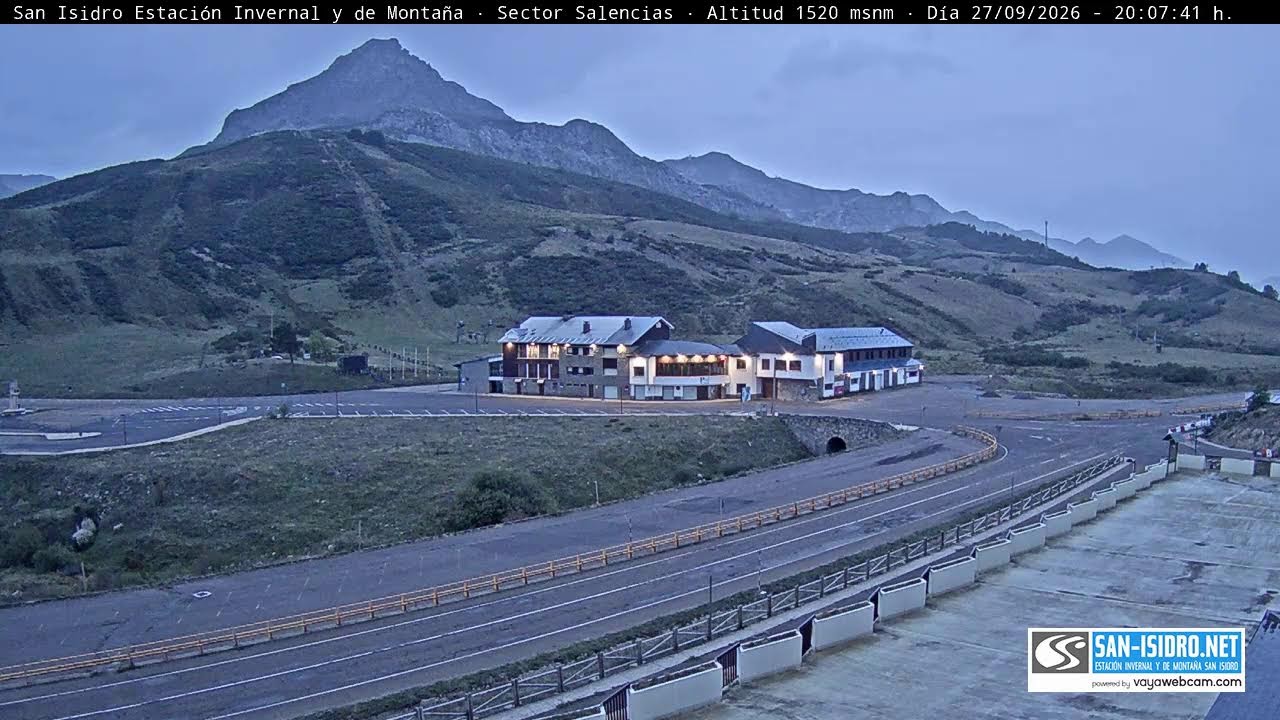
Mountain village on the edge of Picos de Europa
Puebla de Lillo is a tiny municipality in the northeast of the province of León, lost among the majestic ridges of the Cantabrian Mountains. The official name is Puebla de Lillo, and in the local Leonese dialect it is called Pola de Lillo. The village lies at an average altitude of 1100 meters above sea level, and its capital — Puebla de Lillo itself — is located at 1137 meters with coordinates 43° 0′ 24″ N, 5° 16′ 25″ O. This is a border zone between Castile and León and the Principality of Asturias, where mountain passes define the character of life.
Getting here means finding yourself in the territory of the Picos de Europa National Park, the largest national park in Spain with an area of over 67 thousand hectares. Three provinces — Castile and León, Cantabria and Asturias — share this mountain range, and Puebla de Lillo serves as one of the entrances to the protected valleys. From the summits, there are panoramic views of the limestone walls that rise a kilometer above the valley floor. These cliffs are the result of tectonic processes and glacial erosion that have been forming for millions of years.
The road here is an adventure in itself — the serpentine climbs through beech and oak forests, then meadows appear, and finally bare rocks. The climate changes sharply with altitude: spring may be in bloom at the foot, while snow lies on the pass. This makes Puebla de Lillo a place where you can observe the change of seasons in miniature, simply by climbing the adjacent slope. Mountain microclimates create unique conditions for plants and animals adapted to temperature swings and strong winds.
The relief of the municipality is typical of the highlands: deep valleys, narrow gorges and flat summits. The Lillo River and its tributaries have carved these valleys over millennia, creating a landscape that combines harshness and beauty. On clear days, visibility reaches tens of kilometers, allowing you to see neighboring ridges and even the outlines of the Atlantic Ocean on the horizon.
Natural wonders and ancient forests
The main treasure of these places is not architecture, but nature. On the territory of the municipality grows the Villaoscura pine forest (Pinar de Villaoscura), whose age exceeds 4,000 years. These trees have survived the Roman Empire, the Great Migration and the Reconquista — they are silent witnesses of epochs. The pines here are low-growing, gnarled, with winds shaping their bizarre forms. Their roots cling to the rocky soil, and their trunks are covered with lichens, indicating the purity of the air.
Another anomaly is the local lake, whose water "screams." A unique natural phenomenon where underground springs create sounds resembling groans or screams. The lake whose waters scream — this is how guidebooks describe this attraction. The phenomenon is associated with karst rocks and underground rivers that permeate the Picos de Europa. Water passes through limestone cavities and emerges on the surface with a characteristic sound that is especially audible in the silence of the mountain valley. Local residents have considered this place mystical for centuries, associating the sounds with mountain spirits.
The flora and fauna of the region are typical of the Cantabrian Mountains highlands. Cantabrian ibex, griffon vultures and even brown bears are found here, although the latter are rarely seen. Spring meadows are covered with crocuses and mountain violets, and in autumn the forests turn copper and gold. Mushrooms are another wealth of these forests: in season, locals gather porcini and chanterelles, which are sold at León markets.
The ecosystem of Picos de Europa is protected by the state, and any intervention is limited. Tourists can only move along marked trails so as not to disturb the fragile balance. This makes walks around Puebla de Lillo especially valuable — here nature has been preserved almost in its pristine state.
Winter recreation and Pajares ski resort
Snowy winters turn Puebla de Lillo into a center of attraction for ski lovers. On the territory of the municipality operates the Valgrande Pajares ski resort (Estación Invernal Valgrande Pajares). The Puerto de San Isidro pass serves as the gateway to the slopes, and the snow cover here lasts for several months — usually from December to April. The height of the slopes ensures good visibility and stable snow cover even in warm winters.
In season, residents of León and Asturias flock here — the slopes are suitable for both beginners and experienced skiers. The resort infrastructure includes lifts, parking lots and service areas that are clearly visible from the surrounding mountains. Ski schools offer lessons for children and adults, and equipment rental operates daily. After skiing, you can relax in mountain restaurants, trying traditional Asturian cider and cheeses.
In summer, the resort does not stand empty — hiking routes are held here, and the pass serves as a starting point for hikes deep into the Picos de Europa. Mountain lakes and meadows attract wildlife photography enthusiasts. Cyclists use the serpentines for training, and paragliders catch thermals above the valley. Year-round, the pass remains a meeting place for those who love mountains.
Climate and weather at 1100 meters altitude
Altitude dictates the weather. In winter, temperatures regularly drop below zero, and snow covers roofs and slopes. Summer is cool and short — the mountain climate does not favor long warmth. The weather forecast for the municipality is available on the official AEMET website (code 24121), but the real picture is better assessed by looking outside.
This is why Puebla de Lillo webcams online become a useful tool — they show the current weather, snow presence and visibility on the passes in real time. Before heading to the slopes or on a hike, it is worth checking the broadcast: mountain weather changes rapidly, and what was clear in the morning may be hidden by fog by lunchtime. Cameras on the pass and in the village give an accurate picture of current conditions.
Precipitation is unevenly distributed — autumn and spring often bring rain, and summer can have thunderstorms. Wind on the passes reaches a strength that makes movement difficult, so local residents are used to watching the sky and sensing changes. Sometimes a month's worth of precipitation can fall in a few hours, turning streams into raging torrents.
The change of seasons here is expressive: in winter everything is covered with a white blanket, in spring the meadows turn green and are covered with flowers, in summer there is a short warmth, and in autumn the forests burn with gold. Each season brings its own colors and mood, making Puebla de Lillo a place you want to return to again and again.
Population and life of a small municipality
Puebla de Lillo is not a tourist center, but a living village. The population is 641 inhabitants according to INE 2025 data. This is a typical figure for mountain municipalities of Castile and León, where young people leave for cities, and the elderly remain to preserve traditions. The population density is extremely low — there are only a few inhabitants per square kilometer.
The Leonese dialect is still heard in conversations, and buildings are built from local stone. There is no hustle and bustle here — only mountains, forests and silence, broken only by the wind in the pines. Local residents are engaged in cattle breeding and forestry, preserving a way of life that has changed little over the past centuries. Milk and meat products are sold in neighboring cities, supporting the modest economy of the village.
Infrastructure is minimal — a few bars, a church, a town hall. But for those seeking peace and unity with nature, this is an ideal place. The absence of major roads and industry keeps the air clean, and the night sky — strewn with stars. Light pollution is practically absent, making Puebla de Lillo an excellent place for astronomical observations.
Social life is centered around the town hall and the local bar, where residents gather on weekends. Holidays are celebrated modestly but with warmth — religious processions, fairs and traditional games. Tourists are a rarity here, so they are treated with curiosity and hospitality.
What the cameras show
For observing Puebla de Lillo, several sources are available. The webcam at the Puerto de San Isidro pass opens a view of the village surroundings and the access roads to the ski resort. Additional broadcasts show weather conditions in real time — useful before heading to the slopes. The cameras operate around the clock, allowing you to see the village both in daylight and in the lights of night lanterns.
Services like Meteoblue and Hispacams collect regional cameras, allowing you to watch Puebla de Lillo online without registration. Quality depends on lighting and weather, but on clear days mountain ridges and the Lillo River valley are visible. Broadcasts are updated at intervals of several minutes, giving an up-to-date picture of what is happening.
When choosing a camera, consider the direction of view: some show the village center, others — the pass or lifts. This allows you to get a complete picture of what is happening in the municipality without leaving home. For trip planning, it is worth checking several sources — this way you can assess the weather at different altitudes and choose the optimal time for a visit.