

🏙️ St. Moritz Webcams Online — Watch Live in Real Time
2 cameras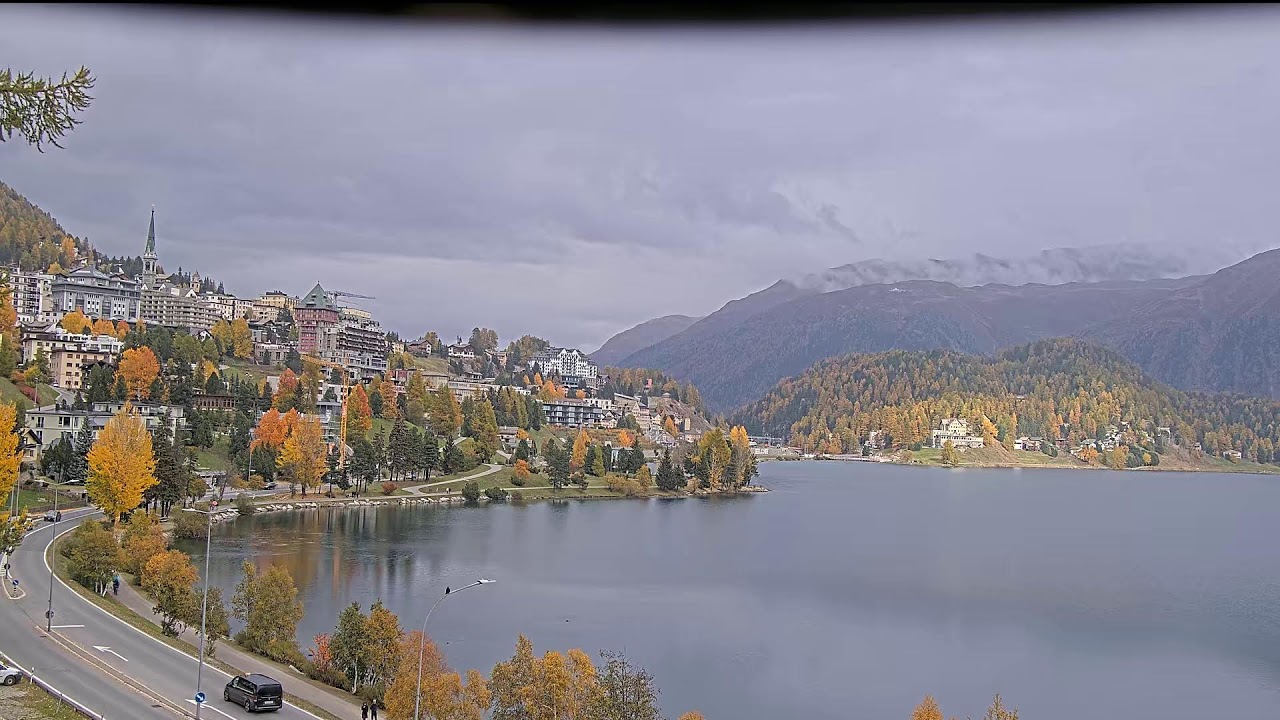
Birthplace of Winter Tourism in Switzerland
St. Moritz is the place where the very idea of winter holidays in the Alps was born. A century and a half ago, several enterprising Britons decided that the snowy slopes of the Swiss mountains were the perfect place for skiing, and it was here, on the shores of a lake in the Engadin Valley, that they launched an entire industry. Today St. Moritz is rightly considered the birthplace of Swiss winter tourism, and its name has become synonymous with luxury mountain holidays.
The resort is located at an altitude of 1850 meters above sea level in the very heart of Upper Engadin. Lake St. Moritz, surrounded by mountain ranges, creates a unique microclimate — here the sun shines more than 300 days a year, and the air is so dry and saturated with ultraviolet that locals call it the "champagne climate." This is no metaphor: it is precisely this combination of bright sunshine, low humidity, and thin mountain air that creates a sense of perpetual celebration.
Olympic Heritage of the Resort
St. Moritz holds a special place in the history of world sports. The Winter Olympic Games were held here twice — in 1928 and 1948. Moreover, it was in 1928 that the Winter Olympics were officially separated from the Summer Games for the first time, making St. Moritz the de facto capital of the White Olympics.
In addition to the Olympic Games, the resort has hosted the Alpine Skiing World Championships four times — most recently in February 2017. The Corviglia and Rosegg runs are known among professionals worldwide: they combine challenging terrain with excellent slope preparation quality. You can watch these runs in real time via St. Moritz webcams — they show both the slopes themselves and the panoramic view of the valley.
The Lake and Unique Winter Traditions
Lake St. Moritz is not just a picturesque body of water, but a true arena for exotic entertainment. In winter, when its surface is covered with thick ice, events unfold here that have no analogues in the world. Snow golf on the frozen lake is a tradition that began in 1904, and after a hiatus was revived in 1979. Every February, a nine-hole course is marked out on the ice, and players with orange balls take to the perfectly smooth white surface.
Equally spectacular is the Snow Polo World Cup — a tournament held on the frozen lake against the backdrop of snow-covered mountains. Goals instead of grass, horses in special spiked shoes, and spectators in fur coats and top hats — this is a spectacle that turns a winter day into a true carnival. Horse racing on ice, bobsleigh on a natural track, cricket on snow — all of this is part of the unique culture of the resort, where winter is not a reason to stay home, but a time for the most unusual entertainment.
Luxury and Gastronomy
St. Moritz is not only sports and nature, but also one of the world's gastronomy and luxury hospitality centers. The concentration of five-star hotels here is record-breaking — Badrutt's Palace, Kulm, Carlton, and other giants of the hotel business have been operating here for over a century and a half. Each of them is a separate world with its own spa centers, Michelin-starred restaurants, and panoramic terraces offering views of the lake and mountains.
Via Serat — the resort's main shopping street — is a gallery of boutiques from leading world brands. Here you can find both traditional Swiss watch workshops and fashion houses with global names. And in the evening, the city transforms: restaurants and lounges fill with guests, and lights reflect off the surface of the lake — this atmosphere can be felt by connecting to a St. Moritz webcam in the evening hours.
Nature and Landscapes of Engadin
The Engadin Valley, where St. Moritz is located, is a high-mountain basin surrounded by peaks over 3,000 meters. From the summits of Piz Nair, Piz Corvatsch, and Piz Palü, breathtaking panoramas unfold: to the east stretches the National Park, to the west are the vineyards of Engadin (the highest in Europe), and below glimmers a chain of lakes — St. Moritz, Silvaplana, and Sils.
Landscapes change from season to season: in summer — emerald meadows and blooming alpine gardens, in autumn — golden larch trees and transparent frosty air, in winter — a snow-white kingdom with sparkling sunshine. In spring, the mountains are carpeted with crocuses and snowdrops. St. Moritz webcams allow you to observe this changing scenery in real time, without leaving home.
Champagne Climate and Sunshine Record
The sun in St. Moritz shines an average of 322 days a year — this is one of the best figures among mountain resorts in Europe. Dry, windless air with low humidity creates a feeling of constant freshness even on freezing days. In winter, the temperature rarely drops below minus ten, and in summer it rarely rises above twenty — an ideal climate for those tired of city stuffiness.
Local mineral springs, known since the Bronze Age, add to the resort's status as a healing place. The sulphurous waters of St. Moritz have been used in spas and health clinics for many centuries. And modern technology allows the use of lake water energy for heating buildings — powerful heat pumps provide up to 80% of the heating needs of large hotels, making the resort an example of eco-friendly tourism.
Ski Slopes and Active Recreation
The ski area of St. Moritz covers several sectors: Corviglia, Rosegg, Corvatsch, and Marguns. In total, this is over 350 kilometers of groomed runs of all difficulty levels — from green for beginners to black for experts. The special feature of the local slopes is their south-facing orientation, which means maximum sunshine hours while skiing.
In addition to classic alpine skiing and snowboarding, the resort offers trail running on snowy paths, sledding, snowmobile tours, and even paragliding over the valley. For those who prefer less active recreation, there are thermal pools, spa complexes, and panoramic restaurants on the mountaintops. Webcams on the slopes show run occupancy and weather conditions in real time — useful information before heading up the mountain.
Cultural Life and Events
St. Moritz lives a rich cultural life year-round. In winter — masterclasses by famous chefs, jazz festivals, and charity balls in historic hotels. In summer — open-air opera festivals, art exhibitions, and gastronomic weeks. Masterclasses on making fondue and raclette, tastings of Swiss wines and cheeses — all of this is part of the local culture.
Badrutt's Palace is not just a hotel, but a symbol of an era, where kings, movie stars, and politicians stayed. Its clock tower has become the resort's calling card. And the Segantini Museum, dedicated to the life and work of the artist Giovanni Segantini, houses a unique collection of works inspired by the nature of Engadin. These places can be seen through St. Moritz webcams — they convey the atmosphere of the resort with its special rhythm of life.
What the Cameras Show
St. Moritz webcams cover key points of the resort: panoramic cameras on the mountaintops show mountain landscapes and the Corviglia slopes, cameras on the lake promenade broadcast views of the water surface and snowy shores, street cameras on Via Serat show the life of the city center. Cameras at the ski stations allow you to assess the condition of the runs and the weather on the slopes in real time.
You can connect to the broadcasts at any time of day — during the day the cameras show sunny landscapes and activity on the slopes, in the evening — the lights of the resort and the atmosphere of the evening city. The live stream from St. Moritz is an opportunity to see one of the most famous resorts in the world, without leaving home.