

🏙️ Sochi Webcams Online — Watch the City in Real Time
4 cameras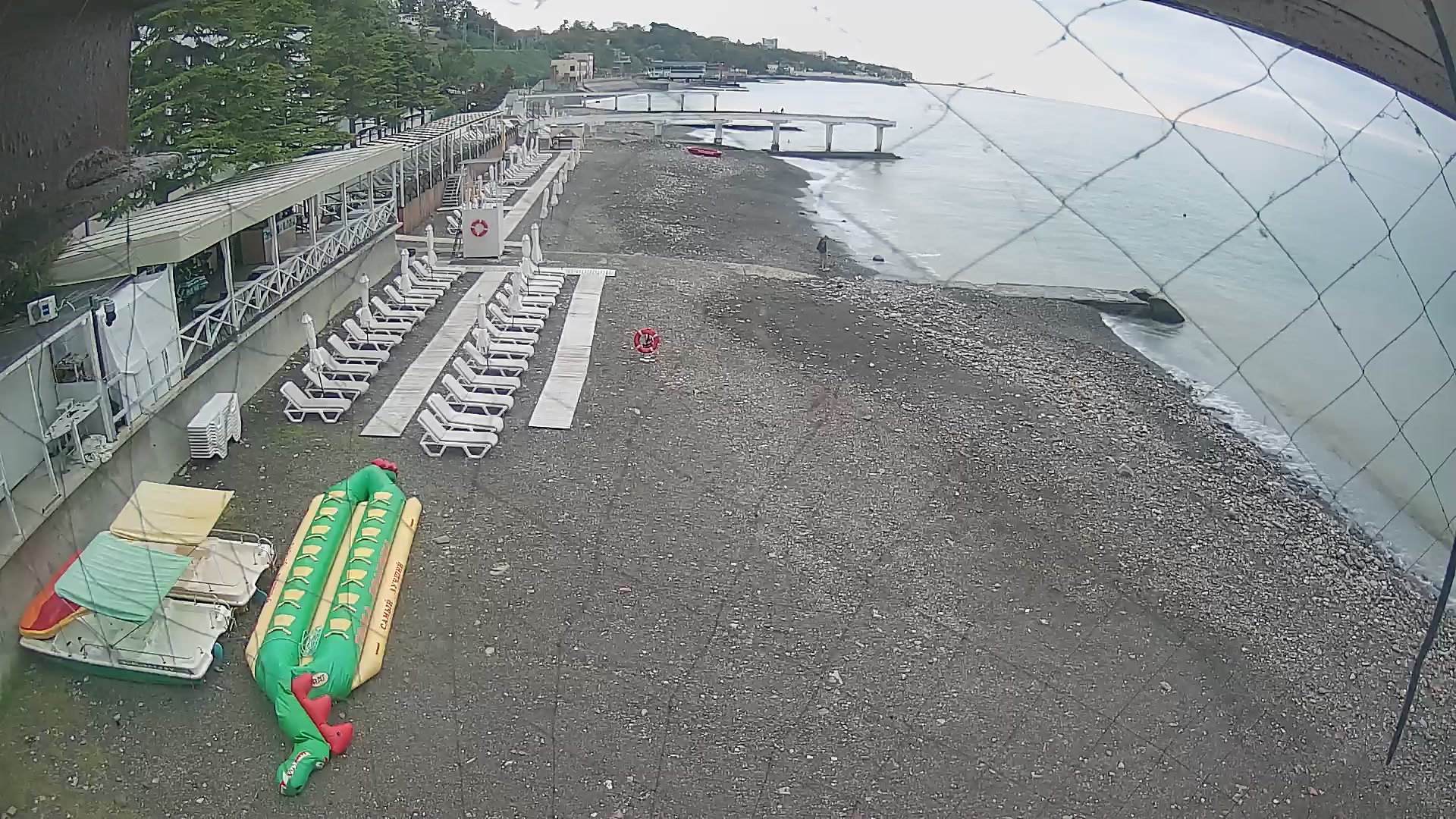

History of Sochi: From Ancient Settlements to the Olympic Capital
Sochi is a city with a history stretching back more than 100,000 years. The first traces of human habitation were found in the Hosta, Akhshtyr, and Atsan caves. The first written mention of the name "Sochi" appears in the records of the Turkish traveler Evliya Çelebi in 1641, where it denoted a mountain. As a settlement, Sochi began to take shape in 1838 when the military fort of Alexandria was founded, later renamed the Navaginskoye fortification. The name "Sochi" derives from the Turkic form of the local toponym Shasha — an ancient Caucasian male name.
In 1896, Sochi was granted the status of a posad (settlement), and on July 31, 1917, the Provisional Government granted it city status. Today, Sochi is home to representatives of over 100 ethnic groups — Armenians, Greeks, Turks, Ubykhs, Adyghe, and Abazins. The city stretches along the Black Sea coast for 147 kilometers, making it one of the longest cities in Europe.
Olympic Legacy: What Happened to the Venues After 2014
The 2014 Olympics turned Sochi into a world sports capital. The Fisht Stadium, after renovation with the central part of the roof dismantled, became a football arena and hosted four matches of the 2018 FIFA World Cup, including the quarterfinal Russia vs. Croatia. The Bolshoy Ice Palace continues to host figure skating and short track competitions, as well as ice shows.
The Shayba Arena was transferred to the Sirius Educational Center, where a children's and youth sports center operates with year-round camps. The Ice Cube — the former curling center — was transformed in 2023 into the largest martial arts academy in Russia. The Rosa Khutor alpine ski resort remains one of the most popular in the country, hosting World Cup alpine skiing stages every year. The Formula 1 Sochi Autodrom circuit held the Russian Grand Prix from 2014 to 2021, after which the races left and the track was shortened.
Stalin's Dacha in Sochi: Secrets of the Green Grove
At an altitude of 160 meters above sea level in the Hosta district stands the legendary Stalin's Dacha. It was built in 1931 to a design by architect Miron Merzhanov on the territory of the former Mikhailovskoye estate. The color of the house was chosen to match the trees — the building is not even visible from the air. The stairs have low steps for the leader's convenience, and the glass is made from rock crystal.
Inside, the original decoration of yew, chestnut, oak, and walnut has been preserved, along with a fireplace and wooden ceilings with cavities for better acoustics. Stalin visited every year from August to October, was treated for rheumatism at the Matsesta springs, and received government members and foreign leaders. His last visit was in 1950. Since 1991, the dacha has been a private museum complex, preserving the leader's furniture and personal belongings. Nearby are dachas built for Beria, Malenkov, Voroshilov, and Molotov.
Sochi National Park: Unique Subtropical Flora
Sochi National Park is a jewel of UNESCO World Heritage. More than 2,000 native plant species grow here, over 50 of which are listed in the Red Book of the Russian Federation. The park covers 208,600 hectares, 94.1% of which are mountain forests. The Sochi endemic mzymtella — a delicate bellflower with 15–20 juicy purple blooms — grows only in the Akhtsu Gorge and has been listed in the Red Book since 2007.
In the park, you can find feijoa — an evergreen shrub with white-pink flowers and iodine-rich fruits. The strawberry tree bears fruits in autumn that look like pink lollipops. Oleander — a poisonous plant sacred in India — is used in Eastern folk medicine. Among the rare orchids are serapias, spiranthes, and traunsteinera. Snowdrops — Voronov's, Caucasian, and broad-leaved — adorn the forests in early spring.
How Tea Grows in Sochi: The History of Northern Tea Growing
Sochi is a unique Russian region where tea is grown on an industrial scale. The first attempts to introduce tea bushes were made as early as 1878 by gardener Reinhold Garbe, who brought plants from Sukhumi to the Mamontovs' estate — but the bushes did not survive the winter. Scientists concluded: tea cannot grow north of Abkhazia.
Judas Koshman, who had experience working on Georgian plantations, planted about 800 seedlings in Solokhaul (30 km from Sochi) in 1901. Facing ridicule from neighbors, he harvested his first crop in 1906, and in 1910 presented his tea "Bodrost" (Vigor) at the Sochi Agricultural Exhibition. In 1923, he received a gold medal in Moscow for the world's northernmost tea. In the 1930s, industrial development began: plantations in Dagomys and Matsesta, the first tea factory in 1939. By 1957, the plantation area exceeded 1,200 hectares; today it is about 600 hectares.
Sochi Airport: Building on a Swamp
The history of Sochi Airport is a history of overcoming. The first airport opened on May 2, 1929, on the site of abandoned fruit orchards belonging to merchant Khludov. But the truly heroic chapter began on July 9, 1941, when construction of a new airfield began on the territory of the "Chernomorets" seed farm in Adler. About 7,000 people — women, elderly, and teenagers — uprooted trees by hand in swampy terrain in temperatures up to +48°C.
Drainage for the runway was made from large cobblestones collected from the Mzymta River. All work was done manually; the deadline was two months, but the airfield was built in 50 days. On September 1, 1941, it received its first military aircraft. The modern terminal covers 65,000 m² — one of the largest in Russia with a throughput of 2,500 passengers per hour. In 2013, a new boarding gallery with 10 jet bridges was opened.
Sochi Districts and Attractions
Sochi consists of four districts: Central, Adler, Hosta, and Lazarevsky. The Central district is the heart of the city with the Sochi River embankment, where you can observe the city's life through online webcams. The Hosta district is famous for the Hosta Fortress, Voronov's Cave, and the Yew Grove. The Adler district includes the Olympic Park, Sochi Park — Russia's Disneyland — and the railway station.
The Lazarevsky district is the most extensive, with settlements of Lazarevskoye, Golovinka, Loo, where dolmens — ancient megalithic structures — have been preserved. Matsesta is known for its hydrogen sulfide springs, which have been used for healing since the early 20th century. Dagomys is famous for its tea plantations and the White Rocks. Krasnaya Polyana is an alpine ski resort at an altitude of 560 meters above sea level, popular year-round.
What the Cameras Show
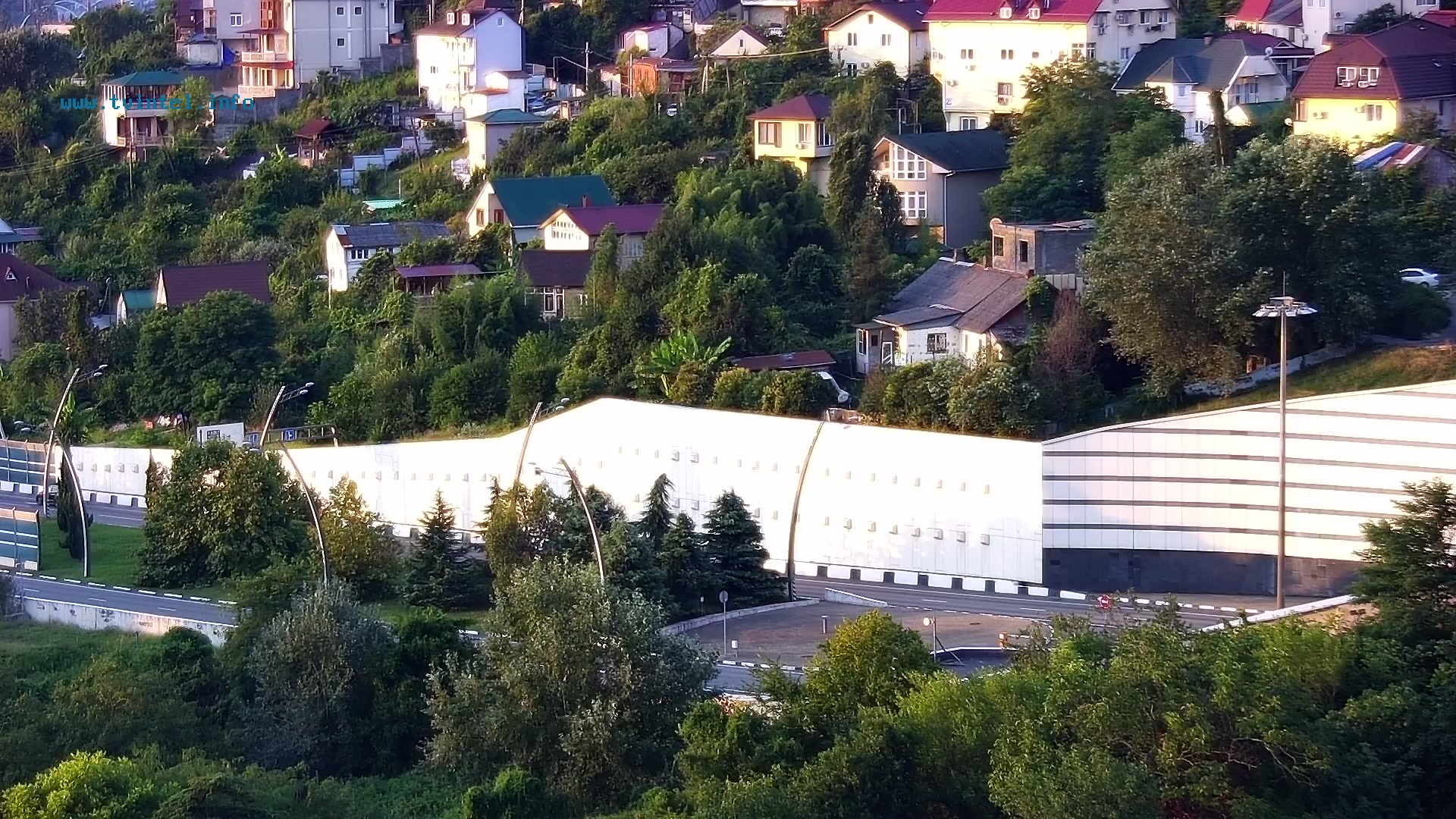
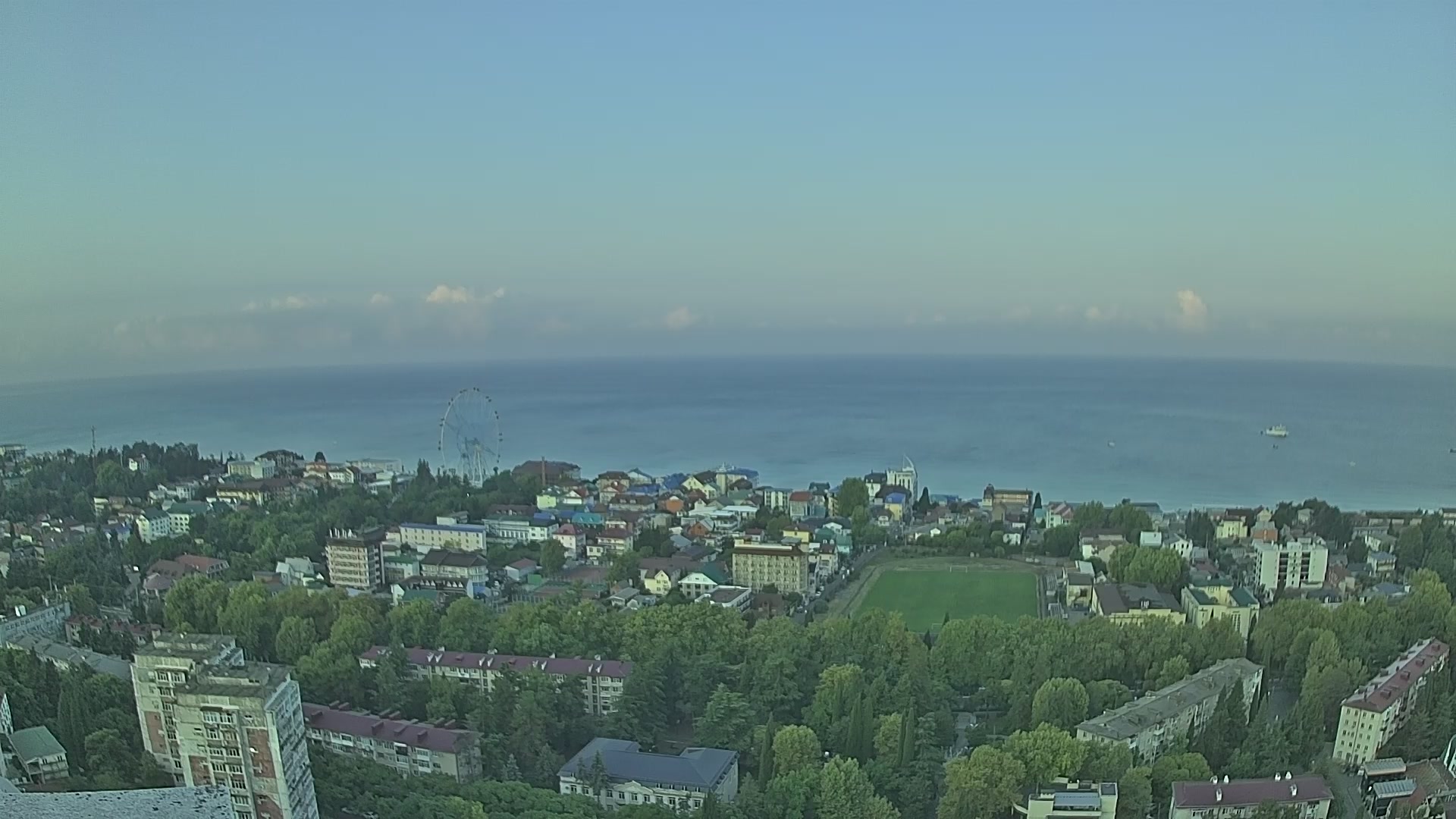
Sochi webcams allow you to see the city in real time: from embankments and beaches to mountain landscapes and Olympic venues. Streams from the city center show busy streets and the seaport where yachts and cruise liners dock. Cameras in Adler offer views of the airport and the Olympic Park with its architectural masterpieces.
For those who want to feel the resort atmosphere, online streams from beaches and embankments are available. The city offers diverse views: from subtropical greenery to the snow-capped peaks of Krasnaya Polyana. Choose a camera and enjoy Sochi panoramas at any time of day — sunrise over the Black Sea or the evening lights of the embankment.