

🏙️ Perm webcams online — watch the city live in real time
5 cameras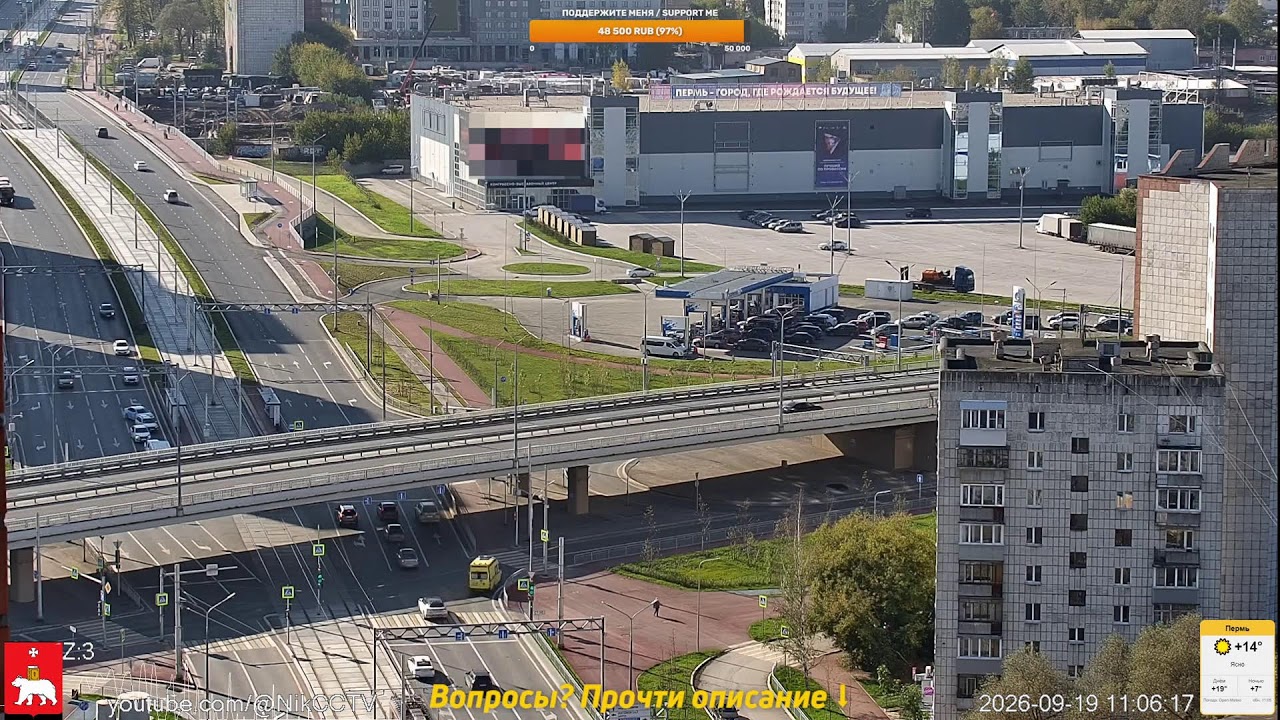
Perm — a city on the Kama River
Located in eastern Europe, Perm is just one hour's flight from Moscow — a major million-plus city on the banks of the Kama. It is the administrative center of Perm Krai and an important industrial hub of the Urals. The city is the largest on the Kama River and one of the region's major industrial and scientific centers.
Historically, Perm developed as a trade and craft center situated on the waterway from Europe to Siberia. Today, the city holds an important geopolitical and economic position as a key transport hub between Europe and Asia.
Federal highways M-7 and M-12 pass through the city, railway lines to Siberia, and there is a developed air transport system connecting to cities across Russia and the world.
Origin of the name
One of the most interesting questions about the history of Perm is the origin of its name. The city's name has deep roots and is connected to the Finno-Ugric peoples who have long inhabited these lands. The name Perm comes from the Finno-Ugric word "Perämaa," which translates as "distant land"The resilient toponym has survived to this day. There is also a version that the name is connected to the people "Perm" — the Komi-Permyaks, the indigenous inhabitants of these lands.
The city's name became known worldwide thanks to British geologist Roderick Murchison. In 1841, while exploring rock formations in the Perm Governorate, he discovered new strata and named the geological period "Permian"The Permian period became one of the most important in geological history. This unique event showed how the city's history is connected to global scientific discoveries.
City history
The history of Perm spans more than four hundred years. The city was founded as a trade and administrative center in 1723, however, fascinating archaeological materials suggest that these lands were inhabited long before the official founding date.
In the 20th century, Perm experienced several stages of development and changed its names. From 1940 to 1957, the city was called Molotov in honor of a Soviet statesman
A unique symbol of the city became the "Permyak Salty Ears" monument, which was installed in 2006 on the Kama embankment. The author of the composition is sculptor Rustam Ismagilov
Culture and art
The cultural life of Perm is rich and diverse. The city is known as the cultural capital of the Urals with numerous theaters, concert halls, and museums. The Perm Opera and Ballet Theatre operates here, considered one of the best theaters in Russia, as well as a chamber theater, a modern museum of contemporary art, and many galleries.
A special place in the cultural heritage of Perm is occupied by the Perm animal style — an original direction of bronze cult casting that existed from the 6th to 14th centuries
The city actively develops contemporary art. The esplanade in the historic center is a popular venue for festivals, exhibitions, and open events. Thematic art projects, conceptual exhibitions, and installations make Perm a center of attraction for contemporary art lovers from all over Russia and Europe.
Geographic location
The location of Perm has determined its role as one of the key transport hubs on the East European Plain. The city is situated on the eastern slopes of the Ural Mountains, on the right bank of the Kama. The Kama River is one of the largest rivers in Russia, playing an important role in the region's economy and transport.
The area around the city is distinguished by picturesque scenery and diverse natural landscapes. From the city, there are views of urban hills, the river bend, and picturesque banks. City parks and the Kama embankment offer places for walks and nature observation.
The climate of Perm is moderately continental with weather conditions typical of the Urals. The city's infrastructure ensures comfortable living in any weather conditions. Bridges across the Kama and highway interchanges connect different districts of the city, allowing quick movement across the territory.
City architecture
The architectural appearance of Perm reflects the city's centuries-old history. The historic center has preserved many buildings from the 19th–20th centuries, including churches, estates, residential houses, and administrative buildings. The development of the central part of the city represents an interesting mix of historical structures and modern architecture.
The city architecture of Perm is characterized by a diversity of styles and eras. Here you can see Russian churches, pre-revolutionary mansions, Soviet buildings from the 1930s–1950s, and modern skyscrapers. The Meshkov House building in the historic center, executed in eclectic style, is one of the vivid examples of the city's architectural heritage
Modern districts of Perm are developing in accordance with modern urban planning standards. Residential complexes and business centers form a new architectural environment of the city, while maintaining a connection with the historic center. Shopping centers, business centers, and sports facilities provide comfort for residents and guests of the city.
What the cameras show
Online observation of Perm allows you to see the city from above or watch the life of streets and embankments in real time. Street cameras capture activity on central streets, avenues, and embankments, showing modern buildings, transport hubs, and historical monuments.
Cameras installed on historic streets and squares of Perm broadcast pedestrian activity and the atmosphere of the city. Observing Lenin Street, Komsomolsky Avenue, or Ekaterininskaya Street allows you to see modern shopping centers, buildings, and traffic movement in the historic center.
Cameras on the Kama embankment show picturesque views of the city from the river side, historical bridges, and modern embankments. These cameras allow you to assess the city's location on the riverbank and its architecture from a water perspective. Video broadcasts from cameras are available in a convenient format and allow you to observe the life of the city at any time of day.