

🏙️ Dąbrowa Górnicza Webcams Online — Watch the City Live Now
1 cameras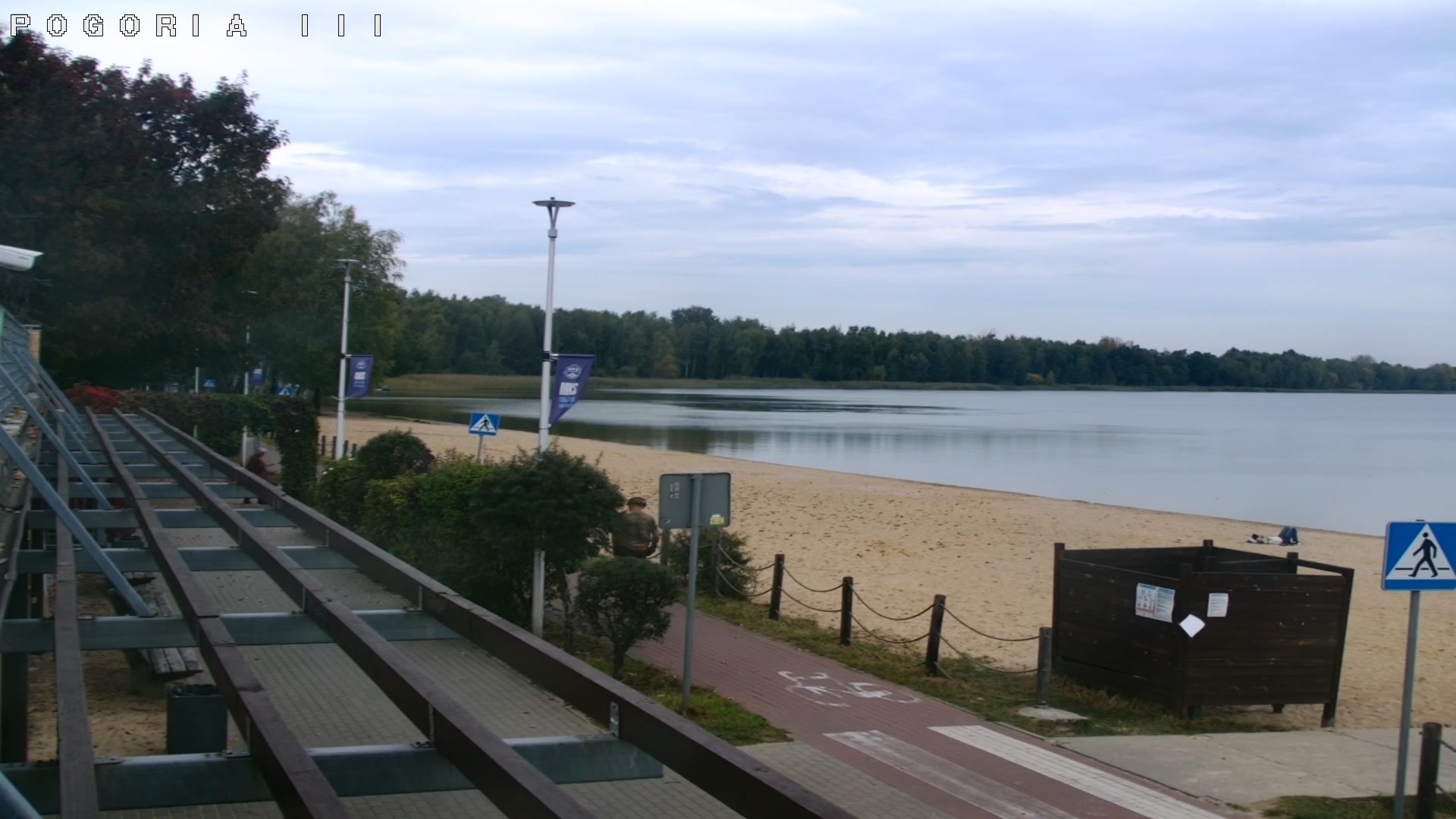
Dąbrowa Górnicza — a city of mining glory and green oak groves
In southern Poland, among the hills of the Silesian Upland, lies Dąbrowa Górnicza — a city whose name itself tells a story. "Dąbrowa" means an oak grove, and "Górnicza" means a mining destiny. It was at the intersection of natural beauty and heavy industry that this corner of Zagłębie Dąbrowskie was shaped. Today, Dąbrowa Górnicza webcams allow you to see how the city intertwines its industrial heritage with modern life.
The city is part of the Upper Silesian Metropolitan Union — the largest urban agglomeration in Poland, home to around 2.5 million people. This means that Dąbrowa Górnicza does not exist in isolation — it is closely connected with Katowice, Sosnowiec, and dozens of other cities, forming a single urban organism.
How Dąbrowa became Górnicza
Until the end of the 18th century, there were several small settlements in dense oak forests on the site of the present city. Everything changed with the discovery of coal seams. The industrial revolution transformed quiet oak groves into one of the mining centers of Silesia. Mines, quarries, metallurgical plants — all this determined the appearance of the city for centuries to come.
Dąbrowa Górnicza received town rights in 1899 as part of the Russian Empire, to which Zagłębie Dąbrowskie belonged after the partitions of Poland. It was no longer a village, but a full-fledged industrial center with tens of thousands of inhabitants, a railway, and its own infrastructure.
The Soviet period brought further industrialization. In 1975, the city was significantly expanded by incorporating neighboring settlements. Large mines — "Prządka", "Buk", "Elżbieta" — became the city-forming enterprises. But from the 1990s, a restructuring process began: many mines closed, and the city began to seek new development paths.
Pogora Lakes — a jewel in the midst of a mining city
Paradoxically, one of the most attractive recreational complexes in the Silesian Voivodeship is located right in Dąbrowa Górnicza. Four Pogora lakes (Pogoria) form a single water system with extensive green areas along the banks. In summer, you can swim, practice water sports, and walk along the embankments. In winter, you can watch how the city transforms under the snow cover.
Pogora are man-made reservoirs that arose on the site of former sand and gravel quarries. Today they are surrounded by parks, beaches, walking and cycling paths. Dąbrowa Górnicza webcams often show this area — it has become the city's calling card for tourists and local residents.
Architectural heritage: from classicism to Art Nouveau
The city has preserved several interesting architectural objects. The main temple — the Church of St. Mary Magdalene — is one of the oldest buildings in Zagłębie Dąbrowskie. Its history dates back to the 15th century, although the current building has undergone many reconstructions.
In the central part of the city you can find Franciscan churches from the turn of the 19th-20th centuries, Art Nouveau residential buildings of mining villages, as well as monuments of industrial architecture — former winding towers, pumping stations, mine ventilation structures. All this creates a unique urban landscape where sacred, civil, and industrial heritage exist side by side.
Transport and geographical location
Dąbrowa Górnicza is located at the intersection of important transport arteries. National road No. 94 runs through the city, connecting Kraków with western Poland. The railway station provides direct connections with Katowice (about 20 km), Sosnowiec, and Warsaw.
Geographically, the city lies within the Silesian Upland — an elevation located at an altitude of 256 to 376 meters above sea level. This creates an interesting relief: Dąbrowa Górnicza is not a flat city, there are hills, ravines, terraces. Views from the high points open onto the entire agglomeration.
Cultural life and education
The city is rich in cultural institutions. The Zagłębie Palace of Culture is the main center of events — concerts, exhibitions, and festivals take place here. Dąbrowa Górnicza is also known for its sports traditions: football clubs, field hockey, athletics.
The city has branches of higher education institutions, secondary schools, and vocational schools. The youth infrastructure is developed no worse than in the regional capital cities. And through Dąbrowa Górnicza webcams, you can observe city life at any time of day — from morning traffic jams at the station to evening walks by Pogora.
Climate and best time for observations
The climate of Dąbrowa Górnicza is moderately continental with a noticeable influence of the agglomeration. Winters are mild, with frequent thaws, summers are warm. However, due to the industrial nature of the region, there are days with high humidity and specific air quality — this is a feature of the entire Upper Silesia.
The best online broadcasts from Dąbrowa Górnicza webcams are obtained on clear autumn and spring days, when visibility is maximum. In winter, cameras often show snow-covered roofs and Pogora parks, and in summer — bathers and busy city streets.
Economy: heritage and transformation
The mining past is still noticeable in the economic landscape of the city. Although many coal enterprises have closed or sharply reduced production, the industrial sector continues to play an important role. Logistics centers, metal processing, construction materials — this is what has replaced mines in recent decades.
Retail trade is also actively developing: Dąbrowa Górnicza has large shopping centers that serve not only the local population but also residents of neighboring cities. Thanks to its convenient transport location, the city has become attractive to companies focused on the entire Silesian agglomeration.
Famous people and memorable places
Dąbrowa Górnicza is the birthplace of several well-known Polish politicians and public figures. The city is connected with the Solidarity trade union movement, whose activists worked in local mines in the 1980s. Monuments to victims of political repression, memorials to mining labor — all this is part of the urban landscape that can be seen through Dąbrowa Górnicza webcams.
Special attention is paid to the memory of World War II and occupation. In the city and its surroundings, there are preserved execution sites, military burials, and monuments of resistance. For those interested in history, online broadcasts are a way to see these memorial spaces in their modern context.
What the cameras show
Dąbrowa Górnicza webcams cover key points of the city: central squares, transport interchanges, park areas around Pogora lakes. This allows you to monitor weather conditions, traffic situations, embankments, and public spaces in real time.
Choose a camera depending on your interest: city center — for urban atmosphere, Pogora — for natural views, railway station — for transport monitoring. All Dąbrowa Górnicza webcams are available online and do not require registration — just open the broadcast and watch the life of this mining city in Zagłębie Dąbrowskie.