

🏙️ Harlingen Webcams Online — Watch the Hanseatic Port in Real Time
4 cameras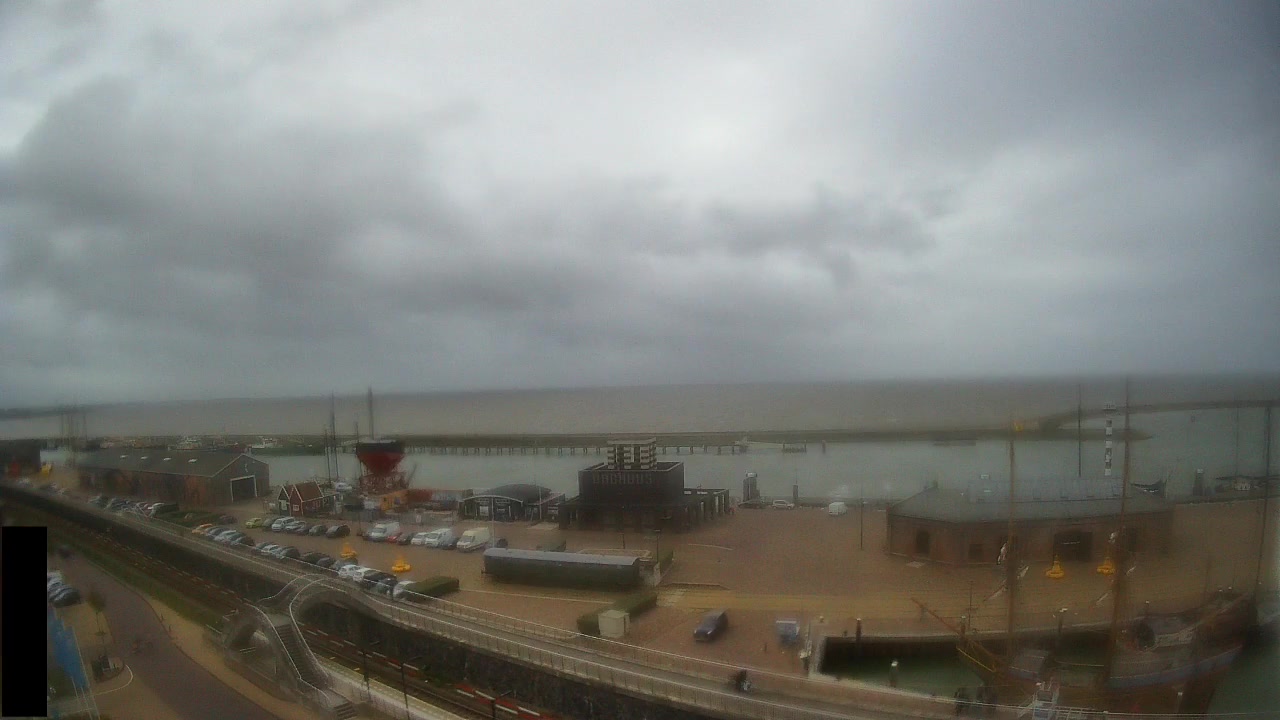
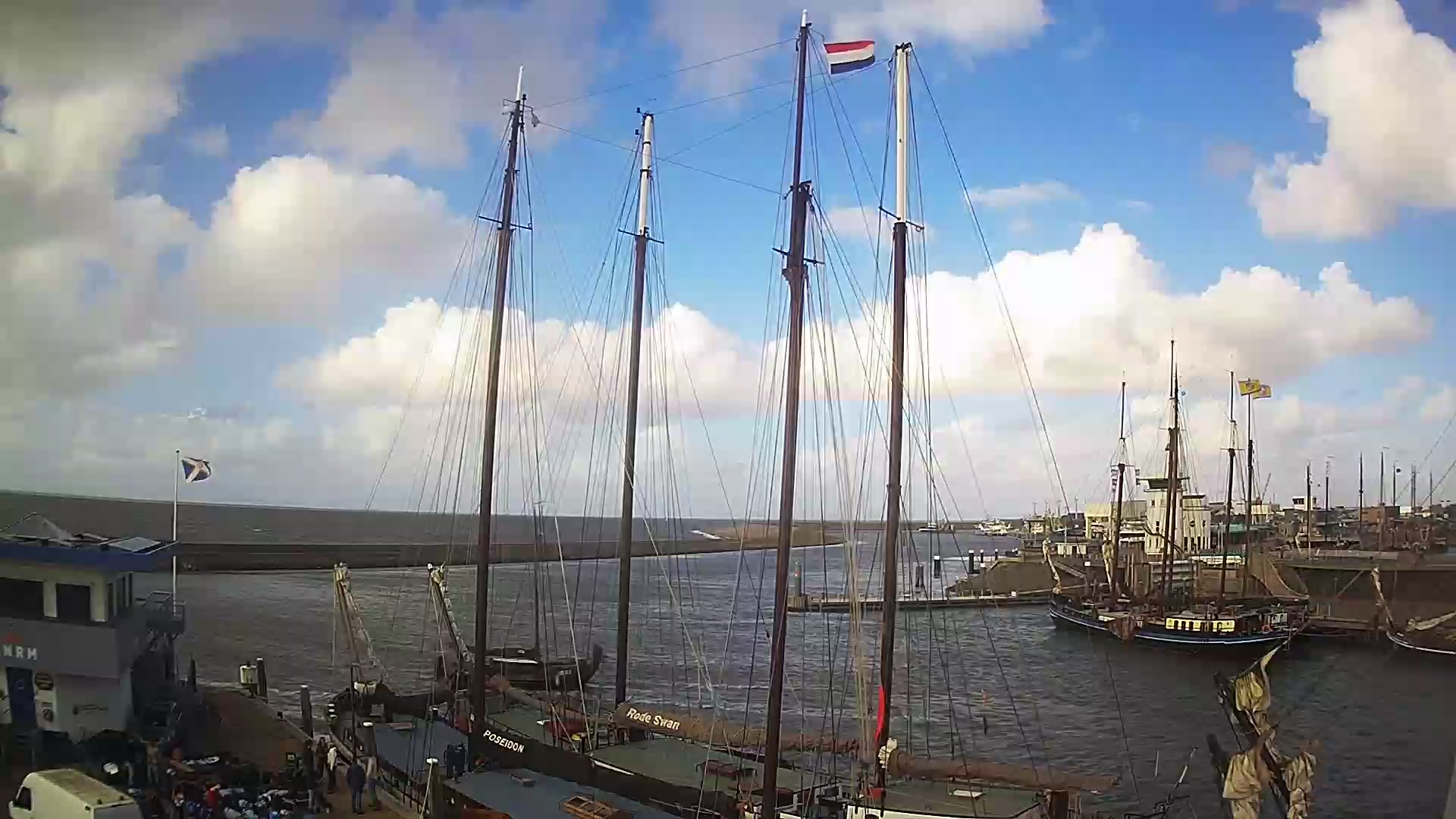
Hanseatic Port on the Wadden Sea Coast
Harlingen is one of those Dutch cities where history literally shows on the facades of buildings and in the curves of canals. Located in the northern part of the province of Friesland, this port town has faced the Wadden Sea for centuries, sending its ships to whaling grounds and Hanseatic trade routes. Today Harlingen, founded around 1157 by a certain Eilward Ludinga, has preserved the spirit of a maritime city where every stone remembers merchant fortune and storm watches.
The city is among the historic Hanseatic settlements — a trade union established in 1356 and uniting about 200 cities of Northwestern Europe. This legacy has shaped Harlingen's appearance: you won't see pompous palaces here, but everywhere you'll find solid merchant warehouses, narrow facades of shipowners' houses, and characteristic canal rings encircling the historic core.
Whaling Past and the Whale Fountain
Harlingen's maritime history is inseparably linked to whaling. In 1652, an expedition of 30 ships set sail from the local harbor, heading to northern waters for whale hunting. This was an era when sperm whale oil was worth its weight in gold, and Frisian sailors were renowned for their bravery in Arctic latitudes.
The whaling boom occurred between 1680 and 1770. During this period, 200–250 ships set sail annually, with a peak of 258 ships in 1721. Between 8,000 and 10,000 sailors were employed in the trade — a colossal figure for a small town. The De Groenlandsvaarder building on Harlinger Voorstraat still recalls this harsh era when Frisian seafarers returned home with holds full of spermaceti and whalebone.
Today, the whaling past is recalled by an unusual fountain sculpture "The Whale" (De Walvis) — a realistic sperm whale located at Zuiderpie in Nieuwe Willemshaven. The sculpture periodically releases a powerful jet of water, like a living mammal, and has become one of the city's symbols as part of the 11fountains project.
Architecture of Merchant Warehouses and Canals
The historic center of Harlingen is an open-air museum of Frisian trading architecture. Original canal rings (grachtengordels), fragments of defensive structures, and numerous monumental merchant warehouses (pakhuisen) have been preserved here. These narrow, tall buildings with hoisting mechanisms on the gables are a characteristic feature of Hanseatic ports, and Harlingen is considered one of the most authentic cities in the Netherlands in this regard.
A walk along the canals reveals dozens of architectural monuments, many of which are listed as municipal monuments. The facades of 17th–18th century houses are decorated with decorative elements typical of Friesland, and signs in Old Frisian remind us that local culture differs from mainstream Dutch culture.
Ferries to the Wadden Islands
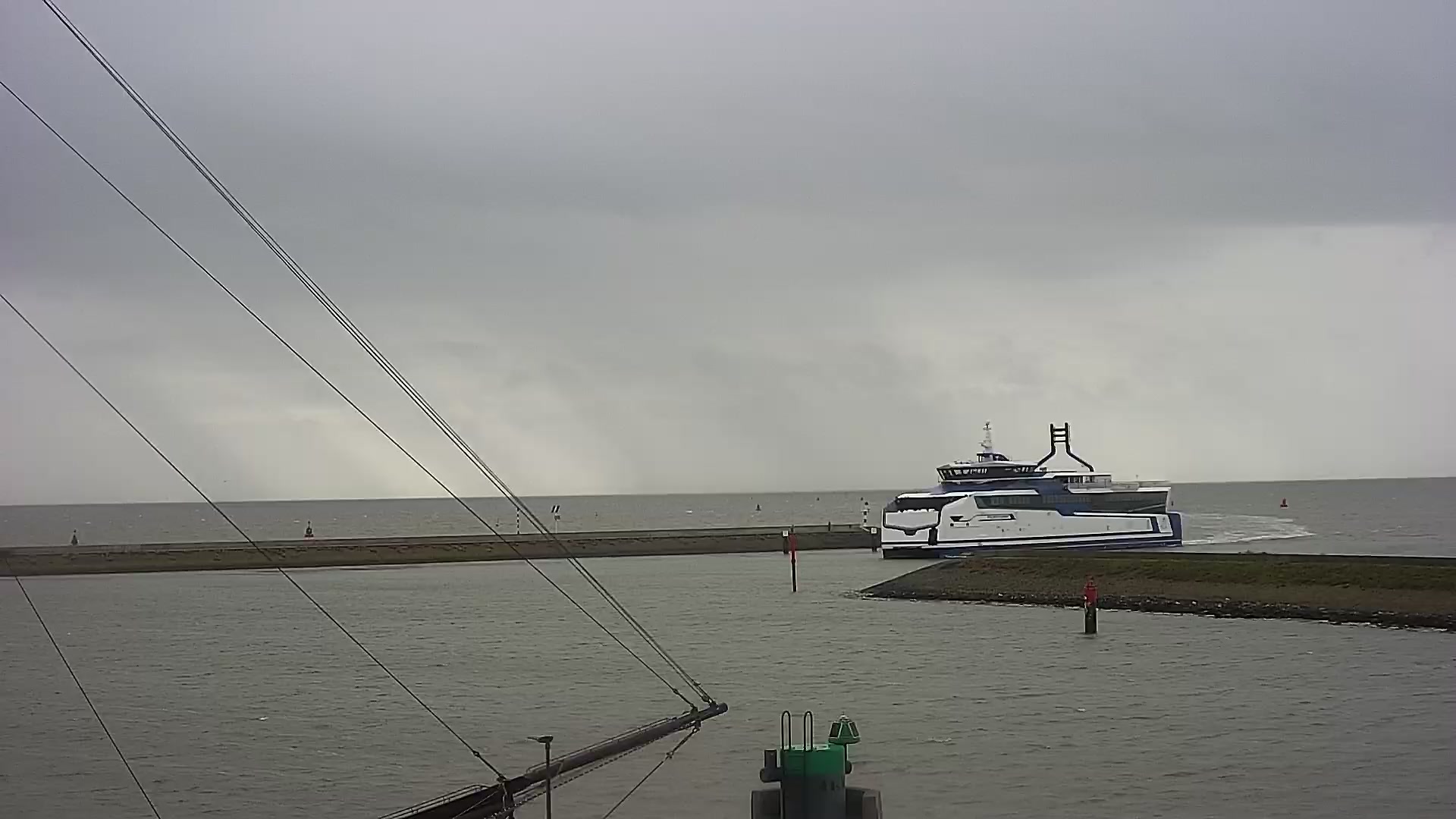
Harlingen is the main gateway to the Wadden Islands. Ferries to Terschelling and Vlieland depart from the local harbor, connecting the mainland with these unique natural areas. The ferry crossing across the Wadden Sea is not just a transport link but a real adventure: during the voyage, you can observe seals resting on sandbanks and millions of migratory birds.
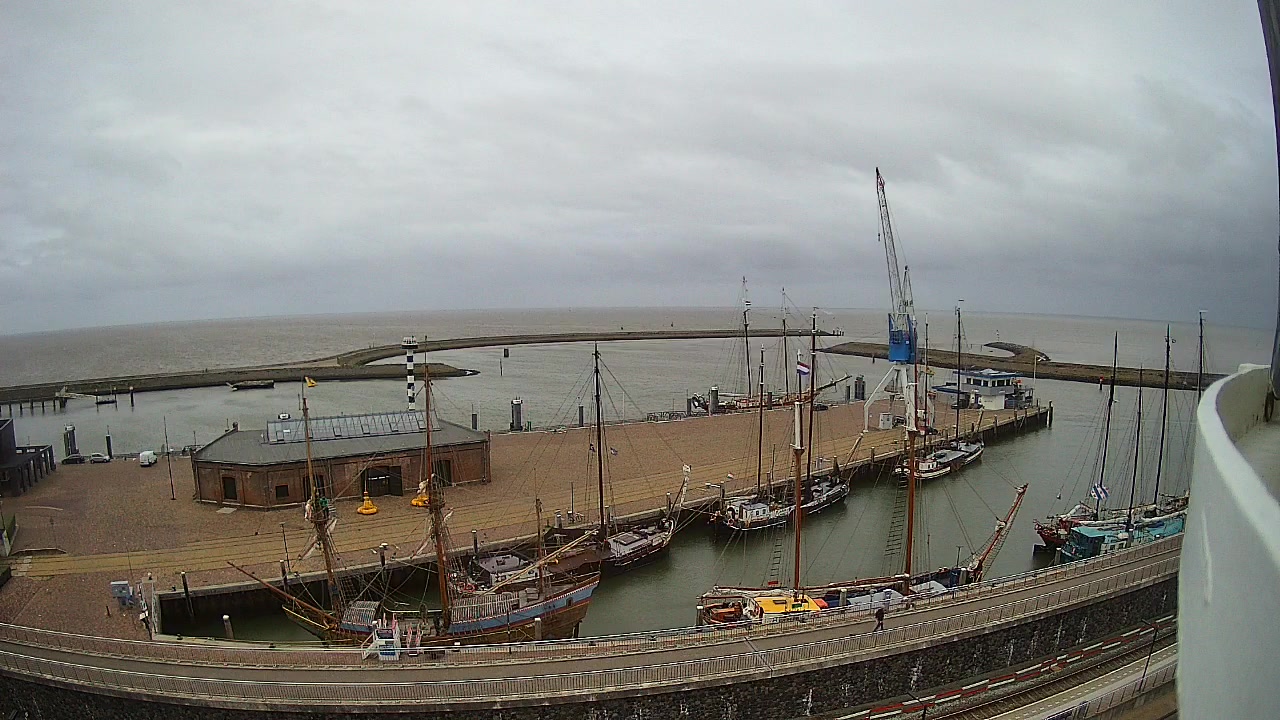
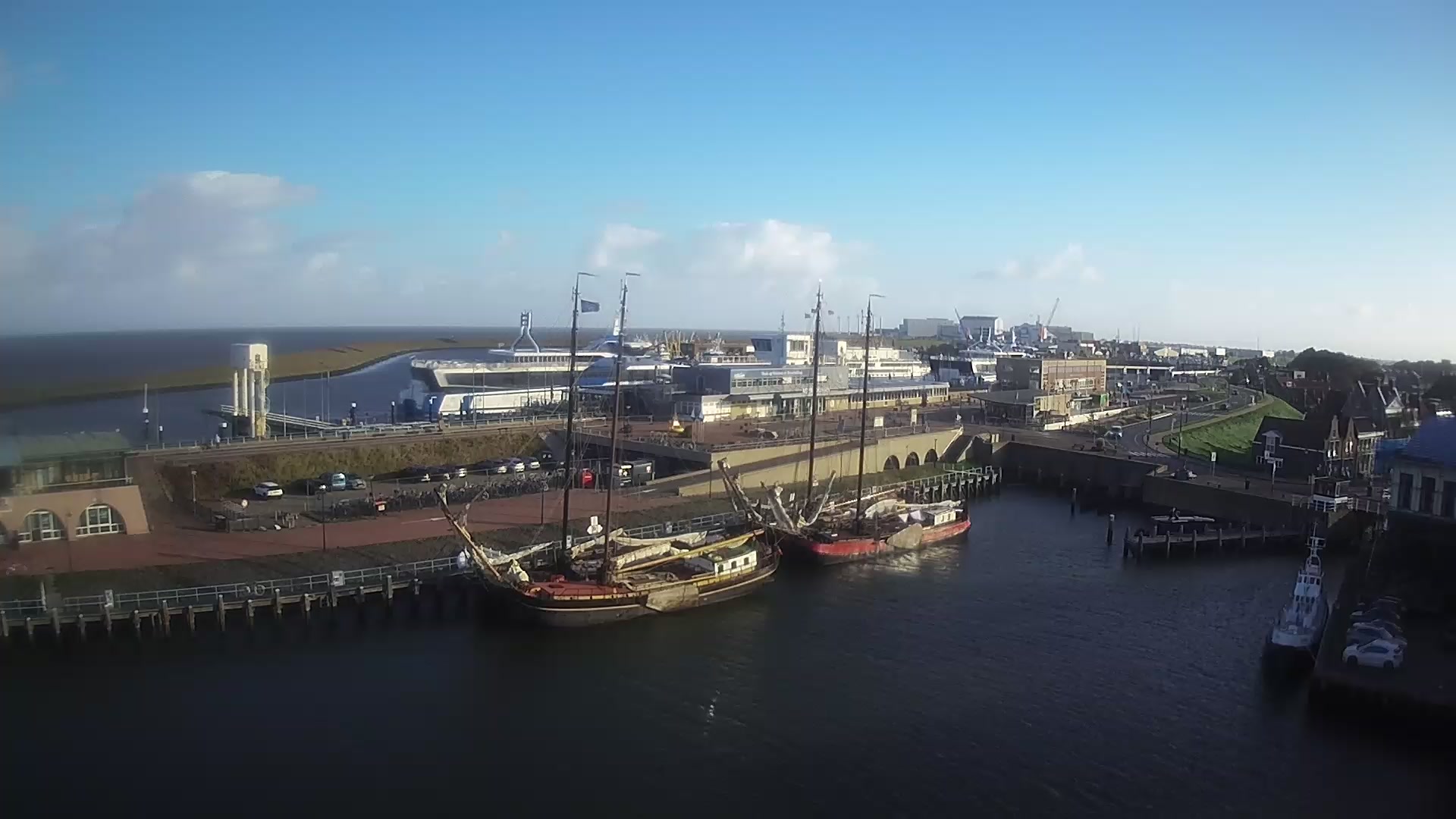
Harlingen's port is full of life — fishing boats, yachts, traditional sailing ships, and cargo vessels dock here simultaneously. You can watch this colorful maritime life for hours, and if you can't visit in person, Harlingen webcams online allow you to see the port in real time — how ferries maneuver, how charter ships raise their sails, and how the landscape changes with the tides.
The "Brown Fleet" and Sailing Traditions
Harlingen is home to the so-called "brown fleet" (bruine vloot) — traditional sailing charter vessels that make voyages along the Wadden Islands. These ships with brown sails are not museum exhibits but an active fleet on which you can set sail across the sea just as seafarers did centuries ago.
Sailing tradition here is not just a tourist attraction but a living element of urban culture. Local shipyards still build and restore wooden vessels, and regattas and festivals dedicated to Friesland's maritime heritage are regularly held in the port.
The Wadden Sea — UNESCO Heritage
The Wadden Sea (Waddenzee), washing the shores of Harlingen, is a unique natural area. In 2009, it was included in the UNESCO World Heritage List as the world's largest continuous system of sand and mudflats with preserved natural dynamics. During low tide, the sea literally recedes, exposing kilometers of wet sand that you can walk across to the islands — this practice is called "wadlopen" and attracts thousands of people annually.
The Wadden Sea ecosystem is incredibly rich: seals, grey whales, and millions of migratory birds inhabit it. For Harlingen, this sea is not just a neighbor but the foundation of its economy and identity for centuries.
A City with an Area of 385 Square Kilometers
The municipality of Harlingen covers an impressive territory — 385.68 km² with a population of about 15,951. This means that in addition to the compact historic center, the municipality includes vast farmlands, polders, and coastal zones. The city is not overcrowded with tourists; it maintains a calm atmosphere of a provincial Frisian settlement where life flows in the rhythm of tides and ferry schedules.
Harlingen is a place people visit not for capital entertainment but for genuine maritime romance, for the smell of salt and seaweed, for screaming seagulls and the creaking of masts in the port. It's a city best experienced by leisurely walking along the canals or watching it through webcams — seeing how the crane boom slowly turns on the waterfront, how another ferry departs from the pier, and how the sunset paints the Wadden Sea waters in copper tones.
What the Cameras Show
Harlingen webcams online provide the opportunity to see this Hanseatic port from anywhere in the world. The broadcasts cover key locations: the historic harbor with merchant warehouses, canal embankments, the ferry crossing, and the Wadden Sea waters. Watching Harlingen webcams is especially interesting during high and low tides — the landscape changes literally before your eyes, exposing sandbanks and changing the horizon line.
The Harlingen online broadcast allows you to assess port activity, observe ship maneuvers, and simply enjoy the atmosphere of an ancient Frisian city. For those planning a trip to the Wadden Islands, watching Harlingen webcams online is a great way to assess the situation in the port in advance and soak up the maritime spirit of this place.