

🏙️ Webcams The Hague online — watch the city of peace and government in real time
8 cameras

A city ruled not by kings, but by laws
The Hague holds a unique position among European cities. It is a place where the constitutional capital is Amsterdam, yet real political power is concentrated here, in the city by the North Sea. Since 1588, the States General has been seated in The Hague, making it the heart of Dutch statehood.
The city grew from a hunting castle of the Counts of Holland, founded in 1230. The name Den Haag translates to "hedge" or "hunting ground" — the castle was surrounded by a tall hedge. Interestingly, The Hague long lacked official city rights: residents refused to pay taxes for building city walls, and legally the city only gained full status in 1806.
Peace Palace and the capital of world justice
The Hague is the only city on the planet where several independent international judicial institutions are concentrated. The Peace Palace (Vredespaleis) was built with funds from Scottish philanthropist Andrew Carnegie and today serves as the seat of the International Court of Justice of the UN. Inside the building, a natural spring of water flows — a unique architectural detail.
It was here in 1899 and 1907 that the Hague Conventions were adopted — the first treaties in world history on the laws of war, banning the use of poisonous gases and dum-dum bullets. The International Criminal Court, the Special Court for Sierra Leone, and other institutions have made The Hague the true capital of international justice.
A curious fact: defendants of the International Criminal Court are held in a detention center right in the Scheveningen district — in conditions close to comfortable apartments, with gyms and a library.
Scheveningen: from fishing village to seaside resort
The Scheveningen district on the North Sea coast had its fate transformed thanks to one person. In 1818, local resident Jacob Pronk built the first wooden bathing cabin on the beach so that wealthy gentlemen could bathe away from prying eyes. This simple invention triggered the transformation of a poor fishing village into an elite resort.
During World War II, the Germans demolished a significant part of Scheveningen to build the Atlantic Wall, and the population was evacuated. After the war, the district was rebuilt and became the largest seaside resort in the Netherlands. Today, Scheveningen's beaches stretch for kilometers, and the promenade is lined with restaurants and hotels.
Scheveningen is also home to the former "Oranjehotel" prison, which the Nazis used as a transit facility. More than 25,000 Resistance members and Jews passed through it.
Hagenaars and Hagenezen: two faces of one city
The internal division among The Hague's residents has deep historical roots. Hagenaars — this is what wealthy citizens, aristocracy, and officials living in the center were called, who considered themselves the "cream" of society. Hagenezen — the poor, workers, and fishermen from the outskirts, who spoke a different dialect.
This class confrontation lasted for centuries. The Hagenezen considered the Hagenaars arrogant, while the latter looked down on the Hagenezen as boors. To this day, this identity persists in the city: residents of the prestigious Statenkwartier district are Hagenaars, while those from the working-class neighborhoods of Morgenstond and Bouwlust are Hagenezen. Differences in speech also remain.
Madurodam: Holland in miniature
Madurodam park is not just a tourist attraction, but a monument to a specific person. It is named after George Maduro — a Dutch Jewish student who perished in the Dachau concentration camp. The park was founded in his memory, and proceeds long went to charity.
Here you can see scaled-down replicas of famous Dutch buildings, bridges, and canals. It is a kind of model of the country at a scale of 1:25, where you can see all of the Netherlands in one visit.
Architecture and districts: from Binnenhof to Rijswijk
The center of The Hague is the Binnenhof, surrounded by government buildings and the Hofvijver lake. Nearby rise the tower of the Munster Church and the parliament building. The architecture of the center combines medieval structures with Renaissance and Baroque elements.
The Statenkwartier district is one of the most prestigious, with wide avenues and mansions from the early 20th century. Rijswijk is a modern residential quarter built in the postwar years. And the Langefort district has preserved the atmosphere of old The Hague with narrow streets and traditional Dutch houses.
Cultural life and museums
The Hague is a city of museums. The Mauritshuis houses Vermeer's "Girl with a Pearl Earring." The Escher Museum in the former palace of Queen Emma displays the artist's famous optical illusions. The Municipal Museum of The Hague tells the story of the city from the Counts of Holland to the present day.
Every summer, a contemporary arts festival takes place on Plein square. And in the Scheveningen district, a traditional winter swim in the icy waters of the North Sea is held — a New Year's tradition that gathers thousands of participants.
Climate and best time for viewing
The climate in The Hague is maritime, with mild winters and cool summers. The best time to observe the city via webcams is from May to September, when the days are long and the weather is most often clear. In winter, the city is enveloped in a characteristic northern haze, and in autumn, rains and winds from the sea are frequent.
In spring, tulips bloom in The Hague's parks, and in summer, life on the Scheveningen promenade buzzes until late evening. In winter, the city takes on a special atmosphere — the canals sometimes freeze, and people skate on them.
What the cameras show
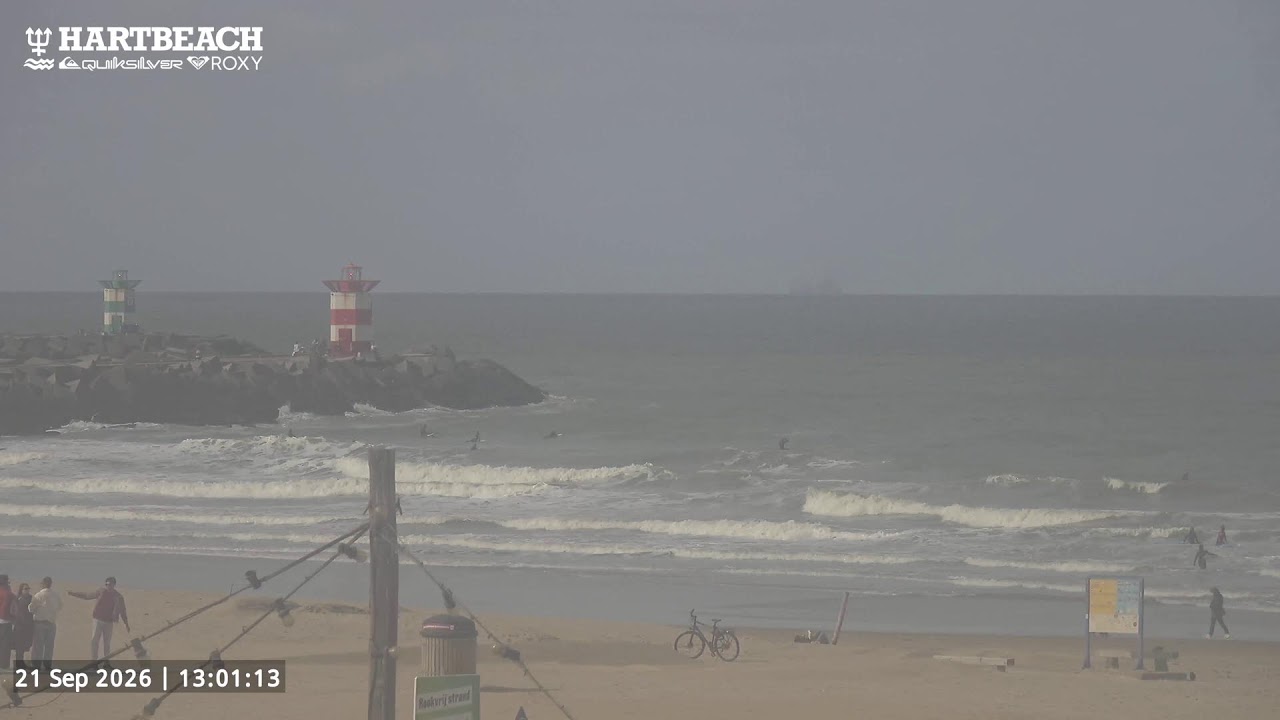
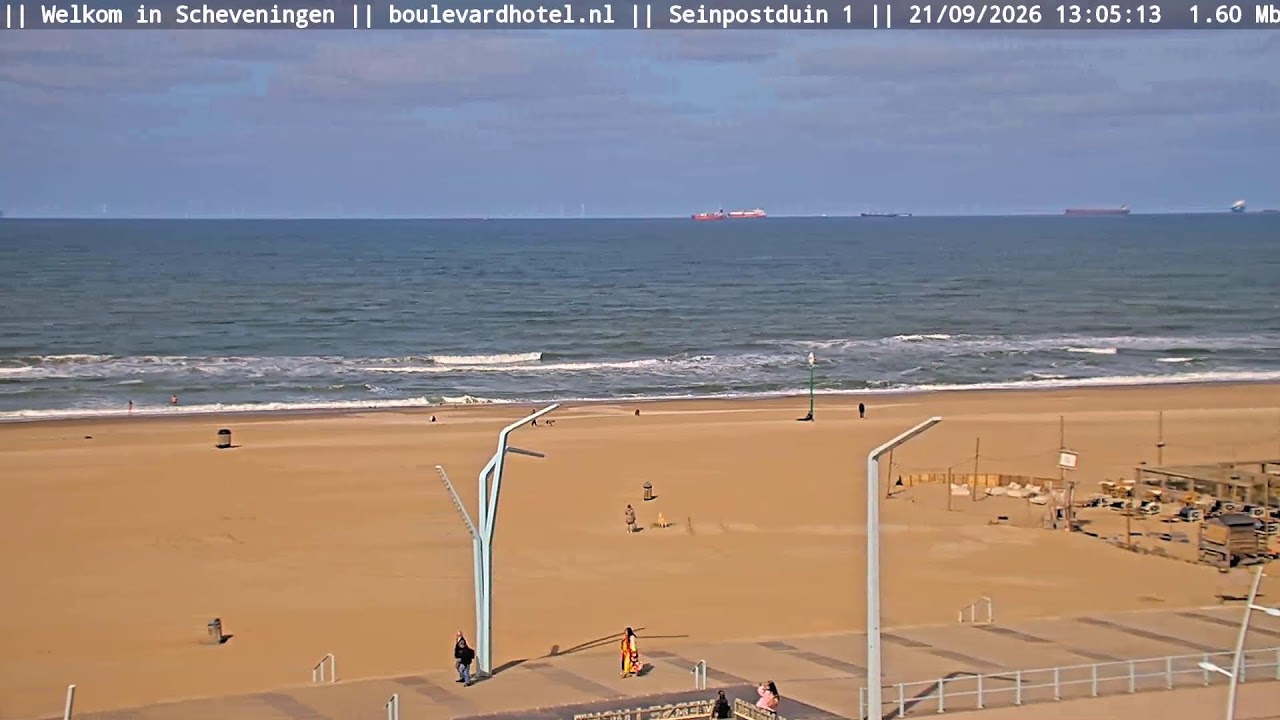
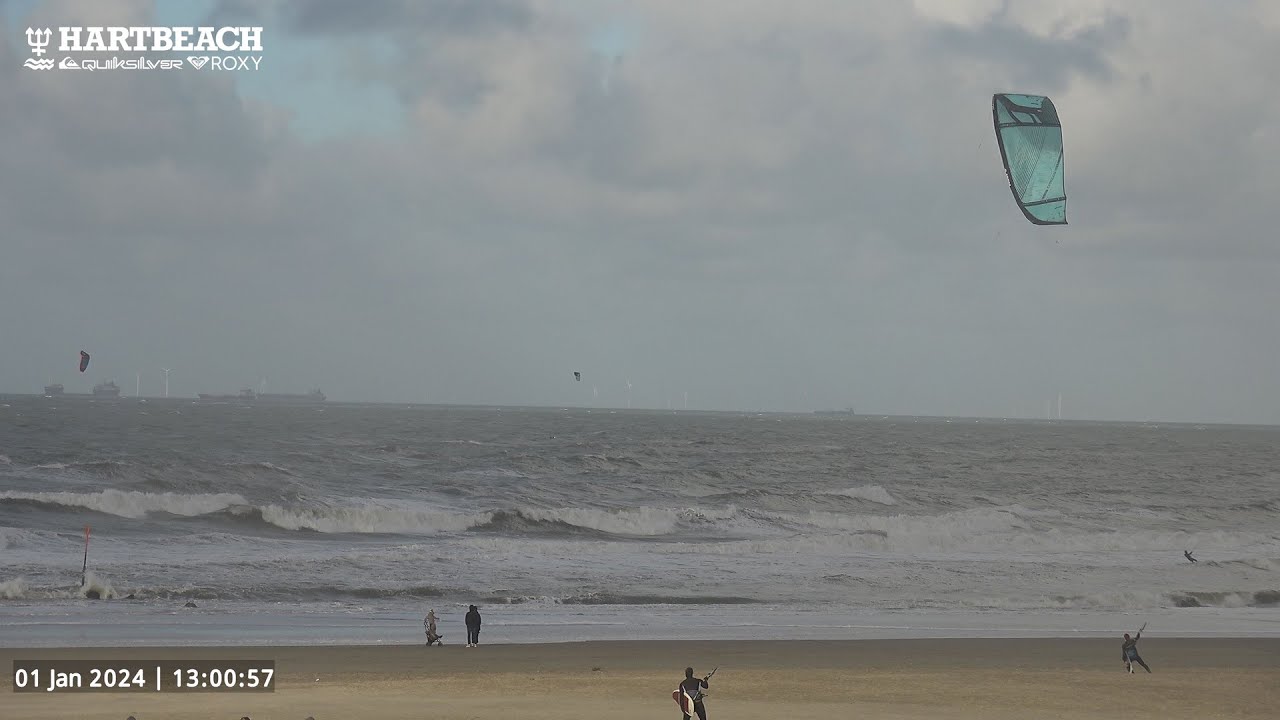
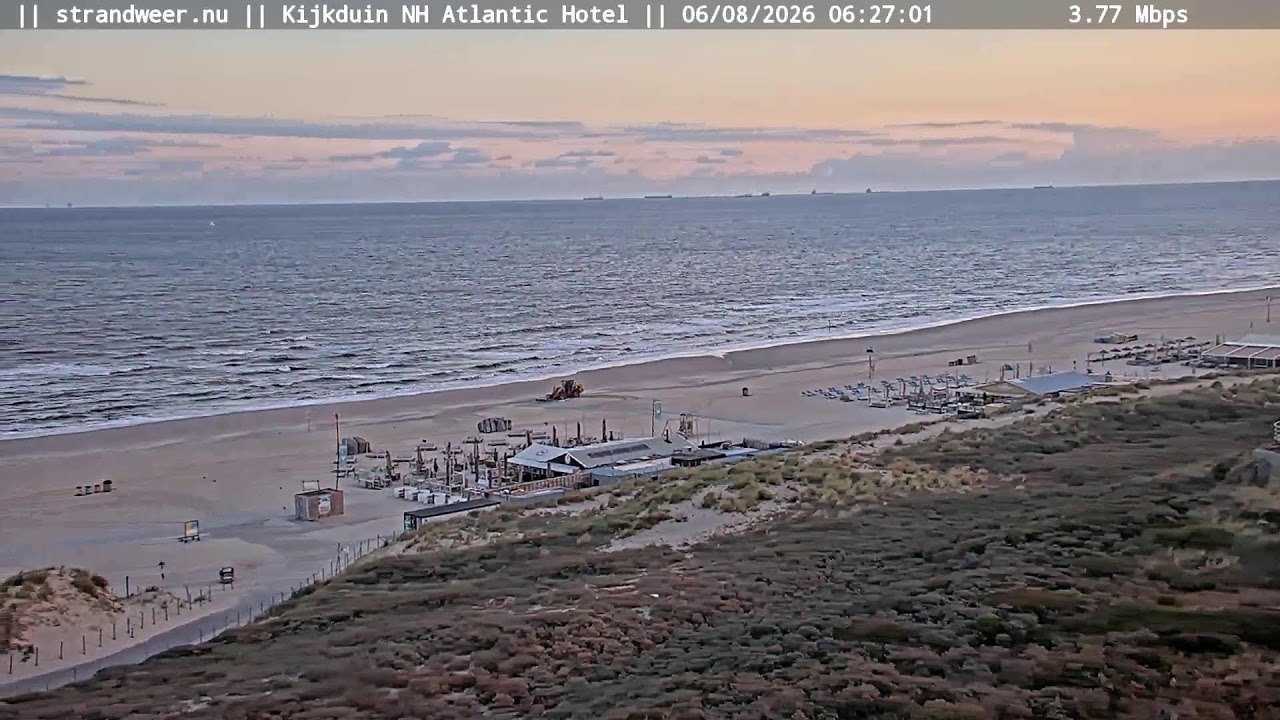
Webcams The Hague online allow you to see the city in real time from anywhere in the world. Cameras are installed at key points: the Scheveningen promenade with views of the beach and pier, Plein square in the center, the Binnenhof with government buildings, and Madurodam park.
Watching The Hague webcams is especially interesting during political events — when journalists and delegations gather in front of the Binnenhof. And on summer evenings, the cameras in Scheveningen show sunsets over the North Sea — one of the most beautiful sights in the Netherlands.
Choose any broadcast and watch the city where decisions of global significance are made, where Hagenaars and Hagenezen live, where a fishing village turned into an elite resort. The Hague is not just a city on the map — it is the capital of international justice and one of the most unusual capitals in Europe.