

🏙️ De Koog webcams online — watch the beach resort in real time
1 cameras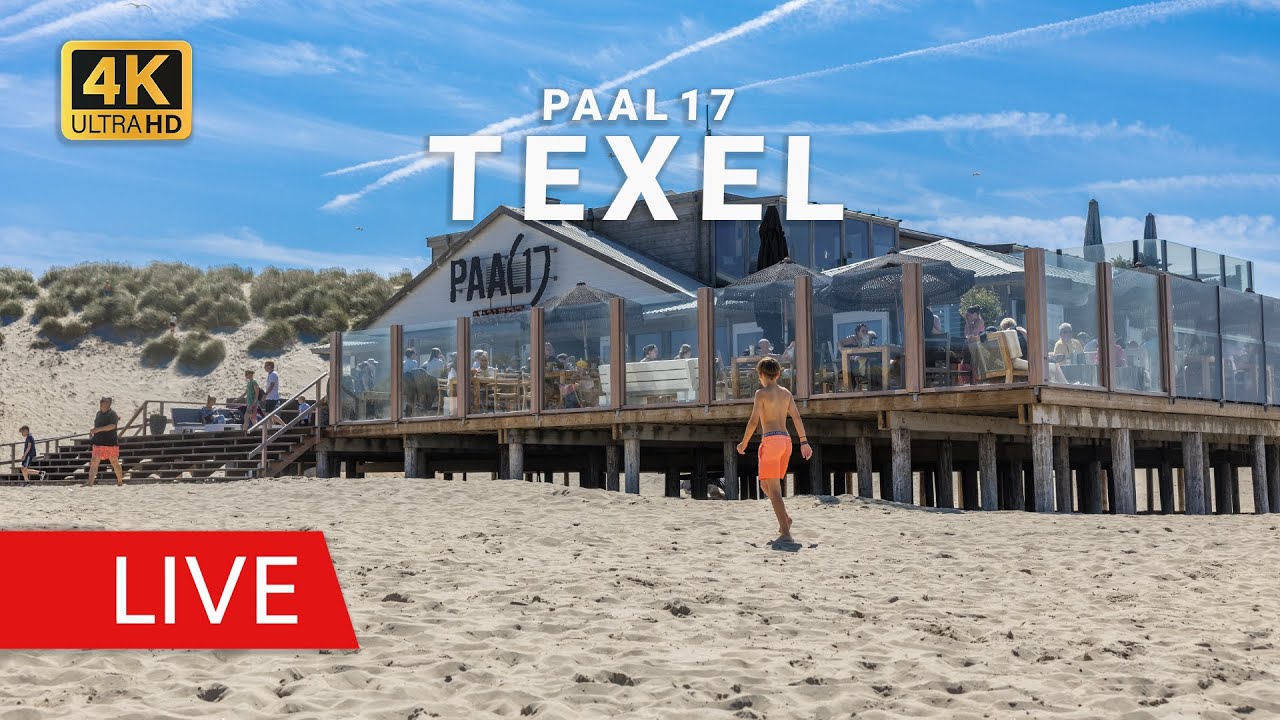
History of De Koog: from a fisherman's hut to a resort
De Koog is a place where time seems to slow down and history emerges through the sand of the dunes. This village in the province of North Holland was first mentioned in 1436 as Cogersdyck, which translates to "land on water". The name speaks for itself: the settlement grew on the border between land and sea, in dunes that formed over centuries.
Initially, De Koog was a typical fishing village. The locals lived off the sea, and the Protestant church from 1415 served as a spiritual center for Texel fishermen. The stone walls of this church remember times when the only way to reach the mainland was by boat, and life depended on the whims of the North Sea.
The turning point came at the turn of the 19th and 20th centuries. In 1896 the first pavilion opened, and in 1908 a hotel appeared — from that moment De Koog began to transform into a tourist resort. After World War II, the village finally became the main beach resort of the island of Texel, which it remains to this day.
Beach resort at the edge of the dunes
De Koog occupies a unique position: it is separated from the North Sea by just a single row of dunes. It is the only true beach resort on the entire island of Texel. Wide sandy beaches stretch as far as the eye can see, and you can reach the water via the Badweg — a road where sand stretches like an endless carpet.
The beaches here are not just wide — they are so spacious that even in the height of the season you can find a secluded spot. Soft sand, fresh sea breeze, and the characteristic smell of seaweed create that very atmosphere of the Dutch coast for which thousands of tourists come here.
After a day at the beach, the village center offers cozy terraces, restaurants, and shops. There are no noisy discos or high-rise hotels here — De Koog has preserved the scale of a real village, where everything is subordinated to relaxation and nature.
Natural attractions: dunes, forests, and seals
Nature is the main treasure of De Koog. Right behind the village begins the Duinen van Texel National Park — a complex terrain with high sandy ridges and deep green valleys. This is not just a landscape, but a whole ecosystem shaped by wind and sea over centuries.
Between De Koog and De Slufter stretches the rugged dune area "De Nederlanden" — a special corner of Texel where nature remains untouched. And on the other side of the village begins the De Dennen forest, making De Koog an ideal base for those who want to combine sea, dunes, and forest.
But the main natural gem is Ecomare, a nature museum, aquarium, and seal sanctuary. About 300,000 people visit it annually. There is a rescue station for seals injured by fishing nets, and one of the main exhibits is a real fin whale skeleton, impressive in its size.
What to see in De Koog: routes and experiences
De Koog is not an open-air museum, but a living place where it's worth just walking. Walking and cycling routes lead through the dunes, along the coast, and into the forest. You can wander along the trails for hours, listening to the sound of the sea and birdsong.
A walk through the dunes to the beach is a ritual. The sand underfoot changes from soft and loose to firm at the water's edge. The wind here is a constant companion, but it is precisely what creates that refreshing climate for which people return year after year.
For those traveling with children, Ecomare is a must-visit. Interactive exhibits, the opportunity to see seals up close, and learning about the marine ecosystem of the North Sea make this museum one of the most visited on the island.
Atmosphere and relaxation: why people return here
De Koog has a special charm — it is a place where Dutch provinciality meets the maritime element. The village is lively but not hectic. There is no pretension here, but there is space, fresh air, and a feeling of freedom.
In the evenings, restaurant terraces fill with tourists discussing the day spent. The menu features fresh fish, local delicacies, and classic Dutch dishes. And sunsets over the North Sea here are special: the sun dips below the horizon, painting the dunes in golden and pink hues.
De Koog is located approximately 17 km north of Den Helder, and this distance creates a sense of detachment from the mainland, island seclusion. It is precisely this feeling that is one of the reasons people return here again and again.
What the cameras show
If you want to see De Koog in real time, webcams online are a great way to feel the atmosphere of this place without leaving home. The broadcasts show the beaches, dunes, and central streets of the village, allowing you to observe the life of the resort at any time of day.
By choosing a camera, you can assess the weather on the coast, watch how the landscape changes depending on the tides, or simply enjoy the view of endless dunes. This is especially valuable for those planning a trip to Texel who want to get an idea of the place in advance.
De Koog webcams are a window into the world of the North Sea, where nature and village life intertwine into a single landscape. Watch the sea, dunes, and cozy streets — and perhaps on your next vacation you will decide to see all this with your own eyes.