

🏙️ Webcams Trieste online — watch the city in real time
2 cameras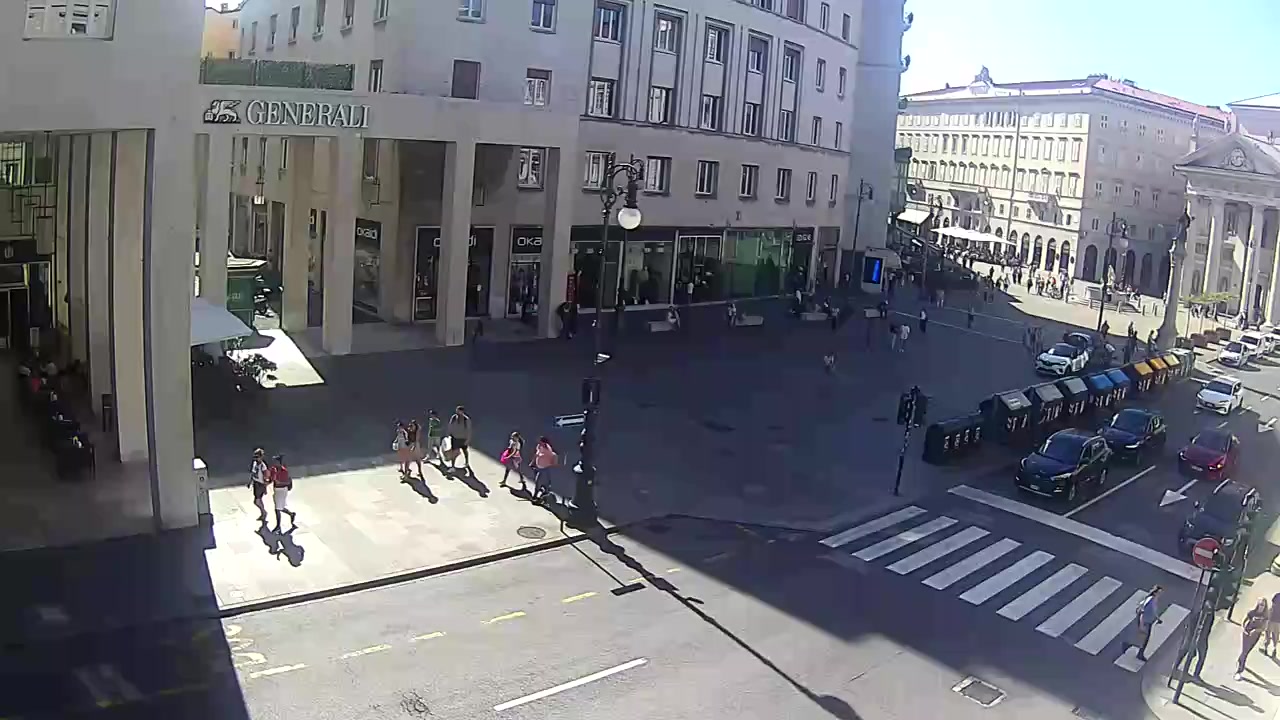
Trieste — a city at the crossroads of cultures and winds
Trieste is located in northeastern Italy, deep within the Gulf of Trieste in the Adriatic Sea, 145 km east of Venice, near the Slovenian border. This is a place where Italian, Austrian and Slavic cultures have intertwined into a unique pattern, creating an atmosphere that cannot be confused with any other city in the country. The narrow streets of the old center lead to spacious squares of Austrian architecture, and around the corner a view of a typically Mediterranean waterfront may open up. Trieste is a paradox city: Italian by language, Austrian by architecture and Balkan by rhythm of life.
The geographical position determined the fate of Trieste for centuries to come. The Karst plateau, approaching the city from the east, creates unique climatic conditions. It is here that the famous bora wind is born, which has become one of the city's calling cards. Watching how the sky over Trieste changes in a matter of minutes is possible through Trieste webcams online — the view of the bay in cloudy weather is particularly impressive.
Coffee capital of Italy
Trieste is the coffee capital of Italy, not Milan, Naples or Turin. In 2015, at the EXPO exhibition in Milan, the city was officially named the coffee capital. This title is not just symbolic: it was through the port of Trieste that green coffee beans entered Europe for centuries. During the Austro-Hungarian rule, the government granted the city tax-free status to stimulate trade growth, and coffee became one of the main goods that determined Trieste's economic prosperity.
Today, the coffee culture here is not a tourist attraction, but an everyday ritual. Historic Trieste cafes, such as San Marco and Ternini, preserve the atmosphere of the early 20th century, when writers and intellectuals gathered over a cup of espresso. Locals drink coffee standing at the bar, as is customary in the best traditions of Italian coffee drinking, but with a noticeable influence of Austrian coffee culture. The portion here is more generous, and the presentation is more solemn than in other regions of the country.
Bora wind — the character of the city
Trieste is often called the "city of winds," and this nickname is well-deserved. Bora is a strong northeastern wind that overcomes the obstacle of the Karst plateau and crashes onto the coastline with enormous force. The wind speed of bora in Trieste can exceed 60 m/s, and rare gusts can even reach 100 m/s. This makes it one of the strongest coastal winds in the Mediterranean.
Bora in Trieste is intermittent — strong gusts alternate with less intense ones. In winter, the wind is especially cold and gusty, capable of stopping traffic on the waterfront and forcing passersby to seek shelter. Locals have long been accustomed to this element: many streets have special handrails that can be held onto during particularly strong gusts. Tourists are often surprised when a light breeze turns into a hurricane in minutes, tearing off umbrellas and hats.
Literary heritage: Joyce, Svevo and others
Trieste has a rich literary heritage and has been home to such famous authors as James Joyce and Italo Svevo. James Joyce lived in Trieste for more than ten years and wrote a significant portion of "Ulysses" and "Dubliners." The city became for him not just a place of residence, but a creative laboratory where the style that changed world literature was formed.
Italo Svevo, whose real name was Aron Ettore Schmitz, was born in Trieste and made the city the setting for his novels. His "Zeno's Conscience" is a deep psychological study unfolding against the backdrop of Trieste's streets and cafes. Literary routes through Trieste pass by the houses where these writers lived and the cafes where they worked. For literature lovers, Trieste is a place of pilgrimage, where every street preserves the memory of great texts.
Austrian heritage: imperial port
For more than 500 years, Trieste was the main trading port of the Austrian Empire. In 1382, the commune of Trieste voluntarily placed itself under the protection of Archduke Leopold the Pious, giving Austria the long-awaited access to the sea. From this moment, the city began its path to economic power, which peaked during the Austro-Hungarian era.
Trieste was a free port from 1719 and quickly became a major trading center of Europe. In the 1860s, the city was elevated to the rank of state capital of the Austrian coastal region — Österreichisches Küstenland. It was during this period that the architecture of the central squares and waterfronts was formed, which today make up the historic core of Trieste. Monumental buildings in the neoclassical and Art Nouveau styles recall the times when the city was the gateway of the empire to the Mediterranean.
Piazza Unità — the heart of Trieste
Piazza Unità d'Italia is the main square of Trieste and one of the largest squares in Europe that opens directly to the sea. Its architectural ensemble was formed in the late 19th and early 20th centuries, when Trieste was experiencing economic prosperity. Neoclassical buildings surround the square on three sides, while the fourth opens a panorama of the Gulf of Trieste.
It is here that the city's public life is concentrated: in the numerous cafes and restaurants on the first floors of historic buildings, life boils from early morning until late evening. Piazza Unità is an ideal point for observing the rhythm of Trieste: through Trieste webcams in the center, you can see how the lighting of the square changes throughout the day, how the lanterns light up at dusk and how the dawn paints the facades in warm tones.
Miramare Castle — romance on a rock
Miramare Castle was built in 1856–1860 according to the design of architect Carl Junker. The clients for the construction were Archduke Maximilian (future Emperor of Mexico) and his wife Charlotte. Miramare was built in medieval Scottish style on a rock jutting into the Adriatic Sea, in the vicinity of Trieste. This is one of the most photographed monuments in the region, attracting tourists with its romantic atmosphere and stunning view of the bay.
The castle interiors have preserved the original furnishings of the mid-19th century: furniture, fabrics, decorative items belonging to the archducal family. The park around Miramare is a botanical garden with rare plant species brought from around the world. Legend has it that Maximilian ordered plants from all corners of the globe where he had visited to be planted here, to create a miniature model of the world. Today, Miramare Park is a popular place for walks among both tourists and locals.
Waterfront and port: the pulse of a maritime city
The Trieste waterfront is where the city meets the sea. Stretching along the bay, it offers panoramic views of the water area where yachts, fishing vessels and cruise liners are moored. The port of Trieste remains one of the largest in the Adriatic, maintaining the commercial significance inherited from Austrian times.
The evening waterfront is especially picturesque: the lights of the port are reflected in the water, and the silhouettes of ships create a romantic backdrop for walks. Locals traditionally take an evening stroll here — a passeggiata, as is customary in many Italian cities. The Trieste waterfront is also an excellent point for watching the sunset over the bay, when the sky turns shades of pink and gold, and the bora wind brings freshness from the sea.
What the cameras show
Trieste webcams online allow you to see the city in real time without leaving home. The broadcasts cover key points: Piazza Unità with its monumental facades, the waterfront with a view of the bay, Miramare Castle on the rock and panoramic points in the historic center. Through Trieste webcams in the center, you can observe the life of Piazza Unità, where cafe life boils during the day and lanterns light up in the evening.
For those who want to feel the atmosphere of a port city, cameras with a view of the harbor and waterfront are suitable. They show the movement of ships, weather changes and the famous bora wind in action. Panoramic Trieste webcams open a view of the city from above, allowing you to appreciate the scale of Austrian architecture and the proximity to the sea. Choose a broadcast and embark on a journey through one of the most unusual cities in Italy — a place where wind, coffee and imperial history meet.