

🏙️ Webcams Sabaudia online — watch in real time
1 cameras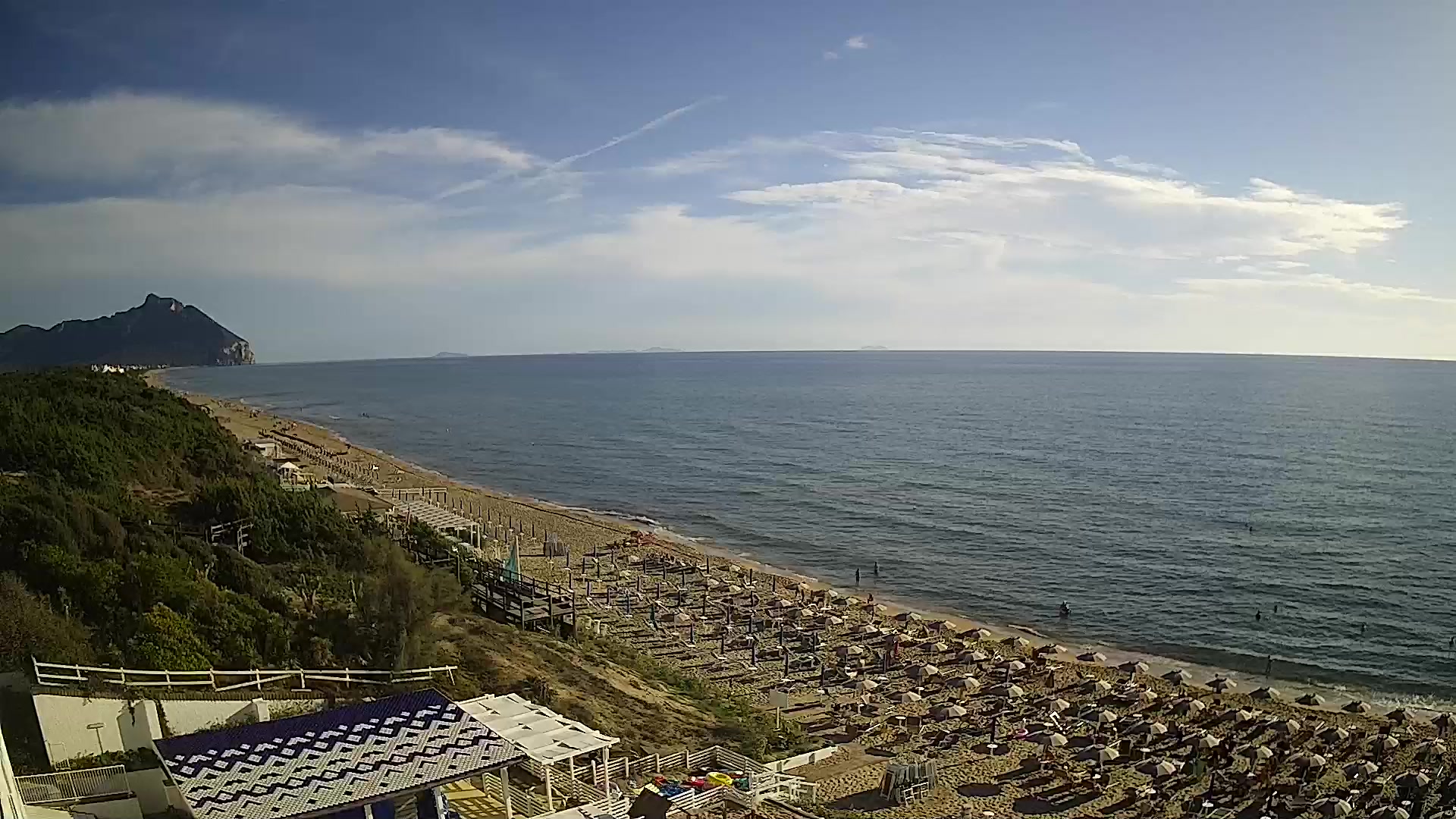
Sabaudia: a city born from the marshes
On the Tyrrhenian Sea coast, among the pine forests and sand dunes of Lazio, stands a city that did not grow over centuries but was designed and built in mere months. Sabaudia was built in 1933–1934 as a showcase project of the new Italian state — a port city on the site of the former Pontine Marshes, drained under Mussolini's programme. It is one of the few cities in the world where architecture, layout, and infrastructure were created simultaneously according to a single vision.
Today, Sabaudia is a living monument to urban utopia, where 1930s rationalism coexists with modern resort life. Sabaudia webcams allow you to see how the geometrically precise layout blends with the natural coastal landscape.
Rationalist architecture: the city as a single organism
The Sabaudia project was developed by a group of architects led by Marcello Cancogni, Gino Montuori, Adolfo Pini, and Mario Scalpelli. They created a city in the Italian rationalist style — with straight streets, symmetrical squares, and laconic facades. Every element of the development follows a unified logic: from the placement of buildings to the orientation of windows according to the cardinal directions.
The city centre is defined by two key structures — Palazzo Comunale (town hall) and Torre Civica (civic tower). These buildings became symbols of the new Sabaudia and remain dominant features of the urban landscape. Their strict lines and absence of excessive decoration are characteristic of an era when form follows function.
Circeo National Park: wild nature at the city gates
Sabaudia borders one of Italy's most unusual nature reserves. Circeo National Park covers an area of 55 km² and was established in 1934 — almost simultaneously with the city itself. The park includes pine forests, a system of sand dunes, marshlands, and a sea coastline.
The park's highest point is Monte Treve at 341 metres, offering a panorama of the entire coastline. Within the reserve, archaeological remains of the ancient city of Circei and a Roman camp have been preserved. For residents and visitors to Sabaudia, the park is a place for walks, birdwatching, and connecting with nature just minutes from the city limits.
Myths and legends: the coast of Odysseus
The lands on which Sabaudia stands are steeped in ancient myths. The Pontine region is traditionally called the "coast of Odysseus" — according to legend, this was the location of the sorceress Circe's palace, described by Homer in the "Odyssey". The ancient Romans believed that on Cape Circeo stood the city of Circeii, where Odysseus arrived during his wanderings.
This mythological connection gives Sabaudia a special charm. A city built in the twentieth century stands on land that for millennia was part of the Mediterranean cultural imagination. Archaeological finds within Circeo National Park confirm that people lived here even before Roman times.
Coast and beaches: the resort life of Sabaudia
Sabaudia is not only an architectural monument but also a full-fledged seaside resort. The city lies on the shore of the Tyrrhenian Sea, and its beaches stretch for several kilometres along the coast. The sand dunes, protected by pine forests, create a unique microclimate — there is always plenty of sun here, and the forest shade provides relief from the midday heat.
The city's infrastructure includes a promenade, a yacht marina, restaurants serving local cuisine, and walking areas. In summer, Sabaudia fills with tourists, but thanks to the well-planned 1930s layout, the city does not lose its sense of scale and even in high season maintains a feeling of space and order.
Climate and best time for observation
Sabaudia's Mediterranean climate features mild winters and warm summers. The swimming season lasts from May to October, but webcam observation of the city is worthwhile at any time of year. In spring, the coast is covered with flowering shrubs; in autumn, the pine forests of Circeo take on deep green hues, and the low sun casts long shadows on the city's geometric streets.
In winter, Sabaudia is especially authentic: without the summer bustle, the architecture is more visible, and the empty beaches and park panoramas reveal the city from an unexpected angle. Online cameras show how the light changes on the facades of Palazzo Comunale throughout the day — a living lesson in rationalist architecture.
Districts and layout: how the city is structured
Sabaudia was built according to a clear plan: straight streets intersect at right angles, squares form focal points, and zoning separates residential, public, and recreational areas. The city's central axis leads from the square to the sea, emphasising the concept of a port city.
The residential quarters are built with villas and townhouses in a uniform style — white or pastel facades, flat or low roofs, terraces. Public buildings are distinguished by their scale and location: the church, market, school, and municipality — everything is in its place, just as on the blueprint. This layout makes Sabaudia convenient for walks and observation: from almost any point in the city, you can see the sea or the green expanses of the park.
What the cameras show
Sabaudia webcams are installed at key points in the city and surrounding areas. Cameras on the central square show Palazzo Comunale and Torre Civica — the main symbols of rationalist architecture. Panoramic cameras on the waterfront offer views of the beaches, marina, and Tyrrhenian Sea. Separate streams come from Circeo National Park — you can observe pine forests, dunes, and the feathered inhabitants of the reserve.
Sabaudia online cameras are an opportunity to see a city where history, myth, and architectural experiment converge on a few kilometres of Italian coastline. Choose a stream and watch how this extraordinary city lives in real time.