

🏙️ Webcams Loiri-Porto San Paolo online — watch in real time
1 cameras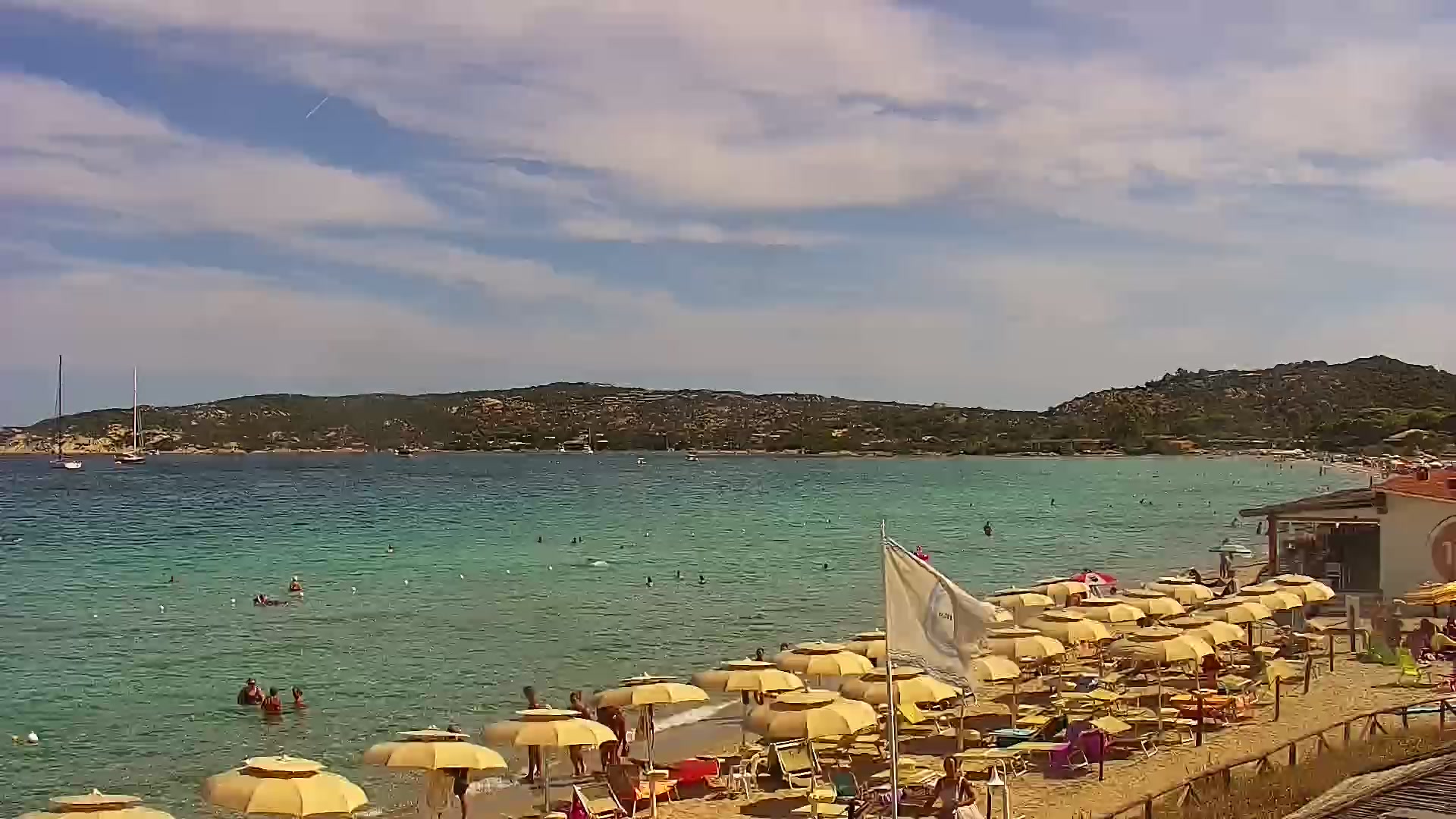
Two faces of one town: the hills of Loiri and the harbour of Porto San Paolo
Loiri-Porto San Paolo is a commune that defies a single description. Two entirely different worlds coexist here: the quiet pastoral village of Loiri in the hills of Gallura and the bustling fishing harbour of Porto San Paolo on the shore of the Gulf of Olbia. The distance between them is just a couple of kilometres as the crow flies, yet the atmosphere changes dramatically. Loiri is stone houses, pomegranate trees and views of the Sardinian foothills. Porto San Paolo is snow-white yachts at the quay, fishing boats and the endless blue of the Tyrrhenian Sea with the silhouette of Tavolara Island on the horizon.
The commune grew from a pastoral stazzo and fishing village — and still preserves both identities. The population is small: 3,541 people on an area of just over 120 km². This is a place where neighbours know each other by name, and tourists return year after year — not for noisy resorts, but for the real Sardinia without the gloss.
Why the town has a double name
The name "Porto San Paolo" speaks for itself: the patron saint of the fishing harbour is considered to be the Apostle Paul. It is from him that the coastal settlement takes its name. The word "Porto" is a direct reference to the harbour that for centuries served as a shelter for fishing vessels. Loiri, on the other hand, is an ancient mountain village whose name predates Sardinian times. Having merged into a single commune, the two settlements kept their names, reflecting the duality of the local way of life: shepherds in the hills and fishermen by the sea.
Tavolara Island — the stone guardian of the gulf
The main landmark visible from virtually any point in Porto San Paolo is the limestone massif of Tavolara. This is not just an island but a true mountain rising from the sea: about 5 kilometres long, 1 kilometre wide, with the highest point being Monte Cannone at 565 metres. The cliffs of the island are sheer almost all around the perimeter, and only at the ends of the massif does the sea retreat, revealing small sandy coves.
Near Tavolara lie the tiny islets of Molara and Molaretto — they are part of a marine reserve and accessible only by boat. It is from Porto San Paolo that excursion boats depart for these places. Local tradition has it that famous Italian actors and directors cross the strait by boat to set foot on Tavolara — this has become a kind of ritual for visitors to Sardinia.
The coast: white sand and turquoise water
The coast of Loiri-Porto San Paolo faces the Gulf of Olbia and the Gulf of Cugnana. The beaches here are classic Gallura: white quartz sand, in places mixed with fine gravel, and water so clear that the bottom is visible at a depth of several metres. The sea near the shore is shallow with a sandy bottom — ideal for swimming with children. The intense turquoise hue of the water comes from the reflections of Tavolara's limestone cliffs and the light-coloured seabed.
Webcams of Loiri-Porto San Paolo allow you to see this palette from afar: the transition from emerald water in the shallows to deep blue in the strait between the mainland and the island. The coast looks especially beautiful in the morning hours, when fishing boats head out to sea and the beaches are not yet crowded with holidaymakers.
Churches and shrines: eight centuries of faith
Scattered across the commune are eight churches — from tiny chapels in mountain hamlets to full parish churches. The oldest medieval centre of the future commune is the Church of Santa Giusta, built on a hilltop and visible for kilometres around. In Loiri itself stands the parish church of San Nicola di Bari with its Romanesque bell tower — its stonework remembers the times when Gallura was the battleground between Pisa and Genoa.
Each village within the commune has its own church and its own festival. In Porto San Paolo the main celebration is the feast day of Saint Paul, patron saint of fishermen. On this day the statue of the saint is carried through the streets to the harbour, and then by boat around the bay. Spectators can watch the procession from the waterfront or via webcams of Loiri-Porto San Paolo broadcasting the centre of the village.
Cuisine: from fisherman's stew to Sardinian desserts
Local gastronomy is pure Sardinia on a plate. The restaurants of Porto San Paolo serve the freshest seafood: langoustines, prawns, the catch of the day caught that morning in the strait. Be sure to try seadas — a traditional Sardinian dessert: crispy pastries filled with young cheese, deep-fried and drizzled with honey. The contrast of salty cheese and sweet honey is the taste of the island in a single bite.
In the mountain hamlets of Loiri, dishes of pastoral cuisine are prepared: roast suckling pig, homemade pasta with tomato sauce, cheeses from sheep's milk. The wine is local, from the vineyards of Gallura: Vermentino and Nasurino perfectly complement the seafood.
The atmosphere of the real Sardinia
Loiri-Porto San Paolo is not a tourist conveyor belt. There are no high-rise hotels or noisy nightclubs. Instead, there are family-run guesthouses, small hotels in stone houses and apartments with views of Tavolara. The streets of Porto San Paolo smell of the sea and coffee from small bars where locals play cards after lunch.
The commune is located 15 kilometres from Olbia — the main transport hub of north-eastern Sardinia. Olbia's airport and ferry terminal make Loiri-Porto San Paolo a convenient base for exploring the Costa Smeralda: from here it is easy to reach San Teodoro, Palau and the Gulf of Cannigione.
What the cameras show
Webcams of Loiri-Porto San Paolo online offer the chance to see both settlements in real time. Cameras in Porto San Paolo broadcast the harbour with yachts and fishing boats, the waterfront and views of Tavolara Island. Streams from Loiri reveal the panorama of Gallura's hills, the stone roofs of old houses and the valley down to the gulf. Choose a camera to check the weather, sea conditions or simply enjoy the view of north-eastern Sardinia — with its limestone cliffs, turquoise water and unhurried way of life unchanged for centuries.