

🏙️ Live Webcams of Castiglione di Garfagnana in Real Time
2 cameras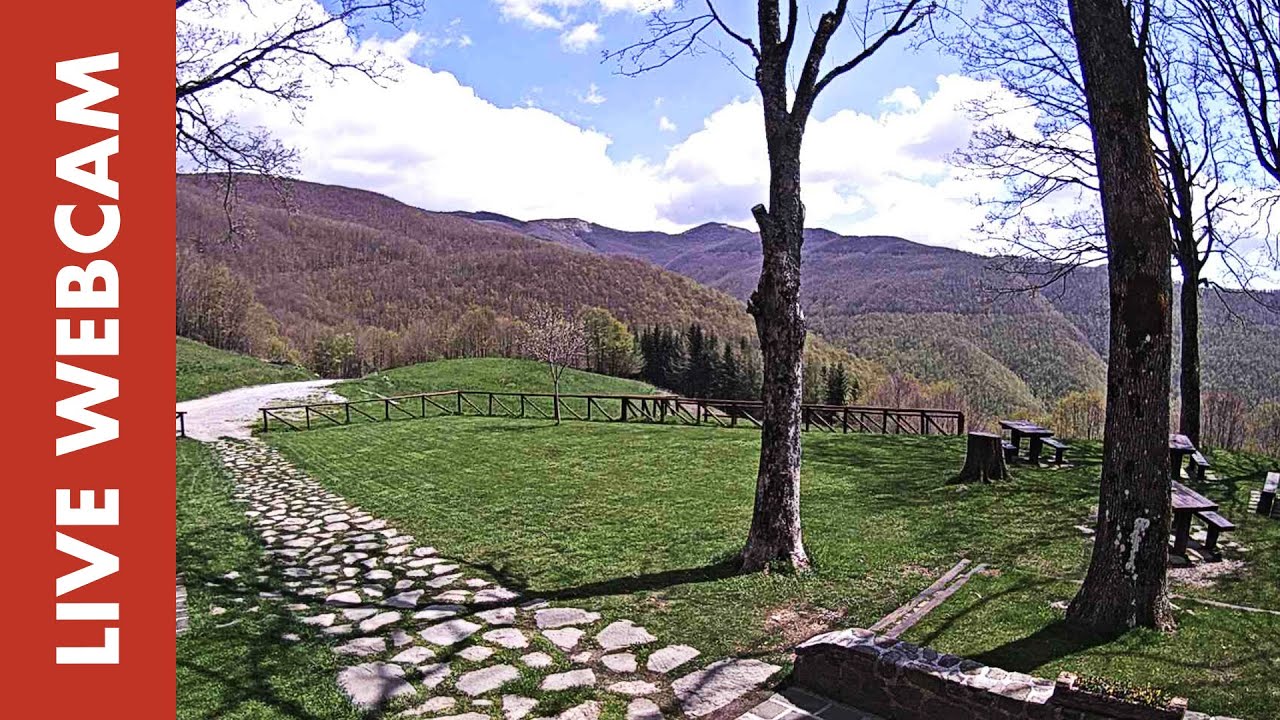
History of Castiglione di Garfagnana: from ancient settlements to the Middle Ages
The first settlements on the territory of modern Garfagnana appeared in prehistoric times. Life here was inextricably linked with the centuries-old rivalry between the bishops of Luni and Lucca and the local ruling dynasties. The strategic position in the Serchio River valley made these lands a coveted prize for feudal lords and church authorities, who for centuries fought for control over trade routes through the Apuan Alps.
Castiglione di Garfagnana long remained the capital of the region until 1806, when after the Napoleonic conquests it became part of the Principality of Lucca, governed by Elisa Bonaparte and Felice Baciocchi. It was this period that gave rise to the municipal coat of arms with a lion on a white-and-red background. Before the foundation of Castelnuovo di Garfagnana, the capital of Garfagnana was precisely Castiglione — a center that always remained loyal to Lucca. Today it is a commune in Italy with a population of 1,877 people (as of 2008) and a population density of 39 people/km².
The medieval borgo survived numerous conflicts — from wars between the Guelphs and Ghibellines to clashes with neighboring city-states. Despite all the upheavals, Castiglione di Garfagnana preserved its identity and architectural heritage, which attracts researchers and tourists from around the world.
Geographical location: the Apuan Alps and the province of Lucca
Castiglione di Garfagnana rises at an altitude of 545 meters above sea level at the foot of the Apuan Alps. This mountain range in northern Tuscany is known for its karst landforms and marble rocks, including the famous Carrara marble. Castiglione di Garfagnana webcams allow you to observe the majestic mountain landscapes in real time, when the peaks are shrouded in fog or bathed in sunlight.
The location in the province of Lucca makes this medieval borgo an ideal starting point for exploring northern Tuscany. From here, there are views of valleys covered with chestnut forests and remote villages hidden among mountain slopes. The climate here is temperate mountain — cool summers and snowy winters create conditions for unique flora and fauna.
The Serchio River, flowing through the valley, historically served as a transport artery for trade in timber and agricultural products. Today its banks have become a place for walking and picnics, and mountain trails attract hiking enthusiasts from all over Europe.
Medieval walls and towers: architectural heritage of the 13th century
The town is famous for its well-preserved 13th-century medieval walls with large towers (Torrioni) and a castle (Rocca). The San Michele tower in the southeast includes the bell tower of the church of the same name, and the San Pietro tower on the eastern wall has preserved embrasures for crossbows. These fortifications once protected residents from raids and served as a symbol of Lucca's power in the region.
The most attractive landmark of Castiglione is the medieval bridge built by Spinetta Malpina in the 13th century. It spans the river and still connects two parts of the ancient settlement. The ancient stone of the walls contrasts with the greenery of the surrounding mountains, creating an unmistakable medieval landscape.
A walk along the fortress walls allows you to feel the scale of the fortifications. The height of the towers reaches several tens of meters, and the thickness of the walls in places exceeds one and a half meters. From the upper points, there is a panorama of the entire valley — which is why Castiglione di Garfagnana had strategic importance for centuries.
Rocca Castle: a fortress on a rocky outcrop
Rocca Castle was built in its current form at the end of the 14th century and is located on a rocky outcrop in the upper part of the village. It offers a view of all Garfagnana — from here you can survey the Serchio River valley and endless mountain ranges. The fortress served as an observation point and the last line of defense in case of siege.
The architecture of Rocca Buonsenore demonstrates the transition from purely defensive structures to more residential premises, which is characteristic of the late Middle Ages in this region. The inner courtyards and staircases are carved directly into the rock, and the walls are decorated with the coats of arms of families who owned the castle at different times.
Today the castle attracts tourists interested in the military history of Tuscany. Tours of the fortress allow you to learn about the life of medieval garrisons and methods of conducting siege warfare. From the top of the rocky outcrop, distant villages and passes that were once important trade routes are visible.
Church of San Michele: art and religion of the 12th century
The Church of San Michele (Chiesa dei Santi Michele e Pietro) is a 12th-century Roman Catholic church built next to the Lucca castle of Castiglione di Garfagnana following the political growth and development of the settlement of the same name. Inside is preserved a panel painting of the Madonna and Child by Giuliano di Simone (1389) and a wooden crucifix.
The temple is not only a place of prayer but also a repository of medieval art. Frescoes and icons tell about the spiritual life of the community that for centuries shaped the appearance of this mountain settlement. The church bell tower is visible from any point in the town and serves as a landmark for travelers.
Religious holidays in Castiglione di Garfagnana are still accompanied by processions and services at the Church of San Michele. Local residents carefully preserve traditions, passing them from generation to generation. The interior of the temple has preserved the atmosphere of medieval piety — stone vaults, dim light of stained glass, and the smell of incense create a sense of traveling through time.
Cultural heritage and modern life
Castiglione di Garfagnana is surrounded by the Apuan Alps — a mountain range in northern Tuscany known for its karst landforms and marble rocks. Local residents have been engaged in stone quarrying and agriculture for centuries, preserving traditions passed down from generation to generation.
The narrow streets of the borgo are paved with stone, and the facades of houses are decorated with coats of arms of noble families. The measured life of the Italian province unfolds in the squares: morning coffee, evening walks along the fortress walls, festive fairs in the historic center. The authentic atmosphere of this place is felt in every stone and every glance at the mountain peaks.
Local cuisine is based on simple but high-quality products: chestnut flour, mountain herbs, olive oil, and homemade cheeses. Annual festivals are dedicated to the chestnut and olive harvests, attracting gourmets from all over Italy. Artisan workshops produce ceramics and wood products, preserving techniques known since the Middle Ages.
What the Cameras Show
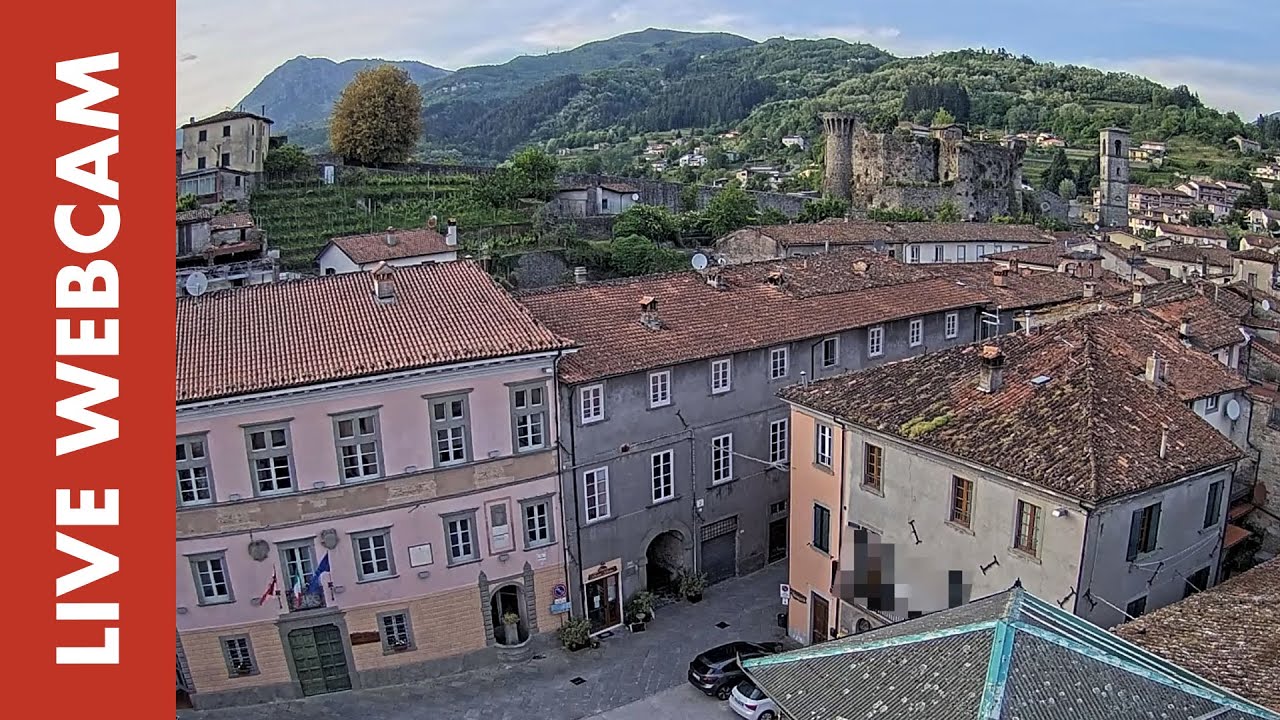
Castiglione di Garfagnana webcams online broadcast panoramic views of medieval towers, mountain landscapes of the Apuan Alps, and picturesque streets of the historic center. The live stream from Tuscany allows you to see the architectural heritage of the province of Lucca in real time — from 13th-century fortress walls to the 12th-century Church of San Michele. The cameras cover key points of the town: the square with the town hall, views of Rocca Castle and mountain passes. This is an opportunity to experience the atmosphere of northern Tuscany without leaving home — to observe the change of time of day, weather conditions, and the life of a small Italian borgo.