

🏙️ Florence Webcams Online — Watch the City in Real Time
2 cameras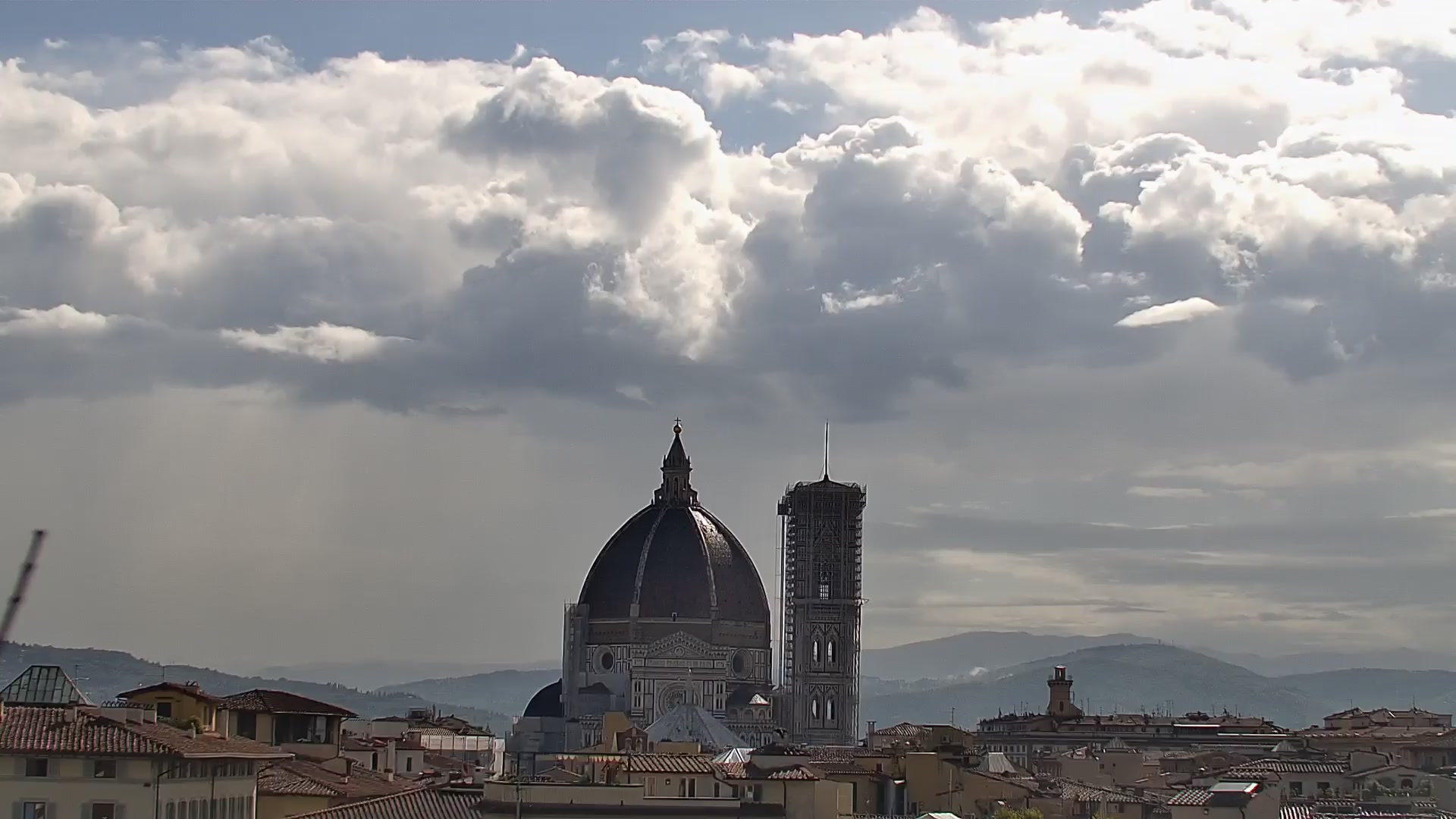
Florence: Cradle of the Renaissance and Heart of Tuscany
Florence is a city that cannot be seen in a single glance. Here every street, every alley, and every facade holds a history told in words and stones of the Renaissance era. The city on the Arno with its majestic dome, whose construction took nearly two centuries, still attracts millions of travelers from around the world. Florence is considered the birthplace of the Renaissance, which has turned this heart of Tuscany into a living museum of world art.
City History: From Roman Fortifications to Cultural Center
Florence's history stretches back into the distant past. The settlement of Florentia was founded by the Romans in 59 BC, becoming a refuge for military veterans. The city received its name in honor of the festival of Floralia — the flowering, symbolizing the beginning of spring and new life. Over the centuries, this name transformed into Florence, becoming a powerful cultural and economic center of the Middle Ages and the Renaissance.
Architectural Masterpieces of the City
The city panorama of Florence was shaped over centuries under the influence of the most talented masters of their time. Museums and cathedrals preserve the heritage of great creators whose ideas and techniques became the foundation of European culture.
The facade of the Cathedral of Santa Maria del Fiore stands out against the city's buildings with its rich decoration and rare materials — green marble and Carrara marble. The construction of the cathedral, including the famous dome, lasted from 1296 to 1436. The creator of the dome, Filippo Brunelleschi, became the first major monument of Renaissance architecture and built the world's largest brick dome. His ideas later inspired Michelangelo in creating the dome of St. Peter's Basilica in the Vatican, which he called the "sister" of the Florentine masterpiece.
History and Uniqueness of Ponte Vecchio
The old bridge connecting the two sides of the Arno River is one of the most recognizable landmarks. Ponte Vecchio was built in 1345 by architect Neri di Fioravanti at the narrowest point of the river. It is the city's oldest bridge. The first bridges at this location existed back in Roman times — the Via Cassia passed through them.
The bridge is distinguished by the unique preservation of its trade rows — jewelry shops that stretch across its length for centuries. Above them runs the Vasari Corridor, connecting the Uffizi with Palazzo Pitti. Indeed, the shops on Ponte Vecchio make it the only bridge in the city that has preserved its trade rows in their historical form.
Uffizi: A Collection of Renaissance Masterpieces
The Uffizi Gallery building is a Renaissance structure that served as an office for the noble Medici rulers. Today the museum's collection features masterpieces of art from the 13th to 18th centuries. The Uffizi collection holds the original Botticelli painting "The Birth of Venus". The gallery is visited by more than 5 million people from around the world each year. The Uffizi Gallery is one of the most important art museums in the world, where each painting reveals pages of Florentine art history.
Palazzo Vecchio and Piazza della Signoria
The market square with Palazzo Vecchio, built in 1255, is the heart of the city's political life. The building served as both a residence for rulers and a prison. The inner courtyard was designed by architect Michelozzo in 1458 in the early Renaissance style. Palazzo Vecchio boasts one of the finest sculpture collections in Italy, including works by Donatello, Verrocchio, and even the young Michelangelo. The gardens and garden alleys around the cathedral create a special space where past eras meet modernity.
Boboli, Santa Croce, and Other Treasures
The Boboli Gardens park is a magnificent example of the Renaissance, laid out in the 16th century for the Medici family. The park and garden project was prepared by architect Niccolò Tribolo. A short walk from the historic center is Santa Croce — a basilica with a history dating back to the 13th century. Here rest the greatest minds of the Renaissance, including Michelangelo, Galileo Galilei, and Niccolò Machiavelli.
Transport Hubs and Urban Space
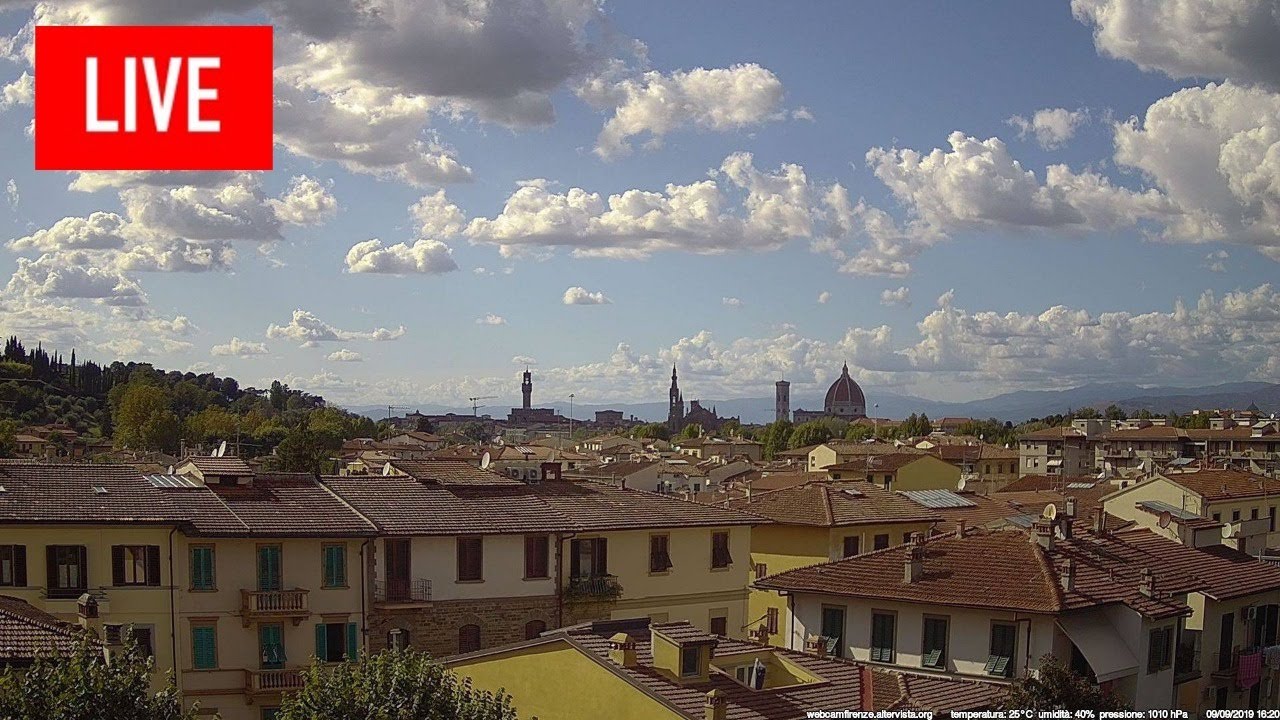
Florence's history is inextricably linked with river transport and the evolving urban environment. The railway station and transport interchanges serve as focal points for getting around the city. Thanks to modern broadcast systems, you can monitor the dynamics of city life in real time, observing the rhythm and atmosphere of the major transport hubs and squares. The cameras capture moments where historical heritage meets urban everyday life, creating a portrait of the city from different angles and times of day. The webcam system opens access to the urban space, allowing you to observe architectural ensembles, squares, and pedestrian zones, to see them in the process of life and movement.
What the Cameras Show
The cameras are positioned at key points that open up the city's panorama: from Ponte Vecchio and the square in front of the Cathedral of Santa Maria del Fiore, from the railway station and transport interchanges, from the squares of the historic center and the Arno embankment. Street cameras capture the life of city streets, trade rows, parks, and embankments. With their help, you can monitor the dynamics of traffic, the atmosphere of historic buildings and pedestrian streets, see the city in different seasons and at different times of day. The camera points create a living picture of city life, where past and modernity intertwine into a single image of Florence.