

🏙️ Budoni webcams online — watch Sardinia life in real time
1 cameras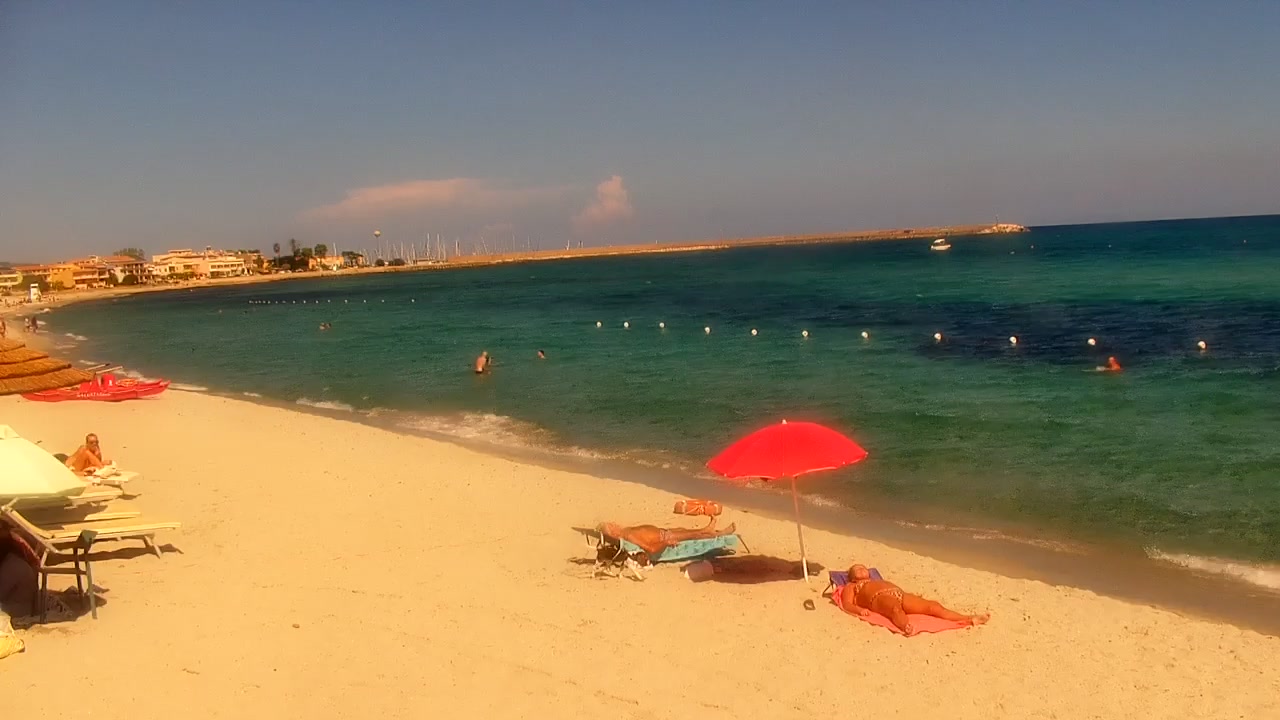
Geographical Location and Unique Status of Budoni
Budoni is a commune in the province of Gallura in northeast Sardinia, Italy, located approximately 170 km northeast of Cagliari and about 30 km from Olbia. This small town occupies a special place on the island's map — it lies at the junction of two historical subregions, which leaves its mark on the culture, architecture, and even the language of the locals. The Sardinian name for Budoni is Budùne, and in the Gallurese dialect it is Budùni, which already speaks to the multifaceted nature of this place.
The population of Budoni is 5,253 people, with a population density of 96.78 people/km². This is a fairly low density that allows natural landscapes to remain virtually untouched. The town is spread across hills descending to the Tyrrhenian Sea coast, offering breathtaking views. Budoni webcams online allow you to see this beauty in real time without leaving home.
Historical Heritage: From Nuraghi to the Judicate
The history of Budoni dates back to ancient times. In the surrounding hills, you can see two nuraghi — Nuraghe Su Entosu and Nuraghe Conca e Bentu. Both names refer to the winds characteristic of their exposed locations. These megalithic structures are witnesses to the Nuragic civilization that flourished on Sardinia in the second millennium BC.
During the Judicate period (from the 10th century), northeastern Sardinia, including Budoni, was part of the Judicate of Gallura. The Barony (Sa Baronìa) historically formed the southern part of the medieval Judicate of Gallura. The Northern Barony (or Barony of Posada) was established on June 25, 1431, when Alfonso V of Aragon invested Nicola. This division is still felt in local dialects and traditions.
Cultural Crossroads: Gallura and Baronia
Budoni is a crossroads of two historical subregions: Gallura and Baronia, where two different dialects are spoken: Gallurese and Logudorese. This is a rare case where two linguistic traditions intersect within a single commune. The Gallurese dialect is closer to Corsican than to Italian, which is explained by historical ties with Corsica. Logudorese is one of the most conservative Sardinian dialects, preserving features of Latin.
This cultural diversity manifests in architecture, cuisine, and festivals. If you find yourself in Budoni on a Sunday in late summer, you can participate in a traditional event — a procession through the streets of Budoni with worshippers in typical Sardinian costumes. These costumes are true works of folk art, with each element carrying symbolic meaning.
Natural Attractions and Beaches
The Budoni coastline stretches for 18 km with white sand beaches. Among the natural attractions are: Li Cucutti cape, Baia Sant'Anna bay, Cala Budoni cove, and Porto Ottiolu harbor with crystal-clear water. Each of these places is a separate world with its own unique character.
Budoni is located within the Tavolara Island Marine Reserve. This reserve is one of Sardinia's gems, where the marine ecosystem has been preserved in its pristine state. Near Budoni, there are salt ponds inhabited by colonies of pink flamingos. Watching these birds in their natural habitat is a special pleasure that brings unity with nature.
Traditions and Local Color
To the west of Budoni are the Stazzi di San Pietro — a group of old shepherd huts and simple houses built from stone, clay, and mortar, with interior walls painted in bright colors. Stazzi are a typical style of Gallurese housing dating back to the 17th century. These structures are not just dwellings but a reflection of the agrarian way of life that for centuries determined the rhythm of life of the locals.
Gallurese cuisine is a separate topic. Traditional dishes are prepared here from local products: goat milk cheese, carasau (a type of flatbread), roasted suckling pig. Winemaking also has deep roots — local wines from Vermentino and Cannonau grape varieties are known far beyond Sardinia.
Architecture and Stazzi of Gallura
Stazzi of Gallura are not just an architectural style but a whole philosophy of life. Stone walls, tiled roofs, interior courtyards — everything is subordinated to practicality and harmony with the surrounding landscape. Stazzi di San Pietro is one of the best examples of this style, preserved in its original form.
The interior walls of the stazzi are painted in bright colors — this is not just decoration but a way to protect against evil spirits, a belief rooted in pre-Christian times. Today, many stazzi have been restored and are used as tourist accommodation, allowing guests of Budoni to immerse themselves in the atmosphere of the past.
Budoni as a Starting Point for Exploring Sardinia
Budoni is an ideal base for exploring northeastern Sardinia. From here, it is easy to reach Olbia — the main transport hub of the region, the resorts of Costa Smeralda with their luxury villas and yacht harbors, and the mountain villages of Gallura where time seems to have stood still.
Budoni webcams in the city center allow you to assess the atmosphere of this place before your trip. You can see how the streets come alive in the morning, how life freezes in the midday heat, and how the lights come on in the evening. This is a living city, not an open-air museum, and the cameras convey its pulse.
What the Cameras Show
This page collects Budoni webcams that broadcast views of the city and its surroundings in real time. You can watch Budoni online and observe the life of this Sardinian city — from the waterfront to the hills dotted with stazzi. The cameras are positioned to cover key points: the coastline, the historic center, and the surrounding landscapes.
Budoni webcams are a window into a world where antiquity meets modernity, where two dialects sound on the same street, and pink flamingos share salt ponds with fishermen. Choose a camera and embark on a journey — Sardinia is waiting for you.