

🏙️ Webcams Stuttgart online — watch the capital of Baden-Württemberg in real time
1 cameras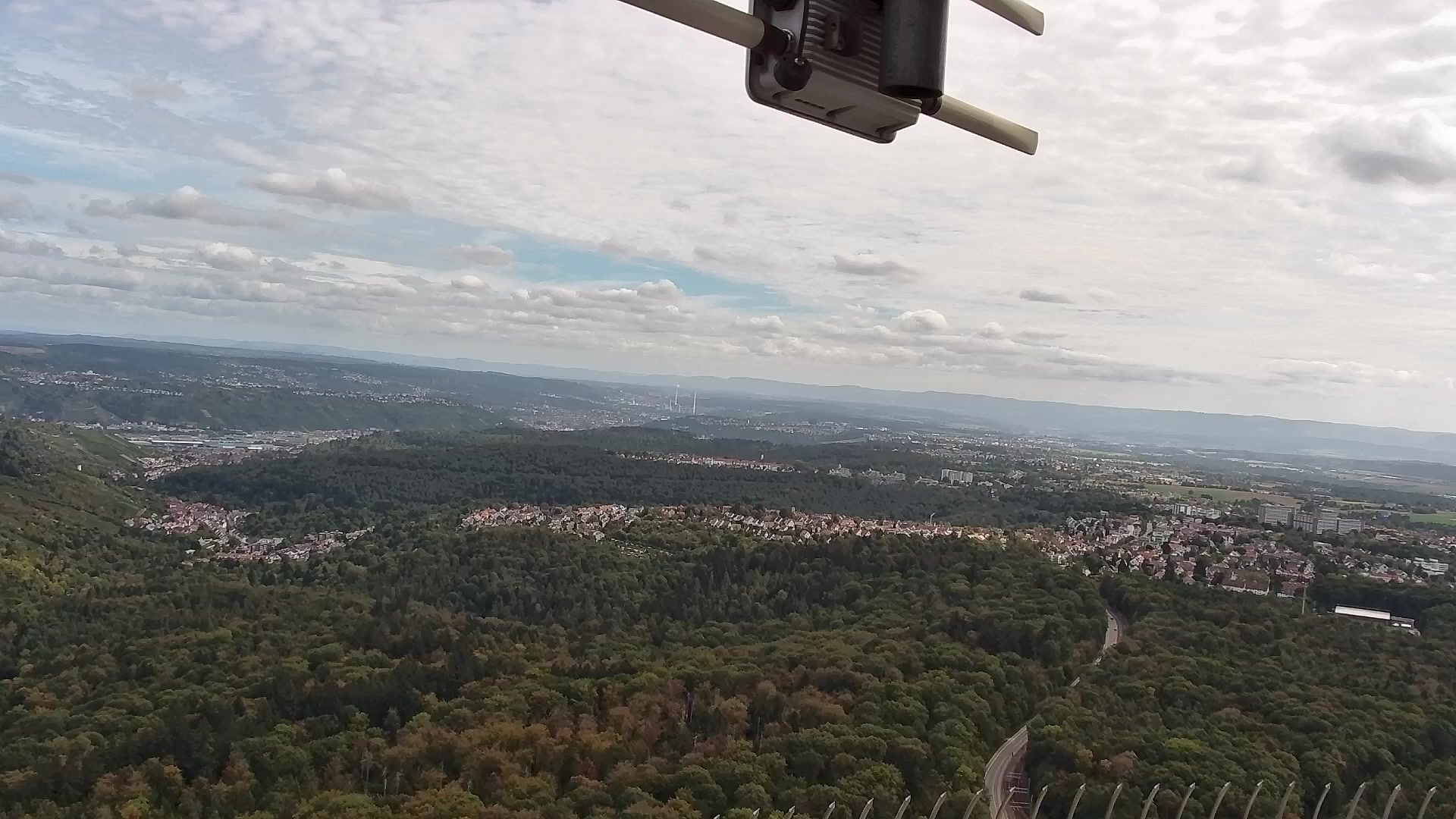

Stuttgart — a city that started with stables
Imagine: the year 950. Swabian Duke Ludolf founded a stud farm on the site of modern Stuttgart for his war horses. Today, the life of a metropolis with a population of about 630 thousand people boils here — the sixth largest city in Germany. From livestock roots to the world capital of automobile manufacturing — a journey of a thousand years.
Stuttgart stretches in the Neckar river valley, surrounded by vineyards and forests. It is the capital of the state of Baden-Württemberg — one of the most economically developed regions in Europe. The headquarters of Mercedes-Benz and Porsche are located here, and the level of innovation makes people call the city the "German Silicon Valley".
Architectural contrasts: from the Middle Ages to high-tech
The old town of Stuttgart is a labyrinth of narrow streets, half-timbered houses and squares where time slows down. Palace Square (Schlossplatz) is the heart of the city, surrounded by baroque palaces and modern buildings. Nearby rises the Collegiate Church (Stiftskirche) — one of the oldest churches in the city, whose towers are visible from many points.
But the real architectural star is the Stuttgart TV Tower on the Bopser hill. At 216.6 meters high, it became the world's first reinforced concrete TV tower and the prototype for hundreds of similar structures around the planet. From the observation deck at a height of 150 meters, a breathtaking panorama opens up: vineyard terraces, factory chimneys, green parks and — in clear weather — the Alps on the horizon.
A multifaceted city: immigrants, students, engineers
Stuttgart is a city with a large number of immigrants. About 40% of residents have a migration background, and among children under five, this figure reaches 64%. Every third resident of the city is a foreigner. This makes Stuttgart incredibly cosmopolitan: dozens of languages are heard on the streets, and restaurants offer cuisine from all continents.
The Stuttgart agglomeration has 2.7 million people, and the entire metropolitan region — about 5.3 million. It is one of the largest economic centers in Europe with a high standard of living and developed infrastructure.
Green lungs of the city: parks and gardens
Stuttgart surprises with the amount of green spaces. Schlossgarten Park is a giant green corridor several kilometers long, connecting the Old Town with the Bad Cannstatt district. The park has lakes, canals, rose gardens and century-old trees. It is a place for jogging, picnics and meditative walks.
No less impressive is Wilhelma — a zoological and botanical garden with a 19th-century palace complex. More than 1000 species of animals are kept here and thousands of plants from all over the world are grown. And Höhenpark in Bad Cannstatt is famous for its thermal springs and views of the Neckar valley.
Automotive Mecca: museums worth seeing
Stuttgart is the cradle of the global automotive industry. The Mercedes-Benz Museum is a journey through the entire history of automobile manufacturing: from Karl Benz's first car to concept cars of the future. The museum building itself is an architectural masterpiece — a double spiral that allows you to view 130 years of history in two hours.
The Porsche Museum is another must-see. Legendary models from the 356 to modern supercars are on display here. The museum building hovers above the ground, like a car at the start. Both museums attract hundreds of thousands of visitors annually and shape the special spirit of the city — a city that moves forward.
Cultural life: theaters, galleries, festivals
Stuttgart is an important cultural center in Germany. The State Gallery (Staatsgalerie) houses works from the Middle Ages to the present, including Picasso, Matisse and Bacon. The Stuttgart Ballet under the direction of Reinhard Lorenz is considered one of the best in Europe. The Stuttgart State Opera is one of the country's leading opera houses.
Every year the city hosts many festivals: the Stuttgart Film Festival, Cannstatt Wasen (a street festival of food and music), the Christmas market — one of the largest and oldest in Europe with more than 280 pavilions.
Stuttgart districts: from the historic center to residential quarters
The city is divided into 23 urban districts (Stadtbezirke), each with its own character. Center (Mitte) is the historic heart with museums, shops and restaurants. Bad Cannstatt is the largest district on the right bank of the Neckar with thermal springs and parks. Weilimdorf and Feuerbach are former industrial zones currently undergoing renovation. Degerloch is a green district in the southeast where the famous TV tower stands.
The Rosenstein quarter is the city's largest construction project, built on the site of a former railway platform. This is an example of how Stuttgart is constantly renewing itself while maintaining a connection with the past.
Climate and the best time for observation
Stuttgart is located in a temperate climate zone. Summers are warm (average July temperature is about 19°C), winters are mild, but with frequent fogs in the Neckar valley. In autumn, the vineyards turn gold and crimson, and in spring the parks bloom wildly and brightly. It is during these seasons that the city looks most picturesque — and Stuttgart webcams convey all this beauty in real time.
What the cameras show in the city
This page collects Stuttgart webcams — from panoramic views from the TV tower to street broadcasts from central squares. You can watch the life of the city in real time: follow the traffic on Königstraße, admire the view of Palace Square, look at Schlossgarten Park or watch the weather in the Neckar valley. Choose a camera and enjoy the view of one of the most dynamic capitals in Germany — a city where millennial history meets high technology.