

🏙️ Webcams Cuxhaven Online — Watch the City in Real Time
2 cameras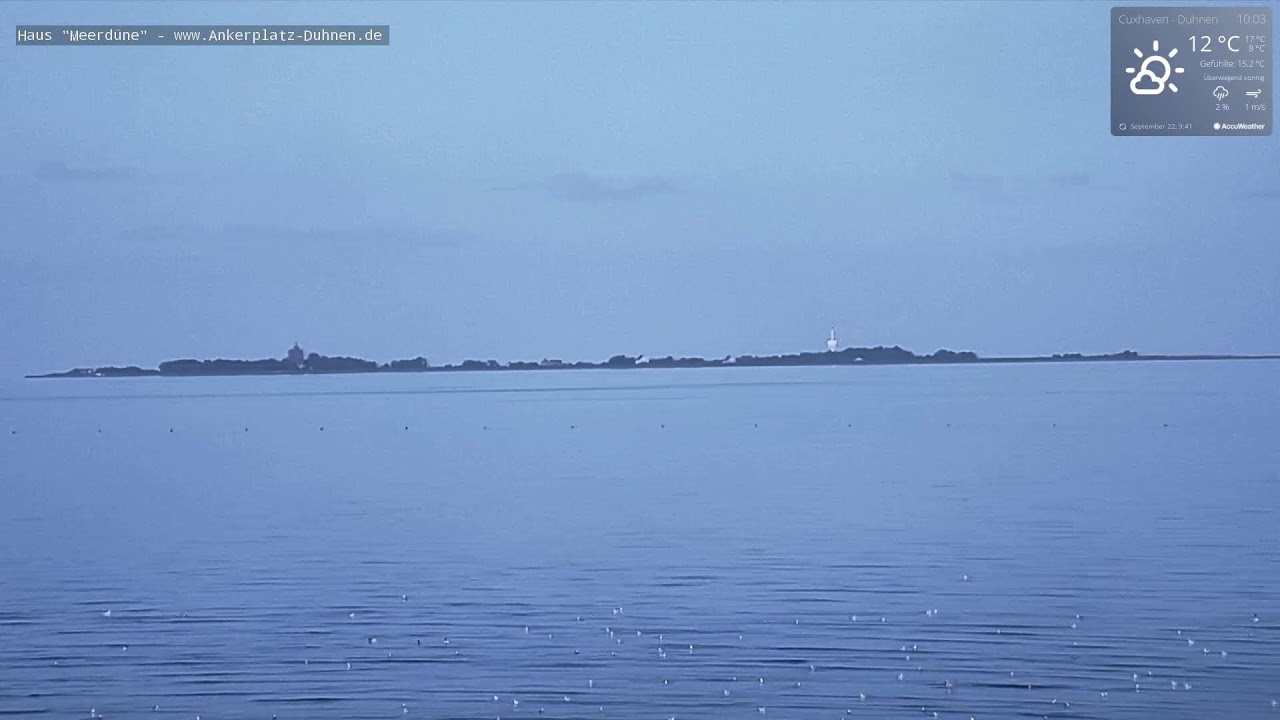
Geographic Location: Where the Elbe Meets the Sea
Cuxhaven is located at the northern tip of Lower Saxony, where the Elbe River flows into the North Sea. This is a city on the border of two elements — fresh water and salty coast, which determined its fate as a maritime outpost and fishing center. The Elbe estuary here forms an extensive shallow zone, which exposes kilometers of sandy bottom at low tide — the famous mudflats. That is why Cuxhaven is often called the gateway to the Wadden Sea, and its landscapes change twice a day with the tide.
The city is located about 100 kilometers northwest of Hamburg, but until 1937 it actually belonged to this city-state. The historic district of Ritzebüttel was a Hamburg enclave on foreign territory — a kind of outpost of the free city on the maritime trade route. Today Cuxhaven is part of Lower Saxony, but its architecture and atmosphere still bear the imprint of the Hanseatic past.
Historical Heritage: From Hanseatic Outpost to Spaceport
The history of Cuxhaven is inextricably linked with the sea and wars. In 1914, the city became the site of the first naval air raid in history — the Cuxhaven Raid, when British seaplanes attacked the German airship base in Nordholz. This event forever inscribed the city in the military annals of the 20th century.
After World War II, Cuxhaven gained a new, unexpected role. From 1945 to 1964, V-2 rockets and scientific sounding rockets were launched here under the management of Hermann-Oberth-Gesellschaft. The city became the only place in Germany with an unlimited launch sector over water — a kind of "German Cape Canaveral." Rockets launched directly from the coast, and their trajectories ran over the North Sea.
On May 7, 1945, the last encrypted Enigma message of the war was transmitted from Cuxhaven with the text "Closing down for ever – all the best – goodbye." This moment symbolized the end of an era not only for the city but for the entire German military machine. Today, exhibitions in local museums and memorial signs on the waterfront remind us of these events.
Kugelbake and Other Symbols of the City
The main landmark of Cuxhaven is the Kugelbake, a wooden lighthouse at the mouth of the Elbe. It marks the boundary between the river and the sea and is depicted on the city's coat of arms. The first mention of a navigation mark at this location dates back to the 17th century, and the current structure was restored after the destruction of World War II. The Kugelbake is not just a landmark for ships, it is a symbol of the meeting of two elements, a place where the river ends and the ocean begins.
Next to the lighthouse is the Alte Liebe — a historic observation deck built in 1733. Originally it served as a breakwater, but over time it has become a favorite spot for watching ships and sunsets. The two-story structure extends into the sea, and from it there is a panorama of the Elbe estuary, where giant container ships and cruise liners pass on their way to the port of Hamburg.
Another maritime symbol is the Elbe 1, a bright red floating lighthouse that now functions as a museum and mini-hotel. It is one of the largest inhabited floating lighthouses in the world, and staying in it is a unique experience for tourists who want to feel like lighthouse keepers in the middle of the sea.
Wadden Sea: Walking on the Ocean Floor
The Wadden Sea off the coast of Cuxhaven has been a UNESCO World Heritage Site since 1985. It is a unique ecosystem where the sea floor up to 20 kilometers wide is exposed at low tide. You can walk on it — literally step on the place that was covered with water an hour ago. Such walks are called "walking on water" and have become a hallmark of the region.
Every year in August, a unique event takes place here — the horse race on the mudflats. This tradition has existed since 1902 and attracts between 20,000 and 30,000 spectators. Horses with riders race along the exposed sea floor, and the stands are located right on the shore. This spectacle, which has no analogues in the world, is a combination of sport, nature, and local folklore.
For those who cannot walk, there are Wattmobile — free three-wheeled buggies for people with limited mobility. And lovers of more traditional transport can ride in Wattwagen — horse-drawn wagons that sometimes go neck-deep in water, carrying tourists to the island of Neuwerk.
Fishing Traditions: Shrimp and Trawlers
Cuxhaven is the second largest fishing ground for North Sea brown shrimp in Germany after Büsum. Fishing here remains a family business: vessels are passed from father to son, and the average age of trawlers is about 34 years. In the port you can see both wooden boats of traditional construction and steel vessels with modern equipment.
The fishing fleet is not only the economic foundation of the city, but also a major tourist attraction. Up to 60% of fishing income comes from tourism: visitors come to the port to watch the unloading of the catch, try fresh shrimp in coastal restaurants and learn about the life of sailors. The port houses processing enterprises, including the well-known company HEIPLOEG.
In recent years, fishermen have been campaigning to protect trawl fishing, which is threatened by environmental restrictions. In restaurants and tourist areas you can see symbols of crosses marking the "death" of ships, and letters explaining the reasons for the protest. This is part of the visual culture of the city, reminding us of the fragility of maritime traditions.
Unusual Attractions: What the City Hides
Few people know that Cuxhaven has preserved a Windsemaphor — a historic wind semaphore from the late 19th century. Before the advent of radio, it was used for optical and acoustic transmission of wind information to sailors. This is a rare example of a pre-electric communication system, which today is a monument to engineering thought.
On the coast stands the Obereversand — a black lighthouse built in the early 20th century. Its dark color makes it unusual among the traditionally white or red navigation structures. This is a popular place for photos, especially at sunset, when the black tower contrasts with the golden sky and gray sea.
In the Zollenspieker area there is the Wernerwald — a quiet forest with clean trails and picturesque glades. This is a little-known among tourists place, ideal for those who want to take a break from the noise of the waterfront and enjoy North German nature. Oaks, beeches and conifers grow here, and in spring the forest is covered with a carpet of snowdrops and lilies of the valley.
On the territory of the city there are Stolpersteine — "stumbling stones", monuments to the victims of Nazism. Small concrete cubes with copper plaques are embedded in the pavement in front of the last places of the victims, reminding of deported, killed and forced to commit suicide people. These are quiet but powerful testimonies of tragic history that can be found on many streets of Cuxhaven.
Cosmic Past and Scientific Heritage
After the war, Cuxhaven became the place where the space age was born. From 1945 to 1964, V-2 rockets were launched here — the same "V-2s" that were created by Wernher von Braun. Under the management of Hermann-Oberth-Gesellschaft, scientific sounding rockets launched from the coast, exploring the upper layers of the atmosphere. Cuxhaven became the only place in Germany with an unlimited launch sector over water — rockets could fly directly over the North Sea without risk to populated areas.
Today, publications in scientific archives and exhibitions in local museums remind us of this period. For space history enthusiasts, Cuxhaven is a must-visit point on the route, a place where military technologies were transformed into tools for peaceful research.
Cultural Life and Festivals
Cuxhaven lives not only by the sea but also by cultural events. The annual horse race on the mudflats is the main summer event, but not the only one. The city hosts fish festivals where you can try fresh shrimp, smoked fish and other gifts of the North Sea. The fishing museum Fischereihafen-Museum tells about the traditions of local fishermen and the history of the port.
In the city park there is the Zoo im Kurpark — a free zoo with about 200 animals, including penguins. This is one of the few places in Germany where you can see penguins for free. The zoo has become a favorite place for family recreation and walks.
The historic Schloss Ritzebüttel castle from the 14th century houses a regional museum and serves as a starting point for walks on the mudflats to the island of Neuwerk. This is a place where medieval history and modern tourism are intertwined — from a Hanseatic outpost to an ecotourism center.
What the Cameras Show
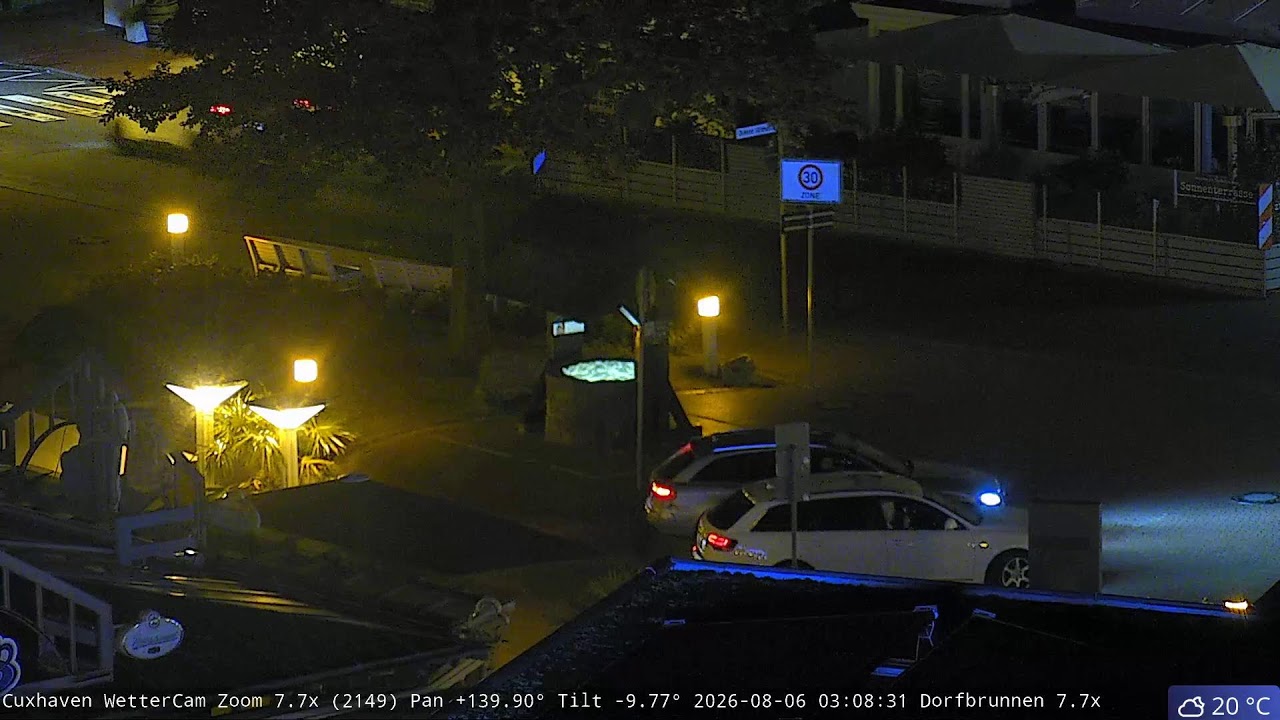
Cuxhaven webcams allow you to observe the life of the city in real time. Cameras are installed at key points: on the Alte Liebe waterfront, where passing ships and sunsets over the Elbe are visible; in the port, where you can watch the work of fishermen and the unloading of trawlers; on the beaches and in the Kugelbake area, where tides and currents change the landscape every day.
Watching Cuxhaven online is especially interesting during low tide, when the sea floor is exposed and mudflat walks begin. Coastal cameras show how group by group tourists set off on the way to the island of Neuwerk, and horse-drawn wagons carry passengers through wet sand. In the port you can see a flock of seagulls circling over fishing boats and the real working rhythm of a maritime city.
Online broadcast from Cuxhaven is an opportunity to feel the atmosphere of the North German coast without leaving home. Watching the tides, following ships in the Elbe estuary or simply enjoying sunsets over the North Sea — all this is available through the city's webcams.